Free Daily Podcast Summary
Stories, Poems & Music - The Creative Process: Daily Summaries Delivered
by Novelists, Poets, Non-fiction Writers, Musicians, Screenwriters, Playwrights & Journalists on Writing - Creative Process Original Series
Get key takeaways, quotes, and insights from Stories, Poems & Music - The Creative Process in a 5-minute read. Delivered straight to your inbox.
Latest Episodes
The most recent episodes — sign up to get AI-powered summaries of each one.
- Mar 3, 202634 min
Trust, Education & Writing as Resistance w/ AL KENNEDY
"The thing that puzzled him was why people don't agree to be fully expressed while they're alive. Why does it only happen in their last moment? Why wouldn't you live being fully expressed?"My guest today is AL Kennedy. She is one of Britain’s most acclaimed and versatile literary voices, a writer who can inhabit the internal life of a soldier in a POW camp, as she did in her Costa Book Award-winning novel Day, as easily as she can navigate the "professional lying" of a modern civil servant.Her latest novel, Alive in the Merciful Country, takes place during the 2020 lockdown. It tells the story of a primary school teacher who receives a confession from an undercover police officer who infiltrated her life decades earlier. It’s a provocative investigation into state power, the "Spy Cops" scandal and the search for mercy in an age of surveillance. It’s a book about the breakdown of trust. We talk about her life, her activism, and why she believes fiction is the only way to tell the truth when the facts are forbidden and how she balances the truth of her novels with the relief of stand-up comedy. Finding Your VoiceOn the Alfred Wolfsohn voice method and the power of being fully expressed Reading from Alive in the Merciful CountryKennedy shares a passage from her latest novel, exploring hope and resilience in dark times. The Myth of Shrinking Attention SpansChallenging the narrative that modern audiences cannot focus, and the importance of engaging storytelling. Education and the Foundation of DemocracyThe dangers of dismantling education and how critical thinking protects us from fascism. The Spy Cop Scandal and State SurveillanceUnpacking the reality of undercover police infiltrating peaceful protests and intimate lives. Lockdown: A Global Pause and the Inrush of EmpathyThe fleeting moment of unified humanity during the pandemic and how it was ultimately betrayed. Writing Without Theft: The Ethics of Character CreationKennedy explains her imaginative process and why she refuses to steal details from real people's lives. AI, Digital Slop, and the Loss of TrustReflections on artificial intelligence as an unstable plagiarism machine and its impact on truth. Nature, Spirituality, and the Merciful CountryFinding healing in the natural world and navigating the future with love and awareness.Episode Websitewww.creativeprocess.info/podInstagram:<a target="_blank" rel="noopener nore
- Feb 23, 202625 min
SIRI HUSTVEDT on Love, Grief & Her Late Husband PAUL AUSTER
“Grief is a particular kind of unrequited love. It wasn't unrequited in the past. Usually, we think of unrequited love as you never got to do it, you never had it for yourself. But, in fact, there can be requited love, which is then unrequited love in the paroxysms of grief.”Today, we are honored to welcome a writer whose work has long explored the intimate landscapes of the mind, memory and the heart. Siri Hustvedt’s writing moves between the personal and the philosophical, the literary and the deeply human. Her work bridges collections of essays, non-fiction, poetry, and seven novels, including the international bestsellers What I Loved and The Summer Without Men. Recipient of the Princess of Asturias Award for Literature and the Gabarron Prize for Thought, her work has been translated into over thirty languages. Her new memoir, Ghost Stories, is a reflection on forty-three years shared with her late husband, the writer and filmmaker Paul Auster. In its pages, we encounter not only love and loss, but the quiet persistence of presence, memory, and language itself. “We were hugely important to the drama of becoming in our own lives” Grief as Unrequited LoveSiri explores the emotional reality of living without Paul Auster, noting that grief occurs because love does not stop when a person dies. The Shared Space of a 43-year Marriage Reading from Ghost StoriesSiri reads the opening passage of her memoir, detailing how the loss of her husband deranged her sense of time and bodily rhythms. How Loss Changes Our Sense of Time How Powerful Emotions and a Person's Life Can Play a Role in Illness Believing in a Reality that Transcends the Individual Physical Love in MarriageOn the importance of physical intimacy in long-term marriages, a reality often left out of grief memoirs.Episode Websitewww.creativeprocess.info/podInstagram:@creativeprocesspodcast
- Jan 9, 202617 min
The Wisdom of Nature: Artists & Scientists on The Beauty & Fragility of Our Planet
In this special edition, we hear from our guests from across the arts and sciences. From composers and poets to forest ecologists and climate envoys, they tell the story of our planet. Moving beyond the data of destruction, we explore the intelligence of nature, the ethics of what we eat, and the empathy required to save our future.MAX RICHTER, Composer, Sleep, The Blue NotebooksCARL SAFINA, Author, Becoming WildADA LIMÓN, 24th US Poet LaureateCYNTHIA DANIELS, Grammy Award-winning Sound Eng.SUZANNE SIMARD, Finding the Mother TreeJOELLE GERGIS, Lead Author, IPCC 6th Assessment RptNOAH WILSON-RICH, CEO, Best Bees CompanyINGRID NEWKIRK, PETA FounderBERTRAND PICCARD, Solar Impulse FoundationDAVID FARRIER, Author, FootprintsKATHLEEN ROGERS, Pres, Earth Day NetworkODED GALOR, Unified Growth TheoryPETER SINGER, PhilosopherGEOFF MULGAN, Another World Is PossibleCLAIRE POTTER, Welcome to the Circular EconomyCHRIS FUNK, Dir. Climate Hazards Car.JENNIFER MORGAN, Special Envoy, International Climate ActionTo hear more from each guest, listen to their full interv
- Dec 31, 20250
The Musician Who Sings to Animals - PLUMES on Trust & Cross-Species Communication - Highlights
On Music, Trust and Connection with the Animal World“Mostly I’ll play in a minor key, something sad, which I think can work for an animal because they can sense the sadness, and they try to reassure me and comfort me. I chose love songs because I'm convinced they are very intuitive and they can sense what I am trying to say to them, and profess my love in a way. I think there's always a way to connect, and if you're being cautious and don't threaten the animals, something beautiful can happen.”Musician Plumes takes his guitar to the world's most unlikely concert halls—farms, sanctuaries, and wild habitats. A passionate advocate for veganism and animal welfare, we discuss what animals hear, how trust forms, and what music can reveal when it enters a world not made for humans alone.Episode Websitewww.creativeprocess.info/podInstagram:@creativeprocesspodcast
- Dec 31, 202540 min
Animals & The Healing Power of Music
How is music a pathway to understanding animals?Musician Plumes takes his guitar to the world's most unlikely concert halls—farms, sanctuaries, and wild habitats. A passionate advocate for veganism and animal welfare, we discuss what animals hear, how trust forms, and what music can reveal when it enters a world not made for humans alone.“Mostly I’ll play in a minor key, something sad, which I think can work for an animal because they can sense the sadness, and they try to reassure me and comfort me. I chose love songs because I'm convinced they are very intuitive and they can sense what I am trying to say to them, and profess my love in a way. I think there's always a way to connect, and if you're being cautious and don't threaten the animals, something beautiful can happen.”Episode Websitewww.creativeprocess.info/podInstagram:@creativeprocesspodcast
- Dec 13, 202514 min
The Writer's Voice: Novelists, Poets, Memoirists & Editors Share Their Stories
How do writers develop their voice, showing us what is important in life?ADA LIMÓN (24th U.S. Poet Laureate, Startlement, The Carrying) explains that her poetry begins with a bodily sensation or curiosity, not an idea. She values the space and breath poetry offers for unknowing and mystery, finding solace in the making and the mess, not in answers. She discusses being free on the page to be her whole, authentic, complicated self.JAY PARINI (Author, Filmmaker, Borges and Me) calls poetry the prince of literary arts—language refined to its apex of memorability. He recounts how his road trip with Borges around Scotland restored him from depression and anxiety following the Vietnam War death of his friend.JERICHO BROWN (Pulitzer Prize-winning Poet, The Tradition, How We Do It: Black Writers on Craft, Practice, and Skill) discusses the rhythm of black vernacular and capturing "symphonic complexity of black life". He shares how he’s found a way not to think about personal risk as he’s writing.ADAM MOSS (Fmr. Editor, New York Magazine; Author, The Work of Art) relates David Simon’s concept of the bounce, in which creativity gains momentum as it is passed between people.VIET THANH NGUYEN (Pulitzer Prize-winning Author, The Sympathizer; To Save and to Destroy) discusses his path to expansive solidarity and capacious grief and how it works against the state's power to divide and conquer. He emphasizes that literature is crucial because authoritarian regimes abuse language; a commitment to the beauty of language is a commitment to truth, and fear is often an indicator of a truth that needs to be spoken.To hear more from each guest, listen to their full interviews.Episode Websitewww.creativeprocess.info/podInstagram:@creativeprocesspodcast
- Dec 12, 202511 min
Writers on Memory, Language & the Power of the Unconscious
How can we use negative spaces in fiction to engage with readers’ imaginations? How are memory and trauma passed onto us through language? How do we become more than the stories we tell ourselves?KATIE KITAMURA (Author, Audition, Intimacies) emphasizes that a book is created in collaboration with the reader, using negative spaces in the narrative structure to allow for reader interpretation, paralleling the space between audience and actor in performance.PAUL LYNCH (Booker Prize-winning Novelist, Prophet Song) discusses the richness and slipperiness of the English language in Ireland, shaped by the overlay of English onto Irish grammatical constructions, resulting in unique phrasing and a capacity to create new constructions.DANIEL PEARLE (Screenwriter, Playwright, The Beast in Me) shares that audiences are fascinated by the unfettered, uncensored ID in characters, reflecting the universal fantasy of acting without consequences. He advises writers to put people who deeply irritate them into a play, as those characters often become the audience's favorites.HALA ALYAN (Novelist, Poet, I’ll Tell You When I’m Home: A Memoir) describes her work as an excavation of the darkest hours and intergenerational trauma carried by her lineage, which has endured repeated exile. She links exile from the body to the larger patterns of not having a place in the world.T.C. BOYLE(Novelist, Short Story Writer, Environmentalist) shares that the creative process involves a magic in reaching for the unconscious and the surprise of the creative process. He emphasizes that art and nature are our salvations, over money. He advocates for solitude in nature—alone on a beach or in the woods—to connect with the natural world.ADAM ALTER (Author of Anatomy of a Breakthrough) discusses the axioms of creativity, noting that being around more people, even those who are "deeply incompetent," is generally beneficial for creativity by providing diversity of opinion and information, preceding the necessary time for solitary focus.SHEHAN KARUNATILAKA (Booker Prize-winning Author of The Seven Moons of Maali Almeida) explains his decision to write in the second person as a way of exploring the spiritual dimension of the internal voice. He posits that the "you" could be a spirit whispering thoughts, leading people (and nations) astray.DANIEL HANDLER A.K.A LEMONY SNICKET (Author, A Series of Unfortunate Events) argues that his books for children and adults are not fundamentally different and says everyone's childhood is full of powerful emotions derived from ordinary injustices, noting that we cry hardest over hurt feelings, not global catastrophes.ADA LIMÓN (24th U.S. Poet Laureate, Startlement, The Carrying) talks about her responsibility as a writer to honor her ancestors, specifically her grandfather, who had to sublimate his creative spirit for safety and belonging, leading her to prioritize grace and freedom in her own writing.<p data-rte-preserve-empty="true" s
- Nov 9, 202517 min
On Mind Games, Power & Obsession - Showrunner HOWARD GORDON & Writer DANIEL PEARLE - Highlights
“How do you render something interior filmically? How do you communicate the details of the lost child, of the amount of time of the stuck creative process, and even the exterior, or the externalization of the house as a kind of hellish thing that's barely staying together—literally flooding with waste—and that you can't afford? So those are the details that we had to carefully figure out how to weave. But, you know, when you look at the first 10 minutes, it could be a horror movie. From that moment, a lot can happen. But what's important about it is that it sets the table for what does happen.” -Howard GordonToday, we explore the dark psychology of obsession, guilt, and the thin line between predator and victim. Our guests are two of television's most accomplished architects of high-stakes drama and moral ambiguity: Howard Gordon, the showrunner and executive producer whose work defined a generation of thrillers with 24 and the multi-award-winning Homeland; and Daniel Pearle, an executive producer and writer who brings a distinct, penetrating depth from his background as a celebrated playwright and his work on series like Accused and American Crime Story.Episode Websitewww.creativeprocess.info/podInstagram:@creativeprocesspodcast
Get Stories, Poems & Music - The Creative Process summaries in your inbox
Free AI-powered daily recaps. Key takeaways, quotes, and mentions — in a 5-minute read.
Get Free Summaries →Free forever for up to 3 podcasts. No credit card required.
You Might Also Like
Listeners also like.
Books & Writers · The Creative Process: Novelists, Screenwriters, Playwrights, Poets, Non-fiction Writers & Journalists Talk Writing, Life & Creativity
Novelists, Screenwriters, Playwrights, Poets, Non-fiction Writers & Journalists Talk Writing · Creative Process Original Series
Philosophy, Ideas, Critical Thinking, Ethics & Morality: The Creative Process: Philosophers, Writers, Educators, Creative Thinkers, Spiritual Leaders, Environmentalists & Bioethicists
Philosophers, Writers, Educators, Creative Thinkers, Spiritual Leaders, Environmentalists & Bioethicists · Creative Process Original Series
Education, The Creative Process: Educators, Writers, Artists, Activists Talk Teachers, Schools & Creativity
Educators, Writers, Artists, Activists Talk Teaching & Learning: Creative Process Original Series
The Creative Process in 10 minutes or less · Arts, Culture & Society: Books, Film, Music, TV, Art, Writing, Creativity, Education, Environment, Theatre, Dance, LGBTQ, Climate Change, Sustainability, Social Justice, Spirituality, Feminism, Technology
The Creative Process · Books, Film, Music, TV, Art, Writing, Creativity, Education, Environment, Theatre, Dance, LGBTQ, Social Justice, Spirituality, Feminism, Technology...
The Creative Process · Arts, Culture & Society: Books, Film, Music, TV, Art, Writing, Creativity, Education, Environment, Theatre, Dance, LGBTQ, Climate Change, Social Justice, Spirituality, Feminism, Tech, Sustainability
Mia Funk
Tech, Innovation & Society - The Creative Process: Technology, AI, Software, Future, Economy, Science, Engineering & Robotics Interviews
Technology, AI, Software, Future, Economy, Science, Engineering & Robotics Interviews - Creative Process Original Series
Talking Writing
Martha Nichols, John Vogel, and Neva Talladen
From the Magic Pencil: Voices of Writing Through
Writing Through
Heroes, Action, Adventure, Extreme Sports - Profiles in Courage - The Creative Process
Action, Adventure, Extreme Sports, Climbers, Divers, Explorers, Athletes, Visionaries, Leaders, Inspiration - Creative Process Original Series
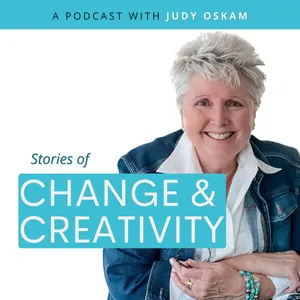
Stories of Change & Creativity
Professor Judy Oskam
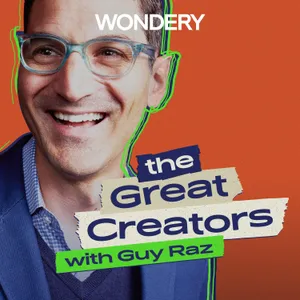
The Great Creators with Guy Raz
Guy Raz | Wondery
Creativity Excitement Emotion
David Andrew Wiebe
About Stories, Poems & Music - The Creative Process
Stories, Poems & Music from the popular The Creative Process podcast. Listen to our interviews on The Creative Process - Arts, Culture & Society on Apple: tinyurl.com/thecreativepod, Spotify: tinyurl.com/thecreativespotify, or wherever you get your podcasts!Writers include Neil Gaiman, U.S. Poet Laureate Ada Limón, Roxane Gay, Jericho Brown, Marge Piercy, Alice Notley, Alice Fulton, Siri Hustvedt, George Pelecanos, Anthony Joseph, E.J. Koh, Hala Alyan, among others. Music by Laurie Anderson, Philip Glass, Robert Plant, Dickie Landry, among others.The podcast is hosted by founder and creative educator Mia Funk with the participation of students, universities, and collaborators from around the world. These conversations are also part of our traveling exhibition. www.creativeprocess.info
Customized Recaps
AI-powered recaps with compact key takeaways, quotes, and insights.
Straight to Your Inbox
Get key takeaways from Stories, Poems & Music - The Creative Process in a 5-minute read.
Save Hours Every Week
Stay current on your favorite podcasts without falling behind.
Frequently Asked Questions
What is Podzilla's Stories, Poems & Music - The Creative Process daily summary?
It's a free AI-powered email that summarizes new episodes of Stories, Poems & Music - The Creative Process as soon as they're published. You get the key takeaways, notable quotes, and links & mentions — all in a quick read.
How does the Stories, Poems & Music - The Creative Process podcast summary work?
When a new episode drops, our AI transcribes and analyzes it, then generates a personalized summary tailored to your interests and profession. It's delivered to your inbox every morning.
Is this an official Stories, Poems & Music - The Creative Process product?
No. Podzilla is an independent service that summarizes publicly available podcast content. We're not affiliated with or endorsed by Novelists, Poets, Non-fiction Writers, Musicians, Screenwriters, Playwrights & Journalists on Writing - Creative Process Original Series.
Can I get summaries of other podcasts too?
Absolutely! The free plan covers up to 3 podcasts. Upgrade to Pro for 15, or Premium for 50. Browse our full catalog at /podcasts.
How often does Stories, Poems & Music - The Creative Process release new episodes?
Stories, Poems & Music - The Creative Process publishes biweekly. Our AI generates a summary within hours of each new episode.
What topics does Stories, Poems & Music - The Creative Process cover?
Stories, Poems & Music - The Creative Process covers topics including Music, Fiction, Arts, Books, Drama, Comedy Interviews. Our AI identifies the specific themes in each episode and highlights what matters most to you.
Start getting Stories, Poems & Music - The Creative Process summaries tomorrow morning.
Free forever for up to 3 podcasts. No credit card required.
Free forever for up to 3 podcasts. No credit card required.