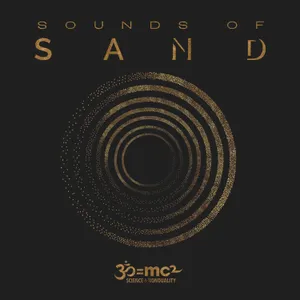
Free Daily Podcast Summary
Sounds of SAND: Daily Summaries Delivered
by Science and Nonduality
Sounds of SAND invites listeners into a contemplative journey through the infinite cycles of existence - from its raw beauty to its deepest mysteries, from its intricate complexity to its profound wonder. Through intimate conversations, thought-provoking interviews, poetic readings, and carefully curated music, we weave together ancient wisdom with lived experience, creating a tapestry of sound that honors the great questions of being
Latest Episodes
The most recent episodes — sign up to get AI-powered summaries of each one.
- 4 days ago1h 0m
Nuance of Wonder: Joan Tollifson
Joan Tollifson returns to the podcast three years after her first conversation. We talk about her June essay Two Inseparable Truths, on the relative and the absolute and the trouble with getting stuck in either one. Along the way: the silence of many nondual teachers in a dark time, what cancer and an aging body insist on that philosophy cannot, why she has never used AI, and why "I don't know" may be the answer closest to true. She closes by reading her essay Radiant Light in Dark Times in full. Topics 00:00 Introduction 00:04 From political movements to the Zen Center 00:06 Why she doesn't name names, and what bypassing looks like 00:11 Two inseparable truths: stuck in the relative, stuck in the absolute 00:19 Why she refuses final conclusions 00:21 Old age, sickness and death as visceral teaching 00:25 Cancer and what the body insists on 00:28 Zooming out and zooming in: two ways through pain 00:33 Why she has never used AI 00:39 Siri, and what a machine can evoke 00:46 Finding the divine in a construction machine 00:49 Joan reads Radiant Light in Dark Times Joan Tollifson Joan Tollifson has been writing and talking about nonduality for decades, with roots in Zen and Advaita and a background that also includes radical nonduality, contemplative inquiry, addiction recovery, martial arts, somatic work, and visual arts. Before all of that came years of political organizing: the feminist movement, gay and lesbian liberation, disability rights, the anti-imperialist left, and Central America solidarity work. Born without her right hand and forearm, she wrote about it in her first book, Bare-Bones Meditation. She is 78 and lives in southern Oregon. She has been a frequent speaker at SAND gatherings over the years. joantollifson.com Right Now, Just As It Is on Substack Her list of recommended books The two essays discussed Two Inseparable Truths, June 20, 2026. The essay that prompted this conversation. Radiant Light in Dark Times, August 12, 2026. Read in full at the end of the episode. Her books Bare-Bones Meditation: Waking Up from the Story of My Life Awake in the Heartland: The Ecstasy of What Is Painting the Sidewalk with Water: Talks and Dialogues about Nonduality Nothing to Grasp Death: The End of Self-Improvement Also in the conversation Douglas Harding, whose approach to headlessness Joan cites as an example of what she calls zooming out. Father Arthur Polen, the Catholic monk whose painting Radiant Light<spa
- 1 weeks ago51 min
AI & Colonial Logic: Christian “ZacaTechO” Ortiz & Thema Monroe-White
Part of SAND’s The Great AI Unraveling Series Artificial intelligence is often framed as a leap forward, a technical revolution, or an inevitable stage in human progress. But what if AI is also asking us to confront something older: the colonial logic embedded in how we define intelligence, progress, neutrality, knowledge, and the human itself? This conversation brought together voices working across technology, culture, race, power, and society to examine what AI reveals about the systems that built it. Rather than treating bias as a technical glitch, this conversation asks what must be unlearned at the level of worldview, institution, data, design, and collective imagination. Facilitated by Christian “ZacaTechO” Ortiz, this dialogue explored AI through a decolonial lens asking necessary questions: Whose knowledge is extracted? Whose futures are optimized away? Whose bodies are surveilled? Whose intelligence is dismissed? And what can liberated knowledge make possible beyond colonial technology? This is not a conversation about making machines more ethical within the same old systems. It is an invitation to question the systems themselves, and to imagine intelligence beyond extraction, domination, and control. Topics 00:00 Welcome, and ZacaTechO 00:04 Why researchers are trained to disconnect 00:09 Red teaming, and what it misses 00:12 John is the doctor, Juan is the patient 00:18 Christian's first encounter with ChatGPT 00:21 How bias became normal 00:26 Justice AI as a model of refusal 00:29 Breaking a language model in the classroom 00:32 One model to rule them all, and the logic of eugenics 00:35 Galton, Namibia, and the through line 00:39 What do we mean by intelligence? 00:41 Emancipatory data science, and where to begin Guests Christian ZacaTechO Ortiz is an Afro-Indigenous decolonial social scientist and technologist. He is the founder of Justice AI GPT and author of the Decolonial Intelligence Algorithmic Framework. He studies how colonial systems still shape law, education, entertainment, and our bodies. The name ZacaTechO came from his father, after the family's origins in Zacatecas. justiceaigpt.ca LinkedIn Academia.edu Profiled in Forbes, September 2025 Substack Dr. Thema Monroe-White is Associate Professor of Artificial Intelligence and Innovation Policy in the Schar School of Policy and Government and the Department of Computer Science at George Mason University. Her work spans bias mitigation in AI, critical computational methods, and emancipatory data science. She holds a PhD in Science, Technology and Innovation Policy from Georgia Tech, and master's and bachelor's degrees from Howard University. She is an advisory board member and fellow of the Institute in Critical Quantitative and Mixed Methodologies. Faculty profile, George Mason University <a href="htt
- 2 weeks ago1h 3m
The Flow of Coherence: Cynthia Li
Dr. Cynthia Li joins us to talk about her new book, The Medicine of Flow. Trained as an internist, Cynthia developed an autoimmune condition and then chronic fatigue and dysautonomia, illnesses largely dismissed at the time as being in her head. Her own body pushed her out of the paradigm she was trained in and into functional medicine, qigong, and intuitive healing. A decade later, a second crisis took her back to housebound and taught her what all her effort hadn't: coherence, and what she calls embodied flow. We talk about surrender that isn't passivity, why nervous system regulation is only part of the picture, and how coherence moves between bodies. Guest Cynthia Li, MD, is a physician who moved from public health to integrative medicine and intuitive healing, with earlier work at Kaiser Permanente's HIV/AIDS group, San Francisco General Hospital, St. Anthony Clinic, and Doctors Without Borders in rural China. A certified qigong teacher and healer since 2014, she has served as faculty for Rachel Remen's Healer's Art program at UCSF, and her story appeared in Dr. Kelly Turner's Radical Remission documentary. She is the author of Brave New Medicine and The Medicine of Flow (May 2026). Timestamps 00:00 Introduction 00:01 From internist to patient: the first illness 00:05 Intuitive medicine, and learning to rule things in 00:07 The second health crisis and the turn to surrender 00:09 What coherence is, and why it isn't just relaxation 00:14 Too many apps: the body in incoherence 00:23 Breath, spiritus, and the nondual 00:27 Physics 101: why we are electromagnetic beings 00:31 Coherence in a time of polycrisis 00:34 Overlapping fields, and the living mandala 00:40 Why the collective comes sixth 00:47 Bamboo in the wind, and whether the future of medicine is ancient Books and practices The Medicine of Flow: Harmonizing Your Inner State for Effortless Healing (Reveal Press, May 2026) Brave New Medicine: A Doctor's Unconventional Path to Healing Her Autoimmune Illness (New Harbinger, 2019) Embodied Flow Methods, free guided audio and video for the practices in the book, including coherent breathing and a downloadable 30-day worksheet Find Cynthia cynthialimd.com Instagram LinkedIn Facebook Psychology Today Her New York Times piece on the pandemic, poverty, and homelessness</
- 3 weeks ago1h 27m
The Dance of Exile & Settlement: Bayo Akomolafe
Full interview with Dr. Bayo Akomolafe, recorded by SAND founders Zaya and Maurizio Benazzo. Edited portions appear in The Eternal Song; this is the whole conversation. Bayo moves from his childhood in Lagos to the Orisha who wanted only to travel, from the psychologist's couch he calls too small a space for healing, to the nets slave ship captains strung along their hulls to stop people from jumping. Along the way: why decolonization isn't individual work, why wellness might be a net rather than a cure, what a monster does to a world that's stuck, and the story of a dried African lake whose dust still feeds the Amazon. Topics 00:00 Introduction 00:03 Lagos, the Yoruba, and being schooled away from context 00:07 Eshu, who wanted only to travel 00:11 A recovering psychologist 00:14 What the babalawo knows that the couch cannot hold 00:18 The plurality of healing and the one-world worldview 00:27 Whiteness, and the world kicking back 00:35 Mice, sleeplessness, and the forgotten technology of dreaming 00:43 Decolonization, monsters, and living in the cracks 00:52 Intergenerational trauma, and why the idea doesn't go far enough 00:56 Wellness, and the nets on the slave ship 01:07 What the arriving felt 01:10 AI, and the nobility of the digital 01:18 Collapse, and the lake that feeds the Amazon Bayo Akomolafe Yoruba philosopher, psychologist, poet, and writer. Founder and Executive Director of The Emergence Network, host of the postactivist course series We Will Dance with Mountains, and inaugural Global Senior Fellow of UC Berkeley's Othering and Belonging Institute. He is a board member of Science and Nonduality. bayoakomolafe.net The Emergence Network These Wilds Beyond Our Fences: Letters to My Daughter on Humanity's Search for Home (North Atlantic Books, 2017) We Will Tell Our Own Story: The Lions of Africa Speak, with Molefi Kete Asante and Augustine Nwoye From SAND Liberation Psychology: Roots, Memory & Practice A nine-month journey with Dr. Pumla Gobodo-Madikizela, Dr. Jennifer Mullan, Dr. Samah Jabr, Dr. Eduardo Duran, Linda Thai, Dr. Daniel Foor, Dr. Bayo Akomolafe, Alnoor Ladha, and Dr. Lynn Murphy. Bayo teaches Module 8, The Cracks Are the Medicine: Fugitive Healing in a Broken System, with Staci Haines. The Eternal Song SAND's documentary series on indigenous cultures, in which Bayo appears. Contact SAND podcast@scienceandnonduality.com Support the mission of SAND and the production of this podcast by becoming a<a href="https://45ta.short.gy/join-sand-
- Aug 20, 20261h 2m
The Unbroken Thread: Pir Zia Inayat Khan
Pir Zia on the secret history of the world From a nondual perspective, aren't the world's great spiritual traditions expressions of a single living wisdom? In this intimate conversation, Pir Zia Inayat Khan explores the inspiration behind Tears from the Mother of the Sun, a sweeping mythic chronicle of sages, exiles, and revelations spanning continents and planes of existence. Drawing on sacred stories from Persia, India, Egypt and beyond, the book weaves the world's legends into a vision of humanity's shared spiritual inheritance. Together we discover the place of myth in a modern world, the imagination as a path of knowing, and the role of our deepest stories in restoring a sense of belonging to one another, to the Earth, and to the mystery that animates us all. Topics 00:00 Welcome 00:03 Growing up in a universalist lineage 00:06 Ferdowsi, Soroush, and the frame of the book 00:11 Why the world's traditions belong to one story 00:14 History as a living stream: the three worlds 00:16 The Mongols, violence, and unification 00:19 "I was a hidden treasure": the beginning of history 00:22 Syzygy, and the question of AI 00:29 Honoring the Earth inside our devices 00:34 Isis, Osiris, and the birth of music at Gaza 00:43 Grief, contraction, and the opening of the heart 00:49 Rabia, Noor Inayat Khan, and the green shoots Pir Zia Inayat Khan Pir Zia Inayat Khan, PhD, is a scholar of religion and teacher of Sufism in the universalist Sufi lineage of his grandfather, Hazrat Inayat Khan. He is president of the Inayatiyya and founder of Sulūk Academy, a school of Sufi contemplative study and practice. He divides his time between Richmond, Virginia and Suresnes, France. pirzia.org Inayatiyya Sulūk Academy The book Tears from the Mother of the Sun: A Secret History of the World, Inner Traditions, 2026, with full-color paintings by Amruta Patil Amruta Patil, writer, painter, and India's first female graphic novelist, author of Kari, Adi Parva, Sauptik, and Aranyaka Also by Pir Zia Immortality: A Traveler's Guide Mingled Waters: Sufism and the Mystical Unity of Religions Saracen Chivalry: Counsels on Valor, Generosity and the Mystical Quest Dream Flowers: The Collected Works of Noor Inayat Khan Caravan of Souls: An Introduction to the Sufi Path of Hazrat Inayat Khan (editor) Figures and ideas in the conversation Lineage <a href="https://en.w
- Aug 13, 202657 min
Arborescence: Robert Moor
Robert Moor is a journalist and essayist whose work has appeared in The New Yorker, Harper's, The Atlantic, Emergence, and The New York Times. His first book, On Trails, won the National Outdoor Book Award and the William Saroyan International Prize. He lives in Halfmoon Bay, British Columbia. His new book is 'In Trees'. Topics 00:00 Welcome, and the new SAND course 00:04 A tree is a verb, not a noun 00:06 Branching, brains, and why AI has no roots 00:13 Pruning, gnarling, and the beauty of wounds 00:16 The Bodhi tree at Bodh Gaya 00:19 From On Trails to In Trees 00:22 Tree thinking and the tree of contents 00:27 Intelligence without anthropomorphizing 00:34 Cedars, Haida Gwaii, and deep time 00:38 Branching futures, many apocalypses, and grief 00:47 Hierarchy, the rhizome, and the Korowai 00:52 Rootedness and relationality Robert Moor In Trees: An Exploration (Simon & Schuster, April 2026) On Trails: An Exploration Robert Moor at Hill Nadell Literary Agency Books mentioned Songs for Relinquishing the Earth by Jan Zwicky. Originally hand-sewn by the author on recycled stock and distributed by request; later won the Governor General's Award for Poetry. Between Earth and Sky: Our Intimate Connections to Trees by Nalini Nadkarni The Hidden Life of Trees by Peter Wohlleben Finding the Mother Tree by Suzanne Simard The Light Eaters by Zoë Schlanger Thus Spoke the Plant by Monica Gagliano The Secret Life of Trees by Colin Tudge, source of the "big plant with a stick up the middle" definition Indigenizing Philosophy through the Land by Brian Burkhart <a href="https://www.harpercollins.com/products/sand-talk-tyso
- Aug 6, 20261h 15m
Superfluity of AI: Lyla June, Kathy Wan Povi Sanchez & Ashley Nicole Leitka
The third conversation in "The Great AI Unraveling", recorded live with our community on July 10, 2026. Throughout time, humanity has experimented with playing God, and each time we have been humbled by forces larger than ourselves. Many Indigenous Nations consciously chose not to pursue certain technologies, recognizing that not every innovation serves life, and that wisdom lies in understanding the boundaries of nature and those of our human condition. As artificial intelligence promises ever greater efficiency, productivity, and control, we are invited to ask a deeper question: Which problem are we really trying to solve? Beneath the relentless pursuit of more—more knowledge, more power, more convenience—lies a profound inquiry into sufficiency, relationship, and meaning. Guests Dr. Lyla June Johnston (aka Lyla June) is an Indigenous musician, scholar, and community organizer of Diné (Navajo), Tsétsêhéstâhese (Cheyenne) and European lineages. Her messages focus on Indigenous rights, supporting youth, traditional land stewardship practices and healing inter-generational and inter-cultural trauma. She blends her study of Human Ecology at Stanford, graduate work in Indigenous Pedagogy, and the traditional worldview she grew up with to inform her music, perspectives and solutions. Her doctoral research focused on the ways in which pre-colonial Indigenous Nations shaped large regions of Turtle Island (aka the Americas) to produce abundant food systems for humans and non-humans. Ashley Nicole Leitka comes from the Absentee Shawnee Tribe of Oklahoma and the Oglala and Sicangu Lakota nations. She lives on Absentee Shawnee land in so-called Oklahoma and is the Director of the Department of Sovereignty and Self-Determination at Honor the Earth. Kathy Wan Povi Sanchez is a native spirit-rooted social activist, community educator, traditional blackware potter, and fluent Tewa language speaker from the Tewa Pueblo of San Ildefonso in New Mexico. For more than two decades, she has been a guiding force within Tewa Women United, advancing environmental justice, cultural revitalization, healing, and social transformation. A respected elder, teacher, and mentor, Kathy developed the acclaimed Two World Harmony Butterfly Model and Trauma Rocks, innovative frameworks that support cross-cultural understanding and intergenerational healing. Her lifelong work bridges Indigenous wisdom, environmental stewardship, community empowerment, and the protection of cultural and spiritual traditions. Through local, national, and international advocacy, she continues to inspire pathways of healing, resilience, and right relationship with the Earth and one another. Topics 00:00:00 — Welcome and The Great AI Unraveling 00:04:00 — Superfluity: what if we don't need it 00:08:00 — The maple syrup story 00:12:00 — Kathy Wan Povi Sanchez on natural law 00:19:00 — Data centers on Native land 00:24:00 — Falsely generated demand and cognitive decline 00:27:00 — The data center toolkit and Stop Data Colonialism 00:30:00 — AI as ancestral intelligence: the Butterfly Model 00:38:00 — Why ceremony is never filmed 00:39:00 — Water, energy, and the growth curve 00:48:00 — Surveillance, ICE, and biometrics 00:57:00 — Yvette Running Horse Collin on Lakota science 00:58:00 — Einstein, Hiroshima, and being humbled 01:01:00 — Choosing oral tradition 01:08:00 — Love is the greatest technology <li style
- Jul 30, 20261h 4m
Healing the Soul Wound: Eduardo Duran
Recorded live at our May 2026 online gathering celebrating Little Singer, the Diné film in The Eternal Song series, this conversation with psychologist Eduardo Duran (Apache/Tewa/Lakota) begins with the prophecy of Crazy Horse and moves through the teachings of the elder who trained him, the soul wound and the origins of the term historical trauma, why Indigenous languages of verbs change how we understand diagnosis, and the Diné teaching of K'é: the universe wired in complete relationship. Trauma, he reminds us, is a movement and not an identity, and the medicine is in the song itself. Eduardo joins the teaching panel of our upcoming live course, Liberation Psychology: Roots, Memory & Practice. Eduardo Duran (Apache/Tewa/Lakota) is a psychologist and Vietnam veteran who has spent most of his career working in Indigenous communities, informed by Buddhist practice, Native teachings, and heart knowing. His work introduced the concepts of the soul wound and historical trauma into clinical practice. He is the author of Buddha in Redface, Healing the Soul Wound, and Native American Postcolonial Psychology. Topics 00:00:00 — Introduction 00:01:00 — The prophecy of Crazy Horse 00:04:00 — Meeting the elder 00:10:00 — Ordered to write 00:13:00 — Languages of verbs 00:19:00 — "They're there" 00:22:00 — Ceremony and the eternal song 00:26:00 — Quantum entanglement and K'é 00:30:00 — Trauma is not an identity 00:35:00 — Healing the land with prayer 00:40:00 — "Already holy, sacred, and divine" 00:44:00 — The dream had you 00:49:00 — Finding your own roots 00:55:00 — Closing gratitude Resources & Links Eduardo Duran Buddha in Redface Healing the Soul Wound: Trauma-Informed Counseling for Indigenous Communities Native American Postcolonial Psychology (with Bonnie Duran) SAND & The Eternal Song Liberation Psychology: Roots, Memory & Practice — a new live course by SAND, registration is now open Watch Little Singer — the Diné film in The Eternal Song series The Eternal Song film series Watch Sila — streaming now Referenced in the conversation International Council of Thirteen Indigenous Grandmothers Contact SAND podcast@scienceandnonduality.com Support the mission of SAND and the production of this podcast by becoming a SAND Member
Get Sounds of SAND summaries in your inbox
Free AI-powered daily recaps. Key takeaways, quotes, and mentions — in a 5-minute read.
Get Free Summaries →Free forever for up to 3 podcasts. No credit card required.
You Might Also Like
Listeners also like.

On Being with Krista Tippett
Conversations exploring spirituality, science, and the human experience through deep interviews with thinkers, poets, and spiritual leaders.
Wonder
A brief weekly journey into the natural world through immersive soundscapes and mindful reflection.
hidden experience audio
In-depth interviews exploring the personal impact of UFO contact and the broader UFO mystery.

Wanderer Chronicles Radio
A sentient starship's archivist narrates philosophical science fiction parables from across the cosmos.

Sleep & Relaxation Music to Calm the Nervous System
Healing music and nature soundscapes designed to promote restorative sleep, reduce anxiety, and support relaxation and meditation practices.
Wild Thing
A narrative podcast exploring how humanity's quest to uncover scientific mysteries reveals deeper truths about ourselves.
Sean Carroll's Mindscape: Science, Society, Philosophy, Culture, Arts, and Ideas
Conversations with leading thinkers exploring fundamental ideas in science, philosophy, culture, and the arts.
Clarkesworld Magazine
Science fiction and fantasy short stories from a digital magazine.
COMPLEXITY
Santa Fe Institute
Weird Studies
Conversations on art and philosophy that explore unsettling ideas and works challenging the boundaries of reality.
Inner Cosmos with David Eagleman
Neuroscientist David Eagleman examines how the brain interprets reality through science, stories, and interviews.
Inquiring Minds
Explores the intersection of science and society through critical thinking and in-depth analysis.
About Sounds of SAND
Sounds of SAND invites listeners into a contemplative journey through the infinite cycles of existence - from its raw beauty to its deepest mysteries, from its intricate complexity to its profound wonder. Through intimate conversations, thought-provoking interviews, poetic readings, and carefully curated music, we weave together ancient wisdom with lived experience, creating a tapestry of sound that honors the great questions of being
Customized Recaps
AI-powered recaps with compact key takeaways, quotes, and insights.
Straight to Your Inbox
Get key takeaways from Sounds of SAND in a 5-minute read.
Save Hours Every Week
Stay current on your favorite podcasts without falling behind.
Frequently Asked Questions
What is Podzilla's Sounds of SAND daily summary?
It's a free AI-powered email that summarizes new episodes of Sounds of SAND as soon as they're published. You get the key takeaways, notable quotes, and links & mentions — all in a quick read.
How does the Sounds of SAND podcast summary work?
When a new episode drops, our AI transcribes and analyzes it, then generates a personalized summary tailored to your interests and profession. It's delivered to your inbox every morning.
Is this an official Sounds of SAND product?
No. Podzilla is an independent service that summarizes publicly available podcast content. We're not affiliated with or endorsed by Science and Nonduality.
Can I get summaries of other podcasts too?
Absolutely! The free plan covers up to 3 podcasts. Upgrade to Pro for 15, or Premium for 50. Browse our full catalog at /podcasts.
How often does Sounds of SAND release new episodes?
Sounds of SAND publishes weekly. Our AI generates a summary within hours of each new episode.
What topics does Sounds of SAND cover?
Sounds of SAND covers topics including Arts, Religion & Spirituality, Spirituality, Culture, Society & Culture. Our AI identifies the specific themes in each episode and highlights what matters most to you.
Start getting Sounds of SAND summaries tomorrow morning.
Free forever for up to 3 podcasts. No credit card required.
Free forever for up to 3 podcasts. No credit card required.