Free Daily Podcast Summary
Security Clearance Insecurity: Daily Summaries Delivered
by Federal News Network | Hubbard Radio
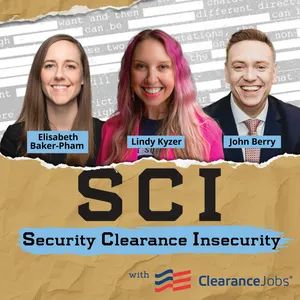
Millions of jobs require a U.S. government security clearance. Getting or keeping one is an anxiety-inducing process shrouded in mystery, and sometimes, urban legend. From drug use and bankruptcy to cryptocurrencies and motorcycle gangs, we unpack all of your top (or most unexpected) security clearance questions. We also talk with some of the leading experts and government officials charged with overseeing the security clearance process and establishing security policies. Security Clearance Insecurity demystifies security clearances, delivers expert insight, and answers the questions you’d never ask at work. Hosted by ClearanceJobs.com's Lindy Kyzer and Sean Bigley, security clearance legal correspondent and regular ClearanceJobs contributor.
Latest Episodes
The most recent episodes — sign up to get AI-powered summaries of each one.
- 2 days ago28 min
The Cipher Brief's Brad Christian Previews the Threat Conference's 10th Year
Lindy Kyzer sits down with The Cipher Brief's COO Brad Christian to preview the 10th annual Threat Conference in Sea Island, Georgia — covering AI's growing role in warfare, the widening public-private innovation gap, and the "gray warfare" tactics adversaries are using inside the U.S. homeland. Then, attorney Elisabeth Baker-Pham joins Lindy to unpack a less obvious clearance risk: how conflicts in Ukraine, Israel, and elsewhere can reignite foreign influence and foreign preference concerns (Guidelines B and C) for clearance holders whose foreign contacts were already vetted — through no action of their own.See Privacy Policy at https://art19.com/privacy and California Privacy Notice at https://art19.com/privacy#do-not-sell-my-info.
- 2 weeks ago28 min
Modernizing SCI Nominations — and When Foreign Ties Come Under Scrutiny
This episode of Security Clearance Insecurity covers two timely issues facing the cleared workforce. First, Lindy Kyzer talks with Mike Flanders, founder of SudoTouch, about the technology gap slowing SCI nomination processing and how automation can help security offices keep pace with Trusted Workforce 2.0's shift to continuous vetting.Then, attorney Elisabeth Baker-Pham joins Lindy to break down Guidelines B and C — foreign influence and foreign preference — and what clearance holders need to know when conflicts abroad (Ukraine, Israel, tensions with China) change how existing foreign contacts are viewed, even without any change in the clearance holder's own behavior.See Privacy Policy at https://art19.com/privacy and California Privacy Notice at https://art19.com/privacy#do-not-sell-my-info.
- Aug 21, 202628 min
FOCI Just Got a Lot Bigger — Plus, What Summer Fun Can Cost Your Clearance
This episode tackles two very different but equally timely clearance issues. First, host Lindy Kyzer sits down with Andrew Lotwin, Senior Vice President of Federal at ISI and a former senior leader at DCSA, to unpack the Department of War's proposed expansion of Foreign Ownership, Control, or Influence (FOCI) requirements. The draft rule would extend FOCI disclosure obligations well beyond the traditional cleared contractor base to any contractor or subcontractor with contracts over $5 million — a change DCSA estimates could take FOCI determinations from roughly 2,000 a year to as many as 40,000. Andrew breaks down what this means for industry awareness, DCSA staffing and technology needs, the strain on the NISS system as it transitions to NISS Increment Two, and how bidders (not just contract winners) could soon be pulled into the process before award. The conversation closes with a look at broader clearance reform priorities, including reciprocity between Title 10 and Title 50 organizations and the push for more transparency in the facility clearance process.In the second half, security clearance attorney Elisabeth Baker-Pham joins Lindy to talk about the clearance risks that tend to surface every summer: overspending and vacation debt, unreported foreign travel (including the "does a cruise count?" gray area), marijuana and hallucinogen use while visiting family or relaxing in legal-use states, DUIs around holiday gatherings, and the general lapses in judgment that come with letting your guard down. With continuous vetting now catching more of these incidents in real time, they explain why self-reporting and consistent judgment matter just as much in July as they do the rest of the year.Have a clearance question or topic you'd like covered on a future episode? Email editor@clearancejobs.com.Want me to adjust the tone, shorten it for show notes, or draft a shorter social-friendly version too?See Privacy Policy at https://art19.com/privacy and California Privacy Notice at https://art19.com/privacy#do-not-sell-my-info.
- Aug 7, 202628 min
Could Veterans Soon Keep Their Security Clearance Eligibility Longer? Plus, Handling False Clearance Reports
Could security clearance holders soon have more time to return to government service after leaving the workforce? In this episode of Security Clearance Insecurity, Lindy Kyzer is joined by ClearanceJobs Content Director Jill Hamilton to discuss the proposal to extend the security clearance eligibility window for veterans from two years to five years, what it could mean for workforce mobility, taxpayer investment, and the future of Trusted Workforce 2.0.Then, security clearance attorney Elizabeth Baker-Pham joins the show to tackle one of the most anxiety-inducing topics for clearance holders: what happens when a former partner, coworker, or acquaintance reports you to the government out of spite? Learn how investigators evaluate allegations, why honesty and documentation matter, and the steps you should take if you're ever the target of a malicious or exaggerated report.Whether you're transitioning out of the military, navigating a career change, or worried about how personal relationships could affect your clearance, this episode breaks down what you need to know—and separates fact from fear.See Privacy Policy at https://art19.com/privacy and California Privacy Notice at https://art19.com/privacy#do-not-sell-my-info.
- Jul 24, 202628 min
Trusted Workforce 2.0: Closing the Continuous Vetting Gap with AI, Automation & Workforce Risk
Trusted Workforce 2.0 has transformed personnel vetting, but implementation is still catching up.In this episode of Security Clearance Insecurity, ClearanceJobs' Lindy Kyzer sits down with Aarti Smith, CEO of Chainbridge Solutions, to explore how continuous vetting is changing workforce risk management across the federal government—and why automation, AI, and modern personnel security systems are becoming mission-critical.They discuss:How continuous vetting has replaced the old "set it and forget it" clearance modelWhat Continuous Vetting Action Reports (CVARs) are—and why they matterThe growing "continuous vetting gap" between policy and operational realityHow DCSA's shared services and NBIS modernization could improve personnel securityThe role of APIs, automation, and dashboards in reducing administrative burdenWhere AI can support adjudicators without replacing human judgmentWhy applicant experience and secure onboarding portals are becoming essentialWhat agencies should prioritize as Trusted Workforce 2.0 continues to expand to larger populationsPlus, in a second conversation, Lindy Kyzer and security clearance attorney Elisabeth Baker-Pham discuss what every college student should know before pursuing a career in national security—from understanding the difference between a public trust and a security clearance to avoiding common mistakes that can jeopardize future eligibility.Whether you're a security professional, hiring manager, federal contractor, or aspiring clearance holder, this episode offers practical insights into the future of personnel vetting and workforce readiness.See Privacy Policy at https://art19.com/privacy and California Privacy Notice at https://art19.com/privacy#do-not-sell-my-info.
- Jul 13, 202628 min
The New Rules of Suitability: What OPM's Vetting Changes Mean for Your Career
The federal personnel vetting landscape is evolving—and understanding the changes has never been more important. In this episode of Security Clearance in Security, host Lindy Kyzer is joined by former OPM suitability expert Bill Pedersen to unpack the biggest updates to federal suitability regulations, Trusted Workforce 2.0, and continuous vetting.They explain how OPM's reforms are creating greater consistency across agencies, what post-appointment suitability actions mean for federal employees, how new reporting capabilities could improve government-wide visibility, and why understanding your position designation has become increasingly important. Whether you're a federal employee, contractor, facility security officer, or security clearance holder, this conversation breaks down complex policy changes into practical insights you can use to better navigate today's personnel vetting environment.See Privacy Policy at https://art19.com/privacy and California Privacy Notice at https://art19.com/privacy#do-not-sell-my-info.
- Jun 26, 202628 min
Building Your Brand in the Intelligence Community with Shana Cosgrove
Success in government contracting isn't built overnight—it's earned through consistency, credibility, and continuous growth.In this episode of Security Clearance Insecurity on Federal News Network, Lindy Kyzer sits down with Shana Cosgrove, founder and CEO of Nyla Technology Solutions, to discuss what it takes to build a thriving GovCon business while establishing a trusted reputation in the cleared community.Shana shares lessons from her journey as a technology leader and entrepreneur, including overcoming challenges as a woman in a male-dominated industry, building strong teams, developing future leaders, and why documenting your accomplishments matters more than you think.The conversation also explores mentorship, emotional intelligence, work-life balance, AI's impact on technical careers, and the habits that help professionals stay relevant in a rapidly changing industry.Whether you're an aspiring leader, an engineer, or someone looking to grow your career in national security, this episode offers practical advice on creating long-term success through authenticity, resilience, and continuous improvement.See Privacy Policy at https://art19.com/privacy and California Privacy Notice at https://art19.com/privacy#do-not-sell-my-info.
- Jun 12, 202628 min
Secret Squirrel Files: Where True Crime Meets National Security
What happens when a former true crime reporter, a national security storyteller, and a clearance industry expert sit down to talk espionage, insider threats, terrorism, and the cases that changed history?In this episode of Security Clearance Insecurity, host Lindy Kyzer welcomes Secret Squirrel Files hosts Phoebe Wells and Katie Helbling, ClearanceJobs new true crime, national security podcast. They discuss the inspiration behind their growing podcast series and why some of the most compelling national security lessons come from real-world cases.The conversation explores how true crime storytelling can help security professionals better understand insider threats, espionage, extremism, intelligence failures, and the policies designed to prevent them. From the Oklahoma City bombing and Operation Bojinka to Aldrich Ames and unsolved military mysteries, the hosts share how these stories provide both historical context and practical lessons for today's cleared workforce.Plus, the team discusses the unique format behind Secret Squirrel Files, the origins of the show's name, and why storytelling remains one of the most effective ways to educate and engage the national security community.In the second half of the episode, security clearance attorney John Berry joins Lindy to discuss an often-overlooked clearance topic: neurocognitive disorders and mental health. The conversation explores how conditions such as dementia, Alzheimer's disease, schizophrenia, and other psychological disorders are evaluated in the clearance process, the importance of self-reporting and treatment, and how government attitudes toward mental health have evolved over the past two decades. See Privacy Policy at https://art19.com/privacy and California Privacy Notice at https://art19.com/privacy#do-not-sell-my-info.
About Security Clearance Insecurity
Millions of jobs require a U.S. government security clearance. Getting or keeping one is an anxiety-inducing process shrouded in mystery, and sometimes, urban legend. From drug use and bankruptcy to cryptocurrencies and motorcycle gangs, we unpack all of your top (or most unexpected) security clearance questions. We also talk with some of the leading experts and government officials charged with overseeing the security clearance process and establishing security policies. Security Clearance Insecurity demystifies security clearances, delivers expert insight, and answers the questions you’d never ask at work. Hosted by ClearanceJobs.com's Lindy Kyzer and Sean Bigley, security clearance legal correspondent and regular ClearanceJobs contributor.
Customized Recaps
AI-powered recaps with compact key takeaways, quotes, and insights.
Straight to Your Inbox
Get key takeaways from Security Clearance Insecurity in a 5-minute read.
Save Hours Every Week
Stay current on your favorite podcasts without falling behind.
Frequently Asked Questions
What is Podzilla's Security Clearance Insecurity daily summary?
It's a free AI-powered email that summarizes new episodes of Security Clearance Insecurity as soon as they're published. You get the key takeaways, notable quotes, and links & mentions — all in a quick read.
How does the Security Clearance Insecurity podcast summary work?
When a new episode drops, our AI transcribes and analyzes it, then generates a personalized summary tailored to your interests and profession. It's delivered to your inbox every morning.
Is this an official Security Clearance Insecurity product?
No. Podzilla is an independent service that summarizes publicly available podcast content. We're not affiliated with or endorsed by Federal News Network | Hubbard Radio.
Can I get summaries of other podcasts too?
Absolutely! The free plan covers up to 3 podcasts. Upgrade to Pro for 15, or Premium for 50. Browse our full catalog at /podcasts.
What topics does Security Clearance Insecurity cover?
Security Clearance Insecurity covers topics including Government. Our AI identifies the specific themes in each episode and highlights what matters most to you.
Start getting Security Clearance Insecurity summaries tomorrow morning.
Free forever for up to 3 podcasts. No credit card required.
Free forever for up to 3 podcasts. No credit card required.