Free Daily Podcast Summary
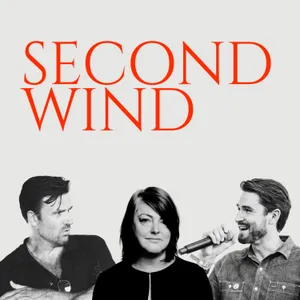
Second Wind by AKA: Daily Summaries Delivered
by Gully Flowers, Kerrie Finch, Jake Neske
Second Wind is the show about how creative power is built. Hosted by Also Known As, Second Wind features candid conversations with the creative leaders, founders, CMOs, producers, and operators shaping modern creativity. We go inside the work, pressure, politics, pivots, and instincts behind ideas that change careers, companies, and culture. These are conversations about reputation, taste, production, leadership, reinvention, AI, in-house agencies, and how great work actually gets made. For creative leaders, producer buyers, brand builders, agency founders, and anyone trying to understand
Latest Episodes
The most recent episodes — sign up to get AI-powered summaries of each one.
- 5 days ago37 min
Pancho Cassis: The Guy Behind Moldy Whopper on Why Most Advertising Gets Ignored
Pancho Cassis is Global CCO and Partner at DAVID and one of the creative leaders behind Burger King’s Moldy Whopper, Stevenage Challenge and some of the most awarded advertising of the last decade.His starting point for every brief is brutally simple: people will do anything to avoid advertising.On this episode of Second Wind, Pancho joins Gully Flowers and Kerrie Finch to talk about what it takes to make work people actually want to see — and why spending $50 million doesn’t mean anyone will care.We get into what he learned judging the Cannes Lions Titanium category; why famous campaigns have an advantage at award shows; what makes an idea travel across countries and cultures; and whether the advertising industry has simply created too many awards.Pancho also explains why he doesn’t believe creative culture can be built entirely on Zoom, how DAVID gives junior creatives the chance to shape big ideas, and the lesson his father taught him about persuading clients to buy work that scares them: patience.Plus, we break down DAVID’s Clash of Clans work with Erling Haaland and Pancho’s philosophy of “milking the stone” — don’t stop when you’ve found a good idea; keep pushing until you’ve extracted everything from it.Pancho Cassis has won 192 Cannes Lions, including eight Grand Prix and three Titanium Lions, as well as a D&AD Black Pencil and dozens of Effies. His work spans Burger King, Supercell, Coca-Cola, Magnum and some of the most recognized creative campaigns in the world.Second Wind is a podcast about the people, ideas and forces shaping advertising, creativity and marketing.
- 2 weeks ago39 min
Inside Cannes Lions & Effie: Paul Kemp-Robertson on What Wins in Advertising Now
Cannes Lions has spent decades defining what great creativity looks like. Effie has done the same for effectiveness.Paul Kemp-Robertson sits inside both.As Chief Content Officer of LIONS, Paul has a rare vantage point on the forces shaping the global advertising industry. LIONS brings together Cannes Lions, Effie, WARC and Contagious — institutions that influence what gets celebrated, what gets studied, what gets put on stage and, ultimately, what the industry believes great work looks like.Paul has also watched the industry change from almost every angle. He started at Shots in the early 1990s, when the world’s best advertising arrived on VHS tapes and call-for-entries went out by fax. He went on to Leo Burnett and co-founded Contagious before becoming Chief Content Officer at LIONS.So we wanted to ask him a bigger question:What wins now?Because advertising is at another strange inflection point.AI has made the tools of creativity available to almost everyone. ChatGPT, Claude and the other major AI platforms are rapidly changing how people search, work, make things and consume media. Yet some of the companies building that future are now turning to advertising agencies, brand-building and very human creative work to differentiate themselves.Paul thinks that’s telling.We get into Mother’s work for Claude and its attack on ChatGPT; why an industry flooded with frictionless AI content could put a new premium on human creativity; why craft is ultimately a form of respect for the audience; and whether we’re heading towards a world where “100% human made” becomes something worth signalling.We also go inside the institutions that have spent decades setting the bar for the industry.What is Cannes Lions actually for now? Do awards still influence the direction of advertising? What separates work that wins awards from work that actually works? Why might the client be the bravest person on an award-winning team? And is safe, generic “wallpaper” advertising actually the biggest risk a brand can take?Paul takes us inside AXA’s “Three Words,” one of the standout ideas from Cannes Lions, and the difficult boardroom conversations behind adding domestic violence coverage to its insurance policies. It’s a fascinating example of creativity moving beyond communications and into the business itself.That leads us somewhere even more interesting: what happens when creative people stop being handed a media plan and start getting closer to the product, the organization and the problem?We talk Oatly’s Department of Mind Control, why some of advertising’s greatest ideas came from creatives wandering around factory floors, the Bitcoin investment Paul wishes he’d made, why curiosity still matters, and what the next generation should know coming into the business.And after a career spent thinking about some of the world’s most celebrated advertising, Paul tells us what he’d put on his LinkedIn tombstone: “It’s only advertising.”Paul Kemp-Robertson is Chief Content Officer at LIONS. He co-founded Contagious and previously worked at Shots and Leo Burnett.Second Wind is a podcast about the people, ideas and forces reshaping advertising, creativity and marketing.Hosted by Kerrie Finch and Gully Flowers.A Second Wind podcast by AKA.
- 3 weeks ago29 min
Stop Making Ugly Noise: Justine Armour on AI, Creativity & Great Advertising
“We just have no interest in flooding the public consciousness with ugly noise.”Justine Armour, International Chief Creative Officer at 72andSunny, joins Second Wind to talk about what great creative work looks like when everyone has access to AI.Fresh from serving as a D&AD Jury President, Justine talks about why human craft is becoming more conspicuous, what separates genuinely creative cultures from agencies that merely talk about creativity, and why 72andSunny has no interest in joining the race to make more, cheaper content.We get into what 72andSunny has learned from working with e.l.f., why strategists and creatives should be “getting up in each other’s shit,” and Justine’s five ingredients for great work: simple, surprising, audacious, craft and energy.Justine also explains why Australian creatives tend to spend longer mastering their craft, why she once turned down an ECD opportunity because she didn’t think she’d made enough great work yet, and the Guinness “Surfer” ad that changed her understanding of what advertising could be.Plus: AI and creativity, D&AD, e.l.f., Wieden+Kennedy, creative leadership, agency culture, optimism without toxic positivity, tall poppy syndrome, and why Justine remains determined not to be average.Justine Armour is International Chief Creative Officer at 72andSunny.Second Wind is a podcast about what happens after you’ve made it — and what the best people in advertising, design and creativity learn next.Search Second Wind by AKA.#Advertising #CreativeLeadership #AI
- Aug 13, 202635 min
The Myth of the “Normal User” | David Vogel on AI, Accessibility & Designing for Real People
Most products are designed for someone who doesn’t exist.The average user.David Vogel, Executive Experience Director at Hypersolid and former AKQA design leader, argues that the idea of a “normal” human has quietly shaped everything from schools and workplaces to digital products, customer experiences, and AI. The problem is that normal was never real.In this episode of Second Wind, David joins Gully Flowers and Kerrie Finch to explore why neurodiversity changes the way we think about accessibility, why crash test dummies reveal a deeper flaw in modern design, and why designing for edge cases often creates better experiences for everyone.The conversation also looks ahead. David explains why ChatGPT is only the earliest interface for AI, why brands should be careful about outsourcing customer relationships to AI platforms, and how intelligent experiences could reshape products, retail, and personalization over the next decade.In this episode• Why there is no such thing as a “normal” user• How ADHD and neurodiversity challenge traditional design thinking• What crash test dummies teach us about accessibility• Why designing for edge cases creates better products for everyone• Why ChatGPT is only the beginning of AI• How brands can embrace AI without giving away the customer relationship• What intelligent experiences could mean for the future of retail, work, and customer experienceGuest: David Vogel, Executive Experience Director at HypersolidHosts: Gully Flowers and Kerrie Finch
- Aug 11, 202652 min
Why Brands Must Refound Themselves in the Age of AI | Craig Elimeliah, Code and Theory
AI isn’t changing marketing. It’s changing what a brand is.In this episode of Second Wind, Craig Elimeliah, Chief Creative Officer at Code and Theory, introduces a concept we haven’t been able to stop thinking about since recording: brand refounding.For years, companies have talked about brand transformation. Craig argues we’re entering something much bigger. AI isn’t simply making marketers faster. It’s forcing organizations to rethink the foundations of how brands are built, governed and remembered.We explore why AI exposes disconnected organizations, why brand consistency becomes more valuable as content scales, why consumers are becoming dramatically harder to fool, and why creative leaders are increasingly responsible for shaping entire businesses, not just campaigns.In this conversation:• What “brand refounding” actually means• Why AI is exposing weak brand systems• The difference between brand transformation and brand refounding• Why speed, scale and brand no longer have to compete• How AI creates organizational memory instead of disconnected campaigns• Why creative leaders are becoming business leaders• The future of agencies, brands and creative operating systems• What every CMO should understand before investing in another AI toolCraig Elimeliah is the Chief Creative Officer at Code and Theory, one of the world’s leading digital transformation and creative technology companies. Throughout his career, he’s helped shape products, platforms and brand systems for many of the world’s most influential organizations.Second Wind is hosted by Gully Flowers and Jake Neske, founders of AKA. Each episode features candid conversations with the creative leaders, CMOs, founders and operators shaping the future of advertising, branding, design, AI and business.If you work in marketing, advertising, brand strategy, creative leadership, AI or digital transformation, this conversation will give you a new framework for thinking about what comes next.
- Jul 28, 202643 min
Amazon Chief Brand Officer Jo Shoesmith on Leadership, AI & Creativity | Second Wind by AKA
What does it take to lead one of the world’s biggest brands?Jo Shoesmith joins Kerrie Finch and Gully Flowers shortly after becoming Chief Brand Officer at Amazon to discuss leadership, AI, creativity, agency relationships, and why the best leaders never stop proving themselves.From Amazon’s leadership principles to building trust, influencing at scale, and preparing for a future shaped by AI, this is a practical conversation for anyone leading creative teams, brands, or businesses.In this episode:Becoming Amazon’s Chief Brand OfficerAmazon’s approach to leadership and trustHow AI is changing creative workWorking with agencies more effectivelyWhy great leaders prove themselves every dayBuilding influence beyond the creative departmentAbout Second Wind by AKASecond Wind by AKA features candid conversations with the creative leaders, founders, CMOs, producers, and operators shaping modern marketing, business, and culture.New episodes every other Tuesday.https://hey-aka.com/second-wind
- Jul 14, 202634 min
Why Agencies Are Selling the Wrong Thing ; Anthony Reeves, Kohler
AI is making execution cheaper. Brands are building stronger in-house teams. Holding companies are consolidating. Production companies are being pushed further downstream.So what are agencies still uniquely for?Anthony Reeves has spent his career inside some of the world’s biggest agency networks and brands. He has worked at WPP multiple times, held senior roles at Amazon and LVMH, and now leads Global Brand and Creative at Kohler.Anthony joins Gully Flowers to discuss why agencies cannot win on efficiency, Kohler’s line on synthetic people, why too much data can weaken a creative brief, how fear changes the work, and why AI may make brand more valuable rather than less.They also get into creative apprenticeship, why great talent clusters, the danger of becoming too comfortable, and Anthony’s book, Eat the Donkey.Follow Second Wind for honest conversations with the people shaping the creative business.Chapters00:00 Why agencies can’t win on efficiency00:39 Anthony Reeves01:21 Moving to Kohler, Wisconsin01:55 The job of a creative leader02:36 Kohler’s line on synthetic people04:14 How AI changed since Cannes 201806:01 Has more data improved the creative brief?08:40 What happened to the holding companies?10:14 What brands still need agencies for12:44 Fear changes the work14:01 How to lead creative teams18:55 Why AI makes brand more valuable21:18 Eat the Donkey25:56 Advice for young creatives28:19 Why great talent clusters30:22 Reinvesting in people and brand31:22 The danger of being downstream32:40 A better North Star
- Jun 30, 202652 min
Susan Credle on M&M’s, Allstate Mayhem, Brave Clients, and the Death of Populist Advertising
Susan Credle has helped build some of the most famous advertising characters of the last 30 years, from the M&M’s ensemble to Allstate’s Mayhem. In this episode of Second Wind, she joins Kerrie Finch and Gully Flowers for a sharp, funny and unusually honest conversation about what makes creative work last.Susan talks about seeing brands as characters, how M&M’s grew from candy mascots into a comedic ensemble, why Mayhem worked because it was deeply strategic, and what great clients do that risk-averse ones often miss.She also gets into one of the biggest tensions in modern advertising: the gap between work that wins awards and work that reaches real people. From the rise of case studies to the decline of truly populist creative, Susan makes the case for work that does not need to be followed around and explained.This is a conversation about brave clients, fragile progress, creative leadership, the pressure of becoming one of the first female CCOs in America, and why the best work should make someone in the world say thank you.
About Second Wind by AKA
Second Wind is the show about how creative power is built. Hosted by Also Known As, Second Wind features candid conversations with the creative leaders, founders, CMOs, producers, and operators shaping modern creativity. We go inside the work, pressure, politics, pivots, and instincts behind ideas that change careers, companies, and culture. These are conversations about reputation, taste, production, leadership, reinvention, AI, in-house agencies, and how great work actually gets made. For creative leaders, producer buyers, brand builders, agency founders, and anyone trying to understand
Customized Recaps
AI-powered recaps with compact key takeaways, quotes, and insights.
Straight to Your Inbox
Get key takeaways from Second Wind by AKA in a 5-minute read.
Save Hours Every Week
Stay current on your favorite podcasts without falling behind.
Frequently Asked Questions
What is Podzilla's Second Wind by AKA daily summary?
It's a free AI-powered email that summarizes new episodes of Second Wind by AKA as soon as they're published. You get the key takeaways, notable quotes, and links & mentions — all in a quick read.
How does the Second Wind by AKA podcast summary work?
When a new episode drops, our AI transcribes and analyzes it, then generates a personalized summary tailored to your interests and profession. It's delivered to your inbox every morning.
Is this an official Second Wind by AKA product?
No. Podzilla is an independent service that summarizes publicly available podcast content. We're not affiliated with or endorsed by Gully Flowers, Kerrie Finch, Jake Neske.
Can I get summaries of other podcasts too?
Absolutely! The free plan covers up to 3 podcasts. Upgrade to Pro for 15, or Premium for 50. Browse our full catalog at /podcasts.
How often does Second Wind by AKA release new episodes?
Second Wind by AKA publishes biweekly. Our AI generates a summary within hours of each new episode.
What topics does Second Wind by AKA cover?
Second Wind by AKA covers topics including Business, Marketing. Our AI identifies the specific themes in each episode and highlights what matters most to you.
Start getting Second Wind by AKA summaries tomorrow morning.
Free forever for up to 3 podcasts. No credit card required.
Free forever for up to 3 podcasts. No credit card required.