Free Daily Podcast Summary
Schools of Excellence: The No. 1 ECE & Private School Leadership Podcast: Daily Summaries Delivered
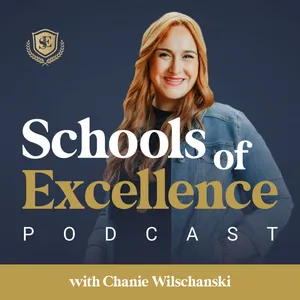
by Chanie Wilschanski
If you are an Early Childhood director or childcare owner, prepare to transform your school and life with the Schools of Excellence podcast. Tune in each week to learn from Chanie Wilschanski, the founder and host of the Schools of Excellence Podcast and a mom of 4 kids. Each episode will be packed with tools and strategies - equipping school leaders to improve staff retention, increase teacher motivation, grow parent partnerships, create a collaborative culture, and enjoy a beautiful quality of life. Every week, Chanie shares the truth about childcare and early childhood school leadership for those striving towards excellence. If you are an early childhood or childcare school leader looking for strategies to grow your school, that are working TODAY, The Schools of Excellence Podcast is for you. In addition to weekly solo episodes, she'll also be inviting childcare and early childhood industry leaders to discuss the most pressing issues facing school leaders today.
Latest Episodes
The most recent episodes — sign up to get AI-powered summaries of each one.
- 1 weeks ago16 min
317. Stop Blaming Your Team for This
You coach her. You remind her. You give her grace, adjust the deadline, understand her season, and hope this is finally the time it sticks. Then you're back on the ride again.I was on a coaching call recently with a group of owners, and I asked them to think about someone on their team who isn't delivering predictably, reliably, and consistently. Not the obvious underperformer, the one everyone already knows isn't working out. I mean the person you're actually invested in. The one you keep coaching. The one you keep training. The one you keep giving another shot.I call this the teacup ride. You coach, you explain, you remind, you accommodate. Round and round you go. They give you a little bit of progress, just enough crumbs to keep you hopeful, and then somehow you're right back where you started, wondering why they can't meet the standard predictably, reliably, and consistently.In this episode, I break down why “did I coach her enough” is the wrong question to be asking, why infrastructure exists to give you evidence instead of just making your school run smoothly, and the two questions that finally reveal whether you're dealing with a skill gap or a willingness gap. Because you cannot supply willingness in another human being, and pretending you can is costing you a lot more than you realize.What You'll LearnWhy “did you coach her enough” is the wrong question when someone keeps missing the standardThe difference between a skill gap and a willingness gap, and the two questions that tell you which one you're facingWhy infrastructure exists to give you evidence of reality, not just to make your school run smoothlyWhat it actually costs you when you keep supplying your own capacity to cover someone else's roleHow to build a predictable response to a missed standard instead of reacting based on your mood in the momentWhy “one more chance” often protects the leader's hope more than it protects the outcomeConnect With Us:Chanie's book, This Can't Be Normal: https://thiscantbenormal.com Join This Can't Be Normal on Substack: https://chaniewilschanski.substack.com/
- 2 weeks ago16 min
316. Don’t try to solve it. Just sit with it.
How many things in your life look functional only because you've become exceptionally good at compensating for what isn't? That's the question I can't stop asking, and it's the reason I started This Can't Be Normal, a new thinking space on Substack.This episode is a little different. I'm not teaching a framework or walking you through five steps. Instead, I'm pulling back the curtain on why I started writing publicly about the questions I don't have answers to yet, questions about responsibility, caretaking, competence, and what we've all quietly agreed to normalize.It started with a moment in Lake Tahoe, on vacation, when I suddenly noticed how automatically I take on responsibility that nobody actually assigned to me. That noticing turned into an article, then another, and eventually into a whole new space for thinking out loud instead of teaching from the front of the room.If you've ever felt like the person everyone relies on, the one who catches everything before it falls, this episode is your invitation to pause and ask a different kind of question.In this episode, you'll learn:Why Chanie started This Can't Be Normal, and how it's different from the podcast, coaching, or her bookThe moment in Lake Tahoe that made her question how automatically she takes on responsibilityWhy being a highly competent, capable leader can make it easy to compensate for things that shouldn't require so much of youThe difference between wanting an answer and wanting to be witnessed in a questionWhy the same "operating system" that shows up in your leadership also shows up in your marriage and parentingThe question Chanie wants every leader to sit with: what have you become so good at tolerating that you've stopped asking whether it should be normal?Mentioned in this episode:This Can't Be Normal on Substack: https://chaniewilschanski.substack.com/ Article: "The Cost of Being the Caretaker" — https://chaniewilschanski.substack.com/p/the-cost-of-being-the-caretaker Connect With Us:Join This Can't Be Normal on Substack: https://chaniewilschanski.substack.com/
- 2 weeks ago21 min
315. Your Staff Schedule Needs an Audit
Your staff is the biggest line item in your budget. Which also means your schedule can be the biggest leak in your school, and most leaders don't even know it's happening.In this episode, Chanie is breaking down schedule efficiency: not "do you have enough staff," but do you have a strategic coverage system. She walks through a real audit where a single scheduling fix uncovered nearly $30,000 a year in savings, and why chasing more enrollment isn't always the answer when the leak is sitting in your own schedule.This episode covers strategic coverage versus just having bodies in the building, why schedule predictability is a leadership standard and not a luxury, why break coverage is actually a culture issue, and why directors who keep jumping into classrooms are quietly stealing from their own school's profitability.In this episode, you'll learn:The difference between strategic coverage and coverage for the sake of coverageHow a 20-minute daily shift overlap across 20 teachers added up to $27,733 a year in one real auditWhy systems need to be designed around the school, not around whichever person is currently running themWhy schedule predictability is a leadership standard, not a nice-to-haveWhy break coverage is a culture issue, and how a late break erodes trust between teachersWhy directors and owners who regularly cover classrooms are unintentionally hurting their school's profitabilityConnect With Us:Join us on Substack: https://chaniewilschanski.substack.com/
- 3 weeks ago21 min
314. The Community Habit Every School Leader Needs
What if the thing that finally moves the needle in your school isn't a new system, but a phone call?This is the final episode in our three-part series on the power of community, and today we're bringing it all together: thriving together, the strength of collective wellness. We're talking about how the people you surround yourself with shape your health, your growth, your business, and honestly, your whole trajectory as a leader.I open with a quote from Jim Rohn: you are the average of the five people you spend the most time around. And once you sit with that for a second, it explains so much — why the mindset in the room rubs off on you, why a struggling season can start to feel “normal,” and why getting around leaders who are further ahead can shift everything without you doing anything differently at all.I walk through real, specific examples of what that's looked like inside our own community: a member who sold her school to another member she met inside the program, a director who got connected to her next regional manager role after a cross-country move, a leader who was saved from a construction nightmare by another member's architect referral. None of these people joined community hoping for those outcomes. That's exactly the point.What You'll Learn In This Episode:Why the five people you spend the most time with shape your beliefs, habits, and results — whether you're aware of it or notThe difference between a community that creates collective wellness and one that spreads collective distressWhy “your network is your net worth” isn't just a nice phrase — it's access to opportunities, knowledge, credibility, and long-term relationshipsA simple travel habit that keeps you exposed to new ideas outside your usual laneReal, anonymized stories of what happens when school leaders build genuine community — from business sales to job placements to saved timelinesWhy investing in community without an immediate ROI is still worth it — and why waiting until you're desperate is the wrong moveConnect With Us:Join us on Substack: https://chaniewilschanski.substack.com/
- 3 weeks ago19 min
313. How Global Connections Create Local Impact
Have you ever sat in a staff meeting and realized it's the same three people talking every single time? That's not community. That's a room full of people who've learned it's safer to stay quiet.This week I'm back with Part 2 of our series on the power of community, and today we're going Beyond Borders. I'm talking about how the connections you build, whether that's at a conference, in your staff meeting, or inside an online community, ripple out into real, local impact at your school. We're talking about why dissent is actually a sign of a healthy team, why the best ideas rarely come from the stage, and why community might be the most underrated retention driver you're not tracking.What You'll LearnWhy the best ideas at any event happen in the hallway, not on the stageThe real reason your staff meeting might be missing true community, even with a diverse team in the roomWhy "strong opinions, held loosely" might be the most useful leadership mindset you adopt this yearHow silencing dissent on your team quietly erodes trust (and retention)Why the same two teachers arriving late need two completely different responses from youPractical, low-pressure ways to build community even if events aren't your thing right nowConnect With Us:Join us on Substack: https://chaniewilschanski.substack.com/
- 4 weeks ago24 min
312. Why You Feel Lonely Even With a Full Building
You've got hundreds of kids in the building, dozens of teachers on your team, and parents lined up at pickup every single day. So why do you still feel completely alone?This week, I'm kicking off a brand new three-part series on the podcast all about the power of community, because nourishing the human spirit is just as important as nourishing your business. In this first episode, we're talking about embracing connection, the heartbeat of everything else we'll cover in this series.I've been running Schools of Excellence since 2016, and if there's one thing I hear over and over from leaders in our world, it's "I want relationships, I want connection, I want friends." And yet, so many of us are painfully slow to actually take the steps it takes to build them. It sounds simple. Go make friends. But in the season of life so many of you are in right now, it's genuinely hard.So today, I'm unpacking why community matters beyond just feeling nice, the real benefits it brings to your emotional and mental wellbeing, and the sneaky ways so many of us isolate ourselves without even realizing it's happening. This isn't about willpower. It's about recognizing the patterns and making one small first step back toward connection.What You'll Learn:Why humans need community for emotional survival, even though we no longer need it for physical survivalThe four real benefits community offers: emotional support, mental stimulation, a sense of belonging, and shared resources and skillsFive circumstances (not choices) that quietly isolate leaders without them realizing itWhat happens to your thinking and your decision-making when you stay isolated for too longA simple, low-pressure first step you can take today to rebuild connectionConnect With Us:Join us on Substack: https://chaniewilschanski.substack.com/
- Aug 20, 202639 min
311. The Identity You Have to Grieve to Lead Well
LaShawn Bridges has run Blessed Beginnings Learning Center in Detroit for 27 years. She's been through a recession. She's been through COVID. And she'll tell you the hardest season of her whole career wasn't either of those. It was learning how to stop being everyone's answer.I love bringing owners into this space because the shape of the story tends to rhyme, even when the details don't. LaShawn came to me in survival mode. She had policies. She had procedures. She had disciplinary systems on paper. And she still couldn't leave her building without holding her breath.This conversation is about what happens on the other side of that. Not a personality transplant, not a quick fix, just the slow, sometimes grief-soaked work of installing infrastructure and watching who you become because of it.We talk about the identity LaShawn had to grieve to become the anchored, accountable leader she is now. We talk about what chronic over-functioning cost her physically and mentally. And we talk about what changed in her marriage, her relationship with her adult daughters, and her families, once she stopped being the fixer for everyone in her orbit.If you've ever felt guilty for wanting quiet, or scared that letting something break means you've failed, this one is for you.What You'll LearnWhy LaShawn describes her old leadership style as “survival mode” even with systems already on paperThe identity she had to grieve in order to become an anchored, accountable leaderWhat chronic over-functioning cost her physically, and how her body told her before her mind caught upThe phrase she repeats to herself to stop absorbing problems that aren't hers to holdHow she rebuilt her calendar so staff issues stop landing on her desk in real timeThe weekly rhythm that changed her marriage after 27 years togetherWhy she now sees failure as a healthy, necessary part of building a business that runs without herHow she defines excellence, for her team, her families, and herselfResources MentionedChanie's book, This Can't Be Normal: https://thiscantbenormal.com Download Chapter One for Free: https://thiscantbenormal.com/chapter-one Connect With Us:Join us on Substack: https://chaniewilschanski.substack.com/
- Aug 18, 202617 min
310. The 4 Silent Saboteurs of Enrollment
You gave the perfect tour. The parent loved everything. And then they enrolled somewhere else.If that scenario makes you want to scream into a pillow, this episode is for you. In today's episode, I'm walking you through the four silent saboteurs quietly costing you enrollment: the first impression gap, the trust signals your team is missing, the confidence gap, and the follow-through factor. None of these have anything to do with your program quality. All of them have everything to do with how you communicate it.I share real stories from schools I've worked with, including a director who couldn't figure out why her inquiry-to-tour ratio was so low (spoiler: it wasn't her facility), and why "we'll think about it" almost never means what you think it means.What You'll LearnWhy parents form their opinion of your school long before they ever call or tourThe exact phrases that unintentionally signal "you're just like everyone else" to a touring familyWhat parents are really asking when they ask about your schedule, your rates, or your teacher retentionWhy confident answers beat perfect answers every single timeHow to build genuine confidence in a team member who feels awkward or unsure in front of familiesThe follow-up mistake that quietly hands enrollments to your competitorsConnect With Us:Join us on Substack: https://chaniewilschanski.substack.com/
Get Schools of Excellence: The No. 1 ECE & Private School Leadership Podcast summaries in your inbox
Free AI-powered daily recaps. Key takeaways, quotes, and mentions — in a 5-minute read.
Get Free Summaries →Free forever for up to 3 podcasts. No credit card required.
You Might Also Like
Listeners also like.
Your Virtual Upline Podcast
A podcast for online leaders redefining success through a belief-driven, identity-led growth method that prioritizes peace over burnout.

Entrepreneur Kids Legacy Show - Family Motivation, Business Boss Babies, Inspirational Speakers and Healthy fun food
Kids learn entrepreneurship, leadership, and life skills through fun conversations and interviews with young achievers and role models.

Entrepreneur Parents - Pretty & Punk Podcast | Family Success, Business Tactics, Relationship Goals
Entrepreneur Parents explores how ambitious founders balance thriving businesses with family life, marriage, and personal growth.

The Middle School Mary Poppins Podcast
Practical parenting strategies and brain science to help caregivers understand and support tweens through middle school challenges.
Good Inside with Dr. Becky
A clinical psychologist provides practical guidance for handling common parenting challenges and improving parent-child relationships.

De Facto Leaders
Pediatric therapist Dr. Karen Dudek-Brannan shares evidence-based strategies for educators and clinicians to support student growth and leadership.
Impact Podcast, Mentorship with Eddie Wilson
A seasoned entrepreneur shares insights on building businesses, leadership, and living with purpose to create meaningful impact.

The Secret To Success with CJ, Karl, Jemal & Eric Thomas
A no-nonsense podcast on mindset, money, and execution featuring real strategies from top performers on winning in life and business.
The Balanced, Beautiful and Abundant Show - Rebecca Whitman
A coach helps high-achieving women overcome burnout using a framework centered on spiritual, emotional, physical, and financial well-being.

The Rachel Hollis Podcast
A self-help podcast blending personal growth advice, humor, and real-life stories to help listeners build a fulfilling life.
The Christy-Faith Show
A podcast offering educational and homeschooling insights for intentional parents.
Working Hard with Grace Beverley
Conversations with diverse achievers reveal raw insights on redefining success, balancing ambition, and learning from failure.
About Schools of Excellence: The No. 1 ECE & Private School Leadership Podcast
If you are an Early Childhood director or childcare owner, prepare to transform your school and life with the Schools of Excellence podcast. Tune in each week to learn from Chanie Wilschanski, the founder and host of the Schools of Excellence Podcast and a mom of 4 kids. Each episode will be packed with tools and strategies - equipping school leaders to improve staff retention, increase teacher motivation, grow parent partnerships, create a collaborative culture, and enjoy a beautiful quality of life. Every week, Chanie shares the truth about childcare and early childhood school leadership for those striving towards excellence. If you are an early childhood or childcare school leader looking for strategies to grow your school, that are working TODAY, The Schools of Excellence Podcast is for you. In addition to weekly solo episodes, she'll also be inviting childcare and early childhood industry leaders to discuss the most pressing issues facing school leaders today.
Customized Recaps
AI-powered recaps with compact key takeaways, quotes, and insights.
Straight to Your Inbox
Get key takeaways from Schools of Excellence: The No. 1 ECE & Private School Leadership Podcast in a 5-minute read.
Save Hours Every Week
Stay current on your favorite podcasts without falling behind.
Frequently Asked Questions
What is Podzilla's Schools of Excellence: The No. 1 ECE & Private School Leadership Podcast daily summary?
It's a free AI-powered email that summarizes new episodes of Schools of Excellence: The No. 1 ECE & Private School Leadership Podcast as soon as they're published. You get the key takeaways, notable quotes, and links & mentions — all in a quick read.
How does the Schools of Excellence: The No. 1 ECE & Private School Leadership Podcast podcast summary work?
When a new episode drops, our AI transcribes and analyzes it, then generates a personalized summary tailored to your interests and profession. It's delivered to your inbox every morning.
Is this an official Schools of Excellence: The No. 1 ECE & Private School Leadership Podcast product?
No. Podzilla is an independent service that summarizes publicly available podcast content. We're not affiliated with or endorsed by Chanie Wilschanski.
Can I get summaries of other podcasts too?
Absolutely! The free plan covers up to 3 podcasts. Upgrade to Pro for 15, or Premium for 50. Browse our full catalog at /podcasts.
How often does Schools of Excellence: The No. 1 ECE & Private School Leadership Podcast release new episodes?
Schools of Excellence: The No. 1 ECE & Private School Leadership Podcast publishes 2x weekly. Our AI generates a summary within hours of each new episode.
What topics does Schools of Excellence: The No. 1 ECE & Private School Leadership Podcast cover?
Schools of Excellence: The No. 1 ECE & Private School Leadership Podcast covers topics including Education, Business, Management, Parenting, Kids & Family, Family. Our AI identifies the specific themes in each episode and highlights what matters most to you.
Start getting Schools of Excellence: The No. 1 ECE & Private School Leadership Podcast summaries tomorrow morning.
Free forever for up to 3 podcasts. No credit card required.
Free forever for up to 3 podcasts. No credit card required.