Free Daily Podcast Summary
Reversing Climate Change: Daily Summaries Delivered
by Ross Kenyon
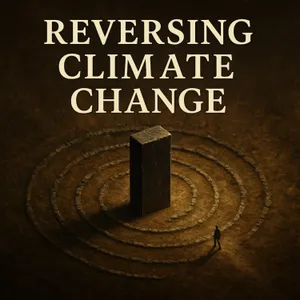
Reversing Climate Change is a podcast about carbon removal and climatetech that keeps wandering off into literature, history, philosophy, theology, and geopolitics on the theory that the technical and scientific questions stop making much sense without them. Hosted by Ross Kenyon, who did not go past a year of political philosophy PhD coursework and has visibly not let it go.
Latest Episodes
The most recent episodes — sign up to get AI-powered summaries of each one.
- 1 weeks ago1h 5m
The palm nutcracker that became a carbon dioxide removal company—w/ Uzoma Ayogu of Biochar Industrial Group
What do you do when none of the machinery you imported works? If you're Releaf, you build your own nutcracker, name it Kraken, and get it working with about six weeks of runway left in the middle of COVID. And once you have a huge pile of palm kernel shells sitting around, why not get really into biochar?Today's guest is Uzoma Ayogu, cofounder and CTO of Releaf and cofounder of Biochar Industrial Group (BIG), which just closed a $1.5 million pre-seed. Releaf cracks palm nuts from smallholder farms in Nigeria, where equipment built for plantations met thick-shelled nuts that arrive wet, dusty and full of rocks. BIG is the carbon dioxide removal side, spun out because Releaf's investors understood agriculture and supply chains and did not understand the voluntary carbon market.They bought their pyrolyzer from a Ukrainian manufacturer during a war, installed it without the manufacturer's engineer, and Uzo slept in the factory on a yoga mat for two weeks. Uptime went from around a third to 87 percent. We also get into cassava yields, what Y Combinator told them when they got in, and my own YC story, which ends with Nori getting in and saying no.This Episode's SponsorEcoEngineers: a full-service advisory and consulting firm focused on carbon dioxide removal, decarbonization, and carbon markets.Listen to the RCC episode I made with David LaGreca from EcoEngineers about how to choose, hire, and fire carbon market contractors.And the one with Rudy Krehbiel, also of EcoEngineers, on which story carbon dioxide removal is actually in and what it costs to be inside the wrong one.2026 EcoForums Training Series: Navigating Global Carbon and Fuel Regulations, Market Mechanisms, and Life-Cycle Analysis FundamentalsResourcesFull disclosure: Uzo, Kenna, and I met in the AirMiners Launchpad Accelerator program and I have worked with them in a few programs since.Subscribe to the Reversing Climate Change SubstackBecome a paid subscriber for bonus content and ad-free episodesMy other show, Climate Workers AnonymousReleafBiochar Industrial GroupBIG raises $1.5m to turn African farm waste into carbon removal, TechCabalAirMinersHow Releaf is scaling Nigerian biochar, my piece for RainbowBooks from the show, at Bookshop
- 2 weeks ago1h 20m
Which story is carbon dioxide removal actually in?—w/ Rudy Krehbiel of EcoEngineers
Every industry runs on a mythology, and carbon dioxide removal has several of them available at once. There is the hype cycle, where the trough of disillusionment is a phase you survive on the way to mainstream adoption. There is the solar cost curve, where a technology is expensive and clunky for years and then abruptly cheaper than everything else. There is Moore's Law, and also the one where the world returns to normal after the next election. Each of those carries a promise about the ending that may not deliver.Rudy Krehbiel thinks some of those stories are misleading us, and this episode is about working out which ones. My introduction runs long because I wanted to talk about Charlie Kaufman's Adaptation first, a film about a man who does not know what genre he is in until the genre changes around him, and which you should watch whether or not you have ever thought about a carbon credit.Rudy works on strategic development at EcoEngineers, who also sponsor this show, and he came into carbon dioxide removal from startups and venture capital, which is why he keeps reaching for diffusion curves. His read is that we are at the innovator stage and mistaking it for a trough. His figures, and they hold up against CDR.fyi's April 2026 snapshot: fewer than 50 million tonnes contracted, barely over a million delivered, Microsoft alone accounting for 78.5% of the disclosed total, and a median purchase outside Microsoft still under 100 tonnes. Diagnose that as failure and you start prescribing medicine for a disease nobody has.The harder argument is the one about public goods. Solar panels and EVs deliver something microeconomic you would still buy if climate change did not exist. A tonne of carbon dioxide removed does not. That makes this, in Rudy's words, arguably the hardest public good anyone has tried to fund, and it is why he will not call the ending inevitable. I asked him to name the story we ought to be inside of. What he answered? You'll have to listen to find out.The Show's SponsorEcoEngineers: a full-service advisory and consulting firm focused on carbon dioxide removal, decarbonization, and carbon markets.Listen to the RCC episode I made with David LaGreca from EcoEngineers about how to choose, hire, and fire carbon market contractors.2026 EcoForums Training Series: Navigating Global Carbon and Fuel Regulations, Market Mechanisms, and Life-Cycle Analysis FundamentalsRudy works at EcoEngineers and EcoEngineers sponsors this show. I would have had him on either way, and you should know the arrangement.ResourcesSubscribe to the Reversing Climate Change Substack for bonus content and ad-free episodesClimate Workers Anonymous, the other show I makeEcoEngineers"How Carbon Removal Loses", the episode Rudy and I keep circlingBelief that makes itself true: a hyperstition for carbon dioxide removalWhy Don Quixote is so misunderstoodHow non-human intelligence will change us, with D.W. Pasulka, where the Marshall McLuhan scene comes upAdaptation (2002), written by Charlie Kaufman, directed by Spike JonzeThe Orchid Thief by Susan OrleanStory by Robert McKeeDiffusion of Innovations, Everett Rogers<a href="https://en.wikipedia.org/
- 3 weeks ago1h 6m
Thinking Little with Mary Berry, Executive Director of The Berry Center—RERELEASE
Wendell Berry died on August 31st, 2026. A listener once made a Reversing Climate Change bingo card and one of the squares was just "someone mentions Wendell Berry," which turned out to be a rigged square. So rather than write another appreciation, I have pulled the conversation I had with his daughter in 2020 and recorded a new introduction to sit in front of it. The episode I made the week he died is here.Mary Berry runs The Berry Center in New Castle, Kentucky, founded in 2011 after a lifetime of farming. She started it because a forty-year local food movement had produced some very good farmers' markets and almost no change to the culture of farming, and because the best agricultural program her state ever had was being forgotten inside that very state.Listen in to hear more about why the local food movement concentrated on food and skipped land use and the economic lives of farmers, and what you do about any of this if you have no Henry County of your own to go back to.My new introduction is about that last part, and about whether those of who without such roots are like locusts, but somehow worse? What a grim sentence to pen, and there's a lot more coming on this topic soon...This Episode's SponsorEcoEngineers: a full-service advisory and consulting firm focused on carbon dioxide removal, decarbonization, and carbon markets.Listen to the RCC episode I made with David LaGreca from EcoEngineers about how to choose, hire, and fire carbon market contractors.2026 EcoForums Training Series: Navigating Global Carbon and Fuel Regulations, Market Mechanisms, and Life-Cycle Analysis FundamentalsResourcesSubscribe to the Reversing Climate Change SubstackBecome a paid subscriber for bonus content and ad-free episodesCheck out my new show, Climate Workers AnonymousThe original 2020 release of this conversationThe Berry Center, and Our Home Place Meat, and the shopThe Berry Center Farm and Forest Institute: the education program Mary describes as the Wendell Berry Farming Program of Sterling College, now run by the Berry Center itselfThe Agrarian Culture Center and the Archive of The Berry Center, which holds her grandfather's and uncle's papers from the Burley Tobacco ProgramThe Land Institute, and Wes Jackson's Becoming Native to This PlaceRemovals, avoidances, and what Wendell Berry thought of making tonnes fungibleWendell Berry, Jayber Crow and the Port William novels, and The World-Ending Fire<l
- Sep 3, 202628 min
Removals, avoidances, and what Wendell Berry thought of making tonnes fungible
Rainbow came into carbon dioxide removal from the outside, kept financing avoidances the whole time, and has watched the market arrive at the position it started from. The company I cofounded, Nori, was merciless about avoidance for its entire existence, so some of that is on me.Wendell Berry died on 31 August, at 92. He has more books referenced on this show than any other author. Early in Nori's life I wrote to him twice inviting him onto this very podcast by explaining that we were making tonnes of soil organic carbon fungible with one another, which may be the worst reading of an audience in my career. He said no both times, kindly. I still have the letters.Listen in to hear more about what it is like to meet someone from Verra and have the first sentence out of your mouth be "I used to think I was better than you", why the hardest parts of carbon market integrity turn out to be structural rather than a failure of anyone's willpower, what the Scouring of the Shire has to do with a methodology list, why I would keep rainforest over carbon removal if someone made me choose, and those ever-present wizards and prophets.This Episode's SponsorEcoEngineers: a full-service advisory and consulting firm focused on carbon dioxide removal, decarbonization, and carbon markets.Listen to the RCC episode I made with David LaGreca from EcoEngineers about how to choose, hire, and fire carbon market contractors.2026 EcoForums Training Series: Navigating Global Carbon and Fuel Regulations, Market Mechanisms, and Life-Cycle Analysis FundamentalsRainbow is a client of mine and I say so in the episode. They are not sponsoring this episode. I was just inspired by the work itself.ResourcesSubscribe to the Reversing Climate Change SubstackBecome a paid subscriber for bonus content and ad-free episodesRemovals, avoidances, and the rise of the portfolio mentality, the essay this episode is built on, at RainbowRainbow, the standard and registrySustained Neutralization of the Warming Response to Emissions through a Portfolio of GHG Mitigation Strategies, Ella Hughes, Zeke Hausfather, Randall Spock and Christopher Van Arsdale, CDRXIV, May 2026. This is the Google paper on stacking and bridgingThe Prodigal Son of Carbon Markets, with Martin Freimüller of Octavia Carbon, on his change of heart about the voluntary carbon marketJason Grillo writes Climagination, and was on the show for The Culture of Carbon RemovalRobert Höglund writes Marginal CarbonRereading The Wizard and the Prophet six years deeper into climate work, with Charles C. Mann, where the wizards and prophets framing comes fromThe impossible taxonomy of carbon dioxide removal, the previous episode about categories that misleadWendell Berry, 1934 to 2026, Kentucky LanternSix Wendell Berry books, and most of what this show has argued about for a decade, are on my Bookshop shelf.Book links go to Bookshop.org. They pay me a commission at no extra cost to you, and the rest goes to independent bookshops.Cover image: Pieter Bruegel the Elder, The Harvesters, 1565, The Metropolitan Museum of Art, Open Access.
- Aug 27, 202629 min
The scariest current parallel from Hitler's Mein Kampf
CW: this episode discusses genocidePeople reference the Weimar Republic's transition to Nazi Germany often. But I think they're missing perhaps the most relevant and frightening insight from Adolf Hitler's memoir, Mein Kampf.It isn't just that economic uncertainty produces political radicalism. It's that bad things can happen when a group which has dominated a multiethnic empire for a long time is expected to start sharing more political and cultural power with the groups they once ruled.If you haven't listened to the previous episode, "The way of life can be free and beautiful, but we have lost the way—Hitler, Chaplin, & The Great Dictator on climate", go read the article and listen to the episode on Substack. It'll make more sense if you do!This Episode's SponsorEcoEngineers: a full-service advisory and consulting firm focused on carbon dioxide removal, decarbonization, and carbon marketsListen to the RCC episode I made with David LaGreca from EcoEngineers about how to choose, hire, and fire carbon market contractors.2026 EcoForums Training Series: Navigating Global Carbon and Fuel Regulations, Market Mechanisms, and Life-Cycle Analysis FundamentalsResourcesCheck out my new show, Climate Workers AnonymousSubscribe to the Reversing Climate Change Substack, and become a paid subscriber
- Aug 20, 20261h 3m
The way of life can be free and beautiful, but we have lost the way—Hitler, Chaplin, & The Great Dictator on climate
CW: this episode discusses genocide and suicide.I swear I didn't mean to make this episode. All I intended to do was to read the wonderfully moving speech at the end of Charlie Chaplin's The Great Dictator. But somehow that meant that I had to process so much about World War II, the personality of Adolf Hitler, and why monsters can also be boring and/or extremely goofy.This monologue episode wends its way through the particular moment in history this film was made and why that is significant (as well as what the film got wrong as a result), Hannah Arendt, Mel Brooks, Louis Theroux's manosphere documentary, the banality of evil, why so many huge leaders of countries and companies feel so adolescent, how weird the History Channel was with Hitler content when I was a kid, and so much more.There is still so much that didn't make it in, but I think I'll share some more soon, in particular about what I find to be the most terrifying part of Mein Kampf. To be continued...This Episode's SponsorEcoEngineers: a full-service advisory and consulting firm focused on carbon dioxide removal, decarbonization, and carbon marketsListen to the RCC episode I made with David LaGreca from EcoEngineers about how to choose, hire, and fire carbon market contractors.2026 EcoForums Training Series: Navigating Global Carbon and Fuel Regulations, Market Mechanisms, and Life-Cycle Analysis FundamentalsResourcesCheck out my new show, Climate Workers AnonymousSubscribe to the Reversing Climate Change Substack, and become a paid subscriberWatch the full Charlie Chaplin speech here
- Aug 13, 20261h 0m
412: J. Maarten Troost on Kiribati's atolls, climate change, and what travel writing is for RERELEASE
This podcast has been running for almost a decade. There are some real gems buried in the catalogue that I am happy to have a chance to rerelease. This is one of those episodes. It has a new intro.I recorded it with J. Maarten Troost in April 2020 and published it as S2E9, "Travel writing a disappearing Oceania". It remains a personal favorite of mine.Maarten wrote four travel memoirs: The Sex Lives of Cannibals (2004), about the two years he spent in Kiribati after his partner got a job at an NGO who operated there; Getting Stoned with Savages (2006), about their move to Fiji and Vanuatu; Lost on Planet China (2008) where Maarten ends up wandering around quite a bit of China; and Headhunters on My Doorstep (2013), a Treasure Island retracing written in recovery.We talk about his time in a huge place that very few have visited to the depths he has, and how the world was changing (or maybe beginning to change) since his time in the region.Travel writing when it's good, acknowledges both difference and universality. It helps us understand Other, and mocks the way that we are in taking our Otherness for granted. Maarten does a wonderful job at both.And he hates the f*@!ing Macarena.This Episode's SponsorEcoEngineers: a full-service advisory and consulting firm focused on carbon dioxide removal, decarbonization, and carbon marketsListen to the RCC episode I made with David LaGreca from EcoEngineers about how to choose, hire, and fire carbon market contractors.2026 EcoForums Training Series: Navigating Global Carbon and Fuel Regulations, Market Mechanisms, and Life-Cycle Analysis FundamentalsResourcesCheck out my new show, Climate Workers AnonymousBecome a paid subscriber of Reversing Climate Change (and get rid of the ads on Spotify)Subscribe to the Reversing Climate Change SubstackJ. Maarten Troost at Penguin Random HouseJ. Maarten Troost at BJ Robbins Literary AgencyThe Sex Lives of Cannibals: Adrift in the Equatorial Pacific (2004)Getting Stoned with Savages: A Trip Through the Islands of Fiji and Vanuatu (2006)Lost on Planet China: One Man's Attempt to Understand the World's Most Mystifying Nation (2008)Headhunters on My Doorstep: A True Treasure Island Ghost Story (2013)What became of the Kiribati land purchase in Vanua LevuKiribati's Office of Te Beretitenti on the Fiji land purchasePaul Theroux, The Happy Isles of Oceania: Paddling the Pacific (1992)Christina Thompson, Sea People: The Puzzle of Polynesia (Harper, 2019)<a href="https://harpers.org/archive/1996/01/shi
- Aug 7, 202652 min
411: Why I love Poppy Russell of Counteract VC's CDR analysis
There are some people whom you know you just have to read whatever they write next. For me, one of those people is Poppy Russell.Poppy is the Research Manager at Counteract VC, a venture capital firm devoted to funding carbon dioxide removal companies. Poppy's research of course helps Counteract diligence potential deals, and sometimes she publishes key insights, models, and other things that make me think.Listen in as Poppy and I discuss the state of carbon removal, what she's bullish and bearish on, whether toxicity could be the next big thing in climate, and which corners she is peaking around next.This Episode's SponsorEcoEngineers: a full-service advisory and consulting firm focused on carbon dioxide removal, decarbonization, and carbon marketsListen to the RCC episode I made with David LaGreca from EcoEngineers about how to choose, hire, and fire carbon market contractors.2026 EcoForums Training Series: Navigating Global Carbon and Fuel Regulations, Market Mechanisms, and Life-Cycle Analysis FundamentalsResourcesCheck out my new show, Climate Workers AnonymousBecome a paid subscriber of Reversing Climate Change (and get rid of the ads on Spotify)Subscribe to the Reversing Climate Change SubstackSubscribe to the Climate Workers Anonymous Substack"Toxicity: The Invisible Tsunami" by Deep Science Ventures"Between a Rock and a Hard Cost: The Economics of Enhanced Weathering""Not All Carbon Removal Projects Are Created Equal""Industry has a central role in CDR's next growth phase""Locating the sweet spot for biochar carbon removal""Treading Carefully in the Waters of Ocean-based CDR"
Get Reversing Climate Change summaries in your inbox
Free AI-powered daily recaps. Key takeaways, quotes, and mentions — in a 5-minute read.
Get Free Summaries →Free forever for up to 3 podcasts. No credit card required.
You Might Also Like
Listeners also like.

A Matter of Degrees
Two climate experts explore the systems driving climate change and spotlight solutions through stories of leadership and activism.
Unf*cking the Future
A scientist explores environmental crises and practical solutions to secure a sustainable future.

The Great Simplification with Nate Hagens
Discussions with experts on energy, ecology, economics, and human behavior to understand the systemic challenges facing civilization.
Drilled
Exposes corporate and political efforts that fueled climate denial and blocked environmental action over decades.

Forum Borealis
In-depth interviews with authors and thinkers on unconventional topics in history, science, philosophy, and politics.

The Remnant Radio's Podcast
Explores Christian theology, church history, and spiritual gifts through respectful dialogue with believers across denominations.
Change Cycle
Examines how businesses can implement circular economy practices to reduce waste and drive sustainable change.

Recode Daily
A daily breakdown of major tech and business stories shaping the digital world and its impact on society.

The Ezra Klein Show
Conversations on pressing political, social, and cultural issues with experts and thinkers.

Inquiring Minds
Explores the intersection of science and society through critical thinking and in-depth analysis.

Cool People Who Did Cool Stuff
Revolutions, rebellions, and resistance movements throughout history, told through the stories of the people who lived them.

Heroes, Action, Adventure, Extreme Sports - Profiles in Courage - The Creative Process
Interviews with adventurers, athletes, and activists exploring courage, resilience, and creativity through extreme sports, exploration, and social change.
About Reversing Climate Change
Reversing Climate Change is a podcast about carbon removal and climatetech that keeps wandering off into literature, history, philosophy, theology, and geopolitics on the theory that the technical and scientific questions stop making much sense without them. Hosted by Ross Kenyon, who did not go past a year of political philosophy PhD coursework and has visibly not let it go.
Customized Recaps
AI-powered recaps with compact key takeaways, quotes, and insights.
Straight to Your Inbox
Get key takeaways from Reversing Climate Change in a 5-minute read.
Save Hours Every Week
Stay current on your favorite podcasts without falling behind.
Frequently Asked Questions
What is Podzilla's Reversing Climate Change daily summary?
It's a free AI-powered email that summarizes new episodes of Reversing Climate Change as soon as they're published. You get the key takeaways, notable quotes, and links & mentions — all in a quick read.
How does the Reversing Climate Change podcast summary work?
When a new episode drops, our AI transcribes and analyzes it, then generates a personalized summary tailored to your interests and profession. It's delivered to your inbox every morning.
Is this an official Reversing Climate Change product?
No. Podzilla is an independent service that summarizes publicly available podcast content. We're not affiliated with or endorsed by Ross Kenyon.
Can I get summaries of other podcasts too?
Absolutely! The free plan covers up to 3 podcasts. Upgrade to Pro for 15, or Premium for 50. Browse our full catalog at /podcasts.
How often does Reversing Climate Change release new episodes?
Reversing Climate Change publishes weekly. Our AI generates a summary within hours of each new episode.
What topics does Reversing Climate Change cover?
Reversing Climate Change covers topics including Science, Philosophy, Culture, Society & Culture, Earth Sciences. Our AI identifies the specific themes in each episode and highlights what matters most to you.
Start getting Reversing Climate Change summaries tomorrow morning.
Free forever for up to 3 podcasts. No credit card required.
Free forever for up to 3 podcasts. No credit card required.