Free Daily Podcast Summary
Pop Culture Parenting: Daily Summaries Delivered
by Dr Billy Garvey, Nick McCormack
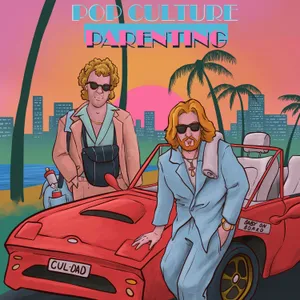
This podcast is about finding the sweetspot between the textbooks and real life when it comes to parenting. Dr Billy (a developmental pediatrician) and Nick (a developing parent) are a couple of dads having honest discussions about parenting day to day. We'll be using iconic TV and cinema scenes from the 80's & 90's to give context to Billy's parenting advice.
Latest Episodes
The most recent episodes — sign up to get AI-powered summaries of each one.
- Yesterday1h 18m
Episode 140: Lost boys & The Lost Boys
What does it mean to be a man? The Lost Boys gives us a window into one version of that answer and it isn't pretty. In this episode we use the film to explore masculinity and what the research tells us about how boys develop their sense of who they are, what it means to be strong, and what they risk losing when the only version of masculinity on offer is rigid, stoic and built on control. We talk about why masculinity itself isn't the problem but rigidity is, how boys often police each other's masculinity in ways that punish vulnerability and reward dominance, and why fixing individual attitudes while leaving peer culture and school systems unchanged rarely works. We look at what the Man Box research tells us about the very real costs of rigid masculinity for boys themselves, including depression, isolation and suicide, and what it actually looks like to raise boys who are strong in all the right ways. This one is for every parent, carer and educator who wants to do better for the boys in their lives. We can't wait to read your reflections, questions and advice.
- 1 weeks ago2h 2m
Episode 139: Sensory sensitivities reflection
The response to our Sensory Sensitivities episode reminded us just how personal and powerful this topic is. Our polls revealed that 85% of our community find the world too full on for their senses some days, and the reflections that followed were honest, funny and deeply moving. We hear from a social worker whose son's autism diagnosis unlocked more than 80 years of unrecognised sensory challenges in his great-grandfather, a mum who realised her entire approach to sleep and noise in her home has been quietly shaped by her own sensory needs, and a parent who discovered mid face story that she absolutely cannot stand having her own face touched. One of our long questions comes from a mum in rural NSW whose daughter spent years being described as anxious before a sensory OT helped the family realise she was simply noticing everything, all the time, and carrying an extraordinary cognitive load just to get through the day. A paediatric OT also shares the cups model, a beautifully simple way to help families understand and talk about their own sensory needs, including how to plan ahead for overwhelming events. We hope this episode helps and thank you to all the beautiful PCP people who sent in their questions and wisdom.
- 3 weeks ago1h 0m
Episode 138: Sensory sensitivities & Mad Max Fury Road'/
Every child experiences the world differently, and Mad Max: Fury Road gives us the perfect lens to explore why. In this episode on Sensory Sensitivities we dive into the science of sensory processing, including all eight senses, and what it means for the children we love and care for. We discuss how the brain decides what to notice and what to ignore, why some kids seem to need more of everything while others are easily overwhelmed, and why so much of what looks like difficult behaviour is actually a child doing their best to regulate a nervous system that works differently. We also explore interoception, the internal sense that connects our bodies to our emotions, and why it matters so much for kids. The question we keep coming back to isn't whether a child has sensory sensitivities, but how those sensitivities shape their experience of daily life. We hope this episode helps you see the children you care for with fresh eyes and we can't wait to read your reflections, questions and advice.
- Aug 16, 20262h 4m
Episode 137: Anger reflection
The response to our anger episode was one of the most moving we have ever received. In this reflection we hear from parents who grew up around anger they couldn't name and are working hard not to repeat those patterns, from a dad who recognised himself in his own mother's rage during the most vulnerable weeks of early parenthood, from someone who works with young people in custody for whom anger became the only language they knew, and from a listener whose message stopped us in our tracks. An occupational therapist shares some powerful practices for going slow and meeting our kids where they are. We are also reminded in our closing that anger and love often live much closer together than we think. Thank you for your extraordinary honesty and courage in sharing. We hope this one helps.
- Aug 2, 20261h 6m
Episode 136: Anger & Lethal Weapon
Every parent knows the feeling. Your kid goes from zero to meltdown in seconds, over something that seems completely trivial. In this episode we use Lethal Weapon as our jumping-off point to explore what's actually happening in a child's brain when anger takes over. We talk about why children's brains are wired to detect and react to emotional triggers before they're wired to interpret them, why telling a young child to "just calm down" is often a developmental mismatch rather than a discipline problem, and why feeling angry and acting aggressively are actually two separate events, which is more hopeful than it sounds. We also explore what the science tells us actually helps when supporting an angry child. We can't wait to read your reflections, questions and advice about anger in the kids you love and care for.
- Jul 19, 20261h 57m
Episode 135: Healthy habits reflection
Episode 135 is out now! Healthy habits reflection goes deep into the gap between the habits we want and the reality of our lives. We hear extraordinary listener stories, questions and advice. A music professional who survived her own real-life Fletcher and came out the other side with a powerful question about what we teach kids to normalise in the pursuit of excellence. A dad whose chaotic childhood was transformed by one loving parent who proved that presence matters more than proximity when it comes to healthy habits. We cover picky eating, the pressure to quit, habit building for neurodivergent kids, what to do when the scaffolding of school and sport falls away, and how to find your way back to yourself when life has left absolutely nothing in the tank. As one listener reminded us, sometimes the most powerful healthy habit you can build isn't for your kids at all. It's finally getting the support you need for yourself.
- Jul 5, 20261h 3m
Episode 134: Healthy habits & Whiplash
Healthy habits. We all want them for our kids and for ourselves, but as Whiplash reminds us, the pursuit of improvement can sometimes drift into pressure, perfectionism and burnout. In this episode we explore what the science of habit formation actually tells us about lasting change, including why healthy habits are built more by our environments than our willpower, why people with strong self-control tend to rely on habits rather than discipline, and how simple changes to our homes and routines can make healthy choices easier for the whole family. We discuss the connection between habits and mental health, why rewards, reminders and good intentions often fail to create lasting change, and how major life transitions can provide unique opportunities to build new family patterns. Along the way we reflect on what Whiplash can teach us about dedication, identity, excellence and the difference between pursuing growth and sacrificing wellbeing. We hope you enjoy this episode and we can't wait to read your reflections, questions and advice about the healthy habits that have helped the kids you love and care for thrive.
- Jun 21, 20261h 41m
Episode 133: Arrival of a baby reflection
What an episode. We asked the PCP community and they delivered some of the most beautiful reflections and advice about the arrival of a baby. We answer question about feeling ready, repairing bonds, jealousy and the foundations of connection. We hear practical advice and phenomenal reflections from people who have overcome challenges that no one should have to. Thank you to everyone who shared their story. You guide us through the dark. Thank you to the Queensland Children's Hospital Foundation for supporting our work and everything you do for children.
Get Pop Culture Parenting summaries in your inbox
Free AI-powered daily recaps. Key takeaways, quotes, and mentions — in a 5-minute read.
Get Free Summaries →Free forever for up to 3 podcasts. No credit card required.
You Might Also Like
Listeners also like.

Two Parents & A Podcast
Two parents navigate raising kids, building a relationship, and tackling topics from entrepreneurship to dental industry critiques.

After Bedtime with Big Little Feelings
Parents discuss challenges like grief, relationships, and toddler behavior with honesty and practical advice.
Good Inside with Dr. Becky
A clinical psychologist provides practical guidance for handling common parenting challenges and improving parent-child relationships.

Parenting is a Joke
Comedians share candid stories about parenting and childhood, exploring the chaos and humor of raising kids while questioning if they’re truly fine.

Parenting with Ginger Hubbard
Biblical parenting advice focused on addressing children's heart issues and fostering godly character through grace and practical guidance.
Care and Feeding | Slate's parenting show
Parents discuss challenges and share advice on raising children from toddlers through teens.
Ask Lisa: Untangling Family Life
Psychologist Lisa Damour answers parents' questions about raising tweens and teens with evidence-based advice on mental health, behavior, and family dynamics.

Calm Parenting Podcast
Practical strategies for managing strong-willed, defiant, or neurodivergent children without power struggles or yelling.
Raising Parents with Emily Oster
An economist examines data-driven approaches to modern parenting challenges, from child independence to teen mental health.

Raising Boys & Girls
Child development experts discuss practical strategies and insights for parenting boys and girls with empathy and hope.

Raising Good Humans
A developmental psychologist discusses evidence-based parenting approaches with experts and parents to support raising resilient, empathetic children.
Respectful Parenting: Janet Lansbury Unruffled
Addresses common parenting challenges with a focus on respectful, trust-based approaches to raising infants and toddlers.
About Pop Culture Parenting
This podcast is about finding the sweetspot between the textbooks and real life when it comes to parenting. Dr Billy (a developmental pediatrician) and Nick (a developing parent) are a couple of dads having honest discussions about parenting day to day. We'll be using iconic TV and cinema scenes from the 80's & 90's to give context to Billy's parenting advice.
Customized Recaps
AI-powered recaps with compact key takeaways, quotes, and insights.
Straight to Your Inbox
Get key takeaways from Pop Culture Parenting in a 5-minute read.
Save Hours Every Week
Stay current on your favorite podcasts without falling behind.
Frequently Asked Questions
What is Podzilla's Pop Culture Parenting daily summary?
It's a free AI-powered email that summarizes new episodes of Pop Culture Parenting as soon as they're published. You get the key takeaways, notable quotes, and links & mentions — all in a quick read.
How does the Pop Culture Parenting podcast summary work?
When a new episode drops, our AI transcribes and analyzes it, then generates a personalized summary tailored to your interests and profession. It's delivered to your inbox every morning.
Is this an official Pop Culture Parenting product?
No. Podzilla is an independent service that summarizes publicly available podcast content. We're not affiliated with or endorsed by Dr Billy Garvey, Nick McCormack.
Can I get summaries of other podcasts too?
Absolutely! The free plan covers up to 3 podcasts. Upgrade to Pro for 15, or Premium for 50. Browse our full catalog at /podcasts.
How often does Pop Culture Parenting release new episodes?
Pop Culture Parenting publishes biweekly. Our AI generates a summary within hours of each new episode.
What topics does Pop Culture Parenting cover?
Pop Culture Parenting covers topics including Parenting, Film, Kids & Family, Society & Culture, TV & Film, Family, Film Reviews. Our AI identifies the specific themes in each episode and highlights what matters most to you.
Start getting Pop Culture Parenting summaries tomorrow morning.
Free forever for up to 3 podcasts. No credit card required.
Free forever for up to 3 podcasts. No credit card required.