Free Daily Podcast Summary
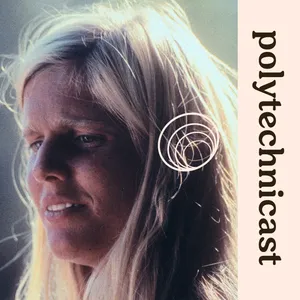
Polytechnicast 🌈: Daily Summaries Delivered
by Polytechnica
Get key takeaways, quotes, and insights from Polytechnicast 🌈 in a 5-minute read. Delivered straight to your inbox.
Latest Episodes
The most recent episodes — sign up to get AI-powered summaries of each one.
- Nov 29, 202423 min
Hauntology
In this episode, we explore hauntology—a critical theoretical concept introduced by Jacques Derrida in 'Spectres of Marx'. Emerging from deconstruction, hauntology reveals how past cultural and social structures persistently infiltrate our present, challenging linear conceptions of time and identity.Developed initially as a philosophical framework to examine Marxism's enduring intellectual legacy, the term has since expanded across disciplines. Theorists like Simon Reynolds and Mark Fisher applied it to cultural analysis, particularly in music and media, revealing how contemporary expression is fundamentally saturated with spectral remnants of unrealized futures and cultural memories.Hauntology disrupts traditional ontological boundaries, suggesting that our understanding of existence is never fully present, but always mediated through linguistic and historical conditions that pre-exist our perception. It's a profound meditation on temporality, memory, and the ghostly persistence of unfulfilled potentials.Welcome to Polytechnicast 🌈
- Nov 28, 202411 min
Right To Be Forgotten
The “Right to Be Forgotten” (RTBF) is a legal concept that allows individuals to request the removal of personal information from search engine results and online directories under certain conditions. Rooted in the desire to protect autonomy and reputation, it aims to mitigate the lasting impact of stigmatizing past actions or information. Advocates highlight its role in addressing issues like revenge porn and outdated or irrelevant personal data that could harm one’s reputation. Critics, however, argue it can infringe on freedom of expression and lead to censorship. Recognized in the EU’s General Data Protection Regulation (GDPR) as a “right to erasure,” RTBF has been adopted or debated in jurisdictions worldwide, with varied interpretations and implementations. While empowering individuals to regain control of their digital footprints, its global application raises complex legal and ethical questions.Welcome to Polytechnicast 🌈
- Nov 15, 202410 min
The Eternal Decoherence
This episode presents a speculative look at the far future of the universe and the potential for a “cosmic amnesia.” It explores how, as galaxies drift beyond visible reach due to cosmic expansion, future astronomers may lose access to the universe’s historical clues, including evidence of the Big Bang. Without observable galaxies, key discoveries like the universe’s expansion would become impossible to replicate. This leads to the unsettling idea that the universe’s true nature might fade from knowledge, leaving future civilizations to theorize within a limited and isolated cosmos. We suggest that, in such a scenario, scientific understanding could give way to mythology or folklore as explanations for cosmic existence.Welcome to Polytechnicast 🌈
- Nov 10, 20249 min
Dark Sparkler
This episode explores the philosophical implications of extremophiles—organisms thriving in harsh environments previously thought inhospitable to life. These microorganisms challenge conventional scientific and philosophical definitions of life by existing in the absence of traditional life-supporting conditions, such as light and oxygen. Their resilience leads to questions about the boundaries of life and how we define existence itself, raising philosophical considerations about life’s inherent contradictions and mysteries. This interplay between life and its limits reflects larger existential and ontological inquiries, particularly through the lens of Schopenhauer’s philosophy of negation and the ‘Will-to-Life,’ where life, paradoxically, contains within it a force of negation.Welcome to Polytechnicast 🌈
- Nov 2, 20249 min
On Not Knowing
Here's a fascinating philosophical exploration of how "not knowing" can actually be incredibly valuable! This episode brings together various philosophical perspectives on wonder and uncertainty, starting surprisingly with Descartes's thoughts on wonder - that feeling of amazement when we encounter something totally new. This sense of wonder and uncertainty, rather than being a weakness, can actually enhance our ethical relationships with others and fuel creativity. When we approach something or someone without trying to fit them into our existing frameworks of understanding, we remain open to their unique qualities and differences. This applies to art and creative thinking, where sometimes the best breakthroughs happen when we let go of control and allow ourselves to explore without a predetermined destination. We can extend this idea to suggest that materials themselves possess a kind of intelligence - like how an artist might need to listen to what their medium "wants" to do rather than forcing it into a preset form. It's a compelling challenge to our usual assumption that knowledge is always preferable to ignorance, suggesting instead that being comfortable with not knowing can lead to richer experiences and deeper understanding.Welcome to Polytechnicast 🌈
- Oct 29, 202411 min
The Death of the Author Again
As one of the latest forms of creative expression art generated using AI is denied copyright protection due to the current legal requirement for human authorship. Despite multiple challenges to this stance, the Copyright Office remains firm—AI-generated art is considered devoid of human involvement. This episode examines the existing legal framework for AI art copyright alongside philosophical theories of authorship and asks if the end user of AI-generated art should be granted copyright if it fulfills the human authorship criterion. Are we perhaps moving beyond current logics of copyright law?Welcome to Polytechnicast 🌈
Get Polytechnicast 🌈 summaries in your inbox
Free AI-powered daily recaps. Key takeaways, quotes, and mentions — in a 5-minute read.
Get Free Summaries →Free forever for up to 3 podcasts. No credit card required.
You Might Also Like
Listeners also like.
The Polymath PolyCast with Dustin PolyInnovator
Dustin Miller - PolyInnovator
PolyTools Creator Spotlight
Dustin Miller - PolyInnovator
ePODstemology
Mark Fabian
LambdaCast
LambdaCast
Epistik
Epistik
What the Tech?
UCalgary Department of Computer Science
The New Thinkery
The New Thinkery
Hi-Phi Nation
Slate Podcasts

PlasticPills Critical Theory & Philosophy
Plasticpills
Meta Tech Podcast
Meta
Code for Thought
Peter Schmidt
Pragmatic
The Engineered Network
About Polytechnicast 🌈
Polytechnicast delivers digestible philosophical bites that can be consumed anywhere at anytime. The general tenor of the work is specifically designed to appeal to as wide an audience as possible. It is in this spirit of a toy theorem (a deliberately simplistic model with many details removed so that it can be used to explain a mechanism concisely) coupled with slow cinema (minimalist, observational, non-narrative, and deliberately contemplative long takes) that we attempt to reveal an applied, quiet, uncluttered, and practical way of consuming challenging content. We are engineering thought.Welcome to Polytechnicast 🌈
Customized Recaps
AI-powered recaps with compact key takeaways, quotes, and insights.
Straight to Your Inbox
Get key takeaways from Polytechnicast 🌈 in a 5-minute read.
Save Hours Every Week
Stay current on your favorite podcasts without falling behind.
Frequently Asked Questions
What is Podzilla's Polytechnicast 🌈 daily summary?
It's a free AI-powered email that summarizes new episodes of Polytechnicast 🌈 as soon as they're published. You get the key takeaways, notable quotes, and links & mentions — all in a quick read.
How does the Polytechnicast 🌈 podcast summary work?
When a new episode drops, our AI transcribes and analyzes it, then generates a personalized summary tailored to your interests and profession. It's delivered to your inbox every morning.
Is this an official Polytechnicast 🌈 product?
No. Podzilla is an independent service that summarizes publicly available podcast content. We're not affiliated with or endorsed by Polytechnica.
Can I get summaries of other podcasts too?
Absolutely! The free plan covers up to 3 podcasts. Upgrade to Pro for 15, or Premium for 50. Browse our full catalog at /podcasts.
How often does Polytechnicast 🌈 release new episodes?
Polytechnicast 🌈 publishes weekly. Our AI generates a summary within hours of each new episode.
What topics does Polytechnicast 🌈 cover?
Polytechnicast 🌈 covers topics including History, Philosophy, Culture, Society & Culture. Our AI identifies the specific themes in each episode and highlights what matters most to you.
Start getting Polytechnicast 🌈 summaries tomorrow morning.
Free forever for up to 3 podcasts. No credit card required.
Free forever for up to 3 podcasts. No credit card required.