Free Daily Podcast Summary
ePODstemology: Daily Summaries Delivered
by Mark Fabian
Get key takeaways, quotes, and insights from ePODstemology in a 5-minute read. Delivered straight to your inbox.
Latest Episodes
The most recent episodes — sign up to get AI-powered summaries of each one.
- 2 weeks ago1h 7m
Video games and the zeitgeist
Dr Stephen Mallory is assistant professor of game design at Lawrence Technical University in Southfield, Michigan. After a career in the video game industry, Stephen turned his considerable intellect to analysing games as an aspect of digimodernism - the contemporary cultural phenomenon where much of our lived experience, indeed, our reality and even sense of self, is mediated through digital technologies, artifacts, and environments. His research is especially concerned with the intersection...
- Apr 7, 20261h 5m
Metamodernism - culture after the end of history
Timotheus Vermeulen is a full professor of media, culture and society at the University of Oslo in Norway. Together with Robin Van Den Akker, he coined the term metamodernism and kick started scholarship of this new idea, co-founding the webzine Notes on Metamodernity and co-editing the book series Studies in Metamodernism. Metamodernism refers to the culture or structure of feeling that comes after postmodernism - it's what we are living through right now. It's character is contested. One th...
- Mar 6, 20261h 2m
An insider's guide to the innovation ecosystem
Innovation is crucial for improving quality of life and clearing away ossified and unhelpful ways of doing and being, like fossil fuel capitalism. So how do we get it moving? The innovation ecosystem of a nation, a region, or even the world is a complex network of physical infrastructure, human capital, industrial policy, and R&D centres among other things. If any part of the network grows weak, it can drag down the whole system. Here to help us navigate this environment is Halima J...
- Feb 6, 202657 min
Data data everywhere yet no meaning to be found
It seems these days that we are awash in data. Indeed, in their recent book The Ordinal Society, Marion Foucard and Kieran Healy argue persuasively that the passive data collection facilitated by the internet, digital technologies, wearables, and social media allows us for the first time to map the deep substrate of the social. Is that true though? In all this data, is there signal? Valeria Ramirez from Cambridge University has made a career out of tracking the advent of digital metrics and t...
- Jan 15, 20261h 4m
Welcome to metamodernity - complexity science, meaning making, and the return of spirituality
Metamodernism is the cultural mode that is emerging after postmodernism, and boy do we need it. Postmodernism was a period of deconstruction. A necessary deconstruction, I hasten to say, one that shook the foundations of many obsolete structures that kept people oppressed like homophobia, patriarchy, colonialism, and opinions masquerading as expertise. But as there was only deconstruction, we find our culture mired in a nihilistic swamp. How can we reconstruct shared values, shared perspectiv...
- Nov 10, 20251h 1m
TL;DR Truth Bombs - The Essence of Aphorisms with James Geary
In one of his Letters Provinciales, the French philosopher and Theologian Blaise Pascal apologises that “I have made this letter longer than usual because I have not had the time to make it shorter”. This is an aphoristic statement that could form one part of the definition of an aphorism: a pithy observation that contains a general truth. There are thousands of well-known aphorisms coming in all manner of media, like the old proverb “a rolling stone gathers no moss”, or the quite recent lyri...
- Oct 22, 202551 min
Replication, preregistration, and open science – what’s all the fuss about?
The so-called “replication crisis” engulfed psychology over the last 10 years, with numerous failures to reproduce canonical studies from the biggest names in the discipline like Dweck’s growth mindset, Baumeister’s willpower as a muscle, and around half of Kahneman’s Thinking Fast and Slow. Interrogation of this failure of replicate led to discoveries of p-hacking, publication bias, a huge disconnect between the theories psychologists were supposedly testing and the cute little studies they ...
- Jun 23, 202559 min
Will EdTech change the university?
Dr Shreeharsh Kelkar from UC Berkeley on to discuss massive online open courses or “MOOCs” and other varieties of education technology. Are they destined to displace the traditional university, or are (were) they just a fad? How do they compare with more general online platforms that host educational content, like YouTube? What sort of people start these ventures? Can they be trusted? Dr Kelkar is extremely well placed to answer these questions, combining a background in electrical engineerin...
Get ePODstemology summaries in your inbox
Free AI-powered daily recaps. Key takeaways, quotes, and mentions — in a 5-minute read.
Get Free Summaries →Free forever for up to 3 podcasts. No credit card required.
You Might Also Like
Listeners also like.
Paradigm
Matthew Geleta
Inquiring Minds
Indre Viskontas
The Metagame
Daniel Kazandjian
Neon Galactic with James Faulk
James Faulk and KEET-TV
Humans On The Loop
Michael Garfield
Infinite Loops
Jim O'Shaughnessy

Stars and Destruct.
Juliana Spicoluk, Mark Spicoluk
AWONDERJUNKIE
Ryan Anderson
Delving In with Stuart Kelter
Stuart Kelter
Ground Truths
Eric Topol
Epistik
Epistik
Far Out With Faust (FOWF)
Far Out With Faust
About ePODstemology
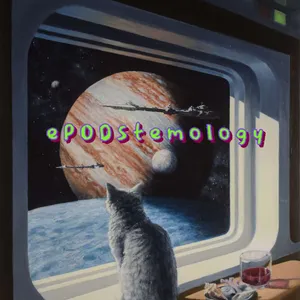
Medicine for intellectual boredom. Host Dr Mark Fabian of Cambridge University brings together an eclectic mix of creative young folk to discuss the most stimulating ideas at the knowledge frontier, from data governance to the metamodern cultural mode, and everything in between. The world's most thoughtful people, having a chat - and you're invited! So turn off your socials, throw away your popular science books, and get ready for some legit galaxy brain takes. Thanks to Keith Spangle for the spaceship cat avatar https://www.deviantart.com/keithspangle
Customized Recaps
AI-powered recaps with compact key takeaways, quotes, and insights.
Straight to Your Inbox
Get key takeaways from ePODstemology in a 5-minute read.
Save Hours Every Week
Stay current on your favorite podcasts without falling behind.
Frequently Asked Questions
What is Podzilla's ePODstemology daily summary?
It's a free AI-powered email that summarizes new episodes of ePODstemology as soon as they're published. You get the key takeaways, notable quotes, and links & mentions — all in a quick read.
How does the ePODstemology podcast summary work?
When a new episode drops, our AI transcribes and analyzes it, then generates a personalized summary tailored to your interests and profession. It's delivered to your inbox every morning.
Is this an official ePODstemology product?
No. Podzilla is an independent service that summarizes publicly available podcast content. We're not affiliated with or endorsed by Mark Fabian.
Can I get summaries of other podcasts too?
Absolutely! The free plan covers up to 3 podcasts. Upgrade to Pro for 15, or Premium for 50. Browse our full catalog at /podcasts.
How often does ePODstemology release new episodes?
ePODstemology publishes monthly. Our AI generates a summary within hours of each new episode.
What topics does ePODstemology cover?
ePODstemology covers topics including Science, Education, Culture, Society & Culture, Social Sciences. Our AI identifies the specific themes in each episode and highlights what matters most to you.
Start getting ePODstemology summaries tomorrow morning.
Free forever for up to 3 podcasts. No credit card required.
Free forever for up to 3 podcasts. No credit card required.