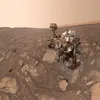
Twenty organic molecules found in an ancient Martian rock
NASA's Curiosity rover has been exploring Mars' Gale Crater for over a decade. A new analysis of samples collected there reveals something remarkable: more than 20 different organic molecules preserved in ancient rock, including the first detection of a nitrogen-bearing heterocycle on Mars, a type of molecule that's a precursor to compounds essential for life as we know it. While these molecules aren't evidence of life, they tell us that the chemical building blocks for life were present in ancient Martian environments. In this episode, we talk with Amy Williams, an astrobiologist and associate professor at the University of Florida, about what this discovery means for our understanding of Mars' habitability. Then, Planetary Society Chief Scientist Bruce Betts joins us for What's Up, where we compare the results to samples collected from asteroid Bennu. Discover more at: https://www.planetary.org/planetary-radio/2026-diverse-organics-gale-crater-marsSee omnystudio.com/listener for privacy information.
Podzilla Summary coming soon
Sign up to get notified when the full AI-powered summary is ready.
Free forever for up to 3 podcasts. No credit card required.
Listen to This Episode
More from Planetary Radio: Space Exploration, Astronomy and Science
Space Policy Edition: A proposal to stifle American science

Spacewoman with Eileen Collins

Los Angeles Astronomical Society celebrates 100 years of looking up
Book Club Edition: Diane Ackerman and “The Planets: A Cosmic Pastoral”
Get summaries like this every morning.
Free AI-powered recaps of Planetary Radio: Space Exploration, Astronomy and Science and your other favorite podcasts, delivered to your inbox.
Free forever for up to 3 podcasts. No credit card required.