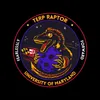
TERP RAPTOR: A student-built mission to asteroid Apophis
On Friday, April 13, 2029, asteroid Apophis will pass closer to Earth than our geostationary satellites. While NASA, ESA, and JAXA are all sending missions, a team of students at the University of Maryland is building their own spacecraft to join the fleet. TERP RAPTOR is a CubeSat-based mission roughly the size of a microwave that aims to fly past the asteroid and snap images of its surface as it approaches Earth. Four members of the team join Planetary Radio: Adrienne Rudolph, the Student Principal Investigator; Elena Wu, the Lead Project Manager; Tyler Autrey, the Mechanical, Structure, and Materials Lead; and Alexander Williams, the Propulsion Lead. Together, they talk about how a graduate class project turned into a real mission, what they hope to learn about this potentially hazardous asteroid, and why they're not letting anyone tell them it can't be done. Then, Bruce Betts joins us for What's Up, where we mark the deployment anniversary of The Planetary Society's own CubeSat-based solar sail mission, LightSail 2. Discover more at: https://www.planetary.org/planetary-radio/2026-terp-raptorSee omnystudio.com/listener for privacy information.
Podzilla Summary coming soon
Sign up to get notified when the full AI-powered summary is ready.
Free forever for up to 3 podcasts. No credit card required.
Listen to This Episode
More from Planetary Radio: Space Exploration, Astronomy and Science

Hot Jupiters: The ‘Roasted Planet’ and the wrong-way hotspot

Book Club Edition: “The Edge of Space-Time” by Chanda Prescod-Weinstein

Sian Proctor and John Read on teaching babies to love the Cosmos

Small Town Universe: Inside Green Bank's Radio Quiet Zone
Get summaries like this every morning.
Free AI-powered recaps of Planetary Radio: Space Exploration, Astronomy and Science and your other favorite podcasts, delivered to your inbox.
Free forever for up to 3 podcasts. No credit card required.