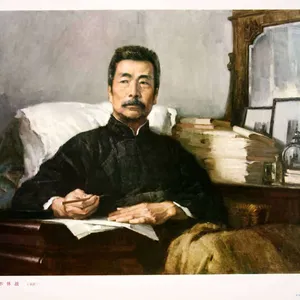
Free Daily Podcast Summary
People's History of Ideas Podcast: Daily Summaries Delivered
by Matthew Rothwell
Get key takeaways, quotes, and insights from People's History of Ideas Podcast in a 5-minute read. Delivered straight to your inbox.
Latest Episodes
The most recent episodes — sign up to get AI-powered summaries of each one.
- Apr 4, 202629 min
Winning Over Enemy Troops: Mao’s Leninist Approach to Fomenting Mutiny in the Guomindang (January 1930)
When the enemy advances, Mao and Zhu retreat from Fujian into Jiangxi province, drawing the Guomindang’s joint suppression force deep in after them, only to later circle back around and defeat it. In this episode we discuss how Mao conducted propaganda directed at enemy troops in order to win them over to join the Red Army. Further reading: Stuart Schram, ed., Mao’s Road to Power, vol. 3: From the Jinggangshan to the Establishment of the Jiangxi Soviets, July 1927-December 1930 Pang Xianzhi a...
- Mar 21, 202630 min
A Single Spark Can Start a Prairie Fire (January 1930) (Part Two)
We conclude our close reading of Mao’s January 5, 1930 letter to Lin Biao. In this episode, Mao discusses his method for understanding the possibilities for revolution in China, as well as the particular tactics to be employed by the Red Army. He also conducts a minor self-criticism. Further reading: Stuart Schram, ed., Mao’s Road to Power, vol. 3: From the Jinggangshan to the Establishment of the Jiangxi Soviets, July 1927-December 1930 Pang Xianzhi and Jin Chongji, Mao Zedong: A Biography, ...
- Mar 14, 202622 min
A Single Spark Can Start a Prairie Fire (January 1930) (Part One)
We begin our close reading of Mao’s January 5, 1930 letter to Lin Biao. Further reading: Stuart Schram, ed., Mao’s Road to Power, vol. 3: From the Jinggangshan to the Establishment of the Jiangxi Soviets, July 1927-December 1930 Pang Xianzhi and Jin Chongji, Mao Zedong: A Biography, vol. 1: 1893-1949 David Apter and Tony Saich, Revolutionary Discourse in Mao’s Republic Mao Zedong, “A Single Spark Can Start a Prairie Fire” Some names from this episode: Lin Biao, commander of the first column o...
- Mar 7, 202658 min
How Brainwashing was Good and Maoist Propaganda was True: An Interview with leading China scholar Aminda Smith
This interview with Dr. Aminda Smith of Michigan State University touches on topics including why good PRC history is left history; thought reform, reeducation through labor, and brainwashing; the veracity of the propaganda produced for a global audience during the Mao years; and the Maoist legacy in China today. Further reading and watching: Aminda Smith, Thought Reform and China’s Dangerous Classes Aminda Smith, “The Maoism of PRC History” Aminda Smith, “Brainwashing and World Revolution”...
- Dec 11, 202531 min
Chen Duxiu Update (or, the Devil Makes Work for Idle Hands) (1929)
The story of how the co-founder and first General Secretary of the Chinese Communist Party became a Trotskyist. Further reading: Gregor Benton, China’s Urban Revolutionaries: Explorations in the History of Chinese Trotskyism, 1921-1952 Gregor Benton, Prophets Unarmed: Chinese Trotskyists in Revolution, War, Jail, and the Return from Limbo Lee Feigon, Chen Duxiu: Founder of the Chinese Communist Party Chang Kuo-t’ao [Zhang Guotao], The Rise of the Chinese Communist Party (2 volumes) Tony Sa...
- Nov 21, 202519 min
Did the German Communists Really Say “After Hitler, Our Turn?” Exploring the Historical Evidence
Responding to listener queries about the evidence behind this common assertion regarding the KPD’s underestimation of the fascist threat. Further reading: Jane Degras, ed., The Communist International, 1919-1943: Documents, vol. 3: 1929-1943 International Press Correspondence Communist International journal (1933) Documents from the 13th Plenum of the ECCI Some names from this episode: Chen Duxiu, co-founder of the Communist Party of China Hermann Remmele, leading KPD Reichstag m...
- Oct 31, 202526 min
Revolution in the ‘20s, Go For It: The ‘Third Period’ Comes to China
The 1920s that is. The Comintern lets the Chinese Communist Party’s Central Committee know how the objective conditions in China are ripening for revolution. Further reading: Nikolai Bukharin, “On the International Situation and the Tasks of the Chinese Communist Party” Nicholas Kozlov and Eric Weitz, “Reflections on the Origins of the ‘Third Period’: Bukharin, the Comintern, and the Political Economy of Weimar Germany” Robin Kelley, Hammer and Hoe: Alabama Communists during the Great Depress...
- Oct 10, 202523 min
The Chinese Communist Party Interventions in the 1929 Sino-Soviet War
How the Chinese Communist Party tried to turn war into revolution in Manchuria in 1929. Further reading: Bruce A. Elleman and Stephen Kotkin, eds., Manchurian Railways and the Opening of China Michael M. Walker, The 1929 Sino-Soviet War Chong-Sik Lee, Revolutionary Struggle in Manchuria: Chinese Communism and Soviet Interest, 1922-1945 “Japan Moves Town to Reach Coal Vein” Some names from this episode: Miles Lampson, British minister to China Yang Jingyu, Fushun special branch secretary of th...
Get People's History of Ideas Podcast summaries in your inbox
Free AI-powered daily recaps. Key takeaways, quotes, and mentions — in a 5-minute read.
Get Free Summaries →Free forever for up to 3 podcasts. No credit card required.
You Might Also Like
Listeners also like.

Rev Left Radio
Revolutionary Left Radio
Talking Politics: HISTORY OF IDEAS
Talking Politics

Guerrilla History
Guerrilla History
The China History Podcast
Laszlo Montgomery
Sinica Podcast
Kaiser Kuo
The Master of Demon Gorge: A Chinese History Podcast
William Han
Cool People Who Did Cool Stuff
Cool Zone Media and iHeartPodcasts
The Peace Revolution Podcast
The Peace Revolution Podcast
The Peace Revolution Podcast (Archive Stream 2006-Present)
Richard Grove, editor-in-chief of Tragedy and Hope Magazine
Revolution Now!
Peter Joseph
Silk And Steel Podcast
Prussian Socialism Podcast on Odysee
Prussian Socialism Podcast
About People's History of Ideas Podcast
In this podcast, Matthew Rothwell, author of Transpacific Revolutionaries: The Chinese Revolution in Latin America, explores the global history of ideas related to rebellion and revolution. The main focus of this podcast for the near future will be on the history of the Chinese Revolution, going all the way back to its roots in the initial Chinese reactions to British imperialism during the Opium War of 1839-1842, and then following the development of the revolution and many of the ideas that were products of the revolution through to their transnational diffusion in the late 20th century.
Customized Recaps
AI-powered recaps with compact key takeaways, quotes, and insights.
Straight to Your Inbox
Get key takeaways from People's History of Ideas Podcast in a 5-minute read.
Save Hours Every Week
Stay current on your favorite podcasts without falling behind.
Frequently Asked Questions
What is Podzilla's People's History of Ideas Podcast daily summary?
It's a free AI-powered email that summarizes new episodes of People's History of Ideas Podcast as soon as they're published. You get the key takeaways, notable quotes, and links & mentions — all in a quick read.
How does the People's History of Ideas Podcast podcast summary work?
When a new episode drops, our AI transcribes and analyzes it, then generates a personalized summary tailored to your interests and profession. It's delivered to your inbox every morning.
Is this an official People's History of Ideas Podcast product?
No. Podzilla is an independent service that summarizes publicly available podcast content. We're not affiliated with or endorsed by Matthew Rothwell.
Can I get summaries of other podcasts too?
Absolutely! The free plan covers up to 3 podcasts. Upgrade to Pro for 15, or Premium for 50. Browse our full catalog at /podcasts.
What topics does People's History of Ideas Podcast cover?
People's History of Ideas Podcast covers topics including History, Philosophy, Culture, Society & Culture. Our AI identifies the specific themes in each episode and highlights what matters most to you.
Start getting People's History of Ideas Podcast summaries tomorrow morning.
Free forever for up to 3 podcasts. No credit card required.
Free forever for up to 3 podcasts. No credit card required.