Free Daily Podcast Summary
Parliament Matters: Daily Summaries Delivered
by Hansard Society
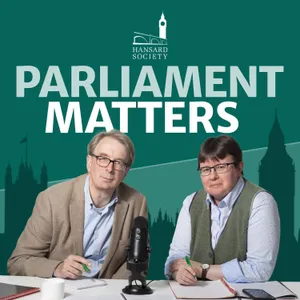
Join two of the UK's leading parliamentary experts, Mark D'Arcy and Ruth Fox, as they guide you through the often mysterious ways our politicians do business and explore the running controversies about the way Parliament works. Each week they will analyse how laws are made and ministers held accountable by the people we send to Westminster. They will be debating the topical issues of the day, looking back at key historical events and discussing the latest research on democracy and Parliament. Why? Because whether it's the taxes you pay, or the laws you've got to obey... Parliament matters!Mark D'Arcy was the BBC's parliamentary correspondent for two decades. Ruth Fox is the Director of the parliamentary think-tank the Hansard Society.❓ Submit your questions on all things Parliament to Mark and Ruth via our website here: <a href="https://hansardsociety.org.uk/
Latest Episodes
The most recent episodes — sign up to get AI-powered summaries of each one.
- 3 days ago1h 9m
PMQs: Parliament Matters Questions
Recorded at Queen Mary University of London as part of Student Week, welcoming students at the start of the new academic year, this special live edition features three expert guests: historian Dr Robert Saunders; Private Members’ Bill specialist Dr Daniel Gover; and historian Dr Catherine Haddon, a senior fellow at the Institute for Government and former Queen Mary student.The panel begins by assessing the new Burnham Government. Has the Prime Minister’s more optimistic, personable style marked a substantive break with Keir Starmer or merely improved the presentation? They consider the fiscal and geopolitical constraints facing the Government; Burnham’s management of Labour MPs; the balance of power among senior ministers and advisers; relations with the civil service; and whether experience as a metro mayor is useful preparation for Downing Street.The students then put the questions. Should Britain cap political donations after Reform UK received unprecedented sums from two billionaires, and would retrospective legislation be justified? Is the emerging five-party system here to stay, and can Parliament’s rules properly accommodate smaller parties? Will social media displace traditional journalism, or make trusted scrutiny and fact-checking more important?The discussion also covers whether Parliament has too many recesses; the tension between national infrastructure needs and local opposition; devolution, separatism and the future of the Union; and reform of Private Members’ Bills. Finally, the panel recommends essential reading for students of Parliament, from political diaries and Anthony Trollope to contemporary accounts by Rory Stewart and Jess Phillips._____🎓 Learn more using our resources for the issues mentioned in this episode. ❓ Send us your questions about Parliament: ✅ Subscribe to our newsletter. 📱 Follow us across social media @HansardSociety / @hansardsociety.bsky.social £ - Support the Hansard Society and this podcast by making a donation today. Parliament Matters is a Hansard Society production supported by the Joseph Rowntree Charitable Trust. Presenters: Mark D’Arcy and Ruth FoxProducer: Richard TownsendSound mixing: Matthew Kowalczuk, Queen Mary University of London Hosted on Acast. See acast.com/privacy for more information.
- 1 weeks ago53 min
MPs reject the assisted dying bill: What happened, and what next?
MPs have rejected the assisted dying bill – but why did a proposal they had previously supported lose this time, and what happens now? Andrew Lewin MP, a supporter of the bill, hot-foots it from the Chamber to give us his immediate reaction. He describes the atmosphere when the result was announced, offers his explanation for the bill’s defeat and considers whether and how the campaign to change the law might continue. Back in the studio, Hansard Society researcher Matthew England joins us to crunch the numbers. Turnout proved crucial to the final result: was the bill defeated because MPs changed their minds, or because previous supporters stayed away? We explore why support has slowly ebbed in the Commons and examine the substantive and procedural problems that confronted the bill. Could there now be a backlash against the House of Lords over the role Peers played in derailing the legislation? Might the Commons seek to curb the Upper House’s powers or was the Lords simply doing its job by scrutinising a deeply consequential and technically complex bill? And with this latest proposal defeated, is assisted dying now off Parliament’s agenda for the foreseeable future? Plus, Nigel Farage told Reform UK’s conference that he would declare a “national emergency” over the small boats crisis. But would such a declaration actually give a Prime Minister any additional legislative powers? And Lee Anderson accused MPs of being lazy and suggested that, under a Reform government, Parliament would sit seven days a week to force through its legislative programme. What would that mean in practice for the management – and, more importantly, the scrutiny – of parliamentary business? Would MPs, officials and the wider parliamentary machinery be able to sustain it? And even if legislation were driven rapidly through the Commons, what would happen when it reached the House of Lords?______ 🎓 Learn more using our resources for the issues mentioned in this episode. ❓ Send us your questions about Parliament: ✅ Subscribe to our newsletter. 📱 Follow us across social media @HansardSociety / @hansardsociety.bsky.social £ - Support the Hansard Society and this podcast by making a donation today. Parliament Matters is a Hansard Society production supported by the Joseph Rowntree Charitable Trust. Presenters: Mark D’Arcy and Ruth Fox Producer: Richard Townsend Hosted on Acast. See acast.com/privacy for more information.
- 2 weeks ago56 min
Andy Burnham’s rewired state: Can Parliament provide the circuit breaker?
Andy Burnham made his despatch box debut as Prime Minister in the House of Commons this week with one of the longest ministerial statements on record and a promise to strengthen the Prime Minister’s grip on Whitehall while transferring power and resources away from it. We examine the new Office of the Prime Minister and Cabinet and No. 10 North. Are they instruments of genuine decentralisation or a more powerful prime-ministerial centre with a Manchester outpost? If Burnham wants Parliament to become the country’s “circuit breaker”, what powers, information and resources will MPs need to do the job? We also ask whether “Parliament, not the courts” means clearer ministerial responsibility or executive power that is harder to challenge and what it all might mean for the future of judicial review. And will devolution without stronger scrutiny simply create powerful mayors and council leaders with weak legislative checks? Plus: Keir Starmer leaves Parliament, Labour MPs contest three select committee chairships, and more than 6,000 written parliamentary questions land after the summer recess. At an estimated £219 each, why are a handful of MPs generating such a large bill and is it time for a recess cap?_____ 🎓 Learn more using our resources for the issues mentioned in this episode. ❓ Send us your questions about Parliament: ✅ Subscribe to our newsletter. 📱 Follow us across social media @HansardSociety / @hansardsociety.bsky.social £ - Support the Hansard Society and this podcast by making a donation today. Parliament Matters is a Hansard Society production supported by the Joseph Rowntree Charitable Trust. Presenters: Mark D’Arcy and Ruth Fox Producer: Richard Townsend Hosted on Acast. See acast.com/privacy for more information.
- Aug 20, 202641 min
Joanna Cherry: The SNP, Westminster, and a decade of political battles
Joanna Cherry joins us this week to discuss her newly published memoir, in which she looks back on some of the most contentious battles in British and Scottish politics in the last two decades. She arrived at Westminster in 2015 as one of 56 SNP MPs elected in a historic landslide that transformed Scottish politics and made the SNP the third-largest party in the House of Commons. She describes the excitement – and occasional hostility – that greeted the new contingent and explains why her experience at Westminster left her believing that the Scottish Parliament could learn a lot from the Commons, particularly when it comes to cross-party working, debate, dissent, and committee scrutiny. One of the central arguments of Cherry’s memoir is that the SNP repeatedly failed to exploit moments of political leverage and that it pursued the wrong strategy for securing another Scottish independence referendum after the loss in 2014. She sets out what she thinks the party could have done differently and why she believes support for independence has now become increasingly detached from support for the SNP itself. Her national profile grew dramatically during the Brexit years. As a constitutional lawyer, Cherry became the lead petitioner in the Scottish legal challenge to Boris Johnson’s 2019 prorogation of Parliament. She explains why the case was brought in Scotland, why she believed the challengers would ultimately win, and what it felt like when the Supreme Court unanimously ruled the prorogation unlawful. The conversation also turns to the bitter internal disputes that marked Cherry’s later years in the SNP. She discusses her relationship with Nicola Sturgeon, her concerns about the SNP’s governance and finances, the treatment of her former mentor Alex Salmond, and the fierce arguments over reform of Scotland’s gender recognition laws. Having lost her seat at Westminster in 2024 and subsequently left the SNP, is Joanna Cherry finished with frontline politics? Perhaps not. She doesn’t rule out a return under a new party leader and a new culture of independent thinking.🎓 Learn more using our resources for the issues mentioned in this episode. ❓ Send us your questions about Parliament: ✅ Subscribe to our newsletter. 📱 Follow us across social media @HansardSociety / @hansardsociety.bsky.social £ - Support the Hansard Society and this podcast by making a donation today. Parliament Matters is a Hansard Society production supported by the Joseph Rowntree Charitable Trust. Presenters: Mark D’Arcy and Ruth Fox Producer: Richard Townsend Hosted on Acast. See acast.com/privacy for more information.
- Aug 6, 202639 min
Unparliamentary: Colourful tales from the Canadian Parliament
Canada’s Parliament shares its Westminster roots with the UK, but it has developed its own distinctive traditions, procedures and political culture. In this episode, Charlie Feldman – former President of the Canadian Study of Parliament Group and author of Unparliamentary, a collection of stories from the stranger corners of Canadian political history – explains how the federal Parliament in Ottawa reflects its British inheritance while developing a character all of its own. The conversation moves beyond constitutional structures to the parliamentary incidents that never quite make it into procedural textbooks. From fistfights between MPs that left chunks torn from a Victorian beard to a full-size salmon being carried across the chamber and deposited on the Prime Minister’s desk, these stories are entertaining in their own right, while illustrating that even the grandest legislatures are not immune to moments of absurdity or behaviour that falls well short of the dignity their proceedings are meant to embody. Charlie also explores some of the more unusual chapters in the Canadian Parliament’s history, including the era when senators were required to adjudicate divorce petitions, with medically trained members examining evidence in an intrusive manner that would be unimaginable today. He discusses the quirks of bilingual parliamentary proceedings and reveals the truth behind the famous story of an MP who allegedly read his entire book into Hansard to secure a free French translation. The episode also examines Parliament Hill’s more unconventional residents. Charlie recounts the contrasting fortunes of its well-loved colony of feral cats and an infestation of rabbits that reportedly survived repeated gunfire from the window of the Speaker’s office. Finally, the discussion looks beyond procedure to Parliament’s physical home. Drawing on visits to legislatures across Europe, Charlie reflects on the challenge of preserving historic parliamentary buildings while creating safe, accessible and modern workplaces. Canada’s ambitious restoration of Parliament Hill offers valuable lessons for Westminster as it confronts the long-term renewal of its own ageing estate.🎓 Learn more using our resources for the issues mentioned in this episode. ❓ Send us your questions about Parliament: ✅ Subscribe to our newsletter. 📱 Follow us across social media @HansardSociety / @hansardsociety.bsky.social £ - Support the Hansard Society and this podcast by making a donation today. Parliament Matters is a Hansard Society production supported by the Joseph Rowntree Charitable Trust. Presenters: Mark D’Arcy and Ruth Fox Producer: Richard Townsend Hosted on Acast. See acast.com/privacy for more information.
- Jul 23, 20261h 2m
Labour’s last chance saloon? Burnham’s new Cabinet faces familiar parliamentary problems
Andy Burnham has unveiled his ministerial team. So, we assess what his appointments reveal about the Government’s priorities, the political calculations behind them, and the parliamentary tests that lie ahead. We begin with the appointment of the new Chief Whip, Anneliese Midgley MP, who takes on one of Westminster’s toughest jobs despite having just two years’ parliamentary experience and no experience on the front bench. We also consider the return of familiar faces to Cabinet, the promotion of newer MPs, the creation of a Cabinet-level role for artificial intelligence, and the implications of the reshuffle for select committees, the House of Lords and the Opposition front benches. Andy Burnham has also reorganised the machinery of government. Professor Jon Davis, Professor of Government at King’s College London, joins us to explain why changes to Whitehall departments matter, how they shape decision-making at the heart of government, and why reorganising government can have consequences that last long after individual ministers have moved on. With Parliament now in summer recess, Ruth and Mark also recommend a selection of political books to keep you entertained over the holidays – whether you’re heading for the beach, relaxing in the garden or simply taking shelter from the latest heatwave. Although Parliament is taking a break, Parliament Matters isn't. Keep an eye on your podcast feed throughout August for several special episodes. Unless Parliament is recalled or major political developments demand an emergency edition, we'll return with our regular weekly analysis when Parliament reconvenes in September.____ 🎓 Learn more using our resources for the issues mentioned in this episode. ❓ Send us your questions about Parliament: ✅ Subscribe to our newsletter. 📱 Follow us across social media @HansardSociety / @hansardsociety.bsky.social £ - Support the Hansard Society and this podcast by making a donation today. Parliament Matters is a Hansard Society production supported by the Joseph Rowntree Charitable Trust. Presenters: Mark D’Arcy and Ruth FoxProducer: Richard Townsend Hosted on Acast. See acast.com/privacy for more information.
- Jul 17, 20261h 11m
How do we protect politicians in a dangerous age?
Following the murder of Ann Widdecombe, we reflect on the dangers facing those in Parliament and public life. Earlier this year, former Lord Chancellor Sir Robert Buckland was appointed to lead the independent review into the circumstances surrounding the murder of Sir David Amess MP, examining whether any opportunities to prevent his death were missed. He joins us to discuss the risks facing politicians today, what more can be done to improve their safety, and how those protections can be strengthened without undermining the close relationship between MPs and the constituents they serve. We also look back at Ann Widdecombe's parliamentary career, including her memorable appearance at the Hansard Society's 2009 House of Commons Speaker election hustings, where she demonstrated the wit, independence and commitment to Parliament that defined her public life. As Sir Keir Starmer names 26 new Peers, we examine the future of the House of Lords. This week, the Hansard Society hosted the first major speech by the Lord Speaker since his election earlier this year. In a wide-ranging address, he warned of the constitutional risks of embarking on poorly conceived reform of the Upper House, describing the Lords as a "constitutional trip switch" capable of forcing a rethink of flawed legislation that has not received adequate scrutiny in the Commons. Anyone seeking to rewire the system, he argued, must consider whether a reformed second chamber would continue to provide that safeguard – or instead "blow a constitutional fuse". We also discuss the newly published report on Retirement and Participation in the House of Lords, which proposes a phased mandatory retirement age, requiring all Peers to retire at 80 by 2034, alongside a minimum participation requirement that could see inactive members removed from the House. And with the new Burnham Government expected to emerge from its chrysalis next week, we ask whether the House of Commons should have postponed its summer recess to scrutinise the incoming Prime Minister. We explore the constitutional mechanics and political realities of appointing a new Government and consider what Parliament's priorities should be when MPs return in September to begin holding the new administration to account.___ 🎓 Learn more using our resources for the issues mentioned in this episode. ❓ Send us your questions about Parliament: ✅ Subscribe to our newsletter. 📱 Follow us across social media @HansardSociety / @hansardsociety.bsky.social £ - Support the Hansard Society and this podcast by making a donation today. Parliament Matters is a Hansard Society production supported by the Joseph Rowntree Charitable Trust. Presenters: Mark D’Arcy and Ruth Fox Producer: Richard Townsend Hosted on Acast. See acast.com/privacy for more information.
- Jul 9, 20261h 14m
Nigel Farage leaves Parliament: What now happens to the standards investigation?
Nigel Farage has quit the House of Commons to force a by-election in his constituency. In a blistering attack on what he called the media “pile-on” and a political stitch-up by the Westminster establishment, he insisted that the “people of Clacton should be the judge of my actions.” So, this week we dissect his “resignation” statement and ask whether he has a point. Is Farage the victim of an establishment determined to bring him down, or is he simply struggling under the weight of mounting scrutiny? We compare his case with other high-profile political controversies and examine whether his arguments stand up. We also explain what his departure means for the Parliamentary Commissioner for Standards’ investigation into his conduct. We explore the standards process, why the investigation is now paused, what happens if Farage wins or loses the by-election, and the range of possible outcomes if the investigation resumes. Just before we began recording, Andy Burnham sent Labour MPs a lengthy leadership pitch promising a different style of government: a stronger voice for backbenchers, a more collaborative approach to policymaking, changes in the approach of the Whips' Office, and a renewed focus on Parliament itself. We analyse what he's proposing and what it might mean in practice. Plus, we sit down with Labour MP Alex Sobel, Chair of the Fair Votes All-Party Parliamentary Group, to discuss his bid to amend the Representation of the People Bill to establish a National Commission on Electoral Reform. He explains why he believes proportional representation is essential to restoring trust in British politics, assesses the prospects for winning Labour over to electoral reform, and argues that the Government should go even further than the Rycroft Review recommendations to tighten the rules on political donations.____ 🎓 Learn more using our resources for the issues mentioned in this episode. ❓ Send us your questions about Parliament: ✅ Subscribe to our newsletter. 📱 Follow us across social media @HansardSociety / @hansardsociety.bsky.social £ - Support the Hansard Society and this podcast by making a donation today. Parliament Matters is a Hansard Society production supported by the Joseph Rowntree Charitable Trust. Presenters: Mark D’Arcy and Ruth FoxProducer: Richard Townsend Hosted on Acast. See acast.com/privacy for more information.
Get Parliament Matters summaries in your inbox
Free AI-powered daily recaps. Key takeaways, quotes, and mentions — in a 5-minute read.
Get Free Summaries →Free forever for up to 3 podcasts. No credit card required.
You Might Also Like
Listeners also like.

Any Questions? and Any Answers?
Experts answer public questions on current issues, followed by audience responses.

Today in Parliament
Coverage of daily news, discussions, and events in Parliament.

Strong Message Here
A weekly analysis of political language and doublespeak, exploring how rhetoric shapes perception and power.

Political Thinking with Nick Robinson
In-depth conversations with political figures and influencers about their lives and the experiences that shaped their worldviews.

Pod Save the UK
Comedians and journalists analyze UK politics with guests, offering insight and solutions on current events.

The Rest Is Politics
Two former political insiders analyze current events in the UK and abroad, offering candid debate and behind-the-scenes insights.

Analysis
Examines the ideas and forces shaping public policy in Britain and abroad with writers, journalists, and academics.

Newscast
A daily news podcast from the BBC that breaks down major headlines and political developments with expert journalists.

Radical with Amol Rajan
Amol Rajan interviews global radicals, pioneers, and innovators shaping the future on issues like AI, climate, and politics.

Friday Night Comedy from BBC Radio 4
Satirical comedy shows from BBC Radio 4 that tackle the week’s news with sharp humor and parody.

The Media Show
A programme exploring the revolution in media, including social media, breaking news, and misinformation.

Intelligence Squared
Live debates and in-depth discussions on pressing global issues featuring leading experts and thinkers.
About Parliament Matters
Join two of the UK's leading parliamentary experts, Mark D'Arcy and Ruth Fox, as they guide you through the often mysterious ways our politicians do business and explore the running controversies about the way Parliament works. Each week they will analyse how laws are made and ministers held accountable by the people we send to Westminster. They will be debating the topical issues of the day, looking back at key historical events and discussing the latest research on democracy and Parliament. Why? Because whether it's the taxes you pay, or the laws you've got to obey... Parliament matters!Mark D'Arcy was the BBC's parliamentary correspondent for two decades. Ruth Fox is the Director of the parliamentary think-tank the Hansard Society.❓ Submit your questions on all things Parliament to Mark and Ruth via our website here: <a href="https://hansardsociety.org.uk/
Customized Recaps
AI-powered recaps with compact key takeaways, quotes, and insights.
Straight to Your Inbox
Get key takeaways from Parliament Matters in a 5-minute read.
Save Hours Every Week
Stay current on your favorite podcasts without falling behind.
Frequently Asked Questions
What is Podzilla's Parliament Matters daily summary?
It's a free AI-powered email that summarizes new episodes of Parliament Matters as soon as they're published. You get the key takeaways, notable quotes, and links & mentions — all in a quick read.
How does the Parliament Matters podcast summary work?
When a new episode drops, our AI transcribes and analyzes it, then generates a personalized summary tailored to your interests and profession. It's delivered to your inbox every morning.
Is this an official Parliament Matters product?
No. Podzilla is an independent service that summarizes publicly available podcast content. We're not affiliated with or endorsed by Hansard Society.
Can I get summaries of other podcasts too?
Absolutely! The free plan covers up to 3 podcasts. Upgrade to Pro for 15, or Premium for 50. Browse our full catalog at /podcasts.
How often does Parliament Matters release new episodes?
Parliament Matters publishes weekly. Our AI generates a summary within hours of each new episode.
What topics does Parliament Matters cover?
Parliament Matters covers topics including News, Government, Politics. Our AI identifies the specific themes in each episode and highlights what matters most to you.
Start getting Parliament Matters summaries tomorrow morning.
Free forever for up to 3 podcasts. No credit card required.
Free forever for up to 3 podcasts. No credit card required.