Free Daily Podcast Summary
Out of Patients with Matthew Zachary: Daily Summaries Delivered
by Matthew Zachary Worldwide
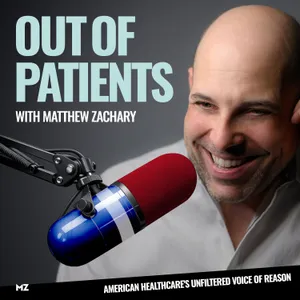
The longest-running independent healthcare podcast, Out of Patients with Matthew Zachary has supplied 17 years of unfiltered truth about American healthcare. A 30-year brain cancer survivor, Matthew built the young adult cancer movement from scratch. Now he channels patient rage into political power, featuring on the air battle-scarred survivors, exhausted caregivers, and the rare insider brave enough to name what's killing us. It’s real stories from real people who refuse to accept that healthcare has to hurt this much. New listeners come for the truth. They stay because finally someone's saying what they've been screaming.
Latest Episodes
The most recent episodes — sign up to get AI-powered summaries of each one.
- Yesterday47 min
Fitz Happens: The Marvelous Fitz Koehler
Fitz Koehler is a fitness expert, race announcer, author, and breast cancer survivor whose career spans decades of helping people move, train, and live healthier lives. After earning a master’s degree in exercise and sport sciences, she built the Fitzness brand, launched the Morning Mile school fitness program, and became one of the country’s most recognizable voices at endurance events before cancer abruptly shifted the conversation. She spent 15 months enduring chemotherapy, surgery, and radiation after discovering breast cancer shortly after receiving a clean mammogram. She kept traveling, announcing races, and working through treatment while watching the body she had spent a lifetime building become weaker by the week. Instead of asking why cancer happened, she focused on the only things she believed remained under her control: movement, nutrition, sleep, and mental health. The conversation explores where personal agency ends and biology takes over. Koehler argues that exercise is not about chasing perfection or preventing every diagnosis. It is about building physical reserve before illness arrives and preserving strength, mobility, and independence during treatment. She rejects wellness snake oil, fad supplements, and miracle cures in favor of practical habits rooted in exercise science and lived experience. The discussion also confronts a harder truth. Koehler did everything “right” and still developed cancer. That tension becomes the center of the episode. Fitness cannot eliminate randomness, but it can influence how people experience treatment, recover from surgery, and reclaim their lives afterward. The conversation moves beyond motivation and into survivorship, exercise oncology, cancer rehabilitation, evidence-based nutrition, and the limits of individual control inside a healthcare system that often tells patients what they should do without showing them how to do it. Along the way, the conversation wanders through kickboxing, Cinnabon, Jean-Claude Van Damme, chocolate-covered Cheetos, Jerry Seinfeld playing during chemotherapy stretches, and why the simplest advice is often the hardest to follow. Beneath the humor sits a larger argument: preparing the body for hardship is not about living forever. It is about living better when life inevitably gets difficult. RELATED LINKSFitz KoehlerFitznessThe Morning MileYou. Supercharged!My Noisy Cancer ComebackYour Healthy Cancer ComebackUF Health Cancer CenterAmerican College of Sports Medicine Exercise Is MedicineFEEDBACKLike this episode? Rate and review Out of Patients on your favorite podcast platform. For guest suggestions or sponsorship email podcasts@matthewzachary.comSee Privacy Policy at https://art19.com/privacy and California Privacy Notice at https://art19.com/privacy#do-not-sell-my-info.
- 2 weeks ago41 min
SurgeON: Dr. Jeremy Heffner
Jeremy Heffner, MD, FACS is a board-certified trauma surgeon, former Chair of Surgery at Lima Memorial Health System, and cofounder of Surgery Unified, one of the largest physician-led communities in surgery. His perspective carries weight because he has spent decades inside operating rooms, hospital leadership, physician culture, and the growing collision between medicine and corporate healthcare. He grew up in a blue-collar Ohio family of firefighters, railroad workers, police officers, and tradespeople. Medicine represented something rare: a career that combined service, stability, and purpose. He pursued engineering, earned his medical degree, completed trauma surgery fellowship training at the University of Michigan, and entered a profession that taught physicians to sacrifice themselves for patients.Then the rules changed.This conversation traces the gap between the medicine physicians were trained to practice and the healthcare industry that emerged around them. Administrative burden expanded. Insurance companies gained influence over treatment decisions. Prior authorization became routine. Hospital systems consolidated. Physicians retained responsibility for outcomes while losing authority over the conditions required to achieve them.Heffner describes watching colleagues struggle with burnout, moral injury, PTSD, and growing frustration with a system that increasingly inserts business incentives between clinicians and patients. He explains why younger physicians are entering medicine with a level of visibility that previous generations never had. They see the paperwork, the denials, the loss of autonomy, and the personal cost before they ever finish training.The discussion moves beyond physician dissatisfaction and into the broader consequences for patients. When insurers delay care, hospitals absorb costs, clinicians absorb stress, and patients absorb uncertainty. The financial incentives remain intact while trust erodes across every level of the healthcare system.At its core, this episode examines what happens when a profession built around service finds itself operating inside an industry built around extraction. The result affects physicians, nurses, caregivers, and every patient forced to navigate the consequences.RELATED LINKSJeremy HeffnerSurgery UnifiedSurgeOnUniversity of Michigan Department of SurgeryKevinMDSuck It Up ButtercupFEEDBACKLike this episode? Rate and review Out of Patients on your favorite podcast platform. For guest suggestions or sponsorship email podcasts@matthewzachary.comSee Privacy Policy at https://art19.com/privacy and California Privacy Notice at https://art19.com/privacy#do-not-sell-my-info.
- 2 weeks ago18 min
[HIATUS] The Cancer Mavericks EP8: The Inequity of Cure: Who Gets to Matter
In 1971, the National Cancer Act transformed cancer into a national research priority. More than 50 years later, the next frontier is no longer defined solely by scientific discovery, but by how quickly knowledge, lived experience, and patient voices can reshape healthcare itself.The concluding chapter of The Cancer Mavericks: A History of Survivorship explores how the cancer advocacy movement continues to evolve in an era of digital communities, social media, precision medicine, and grassroots activism. Building on the work of pioneers such as Mary Lasker, Rose Kushner, and the generations of survivors who followed, today’s advocates are expanding the movement beyond awareness to demand health equity, trusted information, patient-centered research, and meaningful representation in healthcare decision-making.The episode examines how technology has transformed advocacy from local support groups into global communities capable of organizing in real time. Researchers, policymakers, nonprofit leaders, and survivors reflect on the growing influence of digital storytelling, online education, and peer-to-peer networks that connect patients across diagnoses, generations, and geographic boundaries. At the same time, they acknowledge new responsibilities: ensuring accurate medical information, combating misinformation, protecting trust, and keeping patients at the center of innovation.The story also looks ahead to the next generation of advocates. Young leaders are applying lessons learned from decades of cancer activism while drawing inspiration from broader movements for social justice, public health, and community organizing. Their work reflects a simple but enduring truth: meaningful change rarely begins inside institutions. It begins when ordinary people refuse to accept that the system cannot improve.Cancer survivorship has never been a finished story. Every generation inherits the progress achieved by those who came before while confronting challenges uniquely its own. The future of survivorship will be shaped not only by scientific breakthroughs, but by those willing to listen, organize, educate, and ensure that every patient’s voice helps define what comes next.RELATED LINKSNational Cancer InstituteCancer MoonshotCenters for Disease Control and Prevention | Division of Cancer Prevention and ControlHopeLabTigerlily FoundationStupid CancerFEEDBACKLike this episode? Rate and review The Cancer Mavericks: A History of Survivorship on your favorite podcast platform. For more information, visit CancerMavericks.com. Please send any questions to podcasts@matthewzachary.com.See Privacy Policy at https://art19.com/privacy and California Privacy Notice at https://art19.com/privacy#do-not-sell-my-info.
- 3 weeks ago37 min
[HIATUS] The Cancer Mavericks EP7: The Inequity of Cure: Who Gets to Matter
In 1987, Mary P. Lovato, a member of Kewa Pueblo in New Mexico, was diagnosed with acute leukemia. To receive a bone marrow transplant, she had to travel more than 800 miles from home because specialized cancer care was unavailable through the Indian Health Service. When she returned, she discovered another obstacle: many in her community feared cancer so deeply that they avoided speaking about it altogether.This episode examines how cancer survivorship exposed profound inequities in the American healthcare system. Long before health equity became a national priority, advocates from underserved communities were confronting disparities rooted in geography, poverty, racism, language, underfunded healthcare systems, and historical mistrust of medical institutions. Their work demonstrated that scientific advances alone cannot improve survival if patients cannot reach, afford, or trust the care available to them.The story follows pioneers including Mary P. Lovato, who built the first national Native-led cancer support and education program for Indigenous communities, and Maimah Karmo, founder of the Tigerlily Foundation, whose breast cancer diagnosis inspired a movement to improve early detection, clinical trial participation, and representation for Black women. Their advocacy challenged longstanding barriers to culturally competent care while highlighting persistent inequities in access to screening, fertility preservation, navigation, and innovative treatments.The episode also explores why diversity in clinical research matters. For decades, many cancer clinical trials disproportionately enrolled White patients, limiting both access to promising therapies and the scientific understanding of how treatments perform across different populations. Researchers, patient advocates, and community leaders responded by redesigning outreach, improving patient navigation, reducing logistical barriers, and insisting that affected communities help shape the research itself.Cancer survivorship cannot be measured solely by scientific breakthroughs. It also depends on whether every patient has a meaningful opportunity to benefit from them. The pursuit of health equity remains one of the defining challenges and enduring responsibilities of modern oncology.RELATED LINKSNational Cancer Institute | Cancer Health DisparitiesIndian Health ServiceTigerlily FoundationNational Cancer Institute | Cancer Clinical TrialsAmerican Indian Cancer FoundationAbramson Cancer Center | University of PennsylvaniaFEEDBACKLike this episode? Rate and review The Cancer Mavericks: A History of Survivorship on your favorite podcast platform. For more information, visit CancerMavericks.com. Please send any questions to podcasts@matthewzachary.com.See Privacy Policy at https://art19.com/privacy and California Privacy Notice at https://art19.com/privacy#do-not-sell-my-info.
- 3 weeks ago40 min
[HIATUS] The Cancer Mavericks EP6: Lights, Camera… Colonoscopy: Cancer Mavericks Go to Hollywood
In 2000, Katie Couric underwent a live colonoscopy on national television following the death of her husband, Jay Monahan, from colorectal cancer at age 42. The broadcast demystified a procedure many Americans feared, led to an estimated 20% increase in colonoscopy screenings, and became one of the clearest examples of how public storytelling can change healthcare behavior.This episode examines how celebrities, journalists, filmmakers, and entertainers helped reshape the public conversation about cancer during a period when survivorship was becoming increasingly visible. As breakthroughs in targeted therapies, immunotherapy, and early detection allowed more people to live beyond cancer, public figures used their platforms to encourage screening, reduce stigma, and accelerate research. Their influence extended far beyond awareness campaigns, helping transform cancer from a private diagnosis into a national public health conversation.Central to this story is Laura Ziskin, the Hollywood producer behind Pretty Woman and the Spider-Man films, whose metastatic breast cancer diagnosis inspired the creation of Stand Up To Cancer. Working alongside Couric and leaders from entertainment, journalism, and biomedical research, Ziskin championed a new funding model that required multidisciplinary scientific collaboration, helping accelerate discoveries that contributed to multiple FDA-approved cancer therapies. The episode also highlights the advocacy of actor Patrick Dempsey, whose family’s experience with ovarian cancer led to the creation of the Dempsey Center, expanding support for patients and caregivers beyond medical treatment.The story also asks what celebrity advocacy often leaves unsaid. Financial toxicity, caregiver burden, chronic pain, mental health, and the long-term effects of treatment rarely receive the same attention as dramatic diagnoses or breakthrough cures. As cancer survivorship continues to evolve, the greatest challenge may not be convincing people to care about cancer, but helping them understand what it truly means to live with and beyond it.RELATED LINKSStand Up To CancerKatie Couric MediaDempsey CenterAmerican Association for Cancer ResearchNational Cancer InstituteDana-Farber Cancer Institute | Adult Survivorship ProgramFEEDBACKLike this episode? Rate and review The Cancer Mavericks: A History of Survivorship on your favorite podcast platform. For more information, visit CancerMavericks.com. Please send any questions to podcasts@matthewzachary.com.See Privacy Policy at https://art19.com/privacy and California Privacy Notice at https://art19.com/privacy#do-not-sell-my-info.
- 4 weeks ago42 min
[HIATUS] The Cancer Mavericks EP5: The Young Adult Cancer Revolution: When the Next Generation Got Loud
In 2006, a landmark report titled Closing the Gap: Research and Care Imperatives for Adolescents and Young Adults with Cancer confirmed what young survivors had been saying for years. While survival rates for children and older adults had steadily improved, adolescents and young adults had experienced decades of stalled progress. They had become cancer’s lost generation.This episode explores how young adult survivors transformed their shared isolation into one of the most influential grassroots movements in cancer advocacy. Diagnosed during the years typically devoted to education, careers, relationships, and starting families, patients between the ages of 15 and 39 confronted challenges that extended far beyond treatment. Fertility preservation, sexual health, employment, financial toxicity, insurance, and long-term quality of life were rarely discussed in oncology clinics, leaving many to navigate survivorship alone.The episode follows advocates including Tamika Felder, Lindsay Avner, Heidi Adams, Doug Ulman, and Dr. Archie Bleyer, whose research and advocacy fundamentally changed how medicine understands adolescent and young adult cancer. Through organizations including Planet Cancer, Fertile Hope, the Lance Armstrong Foundation, and later Stupid Cancer, survivors built online communities, educational resources, conferences, and national partnerships that challenged long-standing assumptions about cancer care. Their work helped establish fertility preservation as a standard discussion before treatment, expanded research dedicated to adolescent and young adult oncology, and elevated quality of life as a critical clinical outcome alongside survival.The movement also demonstrated the power of lived experience to reshape medicine. Survivors became researchers, educators, nonprofit founders, and policy advocates, insisting that cancer care account not only for years of life saved, but for the lives patients hoped to build afterward.What began as a search for peers evolved into a national movement that permanently transformed adolescent and young adult oncology. Today, dedicated research programs, clinical fellowships, survivorship resources, and patient advocacy organizations continue to build on the foundation these young cancer mavericks created.RELATED LINKSNational Cancer Institute | Adolescent and Young Adult (AYA) Cancer ProgramClosing the Gap: Research and Care Imperatives for Adolescents and Young Adults with CancerAmerican Society of Clinical Oncology | Fertility Preservation GuidelinesStupid CancerLivestrong FoundationJournal of Adolescent and Young Adult OncologyFEEDBACKLike this episode? Rate and review The Cancer Mavericks: A History of Survivorship on your favorite podcast platform. For more information, visit CancerMavericks.com. Please send any questions to podcasts@matthewzachary.com.See Privacy Policy at https://art19.com/privacy and California Privacy Notice at https://art19.com/privacy#do-not-sell-my-info.
- Aug 20, 202642 min
[HIATUS] The Cancer Mavericks EP4: You’re Not ‘Cured’ — You’re Just Not Dead
In 2006, the Institute of Medicine published From Cancer Patient to Cancer Survivor: Lost in Transition, concluding that millions of Americans were surviving cancer only to find themselves navigating a healthcare system unprepared for life after treatment. The report challenged oncology to recognize that curing cancer was not the end of care, but the beginning of survivorship.This episode explores how the growing cancer survivorship movement exposed the long-term consequences of cancer treatment that medicine had largely overlooked. As survival rates improved following the National Cancer Act of 1971, millions of survivors faced chronic fatigue, neuropathy, infertility, cognitive impairment, financial hardship, employment discrimination, anxiety, depression, and post-traumatic stress. These were not rare complications. They became defining features of survivorship for many patients.Drawing on the work of oncologist Dr. Patricia Ganz, survivor advocate Ellen Stovall, and researchers, clinicians, and survivors across the country, the episode examines how survivorship research expanded beyond recurrence and mortality to include quality of life, psychosocial care, rehabilitation, and long-term follow-up. Their efforts helped establish survivorship care plans, multidisciplinary survivorship clinics, and a broader understanding that cancer affects every aspect of a person’s life long after treatment ends.The episode also confronts persistent inequities in survivorship care. Insurance coverage often ends when treatment stops, supportive services remain inconsistent, financial toxicity continues to drive medical hardship, and racial, geographic, and socioeconomic disparities still influence who receives comprehensive follow-up care. For many survivors, finishing treatment simply marks the beginning of another struggle.Modern oncology increasingly recognizes that surviving cancer is measured by more than years of life. It is also measured by quality of life, dignity, access to care, and the ability to rebuild a future after treatment. That evolution remains one of the most significant legacies of the cancer survivorship movement.RELATED LINKSNational Academy of Medicine | From Cancer Patient to Cancer Survivor: Lost in TransitionNational Cancer Institute Office of Cancer SurvivorshipAmerican Society of Clinical Oncology | Survivorship CompendiumCancerCareHopeWell Cancer SupportNational Coalition for Cancer SurvivorshipFEEDBACKLike this episode? Rate and review The Cancer Mavericks: A History of Survivorship on your favorite podcast platform. For more information, visit CancerMavericks.com. Please send any questions to podcasts@matthewzachary.com.See Privacy Policy at https://art19.com/privacy and California Privacy Notice at https://art19.com/privacy#do-not-sell-my-info.
- Aug 18, 202641 min
[HIATUS] The Cancer Mavericks EP3: The Navigator and the Negotiator
In 1967, breast surgeon Dr. Harold P. Freeman arrived at Harlem Hospital expecting to treat cancer. Instead, he confronted a healthcare system where poverty, racism, lack of insurance, and institutional barriers often determined who lived long enough to receive treatment. Patients frequently arrived with advanced disease, not because medicine lacked answers, but because access to care had failed them.This episode explores how cancer survivorship expanded beyond medical breakthroughs to include healthcare access, health equity, and organized advocacy. Building on the early work of the National Coalition for Cancer Survivorship (NCCS), it examines the recognition that surviving cancer depended not only on research, but also on whether patients could navigate a fragmented healthcare system.Freeman responded by creating one of the nation’s first patient navigation programs at Harlem Hospital in 1990. Community-based navigators helped patients overcome practical barriers including insurance, transportation, appointments, communication, and fear. The model dramatically improved timely diagnosis and treatment, increased breast cancer survival in Harlem, and ultimately inspired the Patient Navigator Outreach and Chronic Disease Prevention Act of 2005, establishing navigation as a cornerstone of modern oncology care.The episode also follows cancer survivor Ellen Stovall, whose leadership transformed survivorship into a national policy movement. Through the NCCS, she united advocates across cancer types, fought for insurance protections, expanded access to clinical trials, helped shape the creation of the Office of Cancer Survivorship at the National Cancer Institute, and organized the landmark 1998 National March for Cancer Survivorship in Washington, D.C. Her work reframed survivorship as a public policy issue rather than a personal experience.Together, Freeman and Stovall demonstrated that scientific progress alone could not eliminate disparities in cancer outcomes. Their work established two enduring principles that continue to shape oncology today: patients need someone to help them navigate care, and survivors must have a voice in the policies that govern it. Modern cancer survivorship depends on both.RELATED LINKSNational Coalition for Cancer SurvivorshipHarold P. Freeman Patient Navigation InstituteNational Cancer Institute Office of Cancer SurvivorshipPatient Navigator Outreach and Chronic Disease Prevention Act of 2005American Cancer SocietyTuskegee Study Timeline | Centers for Disease Control and PreventionFEEDBACKLike this episode? Rate and review The Cancer Mavericks: A History of Survivorship on your favorite podcast platform. For more information, visit CancerMavericks.com. Please send any questions to podcasts@matthewzachary.com.See Privacy Policy at https://art19.com/privacy and California Privacy Notice at https://art19.com/privacy#do-not-sell-my-info.
Get Out of Patients with Matthew Zachary summaries in your inbox
Free AI-powered daily recaps. Key takeaways, quotes, and mentions — in a 5-minute read.
Get Free Summaries →Free forever for up to 3 podcasts. No credit card required.
You Might Also Like
Listeners also like.

The Checkup with Doctor Mike
A doctor discusses health, wellness, and personal stories with celebrities from entertainment, politics, sports, and media.
We're Out of Time
Discusses the fentanyl crisis, mental health, and resilience through interviews with recovery experts, survivors, and public figures.

Aubrey Marcus Podcast
Conversations on mindset, spirituality, and human optimization with a focus on psychedelics, health, and personal growth.

The House of Pod
A gastrointestinal doctor and colleagues discuss medicine with humor and insight.
Paul Saladino MD podcast
A physician explores the root causes of chronic disease and optimal health through science and personal experimentation.
Alive Again
People who survived life-threatening events share how their perspectives and lives changed afterward.

Treated with Dr. Sara Szal
Dr. Sara Szal explores holistic health solutions through conversations with experts and patients seeking mind, body, and soul healing.

The Dr. Hyman Show
Explores root causes of chronic disease and promotes functional medicine, nutrition, and preventive health through expert discussions.

The Dr. Gabrielle Lyon Show
Discusses health, longevity, and mental resilience through science-based conversations with medical and wellness experts.

Red Pill Your Healthcast
Two healthcare providers discuss overlooked health issues and empower listeners to make informed decisions for their families.
The Bob & Cancer Show
A couple and their friend share their honest experiences navigating a gastric cancer diagnosis, treatment, and the emotional challenges that follow.
Symptomatic: A Medical Mystery Podcast
Patients recount their struggles to diagnose mysterious chronic illnesses, guided by host Lauren Bright Pacheco.
About Out of Patients with Matthew Zachary
The longest-running independent healthcare podcast, Out of Patients with Matthew Zachary has supplied 17 years of unfiltered truth about American healthcare. A 30-year brain cancer survivor, Matthew built the young adult cancer movement from scratch. Now he channels patient rage into political power, featuring on the air battle-scarred survivors, exhausted caregivers, and the rare insider brave enough to name what's killing us. It’s real stories from real people who refuse to accept that healthcare has to hurt this much. New listeners come for the truth. They stay because finally someone's saying what they've been screaming.
Customized Recaps
AI-powered recaps with compact key takeaways, quotes, and insights.
Straight to Your Inbox
Get key takeaways from Out of Patients with Matthew Zachary in a 5-minute read.
Save Hours Every Week
Stay current on your favorite podcasts without falling behind.
Frequently Asked Questions
What is Podzilla's Out of Patients with Matthew Zachary daily summary?
It's a free AI-powered email that summarizes new episodes of Out of Patients with Matthew Zachary as soon as they're published. You get the key takeaways, notable quotes, and links & mentions — all in a quick read.
How does the Out of Patients with Matthew Zachary podcast summary work?
When a new episode drops, our AI transcribes and analyzes it, then generates a personalized summary tailored to your interests and profession. It's delivered to your inbox every morning.
Is this an official Out of Patients with Matthew Zachary product?
No. Podzilla is an independent service that summarizes publicly available podcast content. We're not affiliated with or endorsed by Matthew Zachary Worldwide.
Can I get summaries of other podcasts too?
Absolutely! The free plan covers up to 3 podcasts. Upgrade to Pro for 15, or Premium for 50. Browse our full catalog at /podcasts.
What topics does Out of Patients with Matthew Zachary cover?
Out of Patients with Matthew Zachary covers topics including Business, Entrepreneurship, Fitness, Culture, Health & Fitness, Society & Culture. Our AI identifies the specific themes in each episode and highlights what matters most to you.
Start getting Out of Patients with Matthew Zachary summaries tomorrow morning.
Free forever for up to 3 podcasts. No credit card required.
Free forever for up to 3 podcasts. No credit card required.