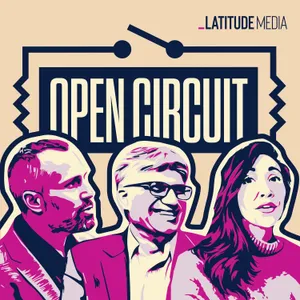
Free Daily Podcast Summary
Open Circuit: Daily Summaries Delivered
by Latitude Media
The energy transition, decoded. Every week, three industry veterans explore the business models, tech breakthroughs, and market shakeups that are driving the biggest industrial transformation in history. The show offers a rare insider's view of the clean energy market.
Latest Episodes
The most recent episodes — sign up to get AI-powered summaries of each one.
- 3 days ago27 min
The hidden power systems behind AI [partner content]
Data centers are known for their hulking exteriors, rows of blinking servers, and massive cooling equipment. But there’s an entire ecosystem no one gets to see: the electrical architecture that sits between the power source and the GPUs. And as data centers integrate more battery storage, there’s little consensus on what that electrical architecture should look like. Batteries used to have one job inside a data center: keep servers on until backup generators kicked on. But today, they're being used to smooth out volatile loads, support onsite generation, and buffer the grid. And that shapes the power system around it. In this episode, produced in partnership with Shoals Technologies, Stephen Lacey talks with Kishan Ponnadurai and Cayman Berg about the expanding role of batteries inside AI campuses, the shift from AC to higher-voltage DC, and navigating a market that is constantly changing. This episode was produced in partnership with Shoals Technologies Group. For 30 years, Shoals has designed and manufactured the electrical backbone of critical energy infrastructure. Learn how Shoals' solutions are helping power data centers.
- 5 days ago56 min
Power is caught in AI’s doom loop
We are in the middle of a radical political and economic realignment, with electricity infrastructure at the center of it. And this summer, the plot thickened. Power sector reforms are coming in fast and furious, across states, regional markets, and federal regulators. Local resistance reached new heights around the country. And data centers are scrambling politics as we near the midterm elections. Meanwhile, AI models are breaking containment in alarming ways. The leaders of AI labs are openly calling for a slowdown and warning of dire security impacts, even while the rush to release new models and IPO intensifies. Poll after poll shows Americans are increasingly distrustful and cynical about AI. And tech companies are stepping away from their claims about AI being a climate panacea, while they invest in the biggest gas projects on the planet. The future of power infrastructure is inextricably linked to all these forces. This week, we’re asking: How are they changing the trajectory of how power gets built? And what does responsible data center development actually look like? Credits: Co-hosted by Stephen Lacey, Jigar Shah, and Caroline Golin. Produced and edited by Stephen Lacey, Sean Marquand, and Anne Bailey. Get your ticket to Latitude Media’s Flex Summit in Austin, Texas on October 14-15. Open Circuit is brought to you by Building an Advanced Energy Ecosystem, where New Mexico's energy future is shaped. Join industry leaders, policy makers, researchers, and innovators at Building an Advanced Energy Ecosystem, September 14-16 in Albuquerque. Visit nmwomenlead.org/registration and use promo code CIRCUIT to save 10% on registration. Open Circuit is brought to you by FischTank PR, an award-winning climate and energy tech, renewables, and sustainability-focused PR firm dedicated to elevating the work of both early-stage and established companies. Learn more about their PR approach and how they can support your company’s messaging by visiting fischtankpr.com.
- 1 weeks ago21 min
Empowering utility customers with demand flexibility [partner content]
As data centers, factories, and electrification push growth to unprecedented heights, customers are looking for greater control over their energy use. But the traditional one-size-fits-all approach falls short for customers wanting to know which energy choices will benefit them most, and how those choices will impact their bills. In this third episode of Bidgely’s four-part series, Stephen Lacey talks with Kirby Brinlee, director of customer experience at Oklahoma Gas & Electric, and Abhay Gupta, CEO at Bidgely. Through their partnership with Bidgely, OG&E learned something surprising about their variable peak pricing program: Customers were shifting their energy use to the wrong hours. Personalized messages and recommendations proved a win-win for the utility and their customers. Flexibility programs became more reliable resources for grid planners, and customers learned how to keep their costs low. Kirby and Abhay discuss how load growth is reshaping the utility-customer relationship, why personalization matters, and how AI is helping OG&E give more power to customers. OG&E’s experience reveals how AI can unlock more sophisticated demand flexibility by finding the right customers, accurately measuring energy usage, and building stronger customer relationships. This is a partner episode, brought to you by Bidgely. This is the third episode in our series with Bidgely exploring how utilities are deploying purpose-built AI to solve their most pressing challenges. Tune in to the other episodes: How APS dove headfirst into AI Turning customer data into grid intelligence
- 1 weeks ago29 min
Electricity bills are on the ballot
Electricity prices have become a central storyline in upcoming U.S. elections. All over the country, Americans are finding it harder to pay their bills, and they’re getting increasingly cynical about utilities and data centers. While governors are caught in the middle of this voter anger, there’s a group of key decisionmakers that are often missed: the 200 regulators that oversee tens of billions of dollars in utility spending. In this episode, Charles Hua, the founder and executive director of PowerLines, walks through why that gap matters right now. Utilities requested a record $31 billion in rate increases last year. And PowerLines’ newest research found that utilities are planning $1.4 trillion in capital expenditures by 2030. Hua dissects what is driving that spending, arguing that the real drivers of higher bills predate the data center boom. Still, the data center effect is real. And state-level regulators are struggling to balance the need for economic development with the massive rate increase requests that utilities are throwing at them. So how will electricity affordability shape elections? And, most importantly, how will it shape the way we pay for needed grid upgrades? This conversation was recorded live at Latitude Media’s Transition-AI conference. Get your ticket to Latitude Media’s Flex Summit in Austin, Texas on October 14-15. Credits: Co-hosted by Stephen Lacey, Jigar Shah, and special guest Nate Adams. Produced and edited by Stephen Lacey, Sean Marquand, and Anne Bailey. Open Circuit is brought to you by Building an Advanced Energy Ecosystem, where New Mexico's energy future is shaped. Join industry leaders, policy makers, researchers, and innovators at Building an Advanced Energy Ecosystem, September 14-16 in Albuquerque. Visit nmwomenlead.org/registration and use promo code CIRCUIT to save 10% on registration. Open Circuit is brought to you by FischTank PR, an award-winning climate and energy tech, renewables, and sustainability-focused PR firm dedicated to elevating the work of both early-stage and established companies. Learn more about their PR approach and how they can support your company’s messaging by visiting fischtankpr.com.
- 3 weeks ago55 min
The breakout moment for VPPs [partner content]
Virtual power plants are having a moment. Suddenly, this once-niche solution for the power sector is breaking into mainstream discourse. The convergence of sudden load growth, aging infrastructure, extreme weather, and electricity inflation is turning distributed resources into must-deploy assets. At the state level, VPPs are becoming a go-to tool for making electricity more affordable. They’re championed as one of the only solutions that can open up enough capacity to support load growth over the next three years. But at a moment of historic utility spending, VPPs can still feel like a round peg in a square hole. Utilities and regulators treat them as a novelty, and market rules are not designed to unlock their potential. So what still needs to happen to leverage the true potential of this resource? This week, we have a live episode recorded from Cpower’s GridFuture conference in Jersey City. Stephen is joined by David Visneau, head of demand response and VPPs at NRG Business; Ken Schisler, senior director of growth & policy at NRG; and Mathew Sachs, chief strategy Officer at CPower . They dive into the unique tailwinds for the market, the regulatory constraints, the state-level policy activity, and some predictions about where we're headed. This episode was produced in partnership with CPower.
- Aug 21, 202649 min
Green Blueprint: Form's storage manufacturing breakthrough
We're on vacation through the end of August, so this week we’re featuring an episode of The Green Blueprint. Lithium-ion batteries have revolutionized energy storage. But inexpensive, multi-day storage will still be critical for backing renewables and decarbonizing the grid. Form Energy is tackling that challenge with a new class of iron-air batteries. By oxidizing and reducing iron, Form is creating low-cost, multi-day storage that competes directly with natural gas peaker plants. Mateo Jaramillo, CEO and co-founder of Form Energy, has spent over two decades in the battery industry, including building Tesla’s storage business. At Form, he’s leading the charge to bring these "E-peakers" to utilities across the country. The company recently achieved a major milestone: completing a one-million-square-foot factory on the site of an old steel mill in Weirton, West Virginia. In this episode, Mateo talks with host Lara Pierpoint about the grueling realities of scaling up manufacturing, why they chose to build in West Virginia, using AI to drive material science discovery, and the immense logistical challenges of building physical infrastructure. Open Circuit is brought to you by Building an Advanced Energy Ecosystem, where New Mexico's energy future is shaped. Join industry leaders, policy makers, researchers, and innovators at Building an Advanced Energy Ecosystem, September 14-16 in Albuquerque. Visit nmwomenlead.org/registration and use promo code CIRCUIT to save 10% on registration. Open Circuit is brought to you by FischTank PR, an award-winning climate and energy tech, renewables, and sustainability-focused PR firm dedicated to elevating the work of both early-stage and established companies. Learn more about their PR approach and how they can support your company’s messaging by visiting fischtankpr.com.
- Aug 19, 202622 min
AI needs a different kind of power plant [partner content]
Arbor Energy is betting that smaller, modular turbines can solve problems the conventional generation model was never designed for. Arbor Energy was founded with an unusual idea: take technologies from rocket engines and use them to make carbon-negative power plants. Today, the market has radically changed. Demand for turbines is exploding, the supply chain is jammed, and data centers need power on rapid timelines. Suddenly, Arbor’s 3D-printed turbine is a potential answer to the power bottleneck. In this episode, Stephen Lacey talks with Arbor CEO and co-founder Brad Hartwig, a former SpaceX engineer who found his calling in power generation. They explore how Arbor is adapting rocket technologies for power generation, how additive manufacturing could unlock new turbine supply chains, and why the company believes cleaner power solutions are critical for community acceptance. Can rocket engineering help reinvent the way we build power plants? This episode was produced in partnership with Arbor Energy.
- Aug 14, 202658 min
Did China outsmart America after the oil shock?
After Iran shut down the Strait of Hormuz, everyone thought prices would hit historic highs. But they didn't. Why? The answer is less about market resiliency, and more about two major government interventions. The U.S. intervened using a central banking model, and China intervened with a top-down government approach. James Gutman, head of research at Abaxx Technologies, joins us this week to discuss how these two interventions influenced global oil flows, and why China emerged as a clear winner. Gutman wrote about the Chinese and American strategies on his substack, Arcs and Angles. We look at how China cut crude oil imports and leaned on a decade of investment in electric vehicles, high-speed rail, and coal-to-liquids to defer demand. As China starts to come back into the market, the country is now operating at a position of strength. We also discuss the U.S. model, which leaned on strategic oil reserves to moderate prices in a way that mirrors central banking. Gutman argues that this “central bank of molecules” model worked, but only for so long. And he worries about how it will get used in the future. Finally, we ask how both of these approaches could get used again in other industries like critical minerals or equipment manufacturing. Get your ticket to Latitude Media’s Flex Summit in Austin, Texas on October 14-15. Credits: Co-hosted by Stephen Lacey, Jigar Shah, and special guest Nate Adams. Produced and edited by Stephen Lacey, Sean Marquand, and Anne Bailey. Open Circuit is brought to you by Building an Advanced Energy Ecosystem, where New Mexico's energy future is shaped. Join industry leaders, policy makers, researchers, and innovators at Building an Advanced Energy Ecosystem, September 14-16 in Albuquerque. Visit nmwomenlead.org/registration and use promo code CIRCUIT to save 10% on registration. Open Circuit is brought to you by FischTank PR, an award-winning climate and energy tech, renewables, and sustainability-focused PR firm dedicated to elevating the work of both early-stage and established companies. Learn more about their PR approach and how they can support your company’s messaging by visiting fischtankpr.com.
Get Open Circuit summaries in your inbox
Free AI-powered daily recaps. Key takeaways, quotes, and mentions — in a 5-minute read.
Get Free Summaries →Free forever for up to 3 podcasts. No credit card required.
You Might Also Like
Listeners also like.
Catalyst with Shayle Kann
Shayle Kann interviews experts on energy decarbonization, technology, and investment trends shaping the future of clean energy.

Intelligence Squared: Business
Discusses the future of capitalism and major economic trends with business leaders, authors, and economists.

Recode Daily
A daily breakdown of major tech and business stories shaping the digital world and its impact on society.

The State of Energy
A podcast exploring the uses and benefits of propane for homes, businesses, farms, and vehicle fleets.

Technology Now
A podcast exploring cutting-edge technology trends and innovations through interviews with industry leaders and HPE experts.

Latent Space: The AI Engineer Podcast
Explores AI engineering breakthroughs in foundation models, code generation, and AI agents through interviews with researchers and developers.

Power: Limits and Prospects for Human Survival
Explores how humanity's pursuit and misuse of power drives ecological and social crises, and why rethinking power is key to survival.

Wall Street Week
Wall Street Week explores global capitalism stories, hosted by David Westin in New York.

The Indicator from Planet Money
A daily economics podcast offering short, accessible insights into money, work, and business.

Voetnoten
Een podcast die complexe rapporten over energie en klimaat uitlegt in drie kwartier per aflevering.

The AI XR Podcast.
Industry insiders interview top founders and executives on AI, spatial computing, VR/AR, and synthetic media.
What's New
Explores how technology shapes culture and transforms everyday life.
About Open Circuit
The energy transition, decoded. Every week, three industry veterans explore the business models, tech breakthroughs, and market shakeups that are driving the biggest industrial transformation in history. The show offers a rare insider's view of the clean energy market.
Customized Recaps
AI-powered recaps with compact key takeaways, quotes, and insights.
Straight to Your Inbox
Get key takeaways from Open Circuit in a 5-minute read.
Save Hours Every Week
Stay current on your favorite podcasts without falling behind.
Frequently Asked Questions
What is Podzilla's Open Circuit daily summary?
It's a free AI-powered email that summarizes new episodes of Open Circuit as soon as they're published. You get the key takeaways, notable quotes, and links & mentions — all in a quick read.
How does the Open Circuit podcast summary work?
When a new episode drops, our AI transcribes and analyzes it, then generates a personalized summary tailored to your interests and profession. It's delivered to your inbox every morning.
Is this an official Open Circuit product?
No. Podzilla is an independent service that summarizes publicly available podcast content. We're not affiliated with or endorsed by Latitude Media.
Can I get summaries of other podcasts too?
Absolutely! The free plan covers up to 3 podcasts. Upgrade to Pro for 15, or Premium for 50. Browse our full catalog at /podcasts.
How often does Open Circuit release new episodes?
Open Circuit publishes weekly. Our AI generates a summary within hours of each new episode.
What topics does Open Circuit cover?
Open Circuit covers topics including News. Our AI identifies the specific themes in each episode and highlights what matters most to you.
Start getting Open Circuit summaries tomorrow morning.
Free forever for up to 3 podcasts. No credit card required.
Free forever for up to 3 podcasts. No credit card required.