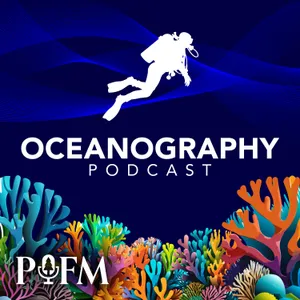
Free Daily Podcast Summary
Oceanography | Marine Science and Ocean Stories: Daily Summaries Delivered
by Pine Forest Media | Environmental Science Podcasts
The ocean is never separate from human life. Oceanography is a marine science podcast about what we know, how we know it, and what we choose to do with that knowledge. Hosted by science communicator Clark Marchese, the show brings researchers, conservationists, policymakers, Indigenous knowledge holders, advocates, and storytellers into conversations that move from discovery to decision-making. We follow whale calls into the deep sea, trace pollution from land to water, visit research vessels and international summits, and ask how ocean science can inform policy that genuinely serves people and the planet. Each episode makes complex research accessible without flattening it, connecting marine biology and ocean discovery with conservation, technology, justice, power, and global policy. Expect deep-dive interviews, narrative explainers, and field reporting grounded in curiosity, rigor, and the belief that understanding the ocean should help us care for it.
Latest Episodes
The most recent episodes — sign up to get AI-powered summaries of each one.
- Today48 min
What Can We Do About Plastic? (Like, for Real)
Plastic is everywhere. We know that. But what can we actually do about it? In this episode of Oceanography, host Clark Marchese speaks with Dr. Anja Brandon, Director of Plastics Policy at Ocean Conservancy, to work backwards through the lifecycle of plastic and ask which solutions can actually make a difference.Starting with plastic already in the ocean, they explore why targeted cleanups still matter before moving upstream to recycling, reuse systems, product design, Extended Producer Responsibility, reductions in single-use plastics, and policies designed to turn off the plastic tap altogether. They also look at where negotiations for a global UN plastics treaty stand and what needs to happen next.From the plastic bottle on the beach to the systems that produced it in the first place, this episode is about moving beyond awareness of plastic pollution and toward what we can actually do about it.Support our science communication directly by donating to Pine Forest Media or directly on PayPalEpisode Guests: Dr. Anja BrandonVisit Dr. Brandon’s website, follow on Instagram @plasticfreeanja, or connect on LinkedInReview Dr. Brandon’s publications on Google ScholarVisit the Ocean Conservancy website and get involved hereListen to Plastic Podcast on Spotify or Apple Podcasts and find our episode on the Plastics Treaty: Busan and Beyond - A UN Treaty on Plastics Listen to Pine Forest Media’s NEWEST PODCAST GREEN FREQUENCYEpisode Transcript and more information on the Pine Forest Media websiteFollow Pine Forest Media on Instagram @pineforestmediaHosted, produced, and edited by Clark Marchese Cover art by Jomiro EmingTheme music by Nela RuizFind some more Pine Forest Media podcasts belowListen to South Pole on Spotify or Apple PodcastsListen to Something in the Water on Spotify or Apple Podcasts Hosted on Acast. See acast.com/privacy for more information.
- 2 weeks ago37 min
A Plankton Ambassador: How Plankton Shaped Life on Earth
Plankton made life on Earth possible. So why do we know so little about them? In this episode of Oceanography, Clark speaks with Vincent Doumeizel, Senior Adviser on the Oceans to the United Nations Global Compact and author of The Power of Plankton. Together, they dive into the extraordinary world of organisms drifting through our oceans, from their role in producing oxygen and shaping evolution to their influence on the carbon cycle, marine food webs, and ocean health.They also explore how new tools like environmental DNA, satellites, and AI are transforming plankton research, why plankton remain largely absent from environmental policy, and how understanding this mostly invisible ecosystem could reveal new ways to protect our oceans and our planet.Support our science communication directly by donating to Pine Forest Media or directly on PayPalEpisode Guests: Vincent DoumeizelFind the book, The Power of PlanktonRead the Plankton ManifestoConnect with Vincent Doumeizel on LinkedIn or follow on social media @theseaweedrevolutionListen to Pine Forest Media’s NEWEST PODCAST GREEN FREQUENCYEpisode Transcript and more information on the Pine Forest Media websiteFollow Pine Forest Media on Instagram @pineforestmediaHosted, produced, and edited by Clark Marchese Cover art by Jomiro EmingTheme music by Nela RuizFind some more Pine Forest Media podcasts belowListen to Plastic Podcast on Spotify or Apple PodcastsListen to South Pole on Spotify or Apple PodcastsListen to Something in the Water on Spotify or Apple Podcasts Hosted on Acast. See acast.com/privacy for more information.
- 3 weeks ago27 min
What Do We Need From Ocean Technology?
How do we measure the ocean? Nicolas Pade, executive director of the European Marine Biological Resource Centre, joins Oceanography to explore the technologies making ocean observation possible, from satellites and autonomous floats to biological sensors, imaging and AI. We examine what scientists can already measure, why marine biodiversity remains so difficult to observe, and how individual data points become baselines, models and predictions. Grounded in Blue Tech Europe 2026, the conversation also reveals what it takes to move an idea from the laboratory into an observing system operating at scale.Continue the conversation on Green Frequency with the companion episode, What Does Ocean Technology Need From Us?Support our science communication directly by donating to Pine Forest Media or directly on PayPalEpisode Guests: Nicolas PadeVisit the EMBRC website or follow the EMBRC on LinkedInListen to Pine Forest Media’s NEWEST PODCAST GREEN FREQUENCYEpisode Transcript and more information on the Pine Forest Media websiteFollow Pine Forest Media on Instagram @pineforestmediaHosted, produced, and edited by Clark Marchese Cover art by Jomiro EmingTheme music by Nela RuizFind some more Pine Forest Media podcasts belowListen to Plastic Podcast on Spotify or Apple PodcastsListen to South Pole on Spotify or Apple PodcastsListen to Something in the Water on Spotify or Apple Podcasts Hosted on Acast. See acast.com/privacy for more information.
- 4 weeks ago1h 12m
Queer Voices in Oceanography
What does it mean to be queer in oceanography? In this special episode, nine LGBTQ+ scientists and ocean professionals share, in their own words, what it has meant to build lives and careers around the sea. Their work stretches from phytoplankton, deep-sea food webs, marine bioacoustics, and microbial ecology to ocean acidification, coastal pollution, fisheries, and marine protected areas. Across very different lives and disciplines, certain experiences begin to echo.They remember the first queer scientist who made another future imaginable. They reflect on joy, friendship, and uncertainty aboard research vessels; the daily calculations surrounding visibility and safety; and the mentors, labmates, and chosen communities that helped them find their place in science. They also consider what universities, laboratories, and research leaders can do to make ocean fieldwork and life at sea safer and more inclusive.But Queer Voices in Oceanography is not only a conversation about barriers. It is a portrait of nine people who love the ocean and have built their lives around understanding and protecting it. Together, their stories reveal why representation matters, what becomes possible when scientists can bring their whole selves to their work, and how the people who once needed to see a queer scientist are becoming the people a younger generation can see.Support our science communication directly by donating to Pine Forest Media or directly on PayPalEpisode Guests: Dr. Erin JonesJacob SnyderLee MillerJamie BlatterDr Jesus Alcazar Trevino Nicolas StorieDr. Michael HensonDr. Marina Sanz-MartínDr. Tristan MckenzieTo connect with more queer scientists visit 500 Queer ScientistsEpisode Transcript and more information on the Pine Forest Media websiteFollow Pine Forest Media on Instagram @pineforestmediaHosted, produced, and edited by Clark Marchese Cover art by Jomiro EmingTheme music by Nela RuizFind some more Pine Forest Media podcasts belowListen to Plastic Podcast on Spotify or Apple PodcastsListen to South Pole on Spotify or Apple PodcastsListen to Something in the Water on Spotify or Apple Podcasts Hosted on Acast. See acast.com/privacy for more information.
- Aug 25, 202634 min
How Ocean Science Sails the Seven Seas
Not every ocean story gets heard. Ocean science and conservation work happens around the world, but research does not automatically reach the public, policymakers, or even other parts of the ocean community. So what determines which stories break through, and who helps important information travel further?Giacomo Abrusci, founder of Seven Seas Media, joins Oceanography for a conversation about ocean communication, science media, and the people working to connect research with wider audiences. Seven Seas Media has spent more than a decade lowering barriers to participation in ocean conservation, publishing contributors from diverse regions, disciplines, and career stages.The conversation explores why some environmental stories attract attention while others are overlooked, how independent media can connect silos within ocean conservation, and why accessibility, editorial independence, and long-form storytelling matter for science communication.It also turns to the High Seas Treaty, conservation success stories, the realities of environmental decline, and the difference between optimism and agency. What does meaningful ocean action look like when no individual can solve a global problem alone?From scientists and journalists to lawyers, designers, doctors, and community advocates, ocean conservation needs many kinds of expertise. Whatever your skills are, there may be a place for them in protecting the ocean.Support our science communication directly by donating to Pine Forest Media or directly on PayPalEpisode Guests: Giacomo AbrusciVisit the Seven Seas Media website, connect with them on LinkedIn or follow their YouTube channel. Connect with Giacomo on LinkedInListen to Pine Forest Media’s NEWEST PODCAST GREEN FREQUENCYEpisode Transcript and more information on the Pine Forest Media websiteFollow Pine Forest Media on Instagram @pineforestmediaHosted, produced, and edited by Clark Marchese Cover art by Jomiro EmingTheme music by Nela RuizFind some more Pine Forest Media podcasts belowListen to Plastic Podcast on Spotify or Apple PodcastsListen to South Pole on Spotify or Apple PodcastsListen to Something in the Water on Spotify or Apple Podcasts Hosted on Acast. See acast.com/privacy for more information.
- Aug 11, 202633 min
From Collapse to Comeback: How Sustainable Fisheries Are Built
Not long ago, the race to catch fish was pushing some U.S. fisheries toward collapse. Fishing seasons became shorter, boats went out in dangerous conditions, and fishermen, scientists, regulators, and conservationists often saw one another as enemies. So how did they begin working together?Amanda Leland, executive director of Environmental Defense Fund and co-author of Sea Change, tells the story of the unlikely coalition that helped transform American fisheries management. Using Gulf red snapper as a case study, she explains how catch shares helped replace the race to fish with a system that gave fishermen greater flexibility and a direct stake in healthier fish populations. The conversation explores science, monitoring, livelihoods, trust, and the early mistakes that shaped better programs, offering a hopeful but hard-won lesson: lasting ocean conservation often begins by working with the people who depend on the resource most.Support our science communication directly by donating to Pine Forest Media or directly on PayPalEpisode Guests: Amanda LealandConnect with Amanda Lealand on LinkedInFind Amanda’s Book, Sea ChangeLearn more about the work of the Environmental Defense FundListen to Pine Forest Media’s NEWEST PODCAST GREEN FREQUENCYEpisode Transcript and more information on the Pine Forest Media websiteFollow Pine Forest Media on Instagram @pineforestmediaHosted, produced, and edited by Clark Marchese Cover art by Jomiro EmingTheme music by Nela RuizFind some more Pine Forest Media podcasts belowListen to Plastic Podcast on Spotify or Apple PodcastsListen to South Pole on Spotify or Apple PodcastsListen to Something in the Water on Spotify or Apple Podcasts Hosted on Acast. See acast.com/privacy for more information.
- Jul 28, 202642 min
Sky Truth: From Satellite Data to Ocean Action
Satellites can reveal what is happening at sea. SkyTruth founder John Amos explains how seeing previously hidden oil slicks from space changed the course of his career, and why he believes environmental data should be free and public. The conversation follows satellite imagery, AIS vessel tracking, and machine learning into tools such as Global Fishing Watch and Cerulean, which make fishing activity and ocean pollution easier to study and respond to. It also examines the limits of satellite ocean monitoring: observation does not automatically prove illegal fishing, coverage remains uneven, and much of the high seas still goes unseen. This is ocean conservation built to move from evidence to policy and action. Support our science communication directly by donating to Pine Forest Media or directly on PayPalEpisode Guests: John AmosVisit the Sky Truth website and connect with them on LinkedInListen to Pine Forest Media’s NEWEST PODCAST GREEN FREQUENCYEpisode Transcript and more information on the Pine Forest Media websiteFollow Pine Forest Media on Instagram @pineforestmediaHosted, produced, and edited by Clark Marchese Cover art by Jomiro EmingTheme music by Nela RuizFind some more Pine Forest Media podcasts belowListen to Plastic Podcast on Spotify or Apple PodcastsListen to South Pole on Spotify or Apple PodcastsListen to Something in the Water on Spotify or Apple Podcasts Hosted on Acast. See acast.com/privacy for more information.
- May 26, 202623 min
How many species are there in the sea? with Dr. Manuel Callebar Guiterrez
How many species are there in the ocean? Marine biologist and taxonomist Manuel Caballero Gutierrez joins Oceanography to explore one of the biggest unanswered questions in marine science: how much life have we actually discovered? From deep-sea expeditions and biodiversity surveys to DNA analysis and museum collections, this episode unpacks how scientists identify, classify, and name new marine species, and why humanity may still know only a fraction of the organisms living on Earth. The conversation explores ocean biodiversity, taxonomy, extinction, climate change, and the growing urgency of documenting life in the sea before ecosystems are permanently altered. A fascinating look at ocean exploration, scientific discovery, and the hidden complexity of life beneath the surface.Support our science communication directly by donating to Pine Forest Media or directly on PayPalEpisode Guests: Dr. Manuel Callebar GutierrezBrowse Dr. Callabar Gutierrez's publications on Research GateListen to Pine Forest Media’s NEWEST PODCAST GREEN FREQUENCYEpisode Transcript and more information on the Pine Forest Media websiteFollow Pine Forest Media on Instagram @pineforestmediaHosted, produced, and edited by Clark Marchese Cover art by Jomiro EmingTheme music by Nela RuizFind some more Pine Forest Media podcasts belowListen to Plastic Podcast on Spotify or Apple PodcastsListen to South Pole on Spotify or Apple PodcastsListen to Something in the Water on Spotify or Apple Podcasts Hosted on Acast. See acast.com/privacy for more information.
Get Oceanography | Marine Science and Ocean Stories summaries in your inbox
Free AI-powered daily recaps. Key takeaways, quotes, and mentions — in a 5-minute read.
Get Free Summaries →Free forever for up to 3 podcasts. No credit card required.
You Might Also Like
Listeners also like.
NOC Into the Blue Podcast
Explores ocean science and conservation by interviewing experts from the UK's National Oceanography Centre.
The Deep-Sea Podcast
Deep-sea scientists discuss ocean mysteries, recent discoveries, and interview experts in the field.
American Shoreline Podcast Network
Experts discuss coastal business, policy, science, engineering, and advocacy to inform and prepare listeners on American shoreline issues.
Sustainable World Radio- Ecology and Permaculture Podcast
Experts discuss ecology, permaculture, organic gardening, and sustainable living through interviews and commentary.
Science Friday
Explores diverse science and technology topics, from space to microscopic life, with engaging educational stories.
Planetary Radio: Space Exploration, Astronomy and Science
Explores space exploration, astronomy, and science through conversations with experts and advocates shaping humanity's journey beyond Earth.
GEO Podcast
Explores geology fundamentals and Earth's natural wonders, from rocks and minerals to volcanoes and glaciers, for learners of all levels.
Unf*cking the Future
A scientist explores environmental crises and practical solutions to secure a sustainable future.
The Planet Earth Podcast
Behind-the-scenes stories and personal reflections from the creators and narrator of the Planet Earth documentary series.
Inquiring Minds
Explores the intersection of science and society through critical thinking and in-depth analysis.
Outside/In
Explores connections between people and the natural world through stories on science, policy, and culture.
Hostile Worlds: Exploring Space
A documentary-style podcast exploring extreme alien environments through immersive audio storytelling aboard a fictional exploration vessel.
About Oceanography | Marine Science and Ocean Stories
The ocean is never separate from human life. Oceanography is a marine science podcast about what we know, how we know it, and what we choose to do with that knowledge. Hosted by science communicator Clark Marchese, the show brings researchers, conservationists, policymakers, Indigenous knowledge holders, advocates, and storytellers into conversations that move from discovery to decision-making. We follow whale calls into the deep sea, trace pollution from land to water, visit research vessels and international summits, and ask how ocean science can inform policy that genuinely serves people and the planet. Each episode makes complex research accessible without flattening it, connecting marine biology and ocean discovery with conservation, technology, justice, power, and global policy. Expect deep-dive interviews, narrative explainers, and field reporting grounded in curiosity, rigor, and the belief that understanding the ocean should help us care for it.
Customized Recaps
AI-powered recaps with compact key takeaways, quotes, and insights.
Straight to Your Inbox
Get key takeaways from Oceanography | Marine Science and Ocean Stories in a 5-minute read.
Save Hours Every Week
Stay current on your favorite podcasts without falling behind.
Frequently Asked Questions
What is Podzilla's Oceanography | Marine Science and Ocean Stories daily summary?
It's a free AI-powered email that summarizes new episodes of Oceanography | Marine Science and Ocean Stories as soon as they're published. You get the key takeaways, notable quotes, and links & mentions — all in a quick read.
How does the Oceanography | Marine Science and Ocean Stories podcast summary work?
When a new episode drops, our AI transcribes and analyzes it, then generates a personalized summary tailored to your interests and profession. It's delivered to your inbox every morning.
Is this an official Oceanography | Marine Science and Ocean Stories product?
No. Podzilla is an independent service that summarizes publicly available podcast content. We're not affiliated with or endorsed by Pine Forest Media | Environmental Science Podcasts.
Can I get summaries of other podcasts too?
Absolutely! The free plan covers up to 3 podcasts. Upgrade to Pro for 15, or Premium for 50. Browse our full catalog at /podcasts.
How often does Oceanography | Marine Science and Ocean Stories release new episodes?
Oceanography | Marine Science and Ocean Stories publishes weekly. Our AI generates a summary within hours of each new episode.
What topics does Oceanography | Marine Science and Ocean Stories cover?
Oceanography | Marine Science and Ocean Stories covers topics including Science, Nature, Earth Sciences. Our AI identifies the specific themes in each episode and highlights what matters most to you.
Start getting Oceanography | Marine Science and Ocean Stories summaries tomorrow morning.
Free forever for up to 3 podcasts. No credit card required.
Free forever for up to 3 podcasts. No credit card required.