Free Daily Podcast Summary
Not Today Cancer: Daily Summaries Delivered
by Jen Delvaux
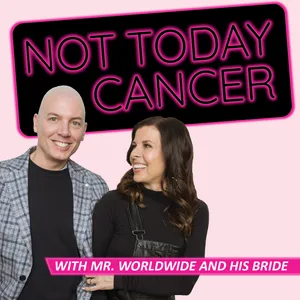
You've been diagnosed. Now what? Not Today Cancer is the podcast for women navigating cancer — from the scary first days of diagnosis through treatment, recovery, and life on the other side. Hosted by Jen Delvaux — breast cancer survivor, Certified Integrative Health Practitioner, and author — this show covers mindset, nutrition, movement, relationships, and the messy, beautiful truth of healing. With 438 episodes and a 4.9-star rating, Not Today Cancer has become a trusted companion for thousands of women who refuse to let cancer be the end of their story. New episodes weekly. You don't have to do this alone.
Latest Episodes
The most recent episodes — sign up to get AI-powered summaries of each one.
- 1 weeks ago45 min
Why Did I Get Cancer? Terrain, Root Causes, and What to Do After Treatment | Dr. Lucas Tims
If you've ever walked out of your last treatment appointment and thought "okay, now what," this one is for you. Dr. Lucas Tims is a naturopathic doctor board certified in naturopathic oncology, a credential very few people in this country hold. He trained in microbiology, did a cancer-focused residency at City of Hope, and served as medical director at City of Hope Phoenix and the Riordan Clinic in Kansas. He now runs Root Causes in San Antonio. But here's why I wanted him on. He didn't come to this from a textbook. His wife was diagnosed with an aggressive cancer while they were still dating and he was still in medical school. He has been the doctor and he has been the person in the waiting room. We got into the question that almost nobody asks after a diagnosis: why. Not to assign blame, and I want to be really clear about that, because I think a lot of us hear "why" and immediately hear "what did I do wrong." That's not what this is. For me, asking why was the thing that gave me back a sense of control. We also talked about what "terrain" actually means inside your body, why he says treating cancer without addressing the terrain is like clearing out the burnt furniture and leaving the house, and what he'd tell you to start with if you're overwhelmed and don't know where to begin. Plus, he taught me a ten second test for your nervous system that I tried the second we got off the call. What we get into: Why he thinks the victimhood mindset is the most dangerous thing you can carry What conventional cancer care does extraordinarily well, and where the blind spot is What "terrain" actually means, and the soil analogy that finally made it click for me Restoring immune function after chemo or radiation When to bring in integrative care (his answer surprised me) The six core therapies and what each one is for My own IV vitamin C experience that scared me off, and what went wrong Cortisol, the sympathetic nervous system, and why stress isn't a soft topic The humming test The three toxic exposures he'd clean up first, and why your laundry room might be the dirtiest room in your house Endocrine disruptors versus your own hormones, and why he says those are not the same conversation Hormone positive breast cancer, the Dutch test, and where he lands on HRT Why prevention is so hard, even when you have the information in front of you His book, coming in 2027 Resources Start here: the page Dr. Tims built just for Not Today Cancer listeners, with the six core therapy white papers and the first chapter of his book. rootcausesoncology.com/ntc His Substack, where he writes about terrain and root cause work: rootcauses.substack.com Root Causes on Instagram: https://www.instagram.com/doctorlucas/ Those white papers are worth grabbing even if you never become a patient. They're a few pages each and they're specifically designed so you can hand them to your own oncologist.
- 2 weeks ago41 min
Beyond the Pink: What No One Tells You About Life After Breast Cancer with Dr. Eleonora Teplinsky
If you have ever finished treatment, rung the bell, and thought "wait, why do I feel worse now than I did during chemo," this episode is for you. Dr. Eleonora Teplinsky is back on the show, and there is a very good reason. She is a board-certified medical oncologist specializing in breast and gynecologic cancers, Director of Breast and Gynecologic Medical Oncology at Valley Health System in New Jersey, host of the Interlude podcast, and her first book, Beyond the Pink: Navigating Life, Health, and Breast Cancer, comes out September 29. Her core message is one we talk about here constantly: survivorship does not start when treatment ends. It starts the day you are diagnosed. We go deep into the things most women are never prepared for. Why the "after" is often harder than active treatment. Why a DEXA scan is only half the bone health picture and muscle mass is the piece almost no one measures. What the emerging GLP-1 and breast cancer recurrence research actually shows, and what it does not show yet. Why vaginal estrogen is still being denied to women who have every guideline on their side. Where testosterone and systemic HRT fit in, and the three-bucket framework she uses to help patients decide. And how to tell trustworthy health information from the noise. Dr. Teplinsky wrote Beyond the Pink with more than 400 citations, and where the evidence does not exist yet, she says so. It is the resource she wished her patients had, and it is written to be brought into the exam room. In this episode Why survivorship begins on day one, not after your last treatment The gap in medical training around menopause, sexual health, and long-term survivorship Why the post-treatment period is often the hardest, and why the support disappears right when you need it Fear of recurrence and scanxiety, and what an oncologist actually says to patients living in it Bone health after an aromatase inhibitor: DEXA scans, calcium, vitamin D, and bone medications The muscle health conversation almost no one is having, sarcopenia, and how it is linked to aromatase inhibitor side effects and adherence How little movement it actually takes: resistance bands, dumbbells, and 20 minutes GLP-1s and breast cancer: the recurrence signal, what is still unknown, and why the source of your prescription matters Why "humans are not mice" and the caution around unstudied peptides Sexual health after cancer: body image, intimacy, dryness, bladder issues, and why sexual health is health Vaginal estrogen: the guidelines, the study that gets misquoted, and the link to reduced UTIs, sepsis, and hospitalizations Testosterone after breast cancer: the theoretical concerns, the hormone receptor nuance, and what newer data suggests Systemic HRT and the three-bucket framework: symptoms, recurrence risk, and your personal risk tolerance A chapter-by-chapter look inside Beyond the Pink Her three pieces of advice for someone newly diagnosed Being mindful of what you consume online, and why nothing good happens on social media after 10pm Connect with Dr. Eleonora Teplinsky Pre-order Beyond the Pink: Navigating Life, Health, and Breast Cancer (out September 29): https://interludecancerstories.com/book/ Pre-order on Amazon: https://www.amazon.com/Beyond-Pink-Navigating-Health-Breast/dp/1538777142 Instagram: https://www.instagram.com/drteplinsky/ Interlude podcast and website: https://interludecancerstories.com/ Connect with Jen Website: https://www.jendelvaux.com Instagram: https://www.instagram.com/jendelvaux Free guide, the changes I made after my diagnosis: https://www.jendelvaux.com/nowwhat If this episode spoke to you, share it with someone who needs it, and follow the show so you never miss an episode. Pre-order Beyond the Pink, take care of yourself, and be gentle with yourself. This episode is for educational purposes and is not medical advice. Please talk with your own care team about what is right for you.
- Aug 21, 202638 min
Mold Made Her Sick in 6 Months — 12 Doctors Missed It | Ariana Thacker, MoldCo
We talk a lot on this show about root causes...what you eat, what you're exposed to, what you're healing inside of. This episode is about the one almost nobody checks: the air in your own home. Ariana Thacker is a chemical engineer and venture capitalist who, by her own description, was a highly functional human — daily boot camp, dialed-in diet, running a VC firm solo. Within months of moving into a new apartment, she was rereading simple emails just to process them, losing clumps of hair, and getting winded on the stairs. She saw more than a dozen providers — immunologists, allergists, pulmonologists, neurologists, PCPs — and none of them ran the right test. Most didn't believe mold could cause a whole-body inflammatory response at all. It took a Shoemaker-certified physician to name it: CIRS, chronic inflammatory response syndrome. She had one of the "dreaded" HLA haplotypes — part of the roughly 24% of the U.S. population that can't clear biotoxins on its own. She got better. Then she built the road she'd just clawed her way down. Ariana is the founder and CEO of MoldCo, a virtual clinic that answers three questions: Am I being exposed? Is mold making me sick? How do I get better? — with a $199 home test and a lab panel that starts at $56, roughly a tenth the cost of what most people pay to guess. Jen shares her own story too: a mold inspection that came back clean, and the leak found years later behind the living room wall by the family who bought the house. In this episode Why "highly functional" doesn't protect you — and how fast the symptoms started The 24% with a genetic susceptibility to mold, and what HLA haplotypes actually mean What CIRS is, and why ~80% of cases trace back to a water-damaged building Why the urinary mycotoxin test may be sending people down the wrong path — and the inflammatory markers (MMP9, MSH, TGF beta-1, C4A) that matter more How to hire a mold inspector who's actually qualified — the certifications to ask for and the 70-page report you should expect Why mold grows within 24–48 hours of water intrusion, and why new builds can be worse, not better The "canary effect": why one person in a house gets sick and nobody else does Prescription binders vs. natural binders — and why the natural route can take ten times longer Do air purifiers actually help? Moldy coffee and protein powder: is ingested mold the real threat, or is it what you're breathing? The environmental red flags to walk your own house for this week If you take one action Look up Shoemaker biotoxin symptom clusters (S-H-O-E-M-A-K-E-R). If a lot of those boxes light up for you — you only need one symptom per box to count — that's a strong signal to investigate your environment. Then walk your home for: that earthy, musty odor (especially in a basement), visible mold, peeling or cracking paint, warped flooring, dust on your HVAC vents, and indoor humidity consistently above 60%. Connect with Ariana MoldCo — moldco.com Instagram — @themoldcompany LinkedIn — in/arianadthacker X — @m0ldilocks 🤍 Follow The After on Instagram: @jendelvaux 💬 Join the community: jendelvaux.com/ntc Links and resources: CoreFlow waitlist: JOIN HERE Free Not Today Cancer community: Request to join here Find Jen on Instagram: https://www.instagram.com/jendelvaux/ Email Jen: jen@jendelvaux.com Loved this episode? I would love it if you left a 5 star review. And if it gave you one idea to try tomorrow morning, share it with a friend who could use a softer, stronger start to her day. Whether you're a cancer survivor, newly diagnosed, or just want to eat f
- Aug 14, 202620 min
Life After Cancer: The Grief No One Warns You About
Nobody warns you that surviving cancer means grieving the person you used to be. Not the diagnosis, not the treatment — her. The version of you who trusted her body, who didn't flinch at every ache, who didn't know what a scan felt like. In this episode of Not Today Cancer, Jen goes deep on one of the most overlooked parts of life after treatment: the quiet grief of losing your "before" self — and why naming it is the first step to healing. If you've ever felt guilty for mourning who you were when you're "supposed" to just be grateful, this one's for you. Jen also walks you through her new series, The After — the truths no one prepares you for once treatment ends. In this episode: Why life after treatment is its own kind of hard (and why "you're done!" feels so confusing) What "disenfranchised grief" is — the grief the world doesn't make space for The specific things we grieve: the body you trusted, your innocence, your sense of safety, the future you'd pictured Why gratitude and grief can live side by side A simple practice to move through it — name her, write the letter, say goodbye and hello The hope on the other side: post-traumatic growth, and the 5 ways survivors grow "You're allowed to miss who you were… and love who you're becoming." 🤍 Follow The After on Instagram: @jendelvaux 💬 Join the community: jendelvaux.com/ntc Links and resources: Jen's protein powder Use Code: Hello10 CoreFlow waitlist: JOIN HERE Free Not Today Cancer community: Request to join here Find Jen on Instagram: https://www.instagram.com/jendelvaux/ Email Jen: jen@jendelvaux.com Loved this episode? I would love it if you left a 5 star review. And if it gave you one idea to try tomorrow morning, share it with a friend who could use a softer, stronger start to her day. Whether you're a cancer survivor, newly diagnosed, or just want to eat for a longer, healthier life, this is a practical, hopeful place to start. This episode is for information and encouragement, not medical advice — always check with your care team. Not today, cancer. 💛
- Jul 31, 202621 min
The 5 Conversations Every Cancer Survivor Should Have (But No One Starts)
You survived cancer — so why does no one talk about what comes next? In this solo episode, Jen opens up the five conversations every survivor should be having, but almost no one starts: hormones, intimacy, mental health, purpose, and energy. These are the quiet struggles that hit after treatment ends, when the appointments stop and everyone else exhales — and you're left figuring out how to feel like yourself again. This is your permission slip to break the silence. Jen walks through each conversation with warmth and honesty, naming the things survivors feel but rarely say out loud — and giving you one real conversation to start and one small step to take this week for each. In this episode: Why hormone changes after treatment aren't "you falling apart" — and how to advocate for yourself with your care team The intimacy conversation nobody prepares you for (and it's about way more than sex) Why finishing treatment can be one of the hardest mental health moments of the whole journey How cancer rearranges your sense of purpose — and why that's not ingratitude Cancer fatigue vs. regular tired, and how to protect your energy without guilt Whether you're newly out of treatment or years into survivorship, this episode will make you feel seen — and give you the words for something you've been carrying. ➡️ Your challenge this week: Pick the ONE conversation that made your chest tighten. That's the one you need most. Take one small step — send the text, book the appointment, or say the honest thing out loud. If this episode spoke to you, share it with a survivor who needs to hear they're not the only one. And come tell Jen which of the five hit home — solo episodes like this come straight from your questions. Not today, Cancer. 💛 Links and resources: Jen's protein powder Use Code: Hello10 CoreFlow waitlist: JOIN HERE Free Not Today Cancer community: Request to join here Find Jen on Instagram: https://www.instagram.com/jendelvaux/ Email Jen: jen@jendelvaux.com Loved this episode? I would love it if you left a 5 star review. And if it gave you one idea to try tomorrow morning, share it with a fr
- Jul 17, 202620 min
Beans & Breast Cancer: The Nutrition Research + How to Start | Not Today Cancer
Can beans really lower your cancer risk? In this episode of Not Today Cancer, we break down the research on beans, breast cancer, and longevity — and exactly how to start eating them without the bloat. After my own diagnosis I moved to a whole food plant-based diet, slowly, and beans became the hero of the story. My partner Darren joins me — and the twist is he barely changed his diet at all, which is kind of the point: you don't have to overhaul everything. In this episode we cover: • The study linking high bean-fiber intake to ~25% lower breast cancer risk • Why soy is safe (and reassuring) for breast cancer survivors • Beans, colorectal cancer, and the power of dietary fiber • What beans do for cholesterol, blood sugar, and type 2 diabetes risk • The Blue Zones longevity connection • How to start slow without gas or bloating • Simple beginner bean recipes to try this week Links and resources: PDF Bean Recipes Jen's protein powder Use Code: Hello10 CoreFlow waitlist: JOIN HERE Free Not Today Cancer community: Request to join here Find Jen on Instagram: https://www.instagram.com/jendelvaux/ Loved this episode? I would love it if you left a 5 star review. And if it gave you one idea to try tomorrow morning, share it with a friend who could use a softer, stronger start to her day. Whether you're a cancer survivor, newly diagnosed, or just want to eat for a longer, healthier life, this is a practical, hopeful place to start. This episode is for information and encouragement, not medical advice — always check with your care team. Not today, cancer. 💛
- Jul 10, 202617 min
The First Hour: My Post-Diagnosis Morning Routine, Backed by Research
Some of the most powerful medicine you'll ever take doesn't come from a pharmacy. It's the first hour of your day. In this solo episode, Jen walks you through her real morning routine after breast cancer. Not the highlight reel, the actual one. From the moment her feet hit the floor to the moment she sits down to work, every habit earned its spot, and Jen shares the research behind each one. You'll hear why she gets sunlight first thing, what goes in her smoothie and why prunes made the list, the reason she walks right after she eats, and the breathwork she never skips. Take what serves you and leave the rest. There's no gold star for doing it all. Pick one habit and start there. In this episode: Why how you wake up sets the frame for your whole day Morning sunlight and its link to cortisol, sleep, and mood Why moving slow calms your nervous system The plastic free swap that lowers your daily toxic load Red light therapy and collagen after estrogen loss The research on gratitude journaling, including a study in breast cancer survivors What's in Jen's smoothie, and why prunes support bone health The gut as your "second brain" How a 10 minute walk after eating supports blood sugar Movement for bone strength, plus breathwork to come back to center Links and resources: Simply Good Coffee (plastic free coffee maker, discount inside): Get it HERE Jen's red light panel: Use Code: jendelvaux to save CoreFlow waitlist: JOIN HERE Free Not Today Cancer community: Request to join here Find Jen on Instagram: https://www.instagram.com/jendelvaux/ Loved this episode? I would love it if you left a 5 star review. And if it gave you one idea to try tomorrow morning, share it with a friend who could use a softer, stronger start to her day.
- Jul 3, 202624 min
The Crazy Things People Say When You Have Cancer
Between the two of us, we have been through cancer twice, on opposite sides of it, and we have heard some things. Some truly wild things. In this one, Darren joins me to put them all on the table. The comments, the questions, the head tilts, the "how long did they give you," the "at least you get a free boob job." We are laughing about it, because after everything we have earned that, and then we get into the part that actually matters: what to say, and what not to say, when someone you love gets news like this. Here is what we get into: The prognosis questions and why the number is never the whole story The doom stories people cannot wait to share The breast cancer "specials" every survivor has heard Why "aren't you done with that already" misses what survivorship really is The comments people aim at the well spouse, not the patient The friends who go quiet, and why the silence hurts more than any clumsy comment What actually helps, in plain and simple words Almost nobody who said these things meant to hurt us. So this is not a roast. It is a peek into what it really feels like on the receiving end, so you can show up a little better for the people you love. Grab my free 13 Self-Care Tips guide: jendelvaux.com/selfcare Got your own wild one? DM me the craziest thing anyone ever said to you and we may read it on part two. Wake up and expect every day to be the best day of your life. 🔗 Resources & Support Join Not Today Cancer the Community, the Community FREE community: Request to join here: https://www.facebook.com/groups/1272880634809475 Triple Boost Protein – my go-to clean, hormone-safe protein. Use HELLO10 for $10 off GET BrocElite: Mara Labs supplements - Use code NotTodayCancer for 20% off AnaOno – Intimates for breast cancer survivors → [ANAONO] Favorite Tea – Third party, organic tea crystals Email Me – coachjennyd@gmail.com
About Not Today Cancer
You've been diagnosed. Now what? Not Today Cancer is the podcast for women navigating cancer — from the scary first days of diagnosis through treatment, recovery, and life on the other side. Hosted by Jen Delvaux — breast cancer survivor, Certified Integrative Health Practitioner, and author — this show covers mindset, nutrition, movement, relationships, and the messy, beautiful truth of healing. With 438 episodes and a 4.9-star rating, Not Today Cancer has become a trusted companion for thousands of women who refuse to let cancer be the end of their story. New episodes weekly. You don't have to do this alone.
Customized Recaps
AI-powered recaps with compact key takeaways, quotes, and insights.
Straight to Your Inbox
Get key takeaways from Not Today Cancer in a 5-minute read.
Save Hours Every Week
Stay current on your favorite podcasts without falling behind.
Frequently Asked Questions
What is Podzilla's Not Today Cancer daily summary?
It's a free AI-powered email that summarizes new episodes of Not Today Cancer as soon as they're published. You get the key takeaways, notable quotes, and links & mentions — all in a quick read.
How does the Not Today Cancer podcast summary work?
When a new episode drops, our AI transcribes and analyzes it, then generates a personalized summary tailored to your interests and profession. It's delivered to your inbox every morning.
Is this an official Not Today Cancer product?
No. Podzilla is an independent service that summarizes publicly available podcast content. We're not affiliated with or endorsed by Jen Delvaux.
Can I get summaries of other podcasts too?
Absolutely! The free plan covers up to 3 podcasts. Upgrade to Pro for 15, or Premium for 50. Browse our full catalog at /podcasts.
How often does Not Today Cancer release new episodes?
Not Today Cancer publishes weekly. Our AI generates a summary within hours of each new episode.
What topics does Not Today Cancer cover?
Not Today Cancer covers topics including Nutrition, Fitness, Health & Fitness, Mental Health. Our AI identifies the specific themes in each episode and highlights what matters most to you.
Start getting Not Today Cancer summaries tomorrow morning.
Free forever for up to 3 podcasts. No credit card required.
Free forever for up to 3 podcasts. No credit card required.