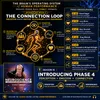
Phase 4 Launch: The Connection Loop — Perception, Emotion & Social Intelligence
In this episode Andrea Samadi launches Phase 4 of the Brain's Operating System for Human Performance, focusing on perception, emotion, and social intelligence. She introduces the Connection Loop as a roadmap for understanding how we see ourselves and others, how emotions shape interactions, and how Mindsight supports deeper listening and reflection. Using a classroom story from Dr. Dan Siegel, Andrea draws four practical takeaways—expand your perception by listening, notice your inner reaction before responding, make room for individuality and belonging, and turn shared insight into action. She also presents the Third Energy framework to show how meaningful connections can create lasting contributions. Listeners are invited to try one conversation with curiosity, check their assumptions, and take one follow-up action to translate understanding into change that influences classrooms, workplaces, and relationships. EP 409 — Introducing Phase 4: The Connection Loop—Perception, Mindsight, and What We Create Together Welcome back to Neuroscience Meets Social and Emotional Learning Podcast, where we bridge neuroscience, social and emotional learning, and human performance so we can create measurable improvements in our well-being, achievement, leadership, productivity, and results. I’m Andrea Samadi, and today we officially launch Phase 4 of The Brain’s Operating System for Human Performance: (where we will cover) Perception, Emotion, and Social Intelligence. In this phase, we’ll explore how we see ourselves and others, how we understand and respond to emotions, and how these abilities shape our relationships, learning, leadership, and ultimately, our performance. We have spent our first three phases exploring the foundations of individual capacity. Now, we bring those foundations into our relationships. Because we can be regulated, motivated, and capable—and still misunderstand the person beside us. We can enter a conversation intending to help and leave someone feeling unheard. Or we can listen in a way that changes our understanding and opens a possibility we had not considered. In this episode, we will: ✓ Review how our first three phases prepared us for this next step. ✓ Introduce the Connection Loop, our roadmap for exploring perception, emotion, relationships, belonging, and performance. ✓ Revisit a clip from Dr. Daniel Siegel about mindsight, identity, and connection. ✓ Turn the lessons from that clip into practical actions for classrooms, workplaces, and relationships. ✓ Introduce the Third Energy Framework—how the imprint of a meaningful relationship can become a contribution that reaches others and make a significant contribution to the world. ✓ Begin preparing for the upcoming Journey of the Mind workbook, planned to be released summer 2027, which will help us bring all five phases into a personal roadmap for growth. As you listen today, keep one question in mind: How can understanding another person change what I do next? WHERE WE HAVE BEEN In Phase 1—Regulation and Safety, we asked: Is our nervous system regulated and safe enough to learn, connect, and perform? We explored sleep, rhythm, breath, recovery, and relational safety—the conditions that support readiness for learning and life. In Phase 2—Neurochemistry and Motivation, we asked: What moves us to act—and what helps us sustain that action? Through the Motivation Loop, we examined belief, attention, action, feedback, reward, and recovery. Then, in Phase 3—Movement, Learning, and Cognition, we asked: How do we build the physical and cognitive capacity required for learning and performance? We explored how movement prepares us, attention supports learning, repetition strengthens skills, and recovery allows adaptation. We also considered nutrition and what our own observations and health data can tell us about capacity. In Episode 408, we brought those lessons together and asked how to turn information into wisdom: how to use what we learn to make meaningful changes. Together, these phases helped us explore how to regulate our system, sustain effort, and build capacity. Phase 4 asks how we use that capacity to understand ourselves and connect with others. INTRODUCING THE CONNECTION LOOP With every interaction, with another person, we bring our own history, our own expectations, emotions, and ways of seeing the world. The person across from us brings theirs. Two people can experience the same conversation and leave with different interpretations. One feels encouraged. The other feels pressured. One thinks the conversation went well. The other leaves wondering whether it was safe to speak honestly. That brings us to the central quest
Podzilla Summary coming soon
Sign up to get notified when the full AI-powered summary is ready.
Free forever for up to 3 podcasts. No credit card required.
Listen to This Episode
More from Neuroscience Meets Social and Emotional Learning

The Ascend Approach: Rewiring Student Behavior with Autonomy, Belonging & Competence | Greg Wolcott
Permission to Feel: Reframe Your Inner Voice (with Marc Brackett Ph.D)
The Biology of Support: How Connection Shapes Learning, Growth and Performance
Movement to Mastery: Closing Phase 3 of the Brain’s Operating System
Get summaries like this every morning.
Free AI-powered recaps of Neuroscience Meets Social and Emotional Learning and your other favorite podcasts, delivered to your inbox.
Free forever for up to 3 podcasts. No credit card required.