Free Daily Podcast Summary
Mysteries of Science: Daily Summaries Delivered
by Fun Kids
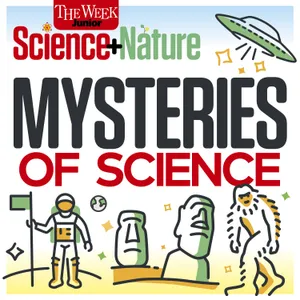
The team behind The Week Junior's Science+Nature magazine investigate unexplained phenomenon with the help of expert guests.
Latest Episodes
The most recent episodes — sign up to get AI-powered summaries of each one.
- 2 weeks ago27 min
Can we fix climate change?
From the archives, an urgent case. The planet is sending signals: melting ice, wilder storms and shifting seasons. Can we crack this one before it’s too late? Dan and Michael start with the basics. Channel 4 News weather presenter Liam Dutton explains the difference between weather and climate, why greenhouse gases trap heat, and what almost twenty years of forecasting has shown him about records being broken. Then it’s on to the solutions, and some are stranger than you’d expect. Author Nicola Penfold makes the case for whale poo as a climate hero, Cindy Forde of Planetari describes solar panels printed onto windows and mangroves that lock away more carbon than rainforests, and young campaigners Amy and Ella Meek and Bella Lack explain where to start when a problem feels far too big.See omnystudio.com/listener for privacy information.
- Oct 15, 202623 min
Science behind vampires
We’re back in the archives for a Halloween special, and this one comes with a warning: don’t listen on a full moon. Dan, Ciaran and Stevie each pick a favourite Halloween monster and hold it up to the light. Wicked’s Laura Pick and Professor Marion Gibson of the University of Exeter trace the witch back to the trials of the 1560s, when around 500 people in England alone, almost all of them women, were put to death for what often turned out to be knowing a great deal about plants. National Trust archaeologist Nancy Grace describes the mummified cats and witch bottles still turning up in old chimneys, hidden there to keep witches out. Storyteller Lari Don explains that werewolf stories are far older than Hollywood’s silver bullets, and that drinking rainwater from a wolf’s paw print will turn you just as surely. Author Alex Foulkes reveals why the earliest vampires were almost always rich men in castles, and which perfectly natural changes to a body after death convinced people the dead had come back. Three monsters, one common thread: science nobody had worked out yet.See omnystudio.com/listener for privacy information.
- Sep 10, 202623 min
How did humans take over the world?
We’re back in the archives with one of the biggest mysteries this show has ever taken on: us. Modern humans have only been around for about 200,000 years, a blink of an eye next to the three billion years life has existed on Earth. We’re not the biggest, the fastest or the strongest animal out there, so how did we end up running the planet? Dan and Michael follow the clues from a strange skull dug out of a German quarry in 1856 to the Neanderthal DNA almost all of us still carry. Historian Yuval Noah Harari, author of Unstoppable Us, argues our real superpower is storytelling, and geneticist Aoife McLysaght explains why we share so much of our DNA with chimpanzees, and how humans are still evolving right now.See omnystudio.com/listener for privacy information.
- Aug 14, 202623 min
How did everything begin?
Dan and Michael explore the biggest mystery of them all: how did everything begin? Around 75 years ago, British astronomer Fred Hoyle went on the radio and used the term "Big Bang" for the very first time. The odd thing is, he was making fun of it. He didn't believe a word of it, and he never changed his mind. So how do we know the Big Bang really happened? Astrophysicist Dr Maggie Lieu from the University of Nottingham explains how Edwin Hubble worked out that the universe is expanding, and why that means everything must have started from one infinitely small, infinitely hot point. She also tells the story of the two scientists at Bell Labs who found the leftover glow of the Big Bang, but spent ages scrubbing pigeon poo off their antenna first because they were convinced the signal was just noise. Then theoretical astrophysicist and science communicator Ethan Siegel explains why Fred Hoyle was so against the idea, how he turned out to be right about where carbon, nitrogen and oxygen come from, and what might happen at the other end of the story. Will the universe end in a big crunch, freeze forever, or do something nobody expected? See omnystudio.com/listener for privacy information.
- Jul 17, 202622 min
Feeling lucky?
Are you a lucky person? Do you have a lucky number, a lucky shirt, or a favourite pair of lucky pants? In this episode of Mysteries of Science, hosts Dan and Michael investigate one of life's slipperiest puzzles: is luck actually real, or is it just a story we tell ourselves?See omnystudio.com/listener for privacy information.
- Jun 18, 202628 min
Fairies and other amazing hoaxes
We're in the archives for another episode of Mysteries of Science. In our first of season three, released on April Fool's Day, hosts Dan, Stevie, and Michael take a deep dive into three of the most famous scientific hoaxes. We're looking at the Cottingley Fairy photographs, crop circles, and zero gravity day...See omnystudio.com/listener for privacy information.
- May 22, 202619 min
The Ice Mummy
Two hikers stumble upon something in the ice: a mummy. Called, Ötzi, over the next few days, the mummy's extracted and examined by experts. It turns out to be 5,000 years old. Who was this person? How did they get there? And what can we learn from the body in the ice? See omnystudio.com/listener for privacy information.
- Apr 23, 202624 min
The Truth About Dragons
Dan and Ciaran open an archive case: Are dragons real? Why do stories of fire-breathing, winged beasts appear in cultures across the world – and can science explain their origins? We're on the quest for answers; from Viking myths to Chinese legends, dinosaur fossils, and even the lair of real-life Komodo dragons. Legendary author Cressida Cowell, dino-expert Nick Crumpton, and Chester Zoo’s own Komodo dragon keeper, Matthew Cook help unpick which mysteries are real and which ones are rubbish. See omnystudio.com/listener for privacy information.
Get Mysteries of Science summaries in your inbox
Free AI-powered daily recaps. Key takeaways, quotes, and mentions — in a 5-minute read.
Get Free Summaries →Free forever for up to 3 podcasts. No credit card required.
You Might Also Like
Listeners also like.
Science for Kids / Science's Not Boring: The Kids Science Podcast
Two fictional siblings host a science podcast for kids, exploring topics like space, nature, and the human body through engaging stories.
Science In Action
The BBC covers the latest weekly developments and news in science.
The World, the Universe and Us
Explores big scientific questions about life, consciousness, climate, and the cosmos with expert scientists and New Scientist journalists.
BBC Inside Science
Explores the latest scientific discoveries and debates shaping our understanding of the world.
Curiosity Weekly
A science podcast breaking down recent discoveries in fields like neuroscience, climate tech, AI, and genetics with expert interviews.
Curious Cases
Hannah Fry and Dara Ó Briain use science to solve listeners' questions and mysteries.

CrowdScience
Explores listener-submitted questions about life, Earth, and the universe with scientists at the forefront of research.
History's Great Mysteries
Explores unexplained historical events and invites listeners to ponder possible theories behind enduring mysteries.
Brains On! Science podcast for kids
Kids co-host with Molly Bloom to explore science questions, mystery sounds, and facts in a weekly podcast.

SolveItForKids Science podcast
Jennifer Swanson/Jeff Gonyea
Sleep Tight Science - A Bedtime Science Podcast For Kids
A bedtime science podcast for kids that answers their big questions about the natural world in a calming, family-friendly way.
The Weirdest Thing I Learned This Week
Three science journalists share bizarre and little-known facts they’ve recently discovered.
About Mysteries of Science
The team behind The Week Junior's Science+Nature magazine investigate unexplained phenomenon with the help of expert guests.
Customized Recaps
AI-powered recaps with compact key takeaways, quotes, and insights.
Straight to Your Inbox
Get key takeaways from Mysteries of Science in a 5-minute read.
Save Hours Every Week
Stay current on your favorite podcasts without falling behind.
Frequently Asked Questions
What is Podzilla's Mysteries of Science daily summary?
It's a free AI-powered email that summarizes new episodes of Mysteries of Science as soon as they're published. You get the key takeaways, notable quotes, and links & mentions — all in a quick read.
How does the Mysteries of Science podcast summary work?
When a new episode drops, our AI transcribes and analyzes it, then generates a personalized summary tailored to your interests and profession. It's delivered to your inbox every morning.
Is this an official Mysteries of Science product?
No. Podzilla is an independent service that summarizes publicly available podcast content. We're not affiliated with or endorsed by Fun Kids.
Can I get summaries of other podcasts too?
Absolutely! The free plan covers up to 3 podcasts, any in the catalog. Basic raises that to 15, Pro to 40 and Max to 100. Browse our full catalog at /podcasts.
How often does Mysteries of Science release new episodes?
Mysteries of Science publishes monthly. Our AI generates a summary within hours of each new episode.
What topics does Mysteries of Science cover?
Mysteries of Science covers topics including Education, Kids & Family, Family. Our AI identifies the specific themes in each episode and highlights what matters most to you.
Start getting Mysteries of Science summaries tomorrow morning.
Free forever for up to 3 podcasts. No credit card required.
Free forever for up to 3 podcasts. No credit card required.