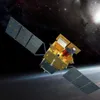
The SVOM Satellite: A New Era in Multi-Messenger Astronomy
In this episode, we dive into the fascinating world of gamma-ray bursts (GRBs) and high-energy transients through the lens of the SVOM (Space-based Multi-band Variable Object Monitor) mission. Launched in June 2024, this Sino-French satellite uses a powerful suite of instruments to detect, localize, and study some of the universe's most extreme events, such as dying massive stars and colliding neutron stars. We explore three of its core instruments: the ECLAIRs trigger camera, the Gamma-Ray Monitor (GRM), and the Visible Telescope (VT). Discover how these tools work together in near real-time to capture everything from high-redshift GRBs in the early universe to optical afterglows and thermonuclear X-ray bursts. Key Topics Covered:The SVOM Mission: An overview of the satellite, which operates in a 625 km low-Earth orbit, and its primary goal to study GRBs and support multi-messenger astrophysics (like gravitational wave follow-ups).ECLAIRs Trigger Camera: A look at the 4–150 keV wide-field coded mask camera that serves as SVOM's autonomous trigger. When ECLAIRs detects a transient, it can prompt the satellite to automatically slew, or rotate, to point its narrow-field telescopes directly at the burst. Gamma-Ray Monitor (GRM): SVOM’s high-energy sentinel covering an energy range of 15 keV up to 5 MeV. We discuss how its large sensitive area helps measure the spectral and temporal properties of bursts, achieving a detection rate of over 100 GRBs per year.Visible Telescope (VT): A deep dive into SVOM's 44-cm aperture optical/near-infrared telescope. Learn how the VT achieved an impressive ~85% detection rate for GRBs observed within the first 10 minutes, and how its deep sensitivity helped identify the mission's highest-redshift burst to date, GRB 250314A, from when the universe was in its infancy (redshift 7.3).References & Further Reading:1. The Gamma-Ray Monitor onboard the SVOM satellite by Jian-Chao Sun, Yong-Wei Dong, Jiang He, et al.2. SVOM/VT: Instrument Overview, Science Objectives, and First-Year Performance by Yu-Lei Qiu, Li-Ping Xin, Jin-Song Deng, et al.3. ECLAIRs: the SVOM high-energy transient trigger camera by O. Godet, J.-L. Atteia, S. Schanne, et al.Acknowledements: Podcast prepared with Google/NotebookLM. Illustration credits: SVOM, CNRS
Podzilla Summary coming soon
Sign up to get notified when the full AI-powered summary is ready.
Free forever for up to 3 podcasts. No credit card required.
Listen to This Episode
More from Multi-messenger astrophysics
FRB 20191221A or "the telescope that hallucinated in the rain"
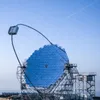
Record-Breaker: Catching Gamma Rays from the Distant Quasar OP 313
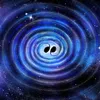
Ripples in Spacetime: Unpacking the GWTC-5.0 Catalog
SN 2017egm : Fermi-LAT's Breakthrough Gamma-Ray Detection
Get summaries like this every morning.
Free AI-powered recaps of Multi-messenger astrophysics and your other favorite podcasts, delivered to your inbox.
Free forever for up to 3 podcasts. No credit card required.