Free Daily Podcast Summary
Mother Daughter Relationship Show: Daily Summaries Delivered
by Brittney Scott
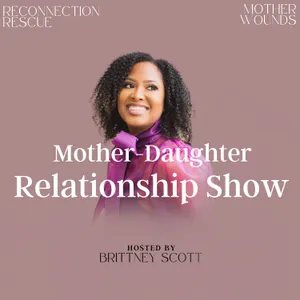
Are you tired of trying to get your mom to understand your pain and apologize, just to be left feeling worse than when you started? I get it! What if I told you that you could heal your mother wound and your inner child, even if your mom wont take any accountability for her behavior or your childhood? Let's be real, it takes a self aware mother to acknowledge hurt done to her daughter. You’re healing should not rely on her being self aware. Welcome to the Mother Daughter Relationship Show, the go to podcast for mother daughter relationships, mother wound healing, eldest daughters, and women learning to mother when they weren’t mothered. I’m your host, Brittney Scott - mother daughter therapist and coach, the eldest daughter and mom to a daughter, book nerd, scripted show over reality show person. I understand the position of the eldest daughter and I know what healthy relationships look and feel like. I’ve worked with women like you who want better relationships and want to stop t
Latest Episodes
The most recent episodes — sign up to get AI-powered summaries of each one.
- 3 days ago27 min
Loving a Mother With Narcissistic Traits [Ep. 85]
Episode 85: Loving a Mother With Narcissistic Traits Without Losing Yourself What happens when you love your mother, but the relationship continues to hurt you?In this episode, Brittney explores what it can be like to have a mother with narcissistic traits and why you don't need an official diagnosis to recognize the impact certain patterns have had on your life.Rather than focusing on labels, this episode looks at the behaviors and relationship dynamics that can leave daughters feeling confused, invalidated, and disconnected from their own reality. Brittney also talks about the complicated grief of loving someone who may genuinely love you while still being unable to provide the kind of consistent, emotionally attuned relationship you need.Most importantly, the episode explores how you can protect yourself while deciding what relationship, if any, you want to have with your mother.In this episode, you'll hear about: Why "narcissist" and "gaslighting" have become overused and why focusing on patterns matters more than labelsLack of empathy and difficulty seeing your perspectiveA mother's need for admiration, control, or to always be rightConditional warmth and approval based on your accomplishments or how you reflect on herDifficulty tolerating criticism or accountabilityGaslighting and having your memories or experiences deniedPlaying the victim when you're the one who has been hurtTriangulating siblings and other family membersThe difference between how a mother presents publicly and how she behaves at homeWhy loving a mother who hurts you can be so confusingGrieving the mother you needed but may never haveWhy your mother's limitations are not evidence that you're unlovableStaying connected without giving up your emotional safetyAdjusting expectations to match reality rather than hoping someone will become who you need them to beSetting boundaries without waiting for your mother's approval or accountabilityProtecting your sense of reality when gaslighting has been part of the relationshipUsing journaling and trusted relationships to reinforce your own memories and intuitionThe "gray rock" strategy for high-conflict interactionsWhy you are allowed to choose closeness, distance, or no relationship at allKey Takeaways:You don't have to choose between loving your mother and taking care of yourself.You are allowed to recognize the reality of the relationship, adjust your expectations, establish boundaries, protect your emotional wellbeing, and decide for yourself what the relationship looks like.Loving her can be your choice. Protecting yourself can be your choice, too.Connect with Brittney:Instagram: @theBrittneyScottWebsite: www.brittneymscott.comConsultation to work with BrittneyFree ResourcesA note from BrittanyIf you've spent years wondering whether you were the problem, questioning your memories, or trying to change yourself to finally receive the love and approval you needed, this episode is a reminder: you are not crazy, you are not a bad daughter, and you were not responsible for your mother's limitations.Thank you for listening. Don't forget you can submit your question! And yes, I really am going to give you an answer in an upcoming podcast.and be sure to say hi on Instagram!Help me reach more service providers like you by following the show & leaving a rating or review on Apple & Spotify!Keyword tags:#NarcissisticMother #NarcissisticTraits #MotherDaughterRelationship #ToxicMother #EmotionalAbuse #Gaslighting #ChildhoodTrauma #HealingFromTrauma #FamilyBoundaries #HealthyBoundaries #DifficultMother #HealingJourney
- 1 weeks ago23 min
The Hidden Costs of Being The Favorite: A Look at Family Roles [Ep. 84]
When Sisters Were Raised by the Same Mother but Had Different ChildhoodsSummaryIn this episode, licensed therapist and mother-daughter coach Brittany Scott explores the golden child and scapegoat dynamic: two roles that can profoundly shape how sisters see themselves, each other, and their mother.The golden child may appear to have “won,” but being favored can come with perfectionism, pressure, loyalty demands, guilt, and a loss of connection to the authentic self. Meanwhile, the scapegoat may carry the pain of being blamed, criticized, dismissed, or held to a different standard.Neither child chose these roles.Brittney discusses how these dynamics can create resentment, guilt, distance, and misunderstanding between sisters, and why healing can begin when both recognize that they were shaped by the same family system in different ways.Most importantly, she explores how adult sisters can build a relationship that exists independently of their mother, even if the mother never acknowledges what happened or changes her behavior.In this episode, you'll hear about:What the golden child and scapegoat child roles meanWhy children don't choose or create these family rolesHow favoritism can affect the golden child's identity and sense of selfThe hidden guilt that golden children may carry into adulthoodThe grief and anger that can accompany the scapegoat experienceWhy sibling resentment can develop even when neither sister created the dynamicHow golden-child guilt can become a barrier to sibling closenessThe difference between taking responsibility and spiraling into shameHow a golden child can listen to and validate her sister's experienceWhat not to do when trying to repair the relationshipWhy healing doesn't require the mother to apologize, change, or participateHow sisters can create a new adult relationship separate from their mother's influenceKey Takeaways:Your childhood roles don't have to determine your adult relationship.If both sisters are willing to see what each carried, acknowledge the ways they were affected, and move beyond the roles assigned to them, they can begin creating something new together.The relationship between sisters can heal, even if the relationship with their mother never does.Thank you for listening. Don't forget you can submit your question! And yes, I really am going to give you an answer in an upcoming podcast.Help me reach more service providers like you by following the show & leaving a rating or review on Apple & Spotify!Keyword tags:#MotherDaughterRelationship #MotherDaughterHealing #FamilyDynamics #GoldenChild #ScapegoatChild #SiblingRelationships #SiblingHealing #ChildhoodTrauma #FamilyTrauma #EmotionalNeglect #ToxicFamilyDynamics #DysfunctionalFamily #HealingFromChildhood #InnerChildHealing #FamilyHealing #GenerationalTrauma #TraumaHealing #Boundaries #AdultChildren #NarcissisticFamily #MentalHealth #TherapyTalk #LicensedTherapist #MotherDaughter #SisterRelationships #SiblingEstrangement #HealingJourney #EmotionalHealing #FamilyPatterns #TheMotherDaughterRelationshipShow
- 2 weeks ago24 min
Feeling Resent Towards Mom: What To Do About It [Ep. 83]
How to Move Forward With Your Mom While Still Feeling Old ResentmentIn this compassionate episode, I address something many daughters struggle with: wanting to move forward with their mom while still flinching at memories from years ago. I explain why these two things aren't contradictory. Resentment and forgiveness can coexist in the same body, even the same day. Rather than focusing on dramatic harms, I dig into the smaller, harder-to-name hurts that accumulate over time: offhand comments about your body, being compared to a sibling, or being told "you're okay" when you clearly weren't. I walk you through five concrete steps for working through a specific memory: naming the exact hurt, feeling it fully in your body without minimizing it, getting curious about why it still has a grip, deciding what you need now, and choosing your relationship to it going forward. I also address how this process looks different depending on whether you're still in contact with your mom or estranged from her.With this episode you'll be able to:Understand that resentment and forgiveness can exist simultaneously, not as oppositesRecognize that smaller, harder-to-name hurts deserve just as much validation as major harmsName one specific memory instead of vague generalizations that are hard to processFeel emotions fully in your body instead of minimizing or explaining them awayGet curious about what a specific memory meant about you and what you needed at the timeSeparate old hurts from current frustrations when you're still in an active relationship with your momKnow that healing doesn't require her participation, acknowledgement, or apology to be realDon't forget: there's no deadline for when you should be "over it." You can take memories one at a time, one day at a time, at whatever pace feels right for you.Connect with Brittney:Instagram: @theBrittneyScottWebsite: www.brittneymscott.comConsultation to work with BrittneyFree ResourcesMentioned resources:Break the Cycle digital course and workbook for deeper resentment workIndividual one-on-one coaching for personalized memory processingFive-step framework for working through specific memoriesBody-awareness techniques for moving emotional energy through the bodyHelp me reach more mothers and daughters by following the show & leaving a rating or review on Apple & Spotify!Keyword tags: resentment, forgiveness, processing hurt, mother daughter healing, body awareness, small hurts, boundary setting, Brittney Scott, Break the Cycle, emotional processing, estrangement, active relationship healing
- 3 weeks ago16 min
Healing VS Reconciling [Ep. 82]
Healing vs. Reconciling: Why You Don't Need Her Permission to HealIn this episode, I separate two concepts most women believe are the same thing: healing and reconciling. Healing is internal work you can do entirely alone. It's making peace with what happened, grieving what you didn't get, accepting the mother you got rather than the one you deserved. It requires nothing from her, not even her being alive. Reconciling, on the other hand, is relational and requires both people willing to rebuild together. When we treat these as identical, we fall into two traps: forcing unsafe reconciliation to "prove" healing is real, or staying stuck waiting on someone else's willingness before we're allowed to feel better. I share stories of women whose mothers passed away before repair could happen or remain unsafe to be close to and women who did the internal work anyway and found their relationship with what happened actually changed, even though their mother never knew or participated. I also speak directly to mothers of adult daughters: sometimes you have to heal first, examining your own patterns and what you passed down, before your daughter shows any interest in reconciling. Healing is the floor everything else is built on. Reconciliation, if it happens, is optional and never the finish line.With this episode you'll be able to:Understand the critical difference between healing (internal, solo work) and reconciling (relational, requires both people)Recognize the two traps of conflating healing and reconciling: forcing unsafe relationships or staying stuck waiting for permissionLearn why reconciling without healing first often means falling back into old unaddressed patternsSee how women whose mothers passed away or remain unsafe still achieved real healing through internal work aloneDiscover why mothers sometimes need to heal and examine their own patterns first before daughters show interest in reconcilingAccept that you can heal completely without ever reconciling, and that's a valid and complete outcomeDon't forget you can submit your questions about mother-daughter relationships for me to answer in upcoming episodes! Check out the Break the Cycle workbook (with lifetime access to all future updates) or learn about Reconnection Rescue for guided healing and reconciliation work together.Mentioned resources:Break the Cycle workbook/course - healing work, no reconciliation required (link in show notes)Reconnection Rescue - private program for mothers and daughters working on healing and reconciliation togetherConnect with Brittney:Instagram: @theBrittneyScottWebsite: www.brittneymscott.comConsultation to work with BrittneyFree ResourcesHelp me reach more mothers and daughters by following the show & leaving a rating or review on Apple & Spotify!Keyword tags: Healing versus reconciling, internal healing work, mother-daughter reconciliation, healing without her, grief and acceptance, healing after death, unsafe relationships, breaking generational patterns, accountability for mothers, adult daughter estrangement, self-healing, reconciliation is optional, Break the Cycle workbook, Reconnection Rescue, healing timeline
- Aug 21, 202624 min
Four Shifts for Parenting Daughters Through Adolescent Growth [Ep. 81]
What Actually Changes When Your Daughter Starts Middle or High SchoolYour daughter isn't pulling away from you when she starts middle or high school, she's building a self that exists outside of you for the first time. This episode breaks down the four shifts every mother-daughter relationship needs to make during this stage, and what it actually sounds like to make them in real time.With this episode you'll be able to:Recognize the difference between your daughter pulling away and her doing normal developmental workUnderstand why "access" has to become "invitation" as she gets olderShift from monitoring her choices to modeling your ownTrade constant availability for consistent, reliable presenceMove from managing her life to mentoring her decisionsHear exactly what a real conversation sounds like when you make this shiftKnow where to start tonight if you want a framework to work through on your ownRemember: "The goal during this stage isn't to hold on tighter. It's to become someone she keeps choosing to let in."Connect with Brittney:Instagram: @theBrittneyScottWebsite: www.brittneymscott.comConsultation to work with BrittneyFree ResourcesTags: mother daughter relationship, daughter starting middle school, daughter starting high school, parenting teenage daughters, mother daughter communication, teen daughter pulling away, raising teen daughters, mother wound healing, mother daughter boundaries, parenting through adolescence, daughter independence, mother daughter trust, break the cycle workbook, reconnection rescue
- Aug 7, 202618 min
What to Say in the First Five Minutes of a Hard Conversation with Your Mom [Ep. 80]
In this practical episode, I break down exactly what needs to happen in the opening minutes of a difficult conversation with your mom, the part that determines whether she actually hears you or immediately gets defensive. I explain why most confrontations don't fall apart because of what was said, but because of how the conversation opened. You'll learn the four-part structure: naming what kind of conversation this is, anchoring to one specific memory instead of your whole childhood, speaking to impact rather than accusation, and clearly stating what you need from her. I also do a full role-play demonstrating these techniques in action with a daughter addressing a memory her mother has repeatedly denied, showing you exactly what this sounds like when it's said out loud.With this episode you'll be able to:Understand why the first five minutes set the emotional temperature for the entire conversationLearn to open by naming the conversation type instead of diving straight into the issueAnchor difficult conversations to one specific memory instead of vague, arguable generalizationsSpeak to impact ("this made me feel") rather than accusation ("you always")Clearly state what you need: acknowledgement, listening, or understanding her sideRecognize when a mother's negative reaction is information about her, not a verdict on youKnow how to end a conversation that's gone badly while protecting your own experienceDon't forget: you don't need perfect words, just an opening that anchors to something specific and speaks to impact, and if you don't receive care back after going in with care, that's not on you.Mentioned resources:Reconnection Rescue program for real-time communication coaching between moms and daughtersRole-play framework for practicing difficult conversation openingsStrategies for ending conversations that aren't landing wellIn-session practice and rephrasing techniques used in the programHelp me reach more mothers and daughters by following the show & leaving a rating or review on Apple & Spotify!Keyword tags: hard conversations, confrontation, communication skills, conversation openers, impact vs accusation, Reconnection Rescue, Brittney Scott, role play, acknowledgement, specific memories, defensive reactions, difficult conversations
- Jul 31, 202614 min
Do I Deserve It? Healing the Question Your Mother's Belittling Left Behind [Ep. 79]
Do I Deserve It? Reclaiming Your Right to Want MoreWhat if the question, “Do I deserve it?”, is quietly shaping your life?In this episode of The Mother Daughter Relationship Show, Brittney Scott explores the self-doubt that can develop when you grow up feeling belittled, criticized, or taught to make yourself smaller. That question can follow you into your career, relationships, friendships, and dreams, causing you to second-guess compliments, hesitate to ask for what you want, or settle for less than you truly desire.With this episode you’ll be able to:Create a personal values list. Identify what truly matters to you Ask who gets to decide what you deserve.Connect with Brittney:Instagram: @theBrittneyScottWebsite: www.brittneymscott.comConsultation to work with BrittneyFree ResourcesKey Take aways:The question “Do I deserve it?” often lives quietly in our internal dialogue.Growing up feeling small can affect what you believe you're worthy of receiving.Your values can help you reconnect with who you are beneath other people's expectations.Ask yourself whose voice is telling you that you don't deserve what you want.Journaling and physically writing down your thoughts can help you process them differently.It's never too late to pursue something that brings you happiness, fulfillment, or pride.Episode Quotes: “If you're willing to work toward something you genuinely desire, ask yourself: Why not you?”Thank you for listening. If this episode resonated with you, take some time this week to write down your values and reflect on who gets to decide what you deserve. Then ask yourself: What is one thing I would go after if I truly believed I was worthy of it? Don't forget you can submit your question! And yes, I really am going to give you an answer in an upcoming podcast.and be sure to say hi on Instagram!Help me reach more service providers like you by following the show & leaving a rating or review on Apple & Spotify!Keyword tags:Emotional Triggers, #Corrective Experiences, #Self-Reflection, # Internal Shifts. #Therapeutic Groups, #Sisterhood, #Community Healing, #Safe Relationships, #Non-linear Healing, #Forgiveness, #Reclaiming Self
- Jul 24, 202619 min
Does Your Daughter Know You Like Her? Not Just Love Her? [Ep. 78]
What Every Daughter Wants (Plus a Special Guest Appearance from My 5-Year-Old)In this episode, I shift focus to moms raising daughters who are still minors, whether toddlers or teens approaching adulthood. I break down the three things every daughter needs to feel: loved, heard, and supported. Drawing from my years working with teenage girls in therapy, I share why they often believe their moms love them but don't actually like them, and how to close that gap. I introduce the "potted plant" technique for being a trusted, quiet presence when your daughter has friends over, explain why teenage girls want to talk more than they want to be talked to, and discuss the importance of letting her make safe mistakes rather than preventing every misstep. Plus, don't miss the adorable surprise guest appearance from my own five-year-old daughter!With this episode you'll be able to:Understand the three foundational needs every daughter has: love, being heard, and supportRecognize the difference between your daughter knowing you love her versus knowing you like herUse the "potted plant" approach to become a trusted, non-intrusive presence during her conversationsLearn why listening more than speaking builds trust with teenage daughtersAllow safe mistakes so she learns natural consequences rather than being told what will happenSupport the specific girl in front of you, not who you expected her to be or who you were at her ageShow genuine interest in her interests, even ones you don't personally enjoyDon't forget: teenage girls want to know their parents actually like them, not just love them out of obligation, so go learn about the band, the music, or whatever she's into right now!Connect with Brittney:Instagram: @theBrittneyScottWebsite: www.brittneymscott.comConsultation to work with BrittneyFree ResourcesMentioned resources:The "potted plant" technique for trusted, quiet presenceStrategies for allowing safe mistakes and natural consequencesIndividual coaching for moms navigating communication with young daughtersReconnection Rescue program for repairing adult mother-daughter relationshipsHelp me reach more mothers and daughters by following the show & leaving a rating or review on Apple & Spotify!Keyword tags:raising daughters, teenage girls, communication styles, potted plant technique, feeling heard, feeling supported, Brittney Scott, parenting teens, trust building, safe mistakes, mother daughter bond, listening skills
About Mother Daughter Relationship Show
Are you tired of trying to get your mom to understand your pain and apologize, just to be left feeling worse than when you started? I get it! What if I told you that you could heal your mother wound and your inner child, even if your mom wont take any accountability for her behavior or your childhood? Let's be real, it takes a self aware mother to acknowledge hurt done to her daughter. You’re healing should not rely on her being self aware. Welcome to the Mother Daughter Relationship Show, the go to podcast for mother daughter relationships, mother wound healing, eldest daughters, and women learning to mother when they weren’t mothered. I’m your host, Brittney Scott - mother daughter therapist and coach, the eldest daughter and mom to a daughter, book nerd, scripted show over reality show person. I understand the position of the eldest daughter and I know what healthy relationships look and feel like. I’ve worked with women like you who want better relationships and want to stop t
Customized Recaps
AI-powered recaps with compact key takeaways, quotes, and insights.
Straight to Your Inbox
Get key takeaways from Mother Daughter Relationship Show in a 5-minute read.
Save Hours Every Week
Stay current on your favorite podcasts without falling behind.
Frequently Asked Questions
What is Podzilla's Mother Daughter Relationship Show daily summary?
It's a free AI-powered email that summarizes new episodes of Mother Daughter Relationship Show as soon as they're published. You get the key takeaways, notable quotes, and links & mentions — all in a quick read.
How does the Mother Daughter Relationship Show podcast summary work?
When a new episode drops, our AI transcribes and analyzes it, then generates a personalized summary tailored to your interests and profession. It's delivered to your inbox every morning.
Is this an official Mother Daughter Relationship Show product?
No. Podzilla is an independent service that summarizes publicly available podcast content. We're not affiliated with or endorsed by Brittney Scott.
Can I get summaries of other podcasts too?
Absolutely! The free plan covers up to 3 podcasts. Upgrade to Pro for 15, or Premium for 50. Browse our full catalog at /podcasts.
How often does Mother Daughter Relationship Show release new episodes?
Mother Daughter Relationship Show publishes weekly. Our AI generates a summary within hours of each new episode.
What topics does Mother Daughter Relationship Show cover?
Mother Daughter Relationship Show covers topics including Education, Fitness, Health & Fitness, Mental Health, Self-Improvement. Our AI identifies the specific themes in each episode and highlights what matters most to you.
Start getting Mother Daughter Relationship Show summaries tomorrow morning.
Free forever for up to 3 podcasts. No credit card required.
Free forever for up to 3 podcasts. No credit card required.