Free Daily Podcast Summary
Moral Maze: Daily Summaries Delivered
by BBC Radio 4
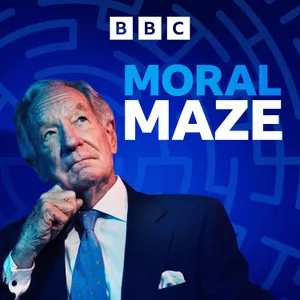
Combative, provocative and engaging live debate examining the moral issues behind one of the week's news stories. #moralmaze
Latest Episodes
The most recent episodes — sign up to get AI-powered summaries of each one.
- 3 days ago57 min
Is porn inherently immoral?
Owning or publishing porn that depicts strangulation or incest is now a crime in England and Wales. Advocates say the new law protects women and girls from material that normalises violence. Critics see it as an attack on the liberal principle that the state has no business policing what consenting adults do in private. But, beyond what the law says, is porn wrong in itself? Immanuel Kant warned that sexual desire can turn people into instruments, treating them as means rather than ends. John Stuart Mill would ask who is actually harmed? Religions teach that sex belongs only within a committed loving relationship. The sex-positive tradition argues that porn can be honest, playful and liberating.Should we have a problem with how porn is made? When, if ever, is a consensual performance morally wrong? What about the impact of porn on our psyche and behaviour? Is there something intrinsically corrosive about the act of looking at porn? If porn is inherently immoral, what does that say about desire, fantasy and the imagination?Chair: Michael Buerk Panel: Matthew Taylor, Anne McElvoy, Mona Siddiqui and Jonathan Sumption. Witnesses: Jamie Whyte, Julie Bindel, Blake Becoming, Anthony McCarthy. Producer: Dan Tierney Assistant producer: Peter Everett Editor: Tim Pemberton.
- 1 weeks ago57 min
Has Remembrance Failed?
Every year, Britain falls silent on Armistice Day. The bugle plays the "Last Post", and we collectively agree: “Never Again”.At the same time, war has returned to Europe. Governments are increasing defence spending to levels not seen since the Cold War. Politicians speak of a nation “on a war footing” and advise citizens to stockpile emergency supplies. Across Europe, the Far Right is resurging and democracy is under strain. Holocaust ignorance is growing, especially among the young. So what exactly are we remembering for? What is the value of remembrance beyond an act of collective mourning? If its moral purpose is to prevent us repeating the mistakes of the past, should we conclude that it has failed? If collective memory has the power to shape human behaviour, for better or worse, how should we think about it?Chair: Michael Buerk Panel: Giles Fraser, Mona Siddiqui, Tim Stanley and Sonia Sodha. Witnesses: Amanda Chisholm, Philip Ingram, Alan Lester and Edward Harcourt. Producer: Dan Tierney Assistant producers: Jay Ungar and Pater Everett. Editor: Chloe Walker.
- Sep 24, 202656 min
Can we separate pop from politics?
Ed Sheeran says he tries to keep politics off the stage. But politics gate-crashed his stadium tour anyway -- when the American rapper Macklemore was removed as a support act for delivering a pro-Palestinian speech. Now Sir Bob Geldof, the man behind Live Aid, says Ed Sheeran's preferred silence isn't political. Fame, he says, is a currency, and artists get to choose how to spend it Is he right? Can any artist, whether a musician, a writer, or a painter, stay out of politics? Or is silence itself a kind of political statement too? This week’s Moral Maze: Can we separate pop from politics? Presenter: William Crawley Panel: Andrew Copson, Ash Sarkar, Ella Whelan, Giles Fraser Witnesses: Tom Phelan, Daniel Rachel, Angela McRobbie, Nick Asbury Producer: Catherine Murray Editor: Chloe Walker
- Sep 17, 202656 min
16/09/2026
Live debate examining the moral issues behind one of the week's news stories. #moralmaze
- Sep 10, 202656 min
How should we respond to warnings of end times and catastrophe?
America’s Vice-President, J. D. Vance, has been talking about the end of the world, saying he “wouldn’t be shocked” if the Anti-Christ was walking amongst us.Most people are living incomparably better lives than generations ago - and history is full of warnings of apocalypse - so how should we respond to warnings of catastrophe and end times?Do such warnings encourage moral behaviour? Do they spur people to take action on important issues - or can they lead to despair and paralysis. Do thoughts of an end give life more meaning?Should we take threats to the way we live as a warning to look after our loved ones - or is it an opportunity to think more widely and work out how to strengthen our community ties. Which end of the political spectrum is more likely to resort to the language of doom-laden prophecy, and to what end?What does this increasingly apocalyptic view of the world tell us about the world we live in, the problems we face, and the society we’ve become?Witnesses: Leigh Price, Elizabeth Oldfield, Dr Ian Paul and Dr Daniel Nilsson DeHanas Presenter: Michael Buerk Panellists: Anne McElvoy, Matthew Taylor, Mona Siddiqui, Tim Stanley Producer: Catherine Murray Asst Producer: Jay Unger Editor Chloe Walker
- Sep 3, 202656 min
How should we respond to rising mental distress?
A record one in seven people in England were prescribed antidepressants in the last year, according to NHS figures. More than nine million patients now take the drugs, and while they may be essential in many cases, the prevalence of mental ill-health – stress, anxiety, burnout – is a moral issue as well as a medical one. Why are more people, including under-18s, presenting to their GP with these conditions, and what should we do about it?Many clinicians believe anti-depressants serve an important function, including in milder cases, particularly where access to talking therapies is limited. This, they say, is both a practical and compassionate response to suffering, and a respect for patient autonomy. However, there is disagreement among psychiatrists, some of whom argue that everyday stress is being patholigised. They see drugs as morally hazardous in certain cases, since they alter mental sates, blunt emotions and create dependence on the drugs themselves, reducing people’s long-term capacity to cope.Beyond the clinical response, there are deeper questions to consider about our society and culture. NHS figures suggest patients in the most deprived areas were prescribed antidepressants 44% more than in the least deprived areas. Many mental health campaigners see the crisis as a social harm, caused by poverty, inequality and insecurity. They believe that rather than simply treating the symptoms of distress, we have a social responsibility to fix the structural causes: better housing, secure working conditions, and a fairer distribution of the resources people need to live dignified lives. For others, the crisis represents something even more fundamental: a loss of meaning, purpose, connection, and resilience.How should we respond to rising mental distress?Chair: Michael Buerk Panel: Ash Sarkar, Giles Fraser, Anne McElvoy and Carmody Grey Witnesses: Ellie Cannon, Joanna Moncrieff, Polly Mackenzie and Mark Vernon Producer: Dan Tierney Assistant producer: Peter Everett Editor: Tim Pemberton
- Aug 27, 202656 min
Data Centres: Whose Thirst Comes First?
AI data centres are expanding across the UK and around the world. Tech giants and governments see them as essential infrastructure for future prosperity; the engines of economic growth, scientific innovation, improved healthcare and national security. Advocates believe they will bring about the next technological leap forward for humanity. But there are always trade-offs. Critics point to the immediate environmental costs; the demand for electricity, water and land. They question whether the promised rewards justify the sacrifices, particularly for local populations who face the disruption of new developments while the economic benefits go elsewhere. Are we, as a society, being swept along by an AI 'arms race' we didn’t consent to? Are we right to put faith in tech billionaires who prophesy a future of progress and human flourishing, or are we simply enabling more consumption? (Every video of Elon Musk as Austin Powers drinks around 4 litres of water). And even if AI promises to solve climate change and eradicate disease, how much are we willing to place on that bet today?Chair: Michael Buerk Panel: Giles Fraser, Mona Siddiqui, Andrew Copson and Ella Whelan. Witnesses: Owen Espley, Michael Tobin, Carissa Véliz, Carlo Cordasco. Producer: Dan Tierney Assistant producer: Peter Everett Editor: Tim Pemberton
- Aug 20, 202656 min
Is empathy ever a weakness?
Reform's Robert Jenrick has described Britain’s welfare system as “suicidal empathy.” It’s also the title of a recent book by the Canadian marketing Professor Gad Saad, who argues that a misdirected sense of empathy can lead to favouring certain people over others – for example, the criminal over the victim. The idea has gained an admirer in Elon Musk who said that "the fundamental weakness of Western civilization is empathy". The claim is that unconditional compassion is not a strength but a soft spot to be exploited, clouding our moral judgements. Critics argue that empathy is the moral foundation of care for the most vulnerable in society and righteous anger against injustice. They see the language of “toxic” or “parasitic” empathy as laying the groundwork for inhuman treatment. Rousseau saw pity as the most natural of human virtues – an instinct which makes us not simply walk on by when we see someone suffering. Removing empathy, in other words, makes us both less human and less humane. Whether in the realm of welfare policy, immigration numbers or prison conditions, the philosophical argument is between those who say feeling for others is the foundation of morality, and those who believe empathy can be a moral liability.Chair: Michael Buerk Panel: Mona Siddiqui, Tim Stanley, Sonia Sodha and Ella Whelan. Witnesses: Matt Goodwin, Paul Sagar, Philippa Smethurst and Luke Bretherton. Producer: Dan Tierney Assistant producer: Peter Everett Editor: Chloe Walker
Get Moral Maze summaries in your inbox
Free AI-powered daily recaps. Key takeaways, quotes, and mentions — in a 5-minute read.
Get Free Summaries →Free forever for up to 3 podcasts. No credit card required.
You Might Also Like
Podcasts in similar categories.

Dateline NBC
True-crime mysteries, documentaries, and in-depth investigations from NBC News.

This American Life
True stories exploring weekly themes with emotional depth, humor, and narrative twists, capturing the complexities of contemporary life.

The Megyn Kelly Show
Provocative conversations with influential figures in politics, law, and culture, featuring candid and fearless dialogue.

The Drop the Needle Podcast
Interviews exploring spirituality, mindset, and music, featuring healers, artists, and teachers discussing personal growth and meaningful songs.

Miss Understood with Rachel Uchitel
Explores the personal stories behind public scandals through candid interviews with individuals redefining their narratives.

The Ezra Klein Show
Conversations on pressing political, social, and cultural issues with experts and thinkers.

The Mel Robbins Podcast
A motivational podcast offering research-backed tools and personal stories to help listeners make positive life changes.

Notes from the Edge
Raw conversations about trauma, survival, identity, and reinvention with host Lisa Lacy.

On with Kara Swisher
Kara Swisher conducts candid, in-depth interviews with influential figures in tech, business, media, and politics.

Live Free with Josh Howerton
A Christian teaching podcast focused on helping listeners know Christ, live free, and impact the world for God's glory.

The Team House
Deep-dive conversations on national security with special operations veterans, intelligence professionals, and frontline reporters.

This Past Weekend w/ Theo Von
Discusses events from the host's recent weekends and other days.
About Moral Maze
Combative, provocative and engaging live debate examining the moral issues behind one of the week's news stories. #moralmaze
Customized Recaps
AI-powered recaps with compact key takeaways, quotes, and insights.
Straight to Your Inbox
Get key takeaways from Moral Maze in a 5-minute read.
Save Hours Every Week
Stay current on your favorite podcasts without falling behind.
Frequently Asked Questions
What is Podzilla's Moral Maze daily summary?
It's a free AI-powered email that summarizes new episodes of Moral Maze as soon as they're published. You get the key takeaways, notable quotes, and links & mentions — all in a quick read.
How does the Moral Maze podcast summary work?
When a new episode drops, our AI transcribes and analyzes it, then generates a personalized summary tailored to your interests and profession. It's delivered to your inbox every morning.
Is this an official Moral Maze product?
No. Podzilla is an independent service that summarizes publicly available podcast content. We're not affiliated with or endorsed by BBC Radio 4.
Can I get summaries of other podcasts too?
Absolutely! The free plan covers up to 3 podcasts, any in the catalog. Basic raises that to 15, Pro to 40 and Max to 100. Browse our full catalog at /podcasts.
How often does Moral Maze release new episodes?
Moral Maze publishes weekly. Our AI generates a summary within hours of each new episode.
What topics does Moral Maze cover?
Moral Maze covers topics including Religion & Spirituality, Spirituality, Culture, Society & Culture. Our AI identifies the specific themes in each episode and highlights what matters most to you.
Start getting Moral Maze summaries tomorrow morning.
Free forever for up to 3 podcasts. No credit card required.
Free forever for up to 3 podcasts. No credit card required.