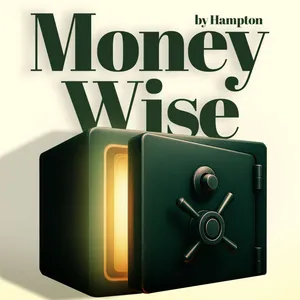
Free Daily Podcast Summary
Moneywise: Daily Summaries Delivered
by Hampton
This is Moneywise, a podcast where host Daniel Berk is joined by high-net-worth guests to explore exclusive insights into personal finance and lifestyle tailored for other high-net-worth people, or those on their way. They'll get radically transparent about the numbers, revealing things like their burn rates, portfolios, and spending habits. This podcast was made for the Hampton community, a private, highly-vetted, peer membership community for founders and CEOs of fast-growing, tech-enabled startups.
Latest Episodes
The most recent episodes — sign up to get AI-powered summaries of each one.
- 5 days ago22 min
I Asked 40 Millionaires Their Biggest Regret
We're still surprised people did this but... 50+ founders worth $10M to $4B reveal their personal finances. Here it is: https://joinhampton.com/mw-wrWhy do we do this? Because if you're an aspirational person or someone who runs a business and is making money, it's incredibly challenging to figure out what to do. Information is impossible to find — and that's what we put together: the net worth reveal and why we do this podcast, Moneywise.I asked 40 millionaires their biggest regret. One answer was just two words: "withholding love."This episode started with a simple survey: 40 millionaires, one question — what's your biggest regret? The answers ranged from $22K a year dumped into life insurance instead of Bitcoin ($11M of upside gone) to hundreds of bitcoins sold at $300 to make payroll. But cross-referenced against 100+ Moneywise conversations, every answer collapsed into just three regrets: I can see the life I almost had. I didn't become the person I thought I could become. I thought I had more time.Then it gets into the science. Why bronze medalists look happier than silver medalists. Why finance is only 2.5% of most people's regrets but dominated this survey. Why the person you never became can bother you longer than any mistake you actually made. Why an $80M exit sent one founder to rock bottom. And a three-question Regret Test to figure out whether your regret is still useful — or just expensive entertainment.Also, this podcast is made by Hampton, which is a community for founders doing on average $20 million a year in revenue. We saw a lot of these money conversations happening privately behind closed doors and we thought, "What the heck, let's make it public." If you are a founder, apply here: http://joinhampton.com/mwTimestamps:00:00 — The survey: 40 millionaires, one question, and the answers that looked completely random01:02 — Every regret collapses into three buckets01:24 — Regret vs. disappointment: why regret needs an alternate reality02:25 — The brain science: patients with orbitofrontal damage don't feel regret03:14 — Your brain uses regret to change future decisions before you make them04:02 — Bucket 1: "I can see the life I almost had" — "the stock market is basically a regret calculator"05:23 — The Olympic study: why bronze medalists look happier than silver medalists06:27 — Finance is only 2.5% of most people's regrets — so why was this survey drowning in them?07:36 — The Opportunity Principle: agency creates regret, and rich people have had a lot of agency08:25 — Bucket 2: "I didn't become the person I thought I could become"09:08 — Ought self vs. ideal self — and why ideal-self regrets never get closure10:26 — "The unlived version of you never has a bad quarter"11:02 — The famous "you'll regret what you didn't do" stat — and the 2,600-person study that broke it13:04 — The 23-year-old already in the "never enough stage," and the moving goalposts from $10M to $1B13:56 — Bucket 3: "I thought I had more time" — kids, health, and the $80M founder who hit rock bottom14:52 — Why priorities flip when time feels scarce (and Daniel's midlife crisis at 30)16:13 — When to engage with a regret and when to let it go — what the research on older adults found17:21 — The Harvard study: relationships at 50 predicted health at 80 better than cholesterol19:45 — The Regret Test: three questions to ask about your biggest regret20:44 — "Regret in 4K": why money doesn't eliminate regret — it makes it higher resolutionSponsors: Daily Body Coach - achieve your dream body with https://moneywise.dailybodycoach.comSubscribe to Moneywise: https://www.youtube.com/@themoneywisepodcastFollow Daniel on X: https://x.com/danielcberkListen on Spotify / Apple Podcasts: [search "Moneywise Hampton"]
- 1 weeks ago1h 0m
Patrick & Kathy Terry (P. Terry's): "Why We Said No to $100M"
We're still surprised people did this but... 50+ founders worth $10M to $4B reveal their personal finances. Here it is: https://joinhampton.com/mw-wrWhy do we do this? Because if you're an aspirational person or someone who runs a business and is making money, it's incredibly challenging to figure out what to do. Information is impossible to find — and that's what we put together: the net worth reveal and why we do this podcast, Moneywise.They turned down a $100M offer for their burger stand — now they're giving the company to their 1,800 employees.Patrick and Kathy Terry opened a 500-square-foot burger stand in South Austin in 2005 — three months into their marriage — selling $1.60 hamburgers. Kathy barely took a salary for over a decade. In 2016, with ten locations, a buyer offered them between $70 and $100 million, and they said no, pulling out just under $10M — the only money they've ever taken in 21 years. Today P. Terry's runs 37 locations, employs 1,800 people, does between $150 and $200 million a year growing 20%+ — and instead of selling, they're transferring the whole company to their employees through an Employee Ownership Trust, something fewer than 100 American companies have ever done.This episode gets into the exact numbers behind the offer they walked away from, why $10M felt like enough, the $900K in interest-free loans they've made to hourly employees (with only $5K in defaults), the "Maggie rule" that governs every company decision, and how an EOT actually works versus an ESOP — including why one protects your culture forever and the other can be forced to sell it. It ends with the question underneath it all: what a business is for when the check stops mattering.Also, this podcast is made by Hampton, which is a community for founders doing on average $20 million a year in revenue. We saw a lot of these money conversations happening privately behind closed doors and we thought, "What the heck, let's make it public." If you are a founder, apply here: http://joinhampton.com/mwTimestamps:00:00 — Cold open: "It was between 70 and $100 million and you turned it down."02:53 — Kathy's West Texas upbringing, quitting the law firm, and giving herself a 500% raise06:33 — Patrick's path: Kool-Aid stand at 5, ad agency by day, running a pizza place nights and weekends09:30 — Springing the burger stand idea on Kathy three months into their marriage: "I didn't think he'd ever do it"11:05 — Year one: $600K in revenue from 500 square feet — and still in the red after depreciation16:09 — The 2016 "dog and pony show": realizing for the first time what the business was worth17:35 — "It was between 70 and $100 million" — a 10–12x offer, and why they turned it down20:23 — Kathy's real fear: "Who's going to take care of our employees? They're not going to bake birthday cakes anymore."23:01 — Patrick was stunned to learn they had 300 employees — he thought it was 80 or 9024:27 — Why the birthday cakes matter: "For a lot of our employees, that is how they celebrate their birthday"25:59 — Barely taking a salary for 12 years, then pulling out just under $10M — the only money ever taken27:17 — The June EOT transition: gifting and selling the first ~11% to the trust via a seller's note33:36 — The origin of interest-free loans: Vinny's broken truck and $15034:05 — $900K loaned to hourly employees over 20 years — only $5,000 ever defaulted37:14 — The Maggie rule: every decision tested against the woman who's worked the grill for 21 years42:05 — Kathy explains EOT vs. ESOP — and why one protects the culture forever49:40 — Profit sharing starts next year: 5% of EBITDA now, 20% in five years, based purely on tenure54:49 — "The island sucks. This is okay." What Patrick learned about what he actually wanted59:20 — Kathy's open offer to walk any founder through the EOT modelSponsors: Daily Body Coach - achieve your dream body with https://moneywise.dailybodycoach.comSubscribe to Moneywise: https://www.youtube.com/@themoneywisepodcastFollow Daniel on X: https://x.com/danielcberkListen on Spotify / Apple Podcasts: [search "Moneywise Hampton"]
- 2 weeks ago51 min
He Ran PayPal With Elon. Now He Has $100M and Spends Nothing
We're still surprised people did this but... 50+ founders worth $10M to $4B reveal their personal finances. Here it is: https://joinhampton.com/mw-wrWhy do we do this? Because if you're an aspirational person or someone who runs a business and is making money, it's incredibly challenging to figure out what to do. Information is impossible to find — and that's what we put together: the net worth reveal and why we do this podcast, Moneywise.He co-founded PayPal with Elon Musk, sold Personal Capital for nearly $1B — and spends $70K a year.Bill Harris has a résumé that barely fits on one page. He was CEO of Intuit, founding CEO of PayPal — in the room with Elon Musk, Peter Thiel, and Max Levchin above a bakery near Stanford — and then founded Personal Capital, which he grew to $23 billion in AUM before selling it to Empower Retirement for close to $1 billion. He's done something like that 11 times. Today his net worth is around $100 million, he's 70 years old, and he spends less than $100,000 a year. He sold his houses, cars, airplane, and 31 pets (including two mountain goats and an iguana) and moved into a small cottage near Miami Beach where he bikes to work every day.This episode gets into what $100 million actually looks like when it's spread across public equities and private operating companies — and why the man who built one of the most important wealth management firms in history keeps his own annual spend near $70K. We go deep on the PayPal origin story, what it was like being "theoretically the CEO" in a room full of people whose egos "wouldn't fit in a large gymnasium," and the specific moment Bill realized that his houses, cars, and airplane weren't making him richer in the ways that mattered. He also shares his best piece of investing advice for people in their 30s, his take on why the S&P 500 isn't as diversified as most people think, and what he calls "freedom money."Also, this podcast is made by Hampton, which is a community for founders doing on average $20 million a year in revenue. We saw a lot of these money conversations happening privately behind closed doors and we thought, "What the heck, let's make it public." If you are a founder, apply here: http://joinhampton.com/mwTimestamps: 00:00 — Cold open: "There wasn't a single one of us whose ego would fit in a large gymnasium" 00:36 — Full guest intro: who Bill Harris is and why this episode matters 03:23 — Bill's origin story: the golden boy path, Intuit CEO at 40, and realizing "I am not a good manager" 06:33 — What money actually is: "It is a rocket fuel. It's the scarce resource you need to build the life you want" 07:38 — The monthly spend reveal: $70–80K a year, all in — "my addiction is Amazon" 09:04 — Life phases: family dole → NYC studio → two houses, 31 pets, and a 1906 Woodside farmhouse 14:20 — Net worth reveal: ~$100M, cut in half by divorce, and the barbell portfolio breakdown 15:27 — Why he doesn't do "fancy investing": survivorship bias, absurd fees, and why alternatives rarely outperform 17:31 — The Evergreen Wealth philosophy: why 80–90% equity is what he'd tell a client with his profile 19:07 — How to value a private company: "Two things dominate it — markets and story" 21:47 — "Things are time": the real cost of owning two houses, four cars, and a small airplane 24:33 — PayPal origin story: "We were close to fisticuffs most days. I was theoretically the CEO" 27:38 — Luck vs. skill: "I'd say it's 80 to 90% luck" — and what that actually means 30:13 — The personal payout from PayPal and Personal Capital: specific numbers, post-tax 32:01 — Why he's self-funding Evergreen with $10M of his own money: "Freedom. I have no boss" 38:05 — Why he still works at 70: mastery, not money — "I can't think of a bigger waste of time" than golf 42:48 — Best investing advice for your 30s: "Hive off a piece and let it marinate" 43:44 — Why the S&P 500 is riskier than it looks: top 10 stocks = 37% of the whole index 45:40 — "Freedom money" defined: the thing that lets you say yes to your own life 48:33 — Closing: "Money is a means to an end. It's not an end."Sponsors: Daily Body Coach - achieve your dream body with https://moneywise.dailybodycoach.comSubscribe to Moneywise: https://www.youtube.com/@themoneywisepodcast Follow Daniel on X: https://x.com/danielcberk Listen on Spotify / Apple Podcasts: [search "Moneywise Hampton"]
- 3 weeks ago48 min
How a $1.5B Wealth Manager Spends His Money
We're still surprised people did this but... 50+ founders worth $10M to $4B reveal their personal finances. Here it is: https://joinhampton.com/mw-wrWhy do we do this? Because if you're an aspirational person or someone who runs a business and is making money, it's incredibly challenging to figure out what to do. Information is impossible to find — and that's what we put together: the net worth reveal and why we do this podcast, Moneywise.He manages $1.5 billion for other people — and still tracks his own spending in a paper checkbook.Glenn Ullmann is a former Air Force pilot who left the military at 29 with a couple hundred thousand dollars, cold-called 200 strangers a day out of a Ponte Vedra phone book, and built Ullmann Wealth Partners into a $1.5 billion RIA that has never had a down year — including 2008. He stopped worrying about money somewhere north of $20 million. Now 63, he spends $30–40K a month, flies his own $1.25M Cirrus, gives more to charity than he can deduct, and still shows up to the office every day.This episode gets into the tension between saving and actually living: why Glenn tells clients with health issues to fly private before their kids do it with the inheritance, how a $10M portfolio pays you $300K a year in "rent" whether markets are up or down, and why he thinks stocks are a bad word. We also cover how he gave up 80% of his own firm to keep his partners, the paper ledger that runs his life, the client who started at $100 a month and now takes the best trips on earth, and why he'd tell a 20-year-old to study English or history instead of finance.Also, this podcast is made by Hampton, which is a community for founders doing on average $20 million a year in revenue. We saw a lot of these money conversations happening privately behind closed doors and we thought, "What the heck, let's make it public." If you are a founder, apply here: http://joinhampton.com/mwTimestamps:01:46 — Who Glenn is, what Ullmann Wealth Partners does, and why "returns don't matter if you rear-end Melinda Gates without an umbrella policy"04:16 — Growing up in his grandfather's plastics business, the Robin's-egg Cadillac, and the gold coin that says "your friendship means more to me than a pot of gold"06:26 — A Morgan Stanley account at 14, paper route money, and his first stock: Sears Roebuck07:44 — Nobody from his high school went to the military. He went to the Air Force Academy three days after graduation: "the best thing I ever did, other than marrying my spouse"11:50 — The Cirrus G7, the parachute that lowers the whole plane, and the button his wife can push if Glenn stops functioning mid-flight13:35 — From AWACS pilot to pharma rep to stockbroker: dialing 200 people a day, 10 conversations, one client17:45 — Net worth leaving the Air Force at 29 and the million-dollar goal on a piece of paper that "never happened"19:26 — The $2M–$20M client sweet spot, and why the firm has never contracted in 25 years — even 2007–200921:57 — Why he went from owning 100% of the firm to 20%: "How could they not have equity?"24:03 — The 11x17 "life map," and the client who was stabbed and left for dead in her New York apartment26:15 — HENRYs who save $10K a month and still need to be told to go enjoy the rest: "People get cancer. People die falling off a ledge."28:49 — "If you don't spend this money and fly first class, your kids will when you're dead"30:40 — The net worth where Glenn stopped worrying: "probably above 20"31:49 — Alimony, fun, and the pen-and-paper checkbook ledger a $1.5B wealth manager uses to track his Amex33:29 — The $1.25M four-seat plane, $40–50K a year to operate, and a $30–40K monthly burn before philanthropy35:10 — Giving appreciated stock and exceeding his deduction limit every year36:21 — Why he still goes to work at 63, the wingman system, three chronic illnesses, and "sometimes a founder needs to get out of the way"39:40 — The Melissa example: $100 a month in 1993 to the best trips on earth41:26 — Where to park $10M after a liquidity event: "you're going to collect around $300,000 a year in dividends and interest"42:55 — Not a real estate guy, the $100K driveway, and "I never invest in things that eat while I'm asleep"44:48 — 90% in global equity, and why "they're not stocks, they're companies"45:40 — Reframing an $80K private flight as a month and a half of portfolio income47:39 — What he'd tell a 20-year-old picking a major: English or historySponsors: Daily Body Coach - achieve your dream body with https://moneywise.dailybodycoach.comSubscribe to Moneywise: https://www.youtube.com/@themoneywisepodcastFollow Daniel on X: https://x.com/danielcberkListen on Spotify / Apple Podcasts: [search "Moneywise Hampton"]
- Aug 18, 202617 min
5 Things Rich People Refuse to Buy
We're still surprised people did this but... 50+ founders worth $10M to $4B reveal their personal finances. Here it is: https://joinhampton.com/mw-wrWhy do we do this? Because if you're an aspirational person or someone who runs a business and is making money, it's incredibly challenging to figure out what to do. Information is impossible to find — and that's what we put together: the net worth reveal and why we do this podcast, Moneywise.A $3 billion founder's money advice: keep driving the Chevrolet. Here's why the richest guests all say the same five things.After 100+ episodes of Moneywise, the same five spending refusals kept showing up — from a $3B founder who's never sold a company, a guy who lost 95% of his net worth and won't buy his own socks, and Bryan Johnson, who spends $2M a year on his body and almost nothing on anything else. None of them read the research. There's 50 years of it, and they all landed in the same place anyway.This episode covers all five: first class, new cars, meaningless stuff, angel checks, and kids' comfort — plus the study behind each one (lottery winners, the MIT Celtics auction, the marshmallow test follow-up). Then Anne Mahlum, who sold SolidCore for nearly $100M and forces herself to spend $200K/month, tears the whole list apart. The episode ends with a 10-minute exercise using two questions that decide what stays on your card statement.Also, this podcast is made by Hampton, which is a community for founders doing on average $20 million a year in revenue. We saw a lot of these money conversations happening privately behind closed doors and we thought, "What the heck, let's make it public." If you are a founder, apply here: http://joinhampton.com/mwEpisodes Mentioned:How Rich Is 'Rich Enough' to Fly Private? — https://www.youtube.com/watch?v=5ZyTo6gppPw"I'm worth about $3 billion": What Happens When You DON'T Sell Your Business — https://www.youtube.com/watch?v=uZM0K9eqzx0What It's Like to Lose 95% of Your Net Worth Overnight (the socks guy) — https://youtu.be/fW-F3MKwevIBryan Johnson: I Probably Won't Actually Live Forever — https://www.youtube.com/watch?v=icWHq_xjhacHow to Not Ruin Your Kids with Your Wealth ft. Dr. Becky — https://www.youtube.com/watch?v=uB1SmMA-nLkTimestamps:0:00 — Cold open: the $3B founder, the socks guy, and Bryan Johnson's $2M body budget0:28 — 100 episodes in, the same five patterns kept repeating — and 50 years of research explains them1:05 — Why guests reveal their real numbers on Moneywise1:50 — #1: First class. "I still fly coach unless it's international" — his "poor kid habit"2:27 — Hedonic adaptation, and the lottery winners who scored lower on enjoying breakfast3:52 — #2: New cars. The $3B founder's advice: don't buy the Ferrari, drive the Chevrolet4:14 — The Millionaire Next Door data (most popular millionaire car: Ford F-150), "big hat, no cattle"4:40 — The commute study: zero relationship between car value and happiness5:35 — #3: Stuff. The socks guy's filter: "Does this dollar come back to me or is it gone?"6:03 — Stanford brain scans: every purchase is want vs. hurt6:28 — The MIT Celtics auction — credit card bidders paid double7:26 — #4: Angel checks. Bryan Johnson writes none — half of deals lose money, 7% produce 75% of returns8:41 — Opportunity cost neglect and attention residue: every check is an open tab in your head10:15 — #5: Kids' comfort. Parents who could buy any seat, flying the family in coach on purpose11:06 — The marshmallow test follow-up wealthy parents actually care about12:11 — 70% of family money gone by generation two, 90% by generation three13:17 — The counterargument: Anne Mahlum ($115M, spends $200K/month) — "I hate when people don't spend on principle"14:19 — The 2023 rerun of the $75K happiness study, and buying back time15:55 — The 10-minute exercise: two questions to run against last month's card statement16:33 — If you run a $3M+ company: HamptonSponsors: Daily Body Coach - achieve your dream body with https://moneywise.dailybodycoach.comSubscribe to Moneywise: https://www.youtube.com/@themoneywisepodcastFollow Daniel on X: https://x.com/danielcberkListen on Spotify / Apple Podcasts: [search "Moneywise Hampton"]
- Aug 11, 202641 min
He's 27 and Runs His Family's 7 Companies
We're still surprised people did this but... 50+ founders worth $10M to $4B reveal their personal finances. Here it is: https://joinhampton.com/mw-wrWhy do we do this? Because if you're an aspirational person or someone who runs a business and is making money, it's incredibly challenging to figure out what to do. Information is impossible to find — and that's what we put together: the net worth reveal and why we do this podcast, Moneywise.He spends $50,000 a month and keeps $50,000 in the bank. He's 27.Mo Moahid is a 27-year-old who runs the finances for his entire family — parents, brother, sister, and seven operating companies across Canada, Dubai, and Pakistan. His great-grandfather built the family fortune. The next generation lost it. His dad rebuilt the whole thing from a sales job after immigrating to Canada, and Mo grew up watching both halves of that cycle happen in his own house. He started his first company at 18, scaled it to 200 employees, sold it at 21 for low seven figures, and now moves capital between line painting, real estate development, consumer electronics, eSIMs in 125 countries, and the AI company he started with his 21-year-old brother.This episode gets into what it actually looks like to manage generational money instead of making it: why he keeps almost nothing liquid, how a $50,000 monthly burn covers five people, what happens when your dad is the chairman and your brother is your co-founder, and how inheritance gets split between three siblings before anyone dies. We go deep on the acquisition he closed the week before we recorded, the corporate job his father made him take, and the question he's already thinking about at 27 — what he wants his own kids to inherit, and what he'd rather they didn't.Also, this podcast is made by Hampton, which is a community for founders doing on average $20 million a year in revenue. We saw a lot of these money conversations happening privately behind closed doors and we thought, "What the heck, let's make it public." If you are a founder, apply here: http://joinhampton.com/mwSponsors: Daily Body Coach - achieve your dream body with https://moneywise.dailybodycoach.comSubscribe to Moneywise: https://www.youtube.com/@themoneywisepodcastFollow Daniel on X: https://x.com/danielcberkListen on Spotify / Apple Podcasts: [search "Moneywise Hampton"]
- Aug 4, 202642 min
$247M Net Worth, $100k/Month Burn: Inside Onyi Odunukwe's Money
We're still surprised people did this but... 50+ founders worth $10M to $4B reveal their personal finances. Here it is: https://joinhampton.com/mw-wrWhy do we do this? Because if you're an aspirational person or someone who runs a business and is making money, it's incredibly challenging to figure out what to do. Information is impossible to find — and that's what we put together: the net worth reveal and why we do this podcast, Moneywise.He turned down $250 million for less than half his company — and admits he'd say yes today.Onyi Odunukwe is the son of two Nigerian immigrant doctors who dropped out of nursing school during finals week and opened a tanning salon at 21. By 30 he had seven locations, sold five to Palm Beach Tan for $2.3 million in a single week, and thought he was rich. Eight years later his net worth is $247 million — roughly $100M in commercial real estate, $194M in business equity across 26 companies, and under $10M in cash — and he recently walked away from a $250 million offer for 49% of Glo Tanning.This episode gets into the exact breakdown of a $247M net worth, why he rejected the biggest check of his life and what changed his mind since, his $75-100K monthly burn (full-time driver, live-in nanny, a ranch on the way), the franchise math behind Blackstone's $8B Jersey Mike's deal, how he plans to keep his kids from being ruined by money — and a confession he's never made publicly before.Also, this podcast is made by Hampton, which is a community for founders doing on average $20 million a year in revenue. We saw a lot of these money conversations happening privately behind closed doors and we thought, "What the heck, let's make it public." If you are a founder, apply here: http://joinhampton.com/mwSponsors: Daily Body Coach - achieve your dream body with https://moneywise.dailybodycoach.comSubscribe to Moneywise: https://www.youtube.com/@themoneywisepodcast Follow Daniel on X: https://x.com/danielcberk Listen on Spotify / Apple Podcasts: [search "Moneywise Hampton"]
- Jul 28, 202637 min
I Have $12M But I'm Broke Every Month
We're still surprised people did this but... 50+ founders worth $10M to $4B reveal their personal finances. Here it is: https://joinhampton.com/mw-wrWhy do we do this? Because if you're an aspirational person or someone who runs a business and is making money, it's incredibly challenging to figure out what to do. Information is impossible to find — and that's what we put together: the net worth reveal and why we do this podcast, Moneywise.He sold his company for a headline $54 million — the number that actually hit his account was $12 million.Brandon Harris is the founder of Playmaker, a sports media company he built starting with $15 shoutout posts on Facebook pages and grew into a business with 20+ million followers and shows featuring athletes like Shaquille O'Neal and Jalen Brunson. The deal that sold it carried a $54 million headline — but between a brutal, near-failed first year with the acquirer and an earn-out he ended up negotiating his way out of early, what actually hit his account was $12 million. Today all of it stays invested, he borrows against it instead of selling, pays himself just $75,000 a year at his new startup, and hasn't taken a single day off since the deal closed.This episode gets into the real mechanics behind a $54 million number — the earn-out structure, the ugly first six months with a Danish acquirer that nearly tanked the whole deal, and the negotiation that got Brandon out early. We go deep on exactly where his money lives today: a 60/40 portfolio, a $600,000 "high risk" Robinhood account, and a $3 million credit line he taps instead of ever selling a share. Brandon also opens up about the 2008 crash that cost his family everything, the tattoo on his shoulder that explains why he can't stop building, and the one regret from the whole Playmaker run that still bothers him.Also, this podcast is made by Hampton, which is a community for founders doing on average $20 million a year in revenue. We saw a lot of these money conversations happening privately behind closed doors and we thought, "What the heck, let's make it public." If you are a founder, apply here: http://joinhampton.com/mwTimestamps:00:00 — Intro: the $54M headline, the real number that hit his account, and how he funds his life today without selling a single share01:30 — Growing up "very privileged" — until his dad's real estate portfolio got wiped out in the 2008 crash02:07 — Supporting his family financially at 18: "basically roller coaster"04:14 — Buying $15 shoutout posts on Facebook pages — the move that led him into media05:06 — Inside the $54M Better Collective deal — "one of the most complicated structures" he's dealt with07:42 — "Where I netted out was about 12 million total"09:48 — The first six months of the earn-out: missing a $17M revenue target by more than half12:18 — "That was probably the least healthy I've been personally in my life"12:51 — The turnaround: landing Shaq and Jalen Brunson, "the thrill of my career"15:56 — Where the $12 million actually lives today — a 60/40 portfolio and a credit line built to avoid capital gains17:35 — The $600,000 Robinhood account for his concentrated AI and robotics bets18:28 — The real debt picture: $3 million tapped on the credit line, $1 million left on the mortgage19:01 — Why he only pays himself $75,000 a year — "a big discount from the corporate 250 I was making"22:19 — His actual number before he can stop working: "I'd like to get to 20 million"24:13 — Zero days off since the exit: "No time, no time"25:09 — The tattoo on his shoulder and the "trauma" behind the drive to keep building33:51 — The regret that still bothers him: "no wins really mattered"Sponsors: Daily Body Coach - achieve your dream body with https://moneywise.dailybodycoach.comSubscribe to Moneywise: https://www.youtube.com/@themoneywisepodcastFollow Daniel on X: https://x.com/danielcberkListen on Spotify / Apple Podcasts: [search "Moneywise Hampton"]
Get Moneywise summaries in your inbox
Free AI-powered daily recaps. Key takeaways, quotes, and mentions — in a 5-minute read.
Get Free Summaries →Free forever for up to 3 podcasts. No credit card required.
You Might Also Like
Listeners also like.
How to Money
Two friends break down personal finance topics like debt payoff and investing in simple, practical terms for everyday listeners.

The Money Mondays
Discusses investments, side hustles, and charity through interviews with entrepreneurs and celebrities in their homes and studios.

Money Guy Show
Teaches wealth-building strategies to help listeners grow their assets and achieve financial goals efficiently.

BiggerPockets Money
Financial experts discuss earning, saving, and growing wealth with guests who’ve achieved financial independence.

Afford Anything | Get Smarter With Money
A weekly discussion on financial freedom covering psychology, income, investing, real estate, and entrepreneurship with experts.

My First Million
Two entrepreneurs analyze market trends and generate business ideas, often with guest collaborators.

NerdWallet's Smart Money Podcast
Personal finance experts break down budgeting, saving, investing, and credit to help listeners make informed money decisions.

Networth and Chill with Your Rich BFF
Breaks down personal finance topics in conversational episodes with experts, focusing on real-life money challenges and practical advice.

The $100 MBA Show
A practical guide to starting and growing a business with minimal resources, covering idea validation, marketing, sales, and reinvestment.

The Iced Coffee Hour
Candid conversations with diverse guests about their life journeys, successes, finances, and personal insights.

Your Money Guide on the Side
A practical guide to personal finance and investing, breaking down complex topics with expert insights and actionable advice.
Money Making Conversations Master Class
Successful entrepreneurs and leaders share strategies for building businesses and creating wealth.
About Moneywise
This is Moneywise, a podcast where host Daniel Berk is joined by high-net-worth guests to explore exclusive insights into personal finance and lifestyle tailored for other high-net-worth people, or those on their way. They'll get radically transparent about the numbers, revealing things like their burn rates, portfolios, and spending habits. This podcast was made for the Hampton community, a private, highly-vetted, peer membership community for founders and CEOs of fast-growing, tech-enabled startups.
Customized Recaps
AI-powered recaps with compact key takeaways, quotes, and insights.
Straight to Your Inbox
Get key takeaways from Moneywise in a 5-minute read.
Save Hours Every Week
Stay current on your favorite podcasts without falling behind.
Frequently Asked Questions
What is Podzilla's Moneywise daily summary?
It's a free AI-powered email that summarizes new episodes of Moneywise as soon as they're published. You get the key takeaways, notable quotes, and links & mentions — all in a quick read.
How does the Moneywise podcast summary work?
When a new episode drops, our AI transcribes and analyzes it, then generates a personalized summary tailored to your interests and profession. It's delivered to your inbox every morning.
Is this an official Moneywise product?
No. Podzilla is an independent service that summarizes publicly available podcast content. We're not affiliated with or endorsed by Hampton.
Can I get summaries of other podcasts too?
Absolutely! The free plan covers up to 3 podcasts. Upgrade to Pro for 15, or Premium for 50. Browse our full catalog at /podcasts.
How often does Moneywise release new episodes?
Moneywise publishes weekly. Our AI generates a summary within hours of each new episode.
What topics does Moneywise cover?
Moneywise covers topics including Business, Entrepreneurship, Investing. Our AI identifies the specific themes in each episode and highlights what matters most to you.
Start getting Moneywise summaries tomorrow morning.
Free forever for up to 3 podcasts. No credit card required.
Free forever for up to 3 podcasts. No credit card required.