Free Daily Podcast Summary
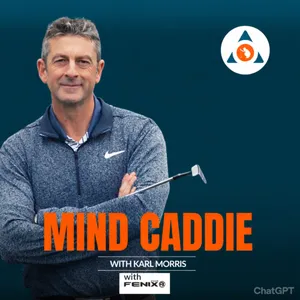
Mind Caddie - Improve Your Mental Golf Game: Daily Summaries Delivered
by Karl Morris
Improve your golf mental game and play your best golf — consistently. Welcome to the Mind Caddie Podcast, the go-to golf psychology podcast for players who want to sharpen their mindset, build confidence, and perform under pressure. Hosted by Karl Morris, Europe's leading performance coach to PGA Tour professionals, this podcast explores the mental skills that separate good golfers from great ones. Each episode dives deep into golf psychology, mental performance, confidence, focus, and emotional control, featuring expert insights, practical strategies, and conversations with elite players and coaches. Whether you're a club golfer, competitive amateur, or aspiring professional, you'll find tools you can apply immediately on the course. Learn how to: - Control nerves and first-tee anxiety - Silence your inner critic - Stay focused under pressure - Recover quickly from bad shots and setbacks - Build rock-solid confidence and consistency - Develop winning pre-round and in-round routines Topics include
Latest Episodes
The most recent episodes — sign up to get AI-powered summaries of each one.
- 3 days ago53 min
Stop Fighting Your Golf: Acceptance, The Yips & The Mental Game | Jim Waldron #427
Get a personalised mental game plan with Karl AI. Start Your 7-Day Free Trial Now. https://mindcaddie.app.link/B8OMj7jVv6b Playing better golf starts with accepting bad shots rather than trying to prevent them. In this episode of The Mind Caddie, Karl Morris is joined by golf performance coach Jim Waldron for a deep dive into the mental game of golf, golf psychology, performance under pressure and the mind-body connection. They explore why acceptance can be the foundation of better performance — and why trying to control your swing, your thoughts and your outcomes can actually make your golf worse. In this episode: Acceptance and the mental game — why accepting every possible outcome can reduce threat and free you to perform. The yips and performance anxiety — why resistance can reinforce the yips and how changing your relationship with them can help. "Let's see what happens" — the simple mindset used by elite players to reduce emotional attachment to the outcome. Swing thoughts and overthinking — why micromanaging tiny movements on the golf course can interfere with natural movement and skill. The mind-body connection — using focused awareness and feel, particularly through the hands, grip and body, rather than constantly thinking about technique. Playing golf with freedom — moving from hope and fear towards acceptance, confidence, focus and a more carefree approach to performance. A compelling conversation about golf mental toughness, confidence, focus, the yips, mindfulness, golf performance coaching and how to access the skills you already have. Buy the Mind Caddie book: Mind Caddie: Become Mentally Strong, When It Counts. Become a Certified Mind Factor Coach: www.themindfactor.com Join the Mind Caddie community: www.mindcaddie.golf Shop with code : MINDFACTOR10 at checkout for 10% OFF your next order at www.fenixxcell.com @fenixxcell
- 1 weeks ago1h 5m
The Secret to Lower Scores? Master Your Wedges | Dr. Sasho Mackenzie #426
One of the biggest opportunities to lower your golf scores lies between 60 and 140 yards? In this episode of The Mind Caddie, Karl Morris is joined by renowned golf researcher and coach Dr. Sasho Mackenzie to explore the science of wedge play, distance control, practice, feel and skill development. They discuss why better feedback can transform your practice, how technology can help develop genuine feel, and why becoming highly skilled with your wedges could give you the confidence to attack more pins and lower your scores. In this episode: 🎯 Why 60–140 yards is a scoring sweet spot for many golfers 🧠 How feedback and feel actually help you develop skill 📊 Why measuring your real wedge performance can transform confidence 🏌️ The science behind Stack Wedge and smarter practice 🔥 Why contact, ball speed and distance control matter more than obsessing over swing positions ⚡ Sasho's insights into sequencing, speed and the full golf swing A fascinating conversation for anyone looking to improve their golf, lower their handicap, practise more effectively and become a better wedge player. Buy the Mind Caddie book: Mind Caddie: How to Become the Golfer You Know You Can Be Become a Certified Mind Factor Coach: www.themindfactor.com Join the Mind Caddie community: www.mindcaddie.golf Shop with code : MINDFACTOR10 at checkout for 10% OFF your next order at www.fenixxcell.com @fenixxcell
- 2 weeks ago44 min
Why Your C Game Matters More Than Your A Game – Jared Tendler #425
📖 Get a FREE chapter from the Amazon best-seller Mind Caddie Book: https://bit.ly/4yUqY0Q What if your worst golf could teach you more than your best? In this episode of Mind Caddie, Karl Morris talks to renowned performance psychologist Jared Tendler, author of Everyday Golf Psychology, about pressure, confidence, adaptability and why understanding your C game may be the key to becoming a more consistent golfer. Their conversation ranges from golf to professional poker, and explores how we can learn to research our own experience rather than simply trying to eliminate mistakes. In this episode: Why Jared's own experience of choking in US Open qualifying changed the direction of his career The surprising connection between golf psychology and professional poker Why every golfer has an A, B and C game – and why narrowing the gap matters How to recognise the early signs of pressure, anger and overconfidence Why journaling and researching your own experience can transform your relationship with the game How better practice, clear intention and commitment create a more reliable feedback loop Buy the Mind Caddie book: Mind Caddie: How to Become the Golfer You Know You Can Be Become a Certified Mind Factor Coach: www.themindfactor.com Join the Mind Caddie community: www.mindcaddie.golf Shop with code : MINDFACTOR10 at checkout for 10% OFF your next order at www.fenixxcell.com @fenixxcell
- 3 weeks ago51 min
Why Your Bad Shots Might Be Your Biggest Opportunity - Randy Joyner #424
What if accepting your worst golf could actually help you play your best? Karl Morris is joined by renowned coach Randy Joyner for a fascinating conversation about why golfers — even the very best in the world — need to stop trying to control the game and start embracing what it actually gives them. In this episode: Why Gary Woodland's cold top on the PGA Tour is a lesson for every golfer Why accepting bad shots can actually unlock better golf The difference between "positive thinking" and staying open to what's possible Why Randy believes golfers should influence the ball — not try to control it How Scottie Scheffler and Seve Ballesteros demonstrate the power of clear intention Why simplifying your golf swing could be the biggest breakthrough of all Karl and Randy also dive into gratitude, the short game, feel, sound and why your body may be far better at playing golf than you give it credit for. The more you accept the reality of golf, the more freedom you have to play it. A thought-provoking conversation for anyone who wants to play better, think less and enjoy the game more. Buy the Mind Caddie book: Mind Caddie: How to Become the Golfer You Know You Can Be Become a Certified Mind Factor Coach: www.themindfactor.com Join the Mind Caddie community: www.mindcaddie.golf Shop with code : MINDFACTOR10 at checkout for 10% OFF your next order at www.fenixxcell.com @fenixxcell
- Aug 21, 202655 min
Are You Ruining Your Golf Game by Thinking Too Much? Karl Morris Turns the Tables #423
What happens when the interviewer becomes the interviewee? In this special episode of The Mind Caddie, Jim Waldron turns the tables on Karl Morris for a fascinating conversation about Karl's own journey through golf, coaching and the mental game. Karl reveals how a 30-year struggle with his own golf ultimately transformed his approach to performance coaching — and why he believes golfers often look for answers in completely the wrong place. In this episode: Karl's journey from teenage golfer to professional coach Why technical thinking can actually damage your golf His work with players including Louis Oosthuizen and Lee Westwood Why observation is the most important principle in the mental game How acceptance and gratitude can reduce the threat of golf Why creating your own definition of success could transform your game A revealing conversation about golf psychology, confidence, performance and what it really takes to play better golf. Perhaps the answer isn't another swing thought. Perhaps it's learning to stop thinking and start observing. Buy the Mind Caddie book: Mind Caddie: How to Become the Golfer You Know You Can Be Become a Certified Mind Factor Coach: www.themindfactor.com Join the Mind Caddie community: www.mindcaddie.golf Shop with code : MINDFACTOR10 at checkout for 10% OFF your next order at www.fenixxcell.com @fenixxcell
- Aug 14, 202652 min
The Golfers Who Get Out of Their Own Way Play Better – Dr. Debbie Crews #422
Your Brain Is Sabotaging Your Golf What if the reason you're not playing your best golf has almost nothing to do with your swing? In this fascinating episode of The Mind Caddie, Karl Morris is joined by renowned golf researcher Dr. Debbie Crews, and what she reveals about the brain could completely change the way you approach your next round. Debbie has spent decades studying what happens inside the brains of golfers and other elite performers. Her latest research explores the different "mini-me's" that can appear on the golf course — the perfectionist, the worrier, the performer, the focused player, the frustrated player and more. The remarkable discovery? They don't all produce the same brain patterns — and some versions of you are far better at playing golf than others. Karl and Debbie explore why you should decide who you're going to be before you play, why the final second before the swing is so important, and why thinking about your technique when you're actually playing may be one of the worst things you can do. They also reveal why target, feel, rhythm and timing can help the brain move away from conscious control and allow your subconscious skills to take over. And if you've ever stood over a putt drowning in swing thoughts, alignment thoughts and technical information, Debbie has a wonderfully simple solution: get the clutter out of your golf and let your brain and body do what they've been trained to do. This is a fascinating conversation about neuroscience, subconscious performance, decision-making and the hidden mental game of golf — with some remarkably practical ideas you can take straight onto the course. In this episode: 🧠 Are you playing with the wrong "you"? Discover Debbie's fascinating research into the different "mini-me's" that emerge during a round. 🎯 Choose who you want to be — why deciding before you play which version of yourself you want on the course can transform performance. ⏱️ The final second matters — what brain research reveals about the crucial moment before the club starts moving. 🏌️ Stop thinking about your swing — why target, feel, rhythm and timing can outperform conscious technical control. 🧹 Declutter your golf — could all those routines, swing thoughts and pieces of information actually be making you worse? 🧠 Meet your "coach and team" — Debbie explains why your conscious mind should make the decision and then trust your subconscious to execute it. ⛳ Why indecision kills performance — why committing to a shot, even the wrong one, is better than standing over the ball with a question mark in your head. 🔥 The simplest golf instruction of all? Debbie's final message: get the ball in the hole and trust your team to figure it out. If you've ever wondered why you can hit the ball beautifully on the range but struggle to reproduce it when it matters, this conversation could change the way you think about your game. Find out more about OptiBrain here: https://www.myoptibrain.com/ Buy the Mind Caddie book: Mind Caddie: How to Become the Golfer You Know You Can Be Become a Certified Mind Factor Coach: www.themindfactor.com Join the Mind Caddie community: www.mindcaddie.golf Shop with code : MINDFACTOR10 at checkout for 10% OFF your next order at www.fenixxcell.com @fenixxcell
- Aug 7, 202648 min
"The World's Best Putting Coach' - Phil Kenyon #421
What if one of the quickest ways to lower your scores has almost nothing to do with changing your golf swing? In this episode of The Mind Caddie, Karl Morris is joined by world-renowned putting coach Phil Kenyon, who has worked with many of the very best golfers in the game, including Scottie Scheffler. Karl and Phil explore why putting represents such a huge opportunity for golfers at every level and why simply spending more time on the putting green doesn't necessarily lead to improvement. They break putting down into three crucial skills — face control, speed control and green reading — and discuss how to identify which area is actually costing you shots. Phil explains why green reading is better thought of as a prediction skill, how feedback accelerates learning, and why many golfers practise putting without ever really knowing what they're trying to improve. They also explore the difference between technical practice and performance practice, how elite players structure their putting sessions, and why understanding your own tendencies is far more valuable than constantly searching for the latest tip. Phil shares fascinating insights from his work with Scottie Scheffler, including the importance of trusting intuition, accepting the inevitable ebb and flow of performance and developing a clear, repeatable approach rather than constantly searching for something new. The conversation also looks back at legendary putting pioneer Harold Swash, Phil's mentor and one of the people responsible for establishing putting coaching as a specialist discipline. A fascinating conversation about putting, learning and performance — and why becoming a better putter may be one of the most accessible ways to become a better golfer. Why face control, speed control and green reading are the three fundamental elements of putting performance. How to identify the low-hanging fruit that could improve your putting fastest. Why green reading should be viewed as a prediction skill, not simply something you either have or don't have. A simple way of using feedback to improve your ability to predict break. Why hitting three balls repeatedly on the practice green may be doing very little for your game. How the world's best players structure putting practice around their individual tendencies and biases. Why performance practice is essential if you want your putting skills to transfer onto the golf course. What recreational golfers can learn from Phil's work with Scottie Scheffler. Why constantly searching for technical fixes can actually make performance more difficult. The importance of accepting the natural ebb and flow of performance. Why putting offers club golfers an enormous opportunity to lower scores without requiring elite physical capabilities. How Phil's approach has evolved from a prescribed putting method towards treating every golfer as an individual case study. The influence of legendary putting coach Harold Swash on Phil's career and modern putting instruction. Why great coaching isn't necessarily about having a single method — it's about finding the right solution for the player in front of you. Buy the Mind Caddie book: Mind Caddie: How to Become the Golfer You Know You Can Be Become a Certified Mind Factor Coach: www.themindfactor.com Join the Mind Caddie community: <a hr
- Jul 31, 202648 min
Without LEARNING technology becomes ENTERTAINMENT How to BEST use a Launch Monitor with Henri Johnson from FlightScope #420
Can technology really make you a better golfer—or does it simply confirm what you already know? In this fascinating episode of The Mind Caddie, Karl Morris is joined by Henri Johnson, CEO and founder of FlightScope, to explore how launch monitor technology can transform your game when it's used with purpose. Henri shares the remarkable story behind FlightScope's journey, from developing radar systems for the military to revolutionising ball tracking in cricket, tennis and, ultimately, golf. Along the way, he explains why accurate feedback—not guesswork—is the key to meaningful improvement. Together, Karl and Henri discuss the importance of understanding impact, why consistency beats chasing distance, and how golfers can use technology to develop genuine skill rather than simply collecting data. It's a thought-provoking conversation about deliberate practice, curiosity and learning, reminding us that technology without learning is just entertainment. If you've ever wondered whether a launch monitor is worth the investment, or how to use one to genuinely lower your scores, this episode is packed with practical advice from two experts who believe better information leads to better performance. In this episode you'll discover: Why impact—not swing appearance—is the true skill in golf. The fascinating story of how FlightScope evolved from military radar to golf technology. Why launch monitors should be used to develop skills, not simply gather numbers. The importance of reducing variability before chasing more distance. How improving strike location can dramatically improve your scores. Why having a coach alongside technology accelerates learning. The role of deliberate practice and honest feedback in long-term improvement. How technology builds confidence by replacing guesswork with certainty. Why curiosity and a clear improvement plan are essential for every golfer. Practical advice on choosing the right FlightScope product for your game. Whether you're a weekend golfer, a serious competitor or a coach looking to help players improve, this episode offers invaluable insights into using technology the right way—and becoming a smarter, more confident golfer. Discount Code - TMFFLIGHTSCOPE https://flightscope.com/collections/all?sca_ref=11890741.2UuTlUw2MS4 Buy the Mind Caddie book: Mind Caddie: How to Become the Golfer You Know You Can Be Become a Certified Mind Factor Coach: www.themindfactor.com Join the Mind Caddie community: www.mindcaddie.golf Shop with code : MINDFACTOR10 at checkout for 10% OFF your next order at www.fenixxcell.com @fenixxcell
Get Mind Caddie - Improve Your Mental Golf Game summaries in your inbox
Free AI-powered daily recaps. Key takeaways, quotes, and mentions — in a 5-minute read.
Get Free Summaries →Free forever for up to 3 podcasts. No credit card required.
You Might Also Like
Listeners also like.

Growth Mindset Psychology: The Science of Self-Improvement
Explores the science behind lasting self-improvement through psychology, neuroscience, and timeless wisdom traditions.
The Mindset Mentor
A motivational podcast blending neuroscience and psychology to help listeners understand their minds and achieve personal growth.

Dissecting High Performance In Tennis
A deep dive into the coaching philosophies and methods that shape elite tennis players’ development and performance.

Drop Zone - GOLF Podcast
A weekly roundtable discussion covering the top stories and issues in golf, hosted by GOLF magazine’s writers and editors.

The Shotgun Start
A fast-paced morning golf podcast covering pro tours, amateur play, and offbeat topics with quick interviews and news rundowns.

No Laying Up - Golf Podcast
A golf podcast offering humorous and insightful discussions for avid players and fans, featuring top figures in the sport.

Fore Play
A group of avid golfers discuss the sport's challenges, pro news, and culture with casual, bar-style commentary.

Finding Mastery with Dr. Michael Gervais
Conversations with elite performers across sports, business, and science to explore the psychology of high performance and human potential.

Modern Wisdom
Discussions with experts on psychology, philosophy, and self-improvement to help navigate life’s challenges.

Peak Performance Life Podcast
Covers health, energy, and mental performance optimization through biohacking, nutrition, and lifestyle strategies.

Feel Better, Live More with Dr Rangan Chatterjee
A doctor-hosted podcast offering practical health advice on eating, sleeping, moving, and relaxing from medical experts and real-life stories.

Essential Tennis Podcast - Instruction, Lessons, Tips
A tennis coach answers player questions and gives technical, strategic, and mental advice to help improve performance on the court.
About Mind Caddie - Improve Your Mental Golf Game
Improve your golf mental game and play your best golf — consistently. Welcome to the Mind Caddie Podcast, the go-to golf psychology podcast for players who want to sharpen their mindset, build confidence, and perform under pressure. Hosted by Karl Morris, Europe's leading performance coach to PGA Tour professionals, this podcast explores the mental skills that separate good golfers from great ones. Each episode dives deep into golf psychology, mental performance, confidence, focus, and emotional control, featuring expert insights, practical strategies, and conversations with elite players and coaches. Whether you're a club golfer, competitive amateur, or aspiring professional, you'll find tools you can apply immediately on the course. Learn how to: - Control nerves and first-tee anxiety - Silence your inner critic - Stay focused under pressure - Recover quickly from bad shots and setbacks - Build rock-solid confidence and consistency - Develop winning pre-round and in-round routines Topics include
Customized Recaps
AI-powered recaps with compact key takeaways, quotes, and insights.
Straight to Your Inbox
Get key takeaways from Mind Caddie - Improve Your Mental Golf Game in a 5-minute read.
Save Hours Every Week
Stay current on your favorite podcasts without falling behind.
Frequently Asked Questions
What is Podzilla's Mind Caddie - Improve Your Mental Golf Game daily summary?
It's a free AI-powered email that summarizes new episodes of Mind Caddie - Improve Your Mental Golf Game as soon as they're published. You get the key takeaways, notable quotes, and links & mentions — all in a quick read.
How does the Mind Caddie - Improve Your Mental Golf Game podcast summary work?
When a new episode drops, our AI transcribes and analyzes it, then generates a personalized summary tailored to your interests and profession. It's delivered to your inbox every morning.
Is this an official Mind Caddie - Improve Your Mental Golf Game product?
No. Podzilla is an independent service that summarizes publicly available podcast content. We're not affiliated with or endorsed by Karl Morris.
Can I get summaries of other podcasts too?
Absolutely! The free plan covers up to 3 podcasts. Upgrade to Pro for 15, or Premium for 50. Browse our full catalog at /podcasts.
How often does Mind Caddie - Improve Your Mental Golf Game release new episodes?
Mind Caddie - Improve Your Mental Golf Game publishes weekly. Our AI generates a summary within hours of each new episode.
What topics does Mind Caddie - Improve Your Mental Golf Game cover?
Mind Caddie - Improve Your Mental Golf Game covers topics including Sports, Golf. Our AI identifies the specific themes in each episode and highlights what matters most to you.
Start getting Mind Caddie - Improve Your Mental Golf Game summaries tomorrow morning.
Free forever for up to 3 podcasts. No credit card required.
Free forever for up to 3 podcasts. No credit card required.