Free Daily Podcast Summary
Lost and Hidden History: Daily Summaries Delivered
by Forbidden Knowledge Network
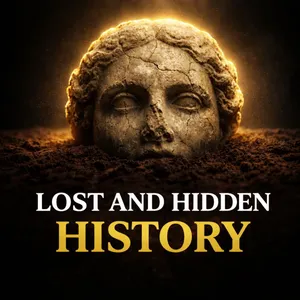
Lost and Hidden History explores forbidden knowledge, lost civilizations, suppressed discoveries, and hidden artifacts that challenge official narratives. Hosted by Ben Carter, each episode investigates ancient technology, unexplained structures, missing records, and historical cover-ups through a structured, documentary-style approach. Examining evidence, patterns, and overlooked findings, the series reveals how history may be far older—and more complex—than we are told.Unlock bonus content and full video episodes:https://www.patreon.com/theforbiddenknowledgenetwork
Latest Episodes
The most recent episodes — sign up to get AI-powered summaries of each one.
- 1 weeks ago26 min
The Lost History of Halloween: The Ancient Festival That Became a Global Tradition
Halloween is often explained in a single sentence: an ancient pagan festival called Samhain became a Christian feast, then turned into a modern night of costumes and candy. The surviving record tells a more complicated story.This episode begins with the Irish Schools’ Collection of nineteen thirty-seven to nineteen thirty-nine, when more than fifty thousand children wrote down customs remembered by parents, grandparents, and neighbors. Their notebooks preserved local accounts of food, games, divination, prayers, disguises, and seasonal fears that were rarely included in official histories. From those pages, the investigation moves backward to medieval Irish manuscripts that name Samain as an important seasonal time, and to the separate Christian development of All Saints’ Day and All Hallows’ Eve.It then follows Robert Burns’s eighteen seventy-six poem “Halloween,” Scottish guisers who performed at doorsteps, turnip lanterns that became pumpkins in North America, and a nineteen twenty-seven Alberta newspaper report containing an early known printed use of “trick or treat.” Museum masks, an Irish Halloween cross, migration, commercial change, and archival preservation all complicate the familiar origin story.The strongest hidden-history interpretation is not that one institution erased Halloween’s true past. It is that a layered regional history was flattened into a simple tale of pagan survival. The central question remains: which modern customs can be traced through evidence across the centuries, and which connections survive mainly as later tradition?This podcast uses artificial intelligence in its research, writing, production, and narration. Episodes are editorially reviewed before publication.#LostAndHiddenHistory #ObscuredCulturalHistory #HalloweenOrigins #Samhain #AllHallowsEveYES OR NO: Do you believe Halloween’s complex history was simplified enough to erase important traditions???????
- 2 weeks ago25 min
The Kingdom of Punt: Egypt’s Mysterious Trading Partner That Vanished From the Map
Egyptian records named Punt for more than a thousand years as a source of incense, ebony, ivory, gold, animals, and other prized materials. Hatshepsut’s mortuary temple at Deir el-Bahari preserves the most elaborate surviving account: a royal expedition, a meeting with named representatives, cargo moved toward ships, and a return framed as an offering to Amun.The carvings are extraordinary, but they never provide coordinates, a sailing itinerary, or a fixed political map. Modern excavations at Mersa/Wadi Gawasis have transformed the question by documenting Egyptian Red Sea maritime activity through ship timbers, rope, anchors, cargo containers, inscriptions, galleries, and work areas. The harbor clarifies how Egypt organized voyages; it does not identify Punt’s destination coast.This episode follows the royal monument, the people named within it, the later damage and dispersal of its blocks, and the archaeologists who recovered the material record of Egyptian seafaring. It weighs the broad southern Red Sea and Horn of Africa interpretation alongside Arabian and wider trans-Red Sea network models, then asks what discovery could finally let Punt speak from its own archaeological ground.This podcast uses artificial intelligence in its research, writing, production, and narration. Episodes are editorially reviewed before publication.#LostAndHiddenHistory #DisputedDiscovery #LandOfPunt #Hatshepsut #AncientEgyptYES OR NO: Can current evidence identify Punt’s exact location??????
- 3 weeks ago25 min
The Picts: The People Rome Could Never Conquer
In 685, Northumbrian king Ecgfrith entered Pictish territory with an army and did not return. The principal surviving account comes from Bede, a Northumbrian monk writing decades later. He records Ecgfrith’s death and the destruction of much of his force, but gives no detailed battlefield narrative and no certain location. The battle is often placed near Dunnichen in Angus, while a carved stone at nearby Aberlemno is often said to show the conflict. Neither identification is secure.This episode follows the people later called the Picts through the uneven evidence they left behind: Roman accounts of northern campaigns, frontier walls and forts, Pictish symbol stones, medieval king-lists, settlement archaeology at Rhynie, and the excavated Christian and craft center at Portmahomack. It examines the popular claim that Rome could never conquer Scotland, while separating Roman campaigns and temporary occupation from lasting provincial control.The strongest hidden-history interpretation is not that a Pictish archive was deliberately destroyed. It is that a sparse written record, outsider labels, changing political names, and centuries of archaeological neglect produced an image of the Picts as primitive and unknowable. Excavation now shows organized centers, skilled production, religious institutions, and powerful kingdoms. Yet their symbols remain undeciphered, their own self-name is uncertain, and the decisive battles linked to their history still lack securely identified sites.This podcast uses artificial intelligence in its research, writing, production, and narration. Episodes are editorially reviewed before publication.#LostAndHiddenHistory #ErasedHistory #Picts #RomanScotland #PictishStonesYES OR NO: Do you believe Pictish history was deliberately erased rather than gradually lost???????
- Oct 6, 202627 min
Antarctica: The Forbidden Zones Beneath the Ice
Beneath nearly four kilometers of ice near Vostok Station lies a vast Antarctic lake known first through measurements rather than sight. This episode follows the records, expeditions, drilling decisions, and failed clean-access plans that transformed a buried geophysical anomaly into one of polar science’s most difficult research targets.From Soviet seismic traverses and airborne radar surveys to the 1996 Nature synthesis, the story traces how separate datasets built a strong case for Lake Vostok. It then follows the Vostok borehole’s approach to the lake, the 2006 decision to stop above it, the Russian expedition’s 2012 report of penetration, and the unresolved questions surrounding material later recovered from the borehole.A parallel mission at Lake Ellsworth reveals why reaching hidden Antarctic water without compromising the evidence is far harder than drilling a hole. The central question is not whether the lake is there, but what kind of sample could finally establish its chemistry and biology with confidence.This podcast uses artificial intelligence in its research, writing, production, and narration. Episodes are editorially reviewed before publication.#LostAndHiddenHistory #RediscoveredScientificFrontier #LakeVostok #AntarcticSubglacialLakes #PolarExplorationYES OR NO: Would a clean replicated sample settle the main questions about Lake Vostok??????
- Sep 29, 202624 min
Why Empires Really Fall: The Hidden Patterns History Repeats
The fall of an empire is often reduced to a date: Nineveh in 612 BCE, western Rome in 476 CE, and the Classic Maya decline in the ninth century. But surviving evidence tells a less tidy story. A damaged Babylonian tablet records Nineveh’s capture, then names an Assyrian claimant still fighting afterward. A later Latin account describes Odoacer taking control of Italy, yet Roman legitimacy remained contested and the exact formal removal of Romulus is disputed. In the Maya lowlands, an inscription says that Naranjo burned Witzna in 697 CE, while archaeological and environmental research identifies evidence of a major fire and reduced later activity at the site.This episode follows the records behind those famous endings: British Museum tablet BM 21901, the transmitted text known as the Anonymus Valesianus, Maya inscriptions, burned deposits, and royal monuments. The hidden-history interpretation is not that a secret cause connects every collapse. It is that later history often turns complicated transfers of power into clean endings, obscuring surviving claimants, continuing communities, and the people whose lives were never recorded.Military defeat, political fragmentation, warfare, resource pressures, and weakened authority all mattered. But they mattered differently in each place. The unresolved question is not simply why empires fall. It is what, exactly, has fallen when a capital is captured, a ruler is removed, or a court stops carving its history into stone.This podcast uses artificial intelligence in its research, writing, production, and narration. Episodes are editorially reviewed before publication.#LostAndHiddenHistory #RecoveredHistory #FallOfEmpires #Nineveh #WesternRomeYES OR NO: Do you believe famous imperial collapse dates have deliberately erased the survival of people and institutions???????
- Sep 15, 202631 min
The Moon Files: The Ancient Secret NASA Never Explained
In May 1969, Apollo 10 crossed behind the Moon with two spacecraft flying separately through lunar orbit. During the mission, Thomas Stafford, John Young, and Eugene Cernan heard a repeating whistle in their radio systems. Cernan called it “outer-space-type music.” The recording survived. So did the transcript.That real moment later became part of a much larger claim: that NASA encountered evidence that the Moon is artificial, inhabited, hollow, or altered by an ancient intelligence—and kept the decisive proof from the public.This episode follows the records behind that claim. It examines ancient Greek traditions about peoples said to be “before the Moon,” Plutarch’s philosophical lunar world, Galileo’s mountains, William Herschel’s apparent lunar lights, and NASA’s 1968 catalog of five hundred seventy-nine reported changes on the lunar surface. It then follows Apollo’s strange radio sound, seismic experiments that made the Moon reverberate for an unusually long time, and modern missions that found pits, ice, magnetic swirls, buried mass concentrations, and a fractured interior.The strongest artificial-Moon interpretation draws power from genuine anomalies, incomplete sampling, and archival confusion. The strongest conventional explanation points to radio interference, dry fractured rock, impacts, volcanism, magnetic shielding, and a natural rocky body formed early in Solar System history.The question is not whether the Moon still holds ancient secrets. It does. The question is whether those secrets were deliberately concealed—or whether humanity has simply begun to read an archive written in rock, dust, gravity, and silence.This podcast uses artificial intelligence in its research, writing, production, and narration. Episodes are editorially reviewed before publication.#LostAndHiddenHistory #LostAndHiddenHistorySpaceAgeArchivesAncientLunar #Moon #NASA #AncientMysteryYES OR NO: Do you believe NASA deliberately hid evidence of an ancient artificial secret on the Moon???????
- Sep 8, 202626 min
The Lost Tribes: Entire Cultures That Vanished From History
In September 1408, Þorsteinn Ólafsson married Sigríðr Björnsdóttir at Hvalsey Church in Norse Greenland. The wedding is the last clearly documented ordinary event involving named Greenland residents, yet later records still include a 1409 attestation and a 1410 visitor departure. Archaeology indicates Norse settlement continued beyond the surviving detailed documents, leaving a gap no final letter has closed.This investigation follows four societies often described as vanished: the Hittite Empire and Hattusa, Norse Greenland, Cahokia, and the Ancestral Pueblo communities of Mesa Verde. Their ruins, archives, environmental records, migration evidence, and descendant traditions reveal very different endings.Some cases include destruction, drought, flooding, conflict, political fracture, and demographic collapse. Others show migration, regional reorganization, and cultural continuity that later observers failed to recognize. Greenland remains the most unresolved: its farms were eventually abandoned, but the final human chain cannot yet be reconstructed.When a settlement falls silent, does that prove its people were gone—or only that the surviving evidence can no longer follow them?This podcast uses artificial intelligence in its research, writing, production, and narration. Episodes are editorially reviewed before publication.#LostAndHiddenHistory #LostCivilizationsArchaeologicalMysteriesCultural #LostTribes #VanishedCultures #AncientPeoplesYES OR NO: Does an abandoned settlement prove that its people were gone??????
- Sep 1, 202626 min
The Forgotten Prophets: Ancient Warnings History Ignored
In approximately 62 CE, according to the historian Flavius Josephus, a man named Jesus son of Ananus began walking through Jerusalem during the Feast of Tabernacles, crying out against the city, its people, and its sanctuary. Authorities beat him, brought him before the Roman procurator Albinus, and had him flogged. Albinus dismissed him as mad and released him. Years later, Jerusalem and its Second Temple were destroyed by Rome.This episode investigates the difficult historical question behind warnings like his. Were ancient prophets simply voices of religion and political fear? Were some unusually perceptive observers who recognized danger before rulers did? Or did later survivors reshape old warnings after catastrophe had made them meaningful?Clay tablets from Mari and Assyria show that prophetic messages were preserved inside royal governments. The Book of Jeremiah remembers warnings against confidence in Jerusalem’s Temple before Babylonian conquest, while a Babylonian chronicle independently confirms Nebuchadnezzar’s capture of Jerusalem in 597 BCE. Herodotus’s story of Croesus and Delphi shows how an oracle could seem accurate only after its ambiguity had been interpreted by defeat.The strongest hidden-history interpretation is that real warnings were sometimes rejected because they threatened political confidence and royal power. The strongest conventional explanation is that informed prediction, ambiguity, later editing, and selective memory can produce the appearance of fulfilled prophecy. The surviving evidence establishes that ancient warnings existed. It cannot establish exactly what every listener heard before history supplied the ending.This podcast uses artificial intelligence in its research, writing, production, and narration. Episodes are editorially reviewed before publication.#LostAndHiddenHistory #LostHistoryAncientProphecyTextualArchaeology #Prophets #AncientWarnings #LostMessagesYES OR NO: Do you believe some ancient warnings were deliberately erased or altered after rulers ignored them???????
Get Lost and Hidden History summaries in your inbox
Free AI-powered daily recaps. Key takeaways, quotes, and mentions — in a 5-minute read.
Get Free Summaries →Free forever for up to 3 podcasts. No credit card required.
You Might Also Like
Listeners also like.

Hidden History with Dr. Harini Bhat
A clinical pharmacist explores baffling historical mysteries as unresolved case studies shaped by gaps in knowledge and human perception.

HISTORY This Week
A weekly look at pivotal historical events and the people behind them, from famous figures to unknown influencers.

HistoryExtra podcast
Historical conversations with leading experts explore gripping stories from the past.
History's Great Mysteries
Explores unexplained historical events and invites listeners to ponder possible theories behind enduring mysteries.

American History Hit
Examines key events in American history, from colonial conflicts to civil rights, through expert interviews and detailed storytelling.
The Ancients
Explores ancient history through expert interviews, covering topics from Neolithic Britain to the fall of Rome.
Our Fake History
Explores the blurred line between historical events and the myths surrounding them.

History's Greatest Mysteries
Explores unsolved historical enigmas, from vanished figures to buried treasures, using insights from experts across disciplines.

New Books in Ancient History
New Books Network

Dan Snow's History Hit
Dan Snow visits historic sites worldwide to explore the stories behind pivotal events, figures, and monuments.
Dark Histories
Unsolved crimes, historical mysteries, and unexplained phenomena explored through narrative storytelling.

After Dark: Myths, Misdeeds & the Paranormal
Historians explore eerie, strange, and dark historical events, from hauntings and witch trials to UFOs and infamous crimes.
About Lost and Hidden History
Lost and Hidden History explores forbidden knowledge, lost civilizations, suppressed discoveries, and hidden artifacts that challenge official narratives. Hosted by Ben Carter, each episode investigates ancient technology, unexplained structures, missing records, and historical cover-ups through a structured, documentary-style approach. Examining evidence, patterns, and overlooked findings, the series reveals how history may be far older—and more complex—than we are told.Unlock bonus content and full video episodes:https://www.patreon.com/theforbiddenknowledgenetwork
Customized Recaps
AI-powered recaps with compact key takeaways, quotes, and insights.
Straight to Your Inbox
Get key takeaways from Lost and Hidden History in a 5-minute read.
Save Hours Every Week
Stay current on your favorite podcasts without falling behind.
Frequently Asked Questions
What is Podzilla's Lost and Hidden History daily summary?
It's a free AI-powered email that summarizes new episodes of Lost and Hidden History as soon as they're published. You get the key takeaways, notable quotes, and links & mentions — all in a quick read.
How does the Lost and Hidden History podcast summary work?
When a new episode drops, our AI transcribes and analyzes it, then generates a personalized summary tailored to your interests and profession. It's delivered to your inbox every morning.
Is this an official Lost and Hidden History product?
No. Podzilla is an independent service that summarizes publicly available podcast content. We're not affiliated with or endorsed by Forbidden Knowledge Network.
Can I get summaries of other podcasts too?
Absolutely! The free plan covers up to 3 podcasts, any in the catalog. Basic raises that to 15, Pro to 40 and Max to 100. Browse our full catalog at /podcasts.
How often does Lost and Hidden History release new episodes?
Lost and Hidden History publishes weekly. Our AI generates a summary within hours of each new episode.
What topics does Lost and Hidden History cover?
Lost and Hidden History covers topics including History, Culture, Society & Culture. Our AI identifies the specific themes in each episode and highlights what matters most to you.
Start getting Lost and Hidden History summaries tomorrow morning.
Free forever for up to 3 podcasts. No credit card required.
Free forever for up to 3 podcasts. No credit card required.