Free Daily Podcast Summary
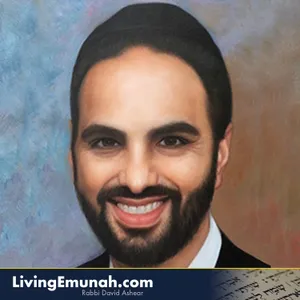
Living Emunah By Rabbi David Ashear: Daily Summaries Delivered
by Rabbi David Ashear
A Daily ethical teaching by Rabbi David Ashear
Latest Episodes
The most recent episodes — sign up to get AI-powered summaries of each one.
- 4 days ago
Shabbat Shuva:The Greatest Chesed
These days of Aseret Yemei Teshuvah are the greatest chesed from Hashem. Imagine a man is standing on trial and his life is on the line. Before the judge gives his final verdict, the man pleads, "Please give me a chance. Tell me what I could do to get off the hook." The judge tells him, "I won't give the final verdict for another week. During that time, if you come to me, admit what you did wrong, sincerely regret it, and tell me you won't do it again, then I'll let you off." What a chesed! His life is on the line, and the judge tells him exactly what to do to be forgiven. This is the incredible chesed that Hashem gives us during these days. He is telling us, "I want to let you off. I want to give you the greatest of everything. Just do teshuvah so I can forgive you." We have to answer the call and actually make teshuvah. The days are passing by quickly. We have to think about what we did wrong and go through the steps necessary to gain full atonement, which include admitting to Hashem what we did. We have to actually say, "I did this wrong." Amazingly, Hashem gives us a mitzvah for confessing our sins. Imagine the judge tells the defendant, "Come tell me what you did wrong so I can forgive you. And besides that, I'm going to give you a huge reward just for admitting it." Hashem not only gives us the ability to erase the damage we caused, He gives us a mitzvah for doing it as well. Rabbeinu Yonah speaks about the regret that we have to have as part of our teshuvah. We have to think about what we did. How could we have gone against the will of Hashem? Hashem warned us in the Torah about all the negative consequences of sin, yet we still allowed a temporary desire to overcome us. How could we exchange eternity for a fleeting pleasure? How could we damage the holy neshamah that Hashem gave us just to satisfy the yetzer hara for a few moments? The Navi tells us that even an animal knows who provides for it. Hashem gives us every breath we take, every heartbeat, every blessing. When we think about that, we can sincerely say, "Hashem, how could I have gone against You? You give me everything." And then we have to make a commitment for the future. We tell Hashem, "I don't want to do this anymore. I want to change." Hashem knows what's in our hearts. He knows our weaknesses, and He knows whether or not we're sincere. Teshuvah doesn't mean we can guarantee that we'll never face the challenge again. It means that right now we sincerely regret what we did, we genuinely don't want to do it again, and we accept upon ourselves, to the best of our ability, not to repeat it. We can't imagine what happens when a person sincerely does teshuvah. The Rambam writes that before teshuvah, a person can be so distant from Hashem, but afterward he is beloved and desired, close and dear. Chazal tell us that teshuvah can rip up a harsh decree. It can bring a refuah shelemah. It can lengthen a person's life. And during these days, the opportunity is even greater. The Rambam tells us that although teshuvah and crying out to Hashem are always good, during the Aseret Yemei Teshuvah they are especially effective and are accepted immediately. Imagine someone had a stain on a very expensive garment that normally needed an enormous process to remove. Then, for just a few days, the manufacturer announced that anyone could bring in his stained garment and they would clean it for him on the spot. No one would say, "Well, let me see if I get around to it." He would run there while the opportunity was available. That is the opportunity we have now during the Aseret Yemei Teshuvah. We all know that sometimes when a person experiences pain or difficulty, it's a kapparah. Kapparah means that the suffering is helping to atone for our sins. But we would rather not have the sin and not need the kapparah. Teshuvah removes the sins and cleanses us from them. And our Rabbis teach us about the unbelievable power that Torah study has to help bring the full atonement that we need. Torah study can atone for the most serious sins. Aveirot that even korbanot cannot completely atone for can be atoned for through Torah study. Hashem tells us that the words of Torah that come out of our mouths are more precious to Him than all the korbanot that can be offered. And the Midrash tells us that even sins that carry the punishment of death at the hands of Heaven can be atoned for through increased Torah study. What an opportunity! A person can say, "Hashem, I want to come closer to You. I want to become cleansed. I'm going to add more Torah study to my life." Now is the time. We want to be pure. We want to be close to Hashem. We have an opportunity of a lifetime. The days of Aseret Yemei Teshuvah are passing by quickly. Let us take advantage of them, do teshuvah, strengthen our Torah study, and come back to Hashem. And in that zechut, may Hashem cleanse us and inscribe and seal us for a year filled with life, berachah, and hatzlacha.
- 5 days ago
Living With the King
On Rosh Hashanah, we crowned Hashem the King. We understood that Hashem runs the world. He is in charge of everything that takes place. We are nothing and Hashem is everything. And we are so proud and happy to be the children of the King in His kingdom. But now, we have to act on that knowledge. We have to live with the understanding that Hashem is the King. That means recognizing that everything that happens to us, every second of the day, is coming from the King. And He is not only Malkeinu, He is Avinu. He is our King, Who is our Father, Who loves us more than we can imagine. When we react to the circumstances of life with that understanding, our avodah becomes so great. A man told me that before Rosh Hashanah, he traveled to Israel for just a couple of days to get a spiritual uplift. He went to get berachot from rabbis and go to the Kotel. He told me he went to visit the King before the great day of Yom HaDin. But as soon as he arrived, his phone stopped working. He had so many calls he needed to make and so many people he needed to contact. But no matter what he tried, he couldn't get the phone to work, and he became very frustrated. Then suddenly he caught himself. He thought, I came here to visit the King, and I forgot Who the King is. Hashem is the One Who decided that my phone shouldn't work right now. Why am I getting so frustrated? I'm in the King's world and He's running the show. And the King is my loving Father. If this is what He wants right now, then I know it's best for me. That thought completely changed his perspective. He totally calmed down. Those thoughts were so beautiful. A relative of mine has a valuable watch that needed to be repaired. She brought it to a jeweler, and he suggested that she go to a small repair shop next door where it would be much cheaper. She went in, and the repairman began taking the watch apart. Before she knew what was happening, pieces of her expensive watch were all over the counter. Then the man said to her, "Sorry, it's broken." She couldn't believe it. "So put it back together," she said. He replied that he wasn't sure he could. She got so upset. Eventually, he told her, "Come back in a couple of hours and I'll see what I can do." She went home distraught. But then she stopped herself and remembered Who was really in charge. She said, "Hashem, You're the King. If You want my watch, I'm happy to give it to You. If You want my watch to be broken, then I accept it with love, because whatever You want for me, I know is best." Immediately, she felt so much better. In the end, she went back to the store, and although she didn't understand how, the man managed to put the entire watch back together and actually fixed it. But the emunah that she displayed during those few hours was worth far more than that watch. Another man told me that this past summer he was teaching children a woodworking class when, lo aleinu, his hand got caught in one of the machines. Two of his fingers were being crushed. Baruch Hashem, he managed to pull his hand out, but it was badly injured and dripping with blood. He told me that after fifteen years of learning emunah every day, even he couldn't believe how calm he was. He simply went over, got a towel and covered his hand. He felt like he was completely in the hands of Hashem. His feeling was, Hashem, if this is what You want for me, then I accept it with love. The people there watching couldn't believe their eyes. Here was a man who had just suffered a terrible injury, yet he was completely calm because he knew Who was running the world. Baruch Hashem, he was able to get treated by a top plastic surgeon, and now, a few months later, his fingers are almost completely back to normal. The emunah he displayed at that time was truly inspiring. A woman who has been in shidduchim for many years related that her young niece had just started shidduchim and remarked to her how difficult shidduchim were. The woman thought to herself, What do you know about difficult? You just started. I've been waiting for so many years. It was painful for her to hear those words. Then, just a few months later, that niece became engaged. Naturally, that could have been extremely difficult for her, but she had been working on her emunah, and she told herself, This is the ratzon of the King. If Hashem wants her to be engaged right now and He wants me to still be waiting, why shouldn't I be happy for her? I'm happy with the life that Hashem wants me to have, and I'm happy with the life that Hashem wants her to have. She went to the engagement party and was genuinely happy for her niece. She overcame the natural feelings of jealousy and hurt and instead displayed the most beautiful emunah, understanding that her Father, the King, runs the world. It's not enough just to say on Rosh Hashanah that Hashem is the King. We have to live every day of our lives with the recognition that He's the King. When something doesn't go the way we wanted, when someone else gets some
- 6 days ago
The Opportunity to Forgive
We are now in the Aseret Yemei Teshuvah. The Rambam writes that during these days, a person should view himself as a benoni whose judgment is still pending. If he does teshuvah, he will be inscribed for life. That means that the order of the day right now is teshuvah. Every person must think about what he did wrong and try to correct it. The Rambam tells us that teshuvah is easily accepted during these days. Hashem is giving us such a great opportunity. He wants us to succeed, but we have to do our part. We must think about what we did wrong. We have to admit it, feel sincere regret, and then accept upon ourselves not to continue doing it. And when it comes to things that we did wrong to other people, even if we ask Hashem for forgiveness, Yom Kippur will not bring atonement until we ask them for forgiveness. This can be very difficult, but we must build up the strength to apologize to the people we hurt. And an apology must be sincere. If someone goes over to the person he hurt and spends the whole time explaining why he did what he did, giving a hundred reasons why he was justified, it's going to be very difficult for the other person to accept that apology. We have to be able to say, "I was wrong. I feel terrible about what I did. It's bothering me so much that I hurt you, and I'm sincerely asking you to please forgive me." The Chafetz Chaim writes about how important it is not to let the opportunity of Yom Kippur pass us by. We need Yom Kippur to complete our atonement, and that will only happen if we do our part beforehand. And when someone asks us sincerely for forgiveness, we have an avodah as well. We're not supposed to make it difficult for them. We should say, "I forgive you," and really mean it. Sometimes that can be very hard. The person may have truly hurt us, but we can tell ourselves, This is what Hashem wants from me. Hashem wants peace, and with emunah, we know that the person who hurt us was only a messenger, and whatever happened was from Hashem for our best. And if it's still very difficult to forgive, we should realize that we have an opportunity for tremendous mesirut nefesh. We can overcome our nature and put aside our feelings because that is what Hashem wants from us. And when a person is wronged and is able to overlook it, it's an extraordinary et ratzon. We've heard so many stories over the years of people who overcame themselves at such moments and saw great yeshuot. If someone finds himself in a difficult situation and manages to sincerely forgive, he should take advantage of that moment and pray to Hashem for the yeshuah that he needs. There was a wonderful bachur who we'll call Yehuda from Williamsburg, who had so much going for him. He was smart and diligent, had excellent middot, and was very good-looking. But as a young child, he was in a serious car accident. Baruch Hashem, he completely recovered, except that he was left with a noticeable limp. When he reached the age of shidduchim, that limp became a much bigger obstacle than the family anticipated. All of his friends were getting engaged, while very few suggestions were coming his way. His mother maintained her emunah and refused to compromise on the things that really mattered. One day, she decided perhaps she should send a picture of her son to the community shadchanim. If they saw what a good-looking bachur he was, perhaps they would be more willing to overlook his limp. That morning after Shacharit, Yehuda was walking toward the kitchenette in the Bet Midrash when an older man came toward him carrying two hot drinks. Someone rushed past and bumped into the older man, causing one of his drinks to spill. The person who actually caused it kept walking, but the older man mistakenly blamed Yehuda. He began shouting at him publicly, accusing him of not looking where he was going. Then, while angrily waving his hands, the second cup, filled with hot tea, spilled directly onto Yehuda's face. Yehuda had every right to defend himself. He had done absolutely nothing wrong. But just then, someone whispered to him, "Don't answer. This is your opportunity. Pray to Hashem now for a shidduch." Yehuda held himself back and didn't say a word. With his face burning and warm tears coming down his cheeks, he turned to Hashem and prayed for a shidduch. That day, his mother couldn't take the picture because his face was red from the burn. Her plan of hishtadlut had seemingly been ruined. But two weeks later, without any picture being sent, Yehuda was engaged. We don't know the calculations of Hashem, but we know how precious it is when a person is wronged and overcomes his natural reaction for the sake of Hashem. During these Aseret Yemei Teshuvah, we may have that opportunity on either side. Perhaps we need to go over to someone and sincerely say, "I'm sorry," which can be very difficult. Or perhaps someone needs our forgiveness, and it's very difficult for us to give it to him. Both require us to overcome ourselves. But these are the op
- 1 weeks ago
What Does Hashem Want?
One of the reasons we blow the shofar on Rosh Hashanah is to, so to speak, remind Hashem of Akedat Yitzchak and the great mesirut nefesh of Avraham Avinu. And in that zechut, Hashem has extra mercy upon us. One of the ways in which we can bring more of Hashem's mercy upon us now is through mesirut nefesh. But what exactly does it mean to show self-sacrifice? Rabbeinu Bachya describes how unfathomable the test of Avraham Avinu was. He waited one hundred years to finally have the child he had been waiting for, and it came about through the greatest miracle. Avraham loved Yitzchak so much. He taught him all of his Torah, and with every passing year, his love for him grew even more. Avraham knew Yitzchak was going to be his future and was going to continue the job that he had started. And then, when Yitzchak was thirty-seven years old, at the prime of his life, when everything Avraham had worked for was right there in front of him, Hashem told Avraham to bring his son as a korban. At that moment, Avraham had to overcome his natural will and desire, put it aside, and focus on one thing: What is Hashem's will? What does Hashem want? Avraham understood that our main purpose in this world is to do the will of Hashem. And therefore, as difficult as it was, he was prepared to put aside everything he had worked for. He said, "Hashem, I want to do what You want." That is mesirut nefesh—putting aside our will and focusing on what Hashem's will is. This year, we had an opportunity to do that ourselves on the first day of Rosh Hashanah. The Gemara tells us how powerful the blowing of the shofar is, how it causes Hashem to go from the Kisei HaDin and sit upon the Kisei HaRachamim. We need the shofar so much. We want every possible zechut to bring us a happy and blessed year. Yet this year, on the first day of Rosh Hashanah, which was Shabbat, because of a rabbinical decree, we did not blow the shofar. We were saying, "Hashem, it's not about what we want. We don't want Your Torah to possibly be violated by someone carrying a shofar on Shabbat. Even though we would love to have the great zechut of shofar, Your will is more important to us than our will." We put aside what we wanted for what Hashem wanted. That is mesirut nefesh, and that mesirut nefesh, be'ezrat Hashem, brought about an outpouring of love and mercy from Hashem. Now, during the Aseret Yemei Teshuvah, part of our avodah has to be having more mesirut nefesh in our own lives. There are so many times when doing what Hashem wants conflicts with what we want. Maybe we want to say something, but we know Hashem doesn't want us to say it. Maybe we want to do something, but we know Hashem doesn't want us to do it. At that moment, we can ask ourselves the same question: What is the will of Hashem? And if we put aside our will for Hashem's will, then we are practicing mesirut nefesh. There is another area in which this can be very difficult. There are people who are not happy with the way their lives are going. Maybe they did not get what they wanted so badly. Maybe they have been waiting such a long time for something that's so important to them. Here, there is a great opportunity to say, "Hashem, my will is to live the life that You want me to live. As long as my life is meant to be like this, without having what I want right now, I'm going to be happy to live it. I'm going to continue serving You with happiness. I'm going to continue growing and doing everything I can in avodat Hashem, because what matters to me most is what You want from me." That is tremendous mesirut nefesh—living the life Hashem wants us to live, even though it may not necessarily be the life that we want for ourselves at this moment. To continue on strong, to serve Hashem with happiness and joy, and to continue committing ourselves to growing stronger and stronger. And with Hashem's help, if we focus on the will of Hashem and what He wants from us, it will arouse an abundance of mercy from Hashem upon us.
- 1 weeks ago
Never Underestimate What Remains
Today is Tzom Gedaliah, which comes right after Rosh Hashanah during the Aseret Yemei Teshuvah. We fast because Gedaliah ben Achikam, the leader of the small group of Jewish people who remained in Eretz Yisrael after the Churban HaBayit, was murdered. The Gemara tells us regarding this, שְׁקוּלָה מִיתָתָן שֶׁל צַדִּיקִים כִּשְׂרֵפַת בֵּית אֱלֹקֵינוּ — the death of tzaddikim is comparable to the burning of the Bet HaMikdash. But we may ask, there have been many great tzaddikim who passed away throughout the generations whom we don't fast for. What was so significant about the death of Gedaliah that we fast over it until today? In fact, at that time, the Bet HaMikdash had already been destroyed. Yerushalayim had already been devastated. Most of the Jewish people had already gone into galut. What was left? Just a small remnant of Jewish people living in Eretz Yisrael under Gedaliah. But perhaps that's the very point. That small remnant had so much potential. There was still Jewish life in Eretz Yisrael. There were still fields to plant and homes to build. Hashem could have produced an entire future just from what remained. But then Gedaliah was murdered. The people became afraid and eventually fled. There is a great lesson here for us. Sometimes a person looks at his life and thinks about what he doesn't have. Maybe things did not turn out the way he hoped. Maybe he lost an opportunity. Maybe years have gone by and he didn't accomplish what he should have. He looks at what's left and thinks, What could I possibly do with this? Tzom Gedaliah teaches us: Never underestimate what's left. Hashem can build an entire future from what looks to us like very little. Imagine a man who once had a successful business that eventually began to fail. He lost his customers, went into debt, and with no choice he had to close. He was devastated. He felt that everything he had built was gone. But sometime later, an old contact called him looking for help locating a certain product. The man knew the industry very well and was able to make the right connection. That led to another call and then another, and eventually he began working as a consultant and broker. Using all the knowledge and contacts he had gained over the years, he ended up making a much better parnassah without all the overhead and pressures of his previous business. What he thought was just what remained from his old business was exactly what Hashem used to build his future. This is a very important message now during the Aseret Yemei Teshuvah. We just stood before Hashem on Rosh Hashanah and thought about all the areas in our lives that we need to improve. We may have chalishut hada'at . We may think, Look how many years have gone by. Look at all the opportunities I've missed. What do I have left? But Hashem doesn't want us to be discouraged. He wants us to be encouraged. As long as He gives us another day, there is tremendous potential just in that day. Maybe someone hasn't learned as much Torah as he should have, but he can start right now, today. Maybe a person hasn't been praying the way he should, but he can start right now with today's tefillah, especially now when tefillah is so powerful. Maybe there's a relationship that a person needs to improve or a middah that he's been struggling with. Today he can take a step. We have no idea what Hashem can build from that one step. This is one lesson we can learn from Tzom Gedaliah. After so much had been lost, what remained still had so much value. The same is true in our lives. We should never say, "It's too late," or, "There's not enough left." We have today. Hashem has given us so much potential. Our job is to use what we have right now and trust that Hashem can build an entire future from it.
- 1 weeks ago
Wake Up Excited
When we wake up in the morning, we are supposed to say modeh ani lefanecha and thank Hashem for giving us another day of life. We are to recognize what an opportunity we have to spend another day living life and perform mitvot . From the moment we get up, we have so many golden opportunities for mitvot , washing our hands properly, putting on tzitzit , saying birkot hashachar , and so on. We have endless opportunities to amass spiritual fortunes every single day. And it is with that attitude that we are supposed to get up excited to serve our Creator.
- 1 weeks ago
The Gift of Rosh Hashanah
The Gemara in Masechet Rosh Hashanah, on the pasuk וּמִי גוֹי גָּדוֹל אֲשֶׁר לוֹ אֱלֹקִים קְרֹבִים אֵלָיו , describes how fortunate the Jewish people are. Normally, when a person knows he's about to stand trial, he dresses in black, leaves his beard untrimmed and anxiously awaits the outcome. But the Jewish people are different. We prepare for Rosh Hashanah by putting on niceclothing, eating and drinking, confident that Hashem will give us a favorable judgment. What an incredible chesed. Hashem wants us to enter the awesome Day of Judgment happy and confident that He is going to give us the most wonderful year. Yet the Gemara elsewhere in Rosh Hashanah seems to say the opposite. The angels in Shamayim asked Hashem why we don't say Hallel on Rosh Hashanah. Hashem responded, "Is it possible that the King is sitting on the throne of judgment, with the books of life and death open before Him, and Yisrael should sing Hallel?" If we are so confident of a favorable judgment, why shouldn't we sing Hallel? There are many answers to this question. The Taz explains that although we are confident that Hashem will judge us favorably, there still has to be a feeling of awe and seriousness. We don't say Hallel because we understand what's taking place. Our lives are being judged. Our entire year is being determined. It's a very serious time. And it is precisely because we take the judgment seriously that we are able to be confident and celebrate. Rosh Hashanah itself is one of the greatest gifts that Hashem has given us. Imagine if there were never a time when we were forced to stop and think about what we're doing with our lives. We could continue year after year, allowing our sins to pile up, never asking ourselves where we're going or whether we're fulfilling the purpose for which Hashem put us here. Hashem gives us Rosh Hashanah to make us stop and think: There's a purpose to my life. Am I living the way Hashem wants me to live? Am I becoming the person I'm capable of becoming? Hashem loves us so much. He placed this Day of Judgment in the midst of the most favorable time of the entire year. Moshe Rabbeinu went up to Har Sinai for the second time on Rosh Chodesh Elul, and forty days later, on Yom Kippur, Hashem forgave the Jewish people for the Chet HaEgel. These are days filled with Hashem's mercy and closeness. The Judge is telling us, so to speak, "I love you. Come close to Me. I want to give you everything that is good." Our Judge is our loving Father. He wants to give us life. He wants to give us berachah. He wants to give us opportunities to grow. But He also wants us to understand what we're doing here. Life is not just about getting through another year. We were given a holy neshamah from under the Kisei HaKavod with a very specific mission. We were given tremendous potential, and Hashem wants us to use it. Imagine a father who gives his son a business to run. He gives him the building, the employees, the inventory and all the money he needs. His greatest desire is for his son to succeed. At the end of every year, he schedules a meeting with his son to go over the business. He examines what's going well, what's going wrong and what needs to change for the upcoming year. The son may dread that meeting, but if he understands his father's point of view, he will see it completely differently. My father isn't looking for a reason to take away my business. He gave me the business because he wants me to succeed. The meeting is what keeps me focused. It gives me the opportunity to correct my mistakes and become the person my father knows I can be. There's just one thing the son has to do. He has to take that meeting seriously. If he walks in laughing about his mistakes and shows no interest in improving, he has missed the entire point. But if he comes in sincerely saying, "I understand what you have given me. I know I can do better. Here's what I want to do to improve," then the father says, "You got the message. Now I can give you everything you need for another successful year." This is how we should view Rosh Hashanah. We recognize the enormous seriousness of the day. We think about our lives, what needs improvement and what Hashem expects from us. And we tell Him, "I want to do better. I know I can do better. I want to fulfill the potential You gave me." And then we can celebrate. We put on beautiful clothing. We eat lavish meals. We come into the day with confidence and joy because we know Who our Judge is. He's our loving Father. He gave us this day because He wants us to succeed. Once we understand the seriousness of life and show Hashem that we want to fulfill our purpose, we can look forward with confidence that Hashem will inscribe us for a year filled with life, berachah and all that is good. Amen.
- 1 weeks ago
I Need You for Everything
On Rosh Hashanah we begin saying, זָכְרֵנוּ לְחַיִּים מֶלֶךְ חָפֵץ בַּחַיִּים — "Remember us for life, O King Who desires life." It is told that Rav Yisrael Salanter would spend a long time concentrating on those words because he wanted to ingrain within himself the recognition that his entire life was dependent upon Hashem. Every moment that he lived and every breath that he took was only because Hashem was giving him life. This is an important part of our avodah on Rosh Hashanah—to recognize how completely dependent we are upon Hashem and how much we need Him for everything. David HaMelech concluded Tehillim with the words, כֹּל הַנְּשָׁמָה תְּהַלֵּל קהּ , and Chazal explain, עַל כָּל נְשִׁימָה וּנְשִׁימָה שֶׁאָדָם נוֹשֵׁם צָרִיךְ לְקַלֵּס לַבּוֹרֵא — "For every single breath that a person takes, he must praise Hashem." Every breath is another revelation of Hashem giving us life. A person who understands this can live with Hashem every second of the day. It is told that when the Chafetz Chaim would get up to get a sefer from the bookshelf, he would first say, "Be'ezrat Hashem, I'm going to get a sefer from the bookshelf." He understood that even to walk across the room to get a sefer requires Hashem's help. We need Hashem for everything. This understanding could explain something very interesting about the way we thank Hashem. Our Rabbis tell us that when we thank Hashem, we should continue asking Him for more. Leah Imeinu, after having her fourth child, Yehudah, said, הַפַּעַם אוֹדֶה אֶת ה׳ — "This time I will thank Hashem." She felt that she had received more than her share and stopped asking. The pasuk then says, וַתַּעֲמֹד מִלֶּדֶת — "She stopped giving birth." Rachel, on the other hand, after giving birth to Yosef, immediately prayed, יֹסֵף ה׳ לִי בֵּן אַחֵר — "Please, Hashem, give me another son," and then she had Binyamin. At first glance, this is difficult to understand. When a human being does us a favor, the proper thing is to say thank you sincerely. If immediately after saying thank you we ask him for something else, the thank you may not appear sincere. It can sound as though we're only thanking him because we want to get more out of him. So why, when it comes to Hashem, do we ask for more immediately after thanking Him? The difference is that when we thank another person, we specifically do not want to convey the message that we are dependent upon him. We know he has no power on his own to give us anything in the future. Hashem can take away his ability to help us at any moment. We're just thanking him for what he already did for us. He gave us something, of course as a messenger of Hashem, and we thank him for that. But we hope we will never need him to help us in the future. With Hashem, however, it's exactly the opposite. When we thank Hashem, part of the thank you is recognizing that we are completely dependent upon Him. How could we just say thank You for what He did in the past while He is continuing to give to us at this very moment? While we're thanking Him for one chesed, He's giving us countless others. He's giving us our eyesight, our heart, our brain, our hands and our feet, and He's giving us the very breath with which we're saying thank You. Therefore, hoda'ah to Hashem means much more than just saying, "Thank You for what You gave me." It means saying, "Hashem, I recognize that everything I have comes from You. Everything I had until now was from You. Everything I have at this moment is from You. And everything I will have in the next moment will also come from You." And that's exactly why, after thanking Hashem, we ask Him for more. The asking is part of the thank you. It shows that we truly recognize Who Hashem is and how completely dependent we are upon Him. We're saying, "Hashem, thank You for the breath You just gave me, and please give me another breath. Thank You for sustaining me until now, and please continue sustaining me. I can't do anything on my own." If we were to thank Hashem and then feel that we're good on our own, the recognition would be incomplete. True hoda'ah means understanding that Hashem's chesed is not just something that happened in the past. It's taking place every single second. As Rosh Hashanah approaches, this is a recognition we need to strengthen. Hashem, my life is in Your hands. I need You for everything. I need You to breathe. I need You for my parnassah. I need You for my family and for my success. I need You for everything. And when we live with that recognition, we live with Hashem every second of the day. Every breath is another reason to thank Him, every need is another reason to turn to Him, and every moment becomes another opportunity to happily serve the One Who is constantly giving us everything we have.
About Living Emunah By Rabbi David Ashear
A Daily ethical teaching by Rabbi David Ashear
Customized Recaps
AI-powered recaps with compact key takeaways, quotes, and insights.
Straight to Your Inbox
Get key takeaways from Living Emunah By Rabbi David Ashear in a 5-minute read.
Save Hours Every Week
Stay current on your favorite podcasts without falling behind.
Frequently Asked Questions
What is Podzilla's Living Emunah By Rabbi David Ashear daily summary?
It's a free AI-powered email that summarizes new episodes of Living Emunah By Rabbi David Ashear as soon as they're published. You get the key takeaways, notable quotes, and links & mentions — all in a quick read.
How does the Living Emunah By Rabbi David Ashear podcast summary work?
When a new episode drops, our AI transcribes and analyzes it, then generates a personalized summary tailored to your interests and profession. It's delivered to your inbox every morning.
Is this an official Living Emunah By Rabbi David Ashear product?
No. Podzilla is an independent service that summarizes publicly available podcast content. We're not affiliated with or endorsed by Rabbi David Ashear.
Can I get summaries of other podcasts too?
Absolutely! The free plan covers up to 3 podcasts. Upgrade to Pro for 15, or Premium for 50. Browse our full catalog at /podcasts.
How often does Living Emunah By Rabbi David Ashear release new episodes?
Living Emunah By Rabbi David Ashear publishes daily. Our AI generates a summary within hours of each new episode.
What topics does Living Emunah By Rabbi David Ashear cover?
Living Emunah By Rabbi David Ashear covers topics including Religion & Spirituality, Spirituality, Judaism. Our AI identifies the specific themes in each episode and highlights what matters most to you.
Start getting Living Emunah By Rabbi David Ashear summaries tomorrow morning.
Free forever for up to 3 podcasts. No credit card required.
Free forever for up to 3 podcasts. No credit card required.