Free Daily Podcast Summary
Listening to America: Daily Summaries Delivered
by Listening to America
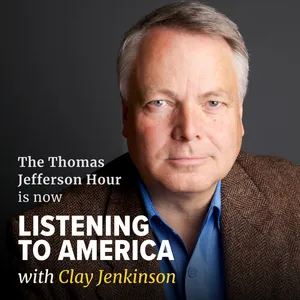
Listening to America aims to "light out for the territories," traveling less visited byways and taking time to see this immense, extraordinary country with fresh eyes while listening to the many voices of America's past, present, and future. Led by noted historian and humanities scholar Clay Jenkinson, Listening to America travels the country's less visited byways, from national parks and forests to historic sites to countless under-recognized rural and urban places. Through this exploration, Clay and team find and tell the overlooked historical and contemporary stories that shape America's people and places.
Latest Episodes
The most recent episodes — sign up to get AI-powered summaries of each one.
- Today54 min
#1722 September 11, 25 Years Later
Host David Horton asks Clay Jenkinson what we have learned from the 9/11 attacks on the World Trade Center, the Pentagon, and all that has transpired since 2001. Clay offers six lessons — beware of overreacting; avoid endless wars that have little to do with the terror attack; keep your eye on the geopolitical ball and don't be distracted by temporary sex scandals; work harder to sustain the national unity that follows a catastrophe; Islam is not our enemy, and it is not the problem; and accept some responsibility for how American actions in the world frustrate and enrage others. Clay argues that America's isolation from Europe and the rest of the world has made us complacent about how our actions and policies inspire violent reactions. This episode was recorded on September 11, 2026.
- 1 weeks ago1h 4m
#1721 Jefferson and Adams: A Fresh Interpretation
Clay's conversation with historian Jim Rasenberger, the author of "A Perfect Coincidence: The Extraordinary Friendship and Astonishing Deaths of John Adams and Thomas Jefferson." Jefferson and Adams collaborated on the Declaration of Independence in 1776, served together as diplomats in France for the United States in the 1780s, and cherished each other's friendship. Then the heated politics of their time came between them, until by 1800, they were enemies. Fortunately, they patched their friendship back together when they were safely retired from public life and died on the same day, the Fourth of July 1826, in lovely harmony, one in Virginia, the other in Massachusetts. This episode was recorded on May 22, 2026.
- 2 weeks ago59 min
#1720 The Declaration of Independence: The Days After Adoption
Host David Horton interviews the third president of the United States, Thomas Jefferson, about the days and weeks following the Fourth of July 1776. How quickly did the printed texts of the Declaration circulate? What was the information network of the time that enabled most Americans to read the Declaration (or hear it read in public) within a few weeks? The final copy had to go to an engraver to become the beautiful presentation document we still revere today. At the time, the Founders did not know that the Declaration would become the most important document in the history of human liberty. Meanwhile, George Washington came very close to losing the war — and perhaps the independence movement — after getting bottled up by the British on Manhattan. This episode was recorded on August 14, 2026.
- 3 weeks ago56 min
#1719 Reinventing America's Educational System
Clay interviews David Osborne, author of the 1992 bestseller Reinventing Government, about the challenges of the American public education system. How well are we preparing young people for the mid-21st century? Why is the United States slipping behind many other nations in educational metrics? David has spent the last few years focused on how we can reinvent public education. His new documentary film Turnaround: The Reinvention of the New Orleans Public Education System chronicles the astonishing success of charter schools in historically problematic school districts. How much does the survival of our republic depend on better schools for all Americans? This episode was recorded on April 27, 2026.
- 4 weeks ago57 min
#1718 Clay's Summer Odyssey and Listener Mail
David Horton sits down with Clay Jenkinson to retrace a whirlwind summer of travel, history and adventure. Clay's journey began in May with a trek to ancient Troy and continued across the American West, following the trail of Theodore Roosevelt. Along the way came an unusual Independence Day in Italy, stops in Las Vegas and California, and a meandering journey along the Missouri River in the footsteps of Lewis and Clark. Clay and David explore the history, surprises and memorable side trips that shaped the journey — and respond to questions and comments from listeners. This episode was recorded on August 6, 2026.
- Aug 16, 202657 min
#1717 Optimism and American Success
Clay interviews Richard Battle of Texas about his series of books about the can-do spirit of America. Three of the books tell feel-good stories of character and gumption in the 18th, 19th, and 20th centuries. Mr. Battle believes that the current malaise in the American spirit is caused by a weak education system that fails to tell the story of how much America has achieved and against what odds. When we are tempted to criticize America, Mr. Battle asks, "compared to what?" What other country has as much freedom and opportunity as still exists in the United States? He regards George Washington as the greatest American for holding the independence movement together against nearly impossible odds. He forgives Jefferson for his failures in the larger context of his achievement in the Declaration of Independence. This episode was recorded on July 21, 2026.
- Aug 9, 20261h 0m
#1716 Once More Down the River and Over the Mountains!
Guest host Russ Eagle and Clay talk about the annual Lewis and Clark Cultural tour, just ended, after three days on the White Cliffs section of the Missouri River in Montana and then three days up in the Bitterroot Mountains on the Lolo or Nez Perce Trail. Twenty guests from around the U.S. and the world joined us for Russ' 14th Lewis and Clark tour and Clay's 26th. The weather was perfect. The river was cool, refreshing, and powerful. Clay and Russ discuss Thomas Jefferson, Lewis and Clark, Native American history, and the status and future of America's public lands. Lewis and Clark crossed the continent between 1803 and 1806. The Expedition is the most famous of all American exploration stories until at least the Apollo Moon landing program of the 1960s. The Lewis and Clark Cultural Tour is physically strenuous. Still, everyone made it up the Wendover Death March, and we had a joyous farewell banquet at Lochsa Lodge west of Missoula. This episode was recorded on August 3, 2026.
- Aug 3, 202657 min
#1715 Can We Save Great Salt Lake?
Clay interviews Dr. Ben Abbott of Brigham Young University about the crisis of Great Salt Lake. Great Salt Lake is a terminal lake, which means that water comes in but does not flow out. It's a remnant of ancient Lake Bonneville. The volume of the lake is now down by 70% and the surface area it covers is down 60%. Abbott believes we are not more than half a dozen years from the lake's ecological collapse, which would severely damage the brine shrimp industry, expose a large number of toxic chemicals to the Utah winds with devastating effects on human health, and severely impair Utah's important winter ski industry. The good news is that Dr. Abbott believes we can solve this problem and that the people of Utah are sufficiently aware of the crisis to make the lifestyle changes (none dire) that will save and refresh the lake. Ben Abbott says a U.N. agency has recently declared a Global Water Bankruptcy, but that saving Great Salt Lake can serve as a template for a much wider set of water-use reforms in the United States and beyond. This episode was recorded on July 23, 2026.
Get Listening to America summaries in your inbox
Free AI-powered daily recaps. Key takeaways, quotes, and mentions — in a 5-minute read.
Get Free Summaries →Free forever for up to 3 podcasts. No credit card required.
You Might Also Like
Listeners also like.

American History Tellers
Pivotal moments in American history are explored through narrative storytelling, revealing their impact on the nation and modern life.

Dolly Parton's America
A documentary podcast exploring Dolly Parton’s life, music, and cultural impact as a unifying symbol in America.

This Day (An America 250 History Show)
Historians explore pivotal U.S. political events from the past and connect them to today’s news.

Americast
Weekly analysis of U.S. politics and social media’s impact on elections from BBC journalists and guests.

American History Hit
Examines key events in American history, from colonial conflicts to civil rights, through expert interviews and detailed storytelling.

This American Life
True stories exploring weekly themes with emotional depth, humor, and narrative twists, capturing the complexities of contemporary life.
Gunfighters
Stories of Old West gunfighters like Billy the Kid, Wyatt Earp, and John Wesley Hardin reveal the violent reality of America's frontier.

Tides of History
Explores how historical events and forces have shaped modern societies, cultures, and global systems.

Noiser Presents
Dramatic, immersive retellings of history’s most pivotal events through expert interviews and eyewitness accounts.
Throughline
A history podcast that explores how past events and figures shaped the present, using immersive storytelling and sound.
Founding Son: John Quincy's America
A musician examines John Quincy Adams's post-presidential career and his stand against slavery in the decades before the Civil War.
abandoned: The All-American Ruins Podcast
Explores abandoned places across the U.S. and beyond, blending immersive storytelling with reflections on history, culture, and mental health.
About Listening to America
Listening to America aims to "light out for the territories," traveling less visited byways and taking time to see this immense, extraordinary country with fresh eyes while listening to the many voices of America's past, present, and future. Led by noted historian and humanities scholar Clay Jenkinson, Listening to America travels the country's less visited byways, from national parks and forests to historic sites to countless under-recognized rural and urban places. Through this exploration, Clay and team find and tell the overlooked historical and contemporary stories that shape America's people and places.
Customized Recaps
AI-powered recaps with compact key takeaways, quotes, and insights.
Straight to Your Inbox
Get key takeaways from Listening to America in a 5-minute read.
Save Hours Every Week
Stay current on your favorite podcasts without falling behind.
Frequently Asked Questions
What is Podzilla's Listening to America daily summary?
It's a free AI-powered email that summarizes new episodes of Listening to America as soon as they're published. You get the key takeaways, notable quotes, and links & mentions — all in a quick read.
How does the Listening to America podcast summary work?
When a new episode drops, our AI transcribes and analyzes it, then generates a personalized summary tailored to your interests and profession. It's delivered to your inbox every morning.
Is this an official Listening to America product?
No. Podzilla is an independent service that summarizes publicly available podcast content. We're not affiliated with or endorsed by Listening to America.
Can I get summaries of other podcasts too?
Absolutely! The free plan covers up to 3 podcasts. Upgrade to Pro for 15, or Premium for 50. Browse our full catalog at /podcasts.
What topics does Listening to America cover?
Listening to America covers topics including History, Culture, Society & Culture. Our AI identifies the specific themes in each episode and highlights what matters most to you.
Start getting Listening to America summaries tomorrow morning.
Free forever for up to 3 podcasts. No credit card required.
Free forever for up to 3 podcasts. No credit card required.