Free Daily Podcast Summary
Let's Talk Micro: Daily Summaries Delivered
by Luis Plaza
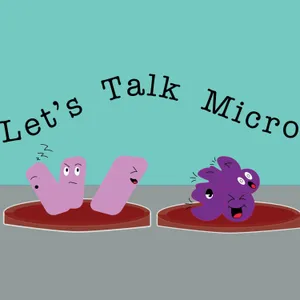
Clinical microbiology explained in simple terms, suitable for students and microbiologists alike. We discuss organisms, reactions, infectious diseases, and more. Hosted by Luis Plaza, a Medical Laboratory Scientist and microbiologist, who also shares his experiences in the field.
Latest Episodes
The most recent episodes — sign up to get AI-powered summaries of each one.
- 3 days ago56 min
244: Group A Strep: Breaking Down the New IDSA Guidelines
Group A Streptococcus (GAS) is a common cause of pharyngitis, but deciding who should be tested and which testing method to use isn't always straightforward. In 2025, the Infectious Diseases Society of America (IDSA) released updated guidelines on Group A streptococcal pharyngitis, bringing renewed attention to diagnostic stewardship and the use of clinical scoring systems to help guide testing decisions. In this episode of Let's Talk Micro, Dr. Christopher Doern returns to the podcast to break down the updated IDSA guidelines and what they may mean for clinical practice. We discuss clinical scoring systems such as Centor and McIsaac, antigen testing, culture, molecular diagnostics, and point-of-care testing. We also explore turnaround time and cost considerations, GAS carriage and the interpretation of positive results, and how diagnostic decisions connect with antimicrobial stewardship. Tune in as we take a practical look at what's changing in Group A strep testing and how laboratories and clinicians can approach these updated recommendations. This podcast episode is sponsored by Cepheid. The views and opinions expressed by the interviewer in this interview are their own and do not necessarily reflect the position of Cepheid. Resources IDSA Clinical Practice Guideline Update on Group A Streptococcal (GAS) Pharyngitis: IDSA 2025 Group A Streptococcal Pharyngitis Guideline Current Laboratory and Point-of-Care Pharyngitis Diagnostic Testing and Knowledge Gaps: https://pubmed.ncbi.nlm.nih.gov/39688598/ Stay connected with Let's Talk Micro: Website: letstalkmicro.com Questions or feedback? Email me at letstalkmicro@outlook.com Interested in being a guest on Let's Talk Micro? Fill out the form here: https://forms.gle/V2fT3asjfyusmqyi8 Support the podcast: Venmo Buy me a Ko-fi
- 1 weeks ago46 min
243: When AI Meets Medicine
Artificial intelligence is changing how healthcare professionals access and use clinical information. But what does that look like at the point of care? In this episode of Let's Talk Micro, Luis is joined by Dr. Declan Kelly, physician, software engineer, and founder of Eolas Medical, to discuss the role of AI in clinical decision support. Dr. Kelly shares how challenges accessing institutional guidelines and clinical knowledge led to the development of Eolas Medical and how AI can help healthcare professionals find the information they need when making clinical decisions. The conversation explores the importance of local guidelines, the connection between the clinical microbiology laboratory and antimicrobial stewardship, and how AI can help bridge the gap between laboratory data, institutional knowledge, and patient care. They also discuss evidence supporting these technologies, concerns surrounding AI hallucinations and clinical safety, and how clinical decision support may evolve in the years ahead. Tune in to learn how AI is changing the way clinical knowledge is accessed and what that could mean for the future of healthcare. This episode is brought to you in collaboration with Eolas Medical. Eolas Medical is a clinical knowledge platform founded by physician Dr. Declan Kelly, who saw firsthand how hard it can be to find trusted guidance at the point of care. Using AI grounded exclusively in an organization's own approved protocols and guidelines, Eolas gives clinicians fast, accurate answers instead of generic search results. It is used across 90% of acute NHS trusts and 600+ sites globally, including Stanford and Mass General Brigham. For antimicrobial stewardship, a peer-reviewed study published in Nature Portfolio's npj Antimicrobials and Resistance found prescribing accuracy improved from 47% to 100% with Ask Eolas at the point of care. Resources Eolas Medical: https://www.eolasmedical.com/ Study — Enhancing quality of antimicrobial prescribing through 'Ask Eolas' (language model): a user-testing and simulation evaluation: https://www.nature.com/articles/s44259-026-00187-7 Summary of study: Eolas Medical — Summary of the study and implications for antimicrobial stewardship Stay connected with Let's Talk Micro: Website: letstalkmicro.com Questions or feedback? Email me at letstalkmicro@outlook.com Interested in being a guest on Let's Talk Micro? Fill out the form here: https://forms.gle/V2fT3asjfyusmqyi8 Support the podcast: Venmo Buy me a Ko-fi
- 2 weeks ago1h 0m
242: Microbiology & Infection Prevention: Partners in Crime
Let's Talk Micro is back for a new season! In this season premiere, Luis is joined by Dr. Megan Amerson-Brown to discuss the important connection between clinical microbiology and infection prevention. Dr. Amerson-Brown shares her career journey from the microbiology bench to infection prevention and ultimately laboratory leadership. She discusses how microbiologists contribute to infection prevention through surveillance, diagnostic stewardship, outbreak investigations, and collaboration with infection prevention teams. The conversation also explores how laboratorians can become more involved in infection prevention while remaining in the laboratory, resources and certifications for those interested in the field, the importance of mentorship, and potential career pathways for microbiologists considering a transition into infection prevention. Tune in to the season premiere and learn more about the role microbiologists play in infection prevention and the opportunities available both at and beyond the bench. Additional Resources a-IPC™ (Associate – Infection Prevention and Control) Examination — Information about the entry-level infection prevention and control certification discussed during the episode. CIC® (Certification in Infection Control and Epidemiology) Examination — Information about the CIC certification examination. APIC – Association for Professionals in Infection Control and Epidemiology — Education, career development, and other resources for infection prevention professionals. Stay connected with Let's Talk Micro: Website: letstalkmicro.com Questions or feedback? Email me at letstalkmicro@outlook.com Interested in being a guest on Let's Talk Micro? Fill out the form here: https://forms.gle/V2fT3asjfyusmqyi8 Support the podcast: Venmo Buy me a Ko-fi
- Jul 2, 202635 min
241: What Can Whole Genome Sequencing Realistically Tell Us About Resistance?
Recorded live at ASM Microbe 2026 in Washington, DC, this special episode marks the first live recording of Let's Talk Micro. Joining me are co-host Dr. Andrea Prinzi and guest Dr. Nathan Ledeboer for a discussion on the evolving role of whole genome sequencing (WGS) in clinical microbiology and antimicrobial resistance. Can whole genome sequencing predict antimicrobial susceptibility? What are its current limitations? How close are we to incorporating WGS into routine clinical microbiology laboratories? Throughout the conversation, we explore the opportunities and challenges of implementing sequencing technologies, including bioinformatics, workflow, reimbursement, and the need for continued collaboration between microbiologists, infectious diseases specialists, pharmacists, and antimicrobial stewardship teams. We also discuss how WGS may transform outbreak investigations, epidemiologic surveillance, and the future role of the clinical microbiologist as advanced diagnostics become increasingly integrated into patient care. Whether you're a bench microbiologist, laboratory leader, infectious diseases professional, or student, this episode offers an exciting look at where clinical microbiology is headed and what whole genome sequencing can realistically tell us about antimicrobial resistance. Stay connected with Let's Talk Micro: Website: letstalkmicro.com Questions or feedback? Email me at letstalkmicro@outlook.com Interested in being a guest on Let's Talk Micro? Fill out the form here: https://forms.gle/V2fT3asjfyusmqyi8 Support the podcast: Venmo Buy me a Ko-fi
- Jun 30, 202643 min
240: CLSI M100 2026: Actualizaciones
En este episodio en español de Let's Talk Micro, Luis conversa nuevamente con el Dr. Germán Esparza sobre los cambios más relevantes incluidos en la edición 2026 del documento CLSI M100. Durante la conversación, revisan nuevas opciones terapéuticas como aztreonam-avibactam, actualizaciones en los puntos de corte para Acinetobacter y Neisseria gonorrhoeae, cambios en aminoglucósidos, consideraciones de control de calidad y los desafíos asociados con las pruebas de susceptibilidad para el complejo Burkholderia cepacia. Además, discuten cómo los laboratorios pueden evaluar e implementar estos cambios de manera segura, la importancia de la colaboración con los programas de optimización de antimicrobianos y ofrecen un adelanto de la próxima edición del documento CLSI M45. Temas discutidos: Aztreonam-avibactam y resistencia antimicrobiana Actualizaciones de puntos de corte y pruebas de susceptibilidad Control de calidad e implementación de cambios en el laboratorio Avances y perspectivas para CLSI M45 🔗 Recursos Acceda gratuitamente al CLSI M100: https://em100.edaptivedocs.net/Login.aspx Manténgase conectado con Let's Talk Micro: Página web: letstalkmicro.com ¿Preguntas o comentarios? Escríba a letstalkmicro@outlook.com ¿Le interesa participar como invitado en Let's Talk Micro? Complete el siguiente formulario: https://forms.gle/V2fT3asjfyusmqyi8 Apoya el pódcast: Venmo Buy me a Ko-fi
- Jun 25, 202621 min
239: Inside ASM Microbe 2026
ASM Microbe is the largest microbiology meeting in the United States, bringing together thousands of scientists, laboratorians, clinicians, and industry partners to discuss the latest advances in microbiology. In this episode, Luis shares highlights from ASM Microbe 2026, including sessions on diagnostic challenges, antimicrobial resistance, rapid susceptibility testing, emerging therapeutics, laboratory automation, phage therapy, and whole-genome sequencing. Topics include a Brucella case that reinforces the importance of Gram stain interpretation, updates on resistance mechanisms in Pseudomonas aeruginosa and KPC-producing organisms, advances in rapid AST, and innovations showcased in the vendor hall. Luis also discusses several posters that caught his attention, covering pharyngeal gonorrhea, direct-from-specimen susceptibility testing, phage testing, rapid resistance reporting for Mycobacterium abscessus, and CRISPR-based diagnostics for bloodstream infections. Whether you attended ASM Microbe 2026 or couldn't make it this year, this episode provides a practical overview of some of the trends, technologies, and conversations shaping the future of clinical microbiology. Topics Discussed: • Diagnostic challenges in clinical microbiology • Rapid identification and susceptibility testing • Antimicrobial resistance and emerging therapies • ESKAPE pathogens and Pseudomonas aeruginosa • Laboratory automation and AI-assisted workflows • Phage therapy and phage susceptibility testing • Whole-genome sequencing and CRISPR diagnostics Stay connected with Let's Talk Micro: Website: letstalkmicro.com Questions or feedback? Email me at letstalkmicro@outlook.com Interested in being a guest on Let's Talk Micro? Fill out the form here: https://forms.gle/V2fT3asjfyusmqyi8 Support the podcast: Venmo Buy me a Ko-fi
- Jun 18, 202650 min
238: From the Bench to CPEP: An MLS Journey
What does it take to go from working at the bench to becoming a future clinical microbiology laboratory director? In this episode, Luis is joined by Dr. Mackenzie Collins, a CPEP fellow at UCLA, to discuss her journey from Medical Laboratory Scientist (MLS) to PhD scientist and CPEP fellow. Mackenzie shares how she discovered laboratory medicine, her experience working as an MLS in molecular microbiology, and the mentors and opportunities that helped shape her career path. The conversation explores the CPEP fellowship, the role of laboratory directors, and how MLS professionals can strengthen their applications through projects, research, presentations, and professional involvement. Mackenzie also discusses her PhD work involving HIV reservoirs and long-read sequencing, and why genomics and molecular diagnostics will continue to play an increasingly important role in clinical microbiology. Whether you're considering graduate school, interested in the CPEP fellowship, or exploring career paths in laboratory medicine, this episode offers a firsthand look at one MLS's journey from the bench to clinical microbiology leadership. Topics discussed: The MLS-to-CPEP pathway and transitioning from the bench to graduate school Mentorship, professional development, and building a competitive application The role of clinical microbiology laboratory directors and career opportunities beyond the bench Sequencing, genomics, and the future of clinical microbiology Additional Resources CPEP Fellowship Overview with Dr. Sam Goodfellow Interested in learning more about the CPEP Fellowship? In this episode, Dr. Sam Goodfellow discusses the structure of the program, the application process, and what to expect from CPEP training. https://directory.libsyn.com/episode/index/id/36395120 Understanding the ABMM Certification Examination Learn more about the American Board of Medical Microbiology (ABMM) certification, its importance for future laboratory directors, and what candidates can expect from the examination process. https://directory.libsyn.com/episode/index/id/35868345 Stay connected with Let's Talk Micro: Website: letstalkmicro.com Questions or feedback? Email me at letstalkmicro@outlook.com Interested in being a guest on Let's Talk Micro? Fill out the form here: https://forms.gle/V2fT3asjfyusmqyi8 Support the podcast: Venmo Buy me a Ko-fi
- Jun 11, 202613 min
237: Micro Minutes: A Case of Mistaken Identity
Have you ever received an identification result that just didn't make sense? In this episode, Luis shares three cases of mistaken identity from the microbiology laboratory: a Gram-positive rod identified as Kocuria, another reported as Sphingomonas, and a yeast that somehow became Brucella. While automated identification systems are powerful tools, they can only work with the information we provide. These examples highlight an important lesson for every microbiologist: always correlate the identification with the Gram stain, colony morphology, and other bench observations. When the result doesn't fit, take a step back and ask a simple question: Does it make sense? Join us for a quick Micro Minutes on critical thinking, correlation, and why the Gram stain remains one of the most valuable tools in the microbiology laboratory. Stay connected with Let's Talk Micro: Website: letstalkmicro.com Questions or feedback? Email me at letstalkmicro@outlook.com Interested in being a guest on Let's Talk Micro? Fill out the form here: https://forms.gle/V2fT3asjfyusmqyi8 Support the podcast: Venmo Buy me a Ko-fi
Get Let's Talk Micro summaries in your inbox
Free AI-powered daily recaps. Key takeaways, quotes, and mentions — in a 5-minute read.
Get Free Summaries →Free forever for up to 3 podcasts. No credit card required.
You Might Also Like
Listeners also like.
This Week in Virology
A weekly discussion of viruses, how they cause disease, and the latest research in virology.
Plenary Session
A medical oncologist discusses cancer care, health policy, and evidence-based medicine.
The Clinical Problem Solvers
Experts discuss diagnostic reasoning in clinical medicine.
Bringing Chemistry to Life
Talks with leading chemists about their discoveries, careers, and the science shaping our world.
Modern Chemistry Podcast
Paul Orange Ph.D.

The House of Pod
A gastrointestinal doctor and colleagues discuss medicine with humor and insight.
Paul Saladino MD podcast
A physician explores the root causes of chronic disease and optimal health through science and personal experimentation.

The Peter Attia Drive
Conversations with experts on health, longevity, performance, and critical thinking led by physician Peter Attia.
Machine Learning Street Talk (MLST)
Discussions with leading AI researchers and thinkers exploring machine learning, cognitive science, and philosophy of mind without hype.
Osterholm Update
An infectious disease expert analyzes the latest COVID-19 data, guidance, and pandemic preparedness issues in weekly updates.

TED Talks Science and Medicine
Scientists, doctors, and medical researchers present groundbreaking discoveries and ideas from TED and TEDx events worldwide.
The Curbsiders Internal Medicine Podcast
Expert-led internal medicine discussions with clinical insights and humor for primary care and hospital medicine providers.
About Let's Talk Micro
Clinical microbiology explained in simple terms, suitable for students and microbiologists alike. We discuss organisms, reactions, infectious diseases, and more. Hosted by Luis Plaza, a Medical Laboratory Scientist and microbiologist, who also shares his experiences in the field.
Customized Recaps
AI-powered recaps with compact key takeaways, quotes, and insights.
Straight to Your Inbox
Get key takeaways from Let's Talk Micro in a 5-minute read.
Save Hours Every Week
Stay current on your favorite podcasts without falling behind.
Frequently Asked Questions
What is Podzilla's Let's Talk Micro daily summary?
It's a free AI-powered email that summarizes new episodes of Let's Talk Micro as soon as they're published. You get the key takeaways, notable quotes, and links & mentions — all in a quick read.
How does the Let's Talk Micro podcast summary work?
When a new episode drops, our AI transcribes and analyzes it, then generates a personalized summary tailored to your interests and profession. It's delivered to your inbox every morning.
Is this an official Let's Talk Micro product?
No. Podzilla is an independent service that summarizes publicly available podcast content. We're not affiliated with or endorsed by Luis Plaza.
Can I get summaries of other podcasts too?
Absolutely! The free plan covers up to 3 podcasts. Upgrade to Pro for 15, or Premium for 50. Browse our full catalog at /podcasts.
How often does Let's Talk Micro release new episodes?
Let's Talk Micro publishes weekly. Our AI generates a summary within hours of each new episode.
What topics does Let's Talk Micro cover?
Let's Talk Micro covers topics including Science, Life Sciences. Our AI identifies the specific themes in each episode and highlights what matters most to you.
Start getting Let's Talk Micro summaries tomorrow morning.
Free forever for up to 3 podcasts. No credit card required.
Free forever for up to 3 podcasts. No credit card required.