Free Daily Podcast Summary
Legacy: Daily Summaries Delivered
by Original Legacy Productions
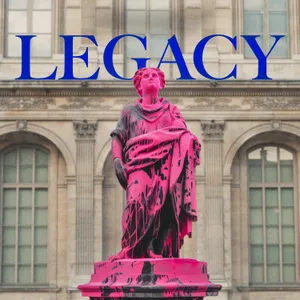
Afua Hirsch and Peter Frankopan tell the wild stories of some of the most extraordinary men and women ever to have lived – and ask whether they have the rep they deserve. Should Nina Simone’s role in the civil rights movement be more celebrated than it is? When you find out what Picasso got up to in his studio, can you still admire his art? Was Napoleon a hero or a tyrant - or both? (And, while we’re at it, was he even short?) Legacy is the show that looks at big lives from the perspective of now – and doesn’t always like what it sees.
Latest Episodes
The most recent episodes — sign up to get AI-powered summaries of each one.
- 4 days ago26 min
Inbox: The Falklands Campaign | Milei, Trump and Oil | Book Club
Why is a war fought 44 years ago back on the front pages?What happens when a combative president in Buenos Aires, a friend in the White House and an oil field due online in 2028 all point at the same islands?And, when 99.8% of the people who live there have already voted, whose islands are they to argue over?Fresh from Sir Lawrence Freedman's two-volume official history of the Falklands campaign, Peter Frankopan takes on the question Afua Hirsch can't let go: whose rights come first?The official record reads like a detective story: the orders, the officers' doubts, and a Prime Minister who went against some of her own senior ministers. But the argument behind it never went away. Afua sets out why the politics look upside down to someone who opposes colonialism. Peter traces Argentina's claim back to a 15th-century treaty. Then come Chagos, Guam and the British Virgin Islands, and the question of whether Britain applies its own principle consistently. There's also the odd matter of why Yair Netanyahu weighed in at all.Join Legacy Plus for bonus episodes, early access, Q&A's, fewer adverts and more.legacy.supportingcast.fm[1:15] A summer with Sir Lawrence Freedman's official history of the Falklands[2:34] Milei, Trump and oil: why a 1982 war is live again[7:18] Inside the official records, and Thatcher's gamble[10:54] Afua's question: whose rights?[14:08] 99.8%, and the islanders who've been there for 200 years[16:48] Chagos, Guam, the British Virgin Islands: is Britain consistent?[19:47] Two wrongs, red post boxes and the Victory Pub[24:44] Why Yair Netanyahu picked a sideStay connected with Legacy:Instagram: @originallegacypodcastTikTok: @legacy_productionsExplore more from Peter and Afua — essays, sources, and ideas:Substack: peterfrankopan.substack.com | afuahirsch.substack.comJoin Legacy+ for bonus episodes, early access, Q&A's, fewer adverts and more.legacy.supportingcast.fmStay connected with Legacy:Instagram: @originallegacypodcastTikTok: @legacy_productionsExplore more from Peter and Afua — essays, sources, and ideas: Substack: peterfrankopan.substack.com | afuahirsch.substack.com Hosted on Acast. See acast.com/privacy for more information.
- 6 days ago39 min
9/11: 25 Years On | The Reckoning | 3
Content warning: this episode describes torture, civilian deaths and the 2021 Kabul airport attack.Bin Laden is dead, al-Qaeda is shattered, and there was never another 9/11 — so who won?What does a war cost once you count the hospitals that closed and the food that never arrived?And what does it mean that the United States signed an agreement with the people it went to war to destroy?Twenty-five years on, Afua Hirsch and Peter Frankopan add up the bill — and find that bin Laden had written the strategy down in advance.February 2020: the United States signs a deal with the Taliban in Doha. The government of Afghanistan is not in the room. Eighteen months later the Afghan state collapses in a matter of days, Kabul airport fills with people willing to cling to the undercarriage of a departing aircraft, and America's longest war ends almost exactly twenty years after it began. Then comes the audit. Brown University puts the direct death toll at more than 940,000, and the total — once you count the collapsed health systems, economies and food supplies — at somewhere near 4.7 million. The attack that started it cost around half a million dollars. The response cost eight trillion. Bin Laden had a phrase for that: he called it bleeding America. The final part of three.Join Legacy Plus for bonus episodes, early access, Q&A's, fewer adverts and more.legacy.supportingcast.fm[0:00] The uncomfortable question: how much of what he wanted did bin Laden actually get?[4:25] Doha, February 2020: the deal, and the government that wasn't invited to sign it[6:39] Not a gradual collapse — provincial capitals fall in a matter of days[11:53] The audit: $8 trillion, 940,000 killed directly, and 3.6 million more[14:56] "Bleeding America" — bin Laden wrote the plan down and said it out loud[19:29] Afghan women, and the argument nobody makes any more[30:23] What the rest of the world was doing while America looked the other way[36:09] The question neither of them wants to answer: whose fault is Afghanistan now?Stay connected with Legacy:Instagram: @originallegacypodcastTikTok: @legacy_productionsExplore more from Peter and Afua — essays, sources, and ideas:Substack: peterfrankopan.substack.com | afuahirsch.substack.comJoin Legacy+ for bonus episodes, early access, Q&A's, fewer adverts and more.legacy.supportingcast.fmStay connected with Legacy:Instagram: @originallegacypodcastTikTok: @legacy_productionsExplore more from Peter and Afua — essays, sources, and ideas: Substack: peterfrankopan.substack.com | afuahirsch.substack.com Hosted on Acast. See acast.com/privacy for more information.
- 1 weeks ago23 min
Inbox: Yesteryear | Waking Up in 1855 | Book Club
What happens to a trad wife influencer when she wakes up in 1855 and has toactually do it?Why were film producers bidding on this novel four years before it wasfinished?And when a story about white homesteaders in pre-Civil War America contains noBlack people at all, what is it quietly telling you?Peter asks Afua what she read over the summer and gets a debut novel, afour-year-old email she'd forgotten about, and a criticism that has nothing todo with the plot.Caro Claire Burke's Yesteryear drops a trad wife influencer — sourdoughstarter, eight children, millions of followers — into an actual 1855 homesteadand makes her live there. Afua raced through it and gives it full marks for theidea. Her objection sits somewhere else entirely, and it's the kind of absenceyou can't unsee once someone points at it. Along the way: why publishers postbooks to your house forever once you've written one, why Peter keeps beingasked to read 550 pages in ten days, and how a novel now gets optioned for filmbefore it has been written.Join Legacy Plus for bonus episodes, early access, Q&A's, fewer adverts andmore.legacy.supportingcast.fm[0:26] The one thing Afua only lets herself read in summer[3:13] Books arrive forever once you're published, and the etiquette nobodyexplains[8:42] The novel Afua found sitting in her own inbox, four years early[12:47] Sourdough, eight children, and a fantasy of the American past[18:03] Peter on class and labour, and why Burke chose 1855[20:28] Afua's real objection, and it isn't the plot[21:13] The Legacy Book Club verdict, in three separate scoresStay connected with Legacy:Instagram: @originallegacypodcastTikTok: @legacy_productionsExplore more from Peter and Afua — essays, sources, and ideas:Substack: peterfrankopan.substack.com | afuahirsch.substack.comJoin Legacy+ for bonus episodes, early access, Q&A's, fewer adverts and more.legacy.supportingcast.fmStay connected with Legacy:Instagram: @originallegacypodcastTikTok: @legacy_productionsExplore more from Peter and Afua — essays, sources, and ideas: Substack: peterfrankopan.substack.com | afuahirsch.substack.com Hosted on Acast. See acast.com/privacy for more information.
- 1 weeks ago43 min
9/11: 25 Years On | The Forever War | 2
Content warning: this episode describes the aftermath of 11 September 2001, including torture and civilian deaths.How does a country go from the sympathy of the entire world to invading a nation that had nothing to do with the attack?What does a blank cheque from the UN Security Council actually buy?And if torture only counts as torture when the pain is equivalent to organ failure, what exactly is everything below that line?Peter Frankopan follows the response from NATO's Article 5 to the caves of Tora Bora, while Afua Hirsch — then a trainee human rights barrister — describes what the war on terror did to British law.Within twenty-four hours, NATO invokes Article 5 for the first and only time in its history. Within three days, Congress passes a sixty-word resolution with a single vote against it; it has since been used to justify American military operations in more than twenty countries. Afghanistan is meant to be narrow and quick, and for five weeks it looks like it. Then bin Laden walks over the mountains into Pakistan, Washington's attention swings to a country with no connection to the attacks, and Colin Powell goes to the United Nations holding a small glass vial. Ten years later he is found living a mile from Pakistan's military academy — and by then the war no longer needs him. Part two of three, twenty-five years on.Join Legacy Plus for bonus episodes, early access, Q&A's, fewer adverts and more.legacy.supportingcast.fm[0:00] The scorecard: two invasions, $8 trillion, 900,000 dead, and the Taliban back in Kabul[3:56] Nous sommes tous américains — Le Monde, the Brandenburg Gate, and candles in Tehran[5:39] Article 5, invoked once in NATO's history, to defend America from nineteen men[12:37] Five weeks to Kabul — then a cave complex at Tora Bora, and bin Laden walks away[18:53] "These are facts. They're not statements." Colin Powell at the United Nations[26:32] Afua's first day as a pupil barrister, and a man accused of training the hijackers[33:19] The torture memos: pain that only counts if it's equivalent to organ failure[41:50] A compound in Abbottabad, a mile from Pakistan's military academyStay connected with Legacy:Instagram: @originallegacypodcastTikTok: @legacy_productionsExplore more from Peter and Afua — essays, sources, and ideas:Substack: peterfrankopan.substack.com | afuahirsch.substack.comJoin Legacy+ for bonus episodes, early access, Q&A's, fewer adverts and more.legacy.supportingcast.fmStay connected with Legacy:Instagram: @originallegacypodcastTikTok: @legacy_productionsExplore more from Peter and Afua — essays, sources, and ideas: Substack: peterfrankopan.substack.com | afuahirsch.substack.com Hosted on Acast. See acast.com/privacy for more information.
- 2 weeks ago41 min
Inbox: Genghis Khan and the Empire We Got Wrong | Marie Favereau
Who taught you that the Mongols only destroyed things?What if the empire that sacked Baghdad also invented blue and white porcelain, elected its leaders, and let the Khan's first wife decide on war?And why do the Mongols still have a worse reputation than any other empire in history — including the ones that lasted longer and killed more?In this Legacy Inbox episode, Peter is joined by Marie Favereau, one of the world's leading historians of the Mongol Empire, whose work has done more than anyone's to dismantle the story of a bloodthirsty wave that destroyed everything in front of it.A small group of nomads from what is now Mongolia — probably fewer than a million people — reached Central Europe within sixty years. They did it partly by fighting in winter, when everyone else went home, and by bringing their families and their herds with them so they never had to depend on the villages they passed through. Then they stopped conquering and started building: cities, workshops, tax systems, religious debates at court, and a trade network running from Korea to the Mediterranean. Marie Favereau is co-curator of Genghis Khan: How the Mongols Changed the World, at the Royal Armouries in Leeds until 1 November — almost 250 objects out of Mongolia, most of which have never left the country before.Join Legacy Plus for bonus episodes, early access, Q&A's, fewer adverts and more.legacy.supportingcast.fm[0:00] Peter introduces Marie Favereau, and the 248 objects that have just landed in Leeds[5:48] Ridden, eaten, milked, worn — why everything starts with the horse[9:47] Khans are elected, can be deposed, and the senior wife decides on trade, diplomacy and war[13:22] "If you just build your empire on the family, you have a dead-born empire"[16:44] Blue and white porcelain turns out to be a Mongol invention[36:12] Why the Mongols get a worse press than any empire that came after themGenghis Khan: How the Mongols Changed the World runs at the Royal Armouries Museum, Leeds, until 1 November 2026. Adults £9, concessions £7, under-16s free. Co-curated by Marie Favereau and Natasha Bennett.royalarmouries.org/leeds/whats-on/genghis-khanMarie Favereau's book The Horde: How the Mongols Changed the World is published by Harvard University Press.Stay connected with Legacy:Instagram: @originallegacypodcastTikTok: @legacy_productionsExplore more from Peter and Afua — essays, sources, and ideas:Substack: peterfrankopan.substack.com | afuahirsch.substack.comJoin Legacy+ for bonus episodes, early access, Q&A's, fewer adverts and more.legacy.supportingcast.fmStay connected with Legacy:Instagram: @originallegacypodcastTikTok: @legacy_productionsExplore more from Peter and Afua — essays, sources, and ideas: Substack: peterfrankopan.substack.com | afuahirsch.substack.com Hosted on Acast. See acast.com/privacy for more information.
- 2 weeks ago38 min
9/11: 25 Years On | The World That Made 9/11 | 1
Content warning: this episode describes the events of 11 September 2001 in detail.What if the deadliest terror attack in history began with an American chequebook?What if the men who carried it out had once been armed, trained and celebrated by the West as freedom fighters?And what if the whole thing was set in motion more than twenty years earlier, on Christmas Eve?Afua Hirsch and Peter Frankopan begin the story of 9/11 two decades before it happened, in the mountains of Afghanistan.July 1979: Jimmy Carter signs off half a million dollars of covert aid to Afghan rebels, and a CIA programme called Operation Cyclone begins. By 1987 it is running at $630 million a year, matched dollar for dollar by Saudi Arabia. Among the thousands who answer the call to fight the Soviets is the softly spoken son of a Saudi construction billionaire. Twenty-two years later, nineteen men walk through airport security in Boston, Washington and Newark carrying box cutters that nobody had thought to ban. This is the first of three episodes marking twenty-five years since 9/11 — where al-Qaeda came from, what happened on the day, and the moment almost the entire world stood with America.Join Legacy Plus for bonus episodes, early access, Q&A's, fewer adverts and more.legacy.supportingcast.fm[0:00] The story doesn't start in New York — it starts in the mountains of Afghanistan[2:17] Christmas Eve 1979, and Soviet transport planes land at Kabul airport[4:04] Operation Cyclone: Carter, Brzezinski, and a plan to build Moscow its own Vietnam[7:48] Romanticised as freedom fighters — and the Saudi billionaire's son who answers the call[12:01] Afua puts it to Peter directly: did the CIA fund bin Laden?[16:38] The Soviets leave, the West loses interest, and bin Laden names his new organisation[23:32] A cloudless blue Tuesday, and a primary election in New York[29:39] Two and a half hours, nineteen men, and the deadliest terror attack in historyStay connected with Legacy:Instagram: @originallegacypodcastTikTok: @legacy_productionsExplore more from Peter and Afua — essays, sources, and ideas:Substack: peterfrankopan.substack.com | afuahirsch.substack.comJoin Legacy+ for bonus episodes, early access, Q&A's, fewer adverts and more.legacy.supportingcast.fmStay connected with Legacy:Instagram: @originallegacypodcastTikTok: @legacy_productionsExplore more from Peter and Afua — essays, sources, and ideas: Substack: peterfrankopan.substack.com | afuahirsch.substack.com Hosted on Acast. See acast.com/privacy for more information.
- 3 weeks ago25 min
Inbox: Lindsey Graham and the Price of a Seat at the Table
How does a man go from calling Donald Trump a kook and a jackass to becoming his closest ally in the Senate?What do you give up to keep a seat at the table, and what do you actually get for it?And when the obituaries settle on calling you a pilot fish, has anything you did survived you?Lindsey Graham flew home from Kyiv on a Friday and was dead by Saturday evening, aged 71 — Peter Frankopan and Afua Hirsch on a career built almost entirely on proximity to other people's power.He was orphaned in his early twenties and raised his younger sister. He was the first in his family to go to university, served in the Air Force, and reached the Senate in 2002 by taking Strom Thurmond's seat. For a decade he was the Republican who legislated with Democrats: the Gang of Eight immigration bill, one third of the three amigos alongside John McCain and Joe Lieberman. Then he called Trump a race-baiting, xenophobic religious bigot and said the party would be destroyed and would deserve it. Then McCain died. A year to the day before January 6th, the Republican strategist Steve Schmidt gave Rolling Stone the line that has followed Graham ever since: he is a pilot fish, the small fish that swims beside the shark and takes on its colouring. Peter and Afua on whether that is the whole story, and on what a seat at the table is worth.Join Legacy Plus for bonus episodes, early access, Q&A's, fewer adverts and more.legacy.supportingcast.fm[0:00] A flight home from Kyiv, a cardiac arrest on Capitol Hill, and a death nobody saw coming[6:14] A restaurant, a pool hall, two funerals, and a younger sister to raise[9:13] The three amigos, and the decade Graham spent legislating with Democrats[11:42] A kook, a jackass, and a party that would be destroyed and would deserve it[12:46] "McCain died" — the two-word answer to how everything changed[17:24] The pilot fish, the shark, and what a seat at the table actually costsStay connected with Legacy:Instagram: @originallegacypodcastTikTok: @legacy_productionsExplore more from Peter and Afua — essays, sources, and ideas:Substack: peterfrankopan.substack.com | afuahirsch.substack.comJoin Legacy+ for bonus episodes, early access, Q&A's, fewer adverts and more.legacy.supportingcast.fmStay connected with Legacy:Instagram: @originallegacypodcastTikTok: @legacy_productionsExplore more from Peter and Afua — essays, sources, and ideas: Substack: peterfrankopan.substack.com | afuahirsch.substack.com Hosted on Acast. See acast.com/privacy for more information.
- 3 weeks ago42 min
Modern Travel | The Full Package | 5
Who decided that the thing stopping people travelling was not money, but choice?What happens to a country when the holiday is designed so that the visitor never has to leave the compound?And of every hundred dollars you spend at an all-inclusive, how much do you think actually stays there?Gerard Blitz opened his first holiday village on a Majorcan beach in 1950 on the theory that what people wanted was not adventure but the removal of every decision — Peter Frankopan and Afua Hirsch follow that idea all the way to the gated resorts of the present.The all-inclusive is now worth close to a hundred billion dollars a year. In the Dominican Republic it accounts for more than seventy per cent of hotel rooms and helps generate over forty per cent of GDP. And of every hundred dollars a guest spends, roughly five stays in the local economy. The rest is repatriated to foreign operators, international airlines and global supply chains, along with the food flown in so that nobody has to eat anything unfamiliar. In water-stressed places, guests can use ten times what a local resident uses in a day. In Jamaica there is now a movement against the privatisation of beaches that local people can no longer reach. Afua has just come back from an Arawak village in the Guyanese Amazon where all-inclusive means something entirely different. Peter, who has enjoyed rather more package holidays than he lets on, is not convinced the answer is to take them away from people.Join Legacy Plus for bonus episodes, early access, Q&A's, fewer adverts and more.legacy.supportingcast.fm[0:00] Sun lounger wars at dawn, and the buffet as a way of life[7:58] Gerard Blitz, a Belgian on a Majorcan beach, and the founding of Club Med[14:59] A hundred billion dollars a year, and the country where all-inclusives are seventy per cent of the rooms[16:39] Five dollars in every hundred — where the rest of your money actually goes[17:54] Ten times the water a local resident uses in a day[26:47] The beaches in Jamaica that Jamaicans can no longer reach[31:07] Plantations sold as celebratory places, and what the industry assumes you cannot handle[34:14] Afua in the Amazon: an all-inclusive of a completely different kindStay connected with Legacy:Instagram: @originallegacypodcastTikTok: @legacy_productionsExplore more from Peter and Afua — essays, sources, and ideas:Substack: peterfrankopan.substack.com | afuahirsch.substack.comJoin Legacy+ for bonus episodes, early access, Q&A's, fewer adverts and more.legacy.supportingcast.fmStay connected with Legacy:Instagram: @originallegacypodcastTikTok: @legacy_productionsExplore more from Peter and Afua — essays, sources, and ideas: Substack: peterfrankopan.substack.com | afuahirsch.substack.com Hosted on Acast. See acast.com/privacy for more information.
Get Legacy summaries in your inbox
Free AI-powered daily recaps. Key takeaways, quotes, and mentions — in a 5-minute read.
Get Free Summaries →Free forever for up to 3 podcasts. No credit card required.
You Might Also Like
Listeners also like.

My Legacy Podcast
Conversations with influential figures and their closest allies explore the personal stories behind lasting legacies.

HistoryExtra podcast
Covers global history from ancient to modern times through expert interviews on events, figures, and eras.

History's Heroes
Profiles real-life historical figures whose courage, innovation, or resilience changed the course of history.

Our Ancestors Were Messy
Explores the lives and scandals of Black Americans in the pre-Civil Rights Era through historical gossip and personal stories.

Intelligence Squared
Live debates and in-depth discussions on pressing global issues featuring leading experts and thinkers.
Slow Burn
Examines pivotal political and cultural moments in American history through archival audio and firsthand accounts.

History Unplugged Podcast
Features interviews with history authors and answers to listener questions on a wide range of historical topics.

The Rest Is History
Historians Tom Holland and Dominic Sandbrook analyze major historical events and figures with narrative depth and scholarly insight.

Revisionist History: The Staten Island Problem
A deep dive into the 1990s Staten Island secession movement as a lens on democracy, resentment, and urban fracture.

The Interview
In-depth interviews with influential figures across culture, politics, business, and sports exploring their motivations and impact.

Breaking History
Historians and reporters analyze current events through the lens of past political and social upheavals.
In Our Time
Explores pivotal ideas, figures, and discoveries across history, science, philosophy, and culture through expert discussions.
About Legacy
Afua Hirsch and Peter Frankopan tell the wild stories of some of the most extraordinary men and women ever to have lived – and ask whether they have the rep they deserve. Should Nina Simone’s role in the civil rights movement be more celebrated than it is? When you find out what Picasso got up to in his studio, can you still admire his art? Was Napoleon a hero or a tyrant - or both? (And, while we’re at it, was he even short?) Legacy is the show that looks at big lives from the perspective of now – and doesn’t always like what it sees.
Customized Recaps
AI-powered recaps with compact key takeaways, quotes, and insights.
Straight to Your Inbox
Get key takeaways from Legacy in a 5-minute read.
Save Hours Every Week
Stay current on your favorite podcasts without falling behind.
Frequently Asked Questions
What is Podzilla's Legacy daily summary?
It's a free AI-powered email that summarizes new episodes of Legacy as soon as they're published. You get the key takeaways, notable quotes, and links & mentions — all in a quick read.
How does the Legacy podcast summary work?
When a new episode drops, our AI transcribes and analyzes it, then generates a personalized summary tailored to your interests and profession. It's delivered to your inbox every morning.
Is this an official Legacy product?
No. Podzilla is an independent service that summarizes publicly available podcast content. We're not affiliated with or endorsed by Original Legacy Productions.
Can I get summaries of other podcasts too?
Absolutely! The free plan covers up to 3 podcasts. Upgrade to Pro for 15, or Premium for 50. Browse our full catalog at /podcasts.
How often does Legacy release new episodes?
Legacy publishes every few days. Our AI generates a summary within hours of each new episode.
What topics does Legacy cover?
Legacy covers topics including News, History, Commentary, Culture, Society & Culture. Our AI identifies the specific themes in each episode and highlights what matters most to you.
Start getting Legacy summaries tomorrow morning.
Free forever for up to 3 podcasts. No credit card required.
Free forever for up to 3 podcasts. No credit card required.