Free Daily Podcast Summary
Learn Cardano Podcast: Daily Summaries Delivered
by Pete Bui
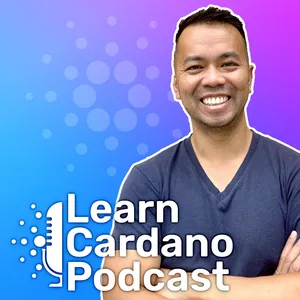
The Learn Cardano Podcast is about the Cardano blockchain and all its aspects, from staking, stake pool operations, smart contracts, and coding in Plutus to voting in Project Catalyst. If you have heard about Bitcoin and Ethereum but haven’t heard of Cardano, this podcast is for you. We’ll have news updates from the project, interviews with key Cardano leadership, community members, stake pool operators and step-by-step how-to guides to understand aspects of Cardano better. DISCLAIMER: This content is for informational and educational purposes only and is not financial, investment, or legal advice. I am not affiliated with, nor compensated by, the project discussed—no tokens, payments, or incentives received. I do not hold a stake in the project, including private
Latest Episodes
The most recent episodes — sign up to get AI-powered summaries of each one.
- Yesterday20 min
Cardano Leios & Midnight Mainnet: What’s Moving Now
Cardano’s next scaling phase and Midnight’s mainnet rollout are both moving forward. This update covers the final NIGHT redemption window, a draft rewards model for Cardano stake pool operators, open smart-contract deployment on Midnight, Monument Bank’s tokenised deposit plans, and the latest Dijkstra testnet work ahead of Leios.Peter also breaks down live ecosystem activity across RealFi, Strike, ATLAS, Ascend, Revuto and WingRiders, including new mainnet launches, integrations and infrastructure upgrades. The episode includes a paid sponsorship segment from Nexo Australia at 7:58 explaining how crypto-backed credit lines work, including loan-to-value and liquidation risk.PAID PARTNERSHIP DISCLOSURE: This episode contains a sponsored segment from Nexo Australia beginning at 7:58.Chapters:0:00 Happy 39th Birthday, Charles0:39 Glacier Drop: The Last Thaw2:43 NIGHT Rewards for SPOs4:10 Midnight and Other Chains5:27 Midnight Mainnet Open to Developers6:05 Monument Bank and the SALT Panel7:58 Sponsor: Nexo10:41 RealFi and Pulsewave12:16 Dijkstra and Leios14:06 Strike and Conflux16:10 Atlas on Mainnet16:54 Ascend Market Prediction Perps18:12 Revuto on Solana19:23 WingRiders DEX Revamp20:11 Wrap UpWhat you'll learn:• Midnight’s final NIGHT redemption tranche is under way, with 28 days remaining from the recording date to claim eligible tokens.• A draft Midnight proposal outlines how participating Cardano stake pool operators and delegators could earn NIGHT through block production, but the mechanism is not yet active.• Midnight has opened mainnet smart-contract deployment to developers, allowing more applications to move beyond the earlier gated process.• Monument Bank presented plans for a one-year tokenised fixed-term deposit that would be available to UK retail customers.• The Dijkstra test network was upgraded on 2 November as Cardano prepares protocol work that includes Leios scaling.• Strike is adding Conflux-linked fiat off-ramps and incentives while approaching two billion in all-time trading volume, according to the episode’s cited updates.• ATLAS has launched on Cardano mainnet, while Ascend has introduced prediction perpetuals to private mainnet groups on Midnight.• The sponsored Nexo Australia segment explains that borrowing against crypto can create rising loan-to-value and liquidation risk when collateral values fall.References:Happy BDay Charles:- https://link.learncardano.io/jgCX8PPineapple on Pizza:- https://link.learncardano.io/cezM7vGlacier Drop Redeem Ends Soon:- https://link.learncardano.io/mVjpbVMidnight Updates:- https://link.learncardano.io/5Z5RPo- https://link.learncardano.io/OCNBqh- https://link.learncardano.io/rx1BNt- https://link.learncardano.io/AjTvig- https://link.learncardano.io/wJzW1uLearn more about Nexo:- https://link.learncardano.io/QR6DJeRealFi:- https://link.learncardano.io/nIK3uH- https://link.learncardano.io/psHjzKDijkstra Hardfork:- https://link.learncardano.io/vIidijStrike Finance Killing It:- https://link.learncardano.io/OhsgKc- https://link.learncardano.io/RvcYTw- https://link.learncardano.io/rU5ZYrATLAS Beta Public Mainnet Live:- https://link.learncardano.io/nndhj7- https://link.learncardano.io/hJVE3z- https://link.learncardano.io/XkLxVE- https://link.learncardano.io/lSMxd2Ascend Prediction Perps Live in Midnight Mainnet:- http
- 2 days ago9 min
Cardano PRIME Reveals Its First 9 DeFi Teams
Cardano PRIME has selected its first cohort of nine teams for AlphaGrowth's Cardano DeFi program. Peter breaks down what Sundae Labs, Liqwid Finance, Indigo, Steer, VIA Labs, ReBond, Dial, Midgard Labs and TxPipe are expected to deliver.The cohort covers new market functions, isolated lending markets, collateral upgrades, automated liquidity management, cross-chain routing, tokenised bonds, programmable invoices and independent smart-contract audits—all aimed at addressing infrastructure gaps and supporting deeper liquidity on Cardano.Chapters:0:00 Cardano PRIME's First Cohort1:15 How the Teams Were Picked1:51 Sundae Labs and What Cardano DeFi Is Missing3:17 Liqwid V33:49 Indigo4:08 Steer4:40 VIA Labs5:18 ReBond5:40 Dial7:05 Midgard Labs7:22 TxPipe7:52 Nine Teams, One Goal8:48 Wrap UpWhat you'll learn:- Cardano PRIME's first cohort includes nine established and newer teams working across Cardano DeFi infrastructure.- Sundae Labs, Liqwid Finance and Indigo are funded to expand core market, lending and collateral capabilities.- Steer and VIA Labs focus on automated liquidity management and easier cross-chain asset routing into Cardano.- ReBond and Dial add tokenised bond and programmable invoice use cases.- Midgard Labs and TxPipe provide independent smart-contract security reviews for cohort projects.- The program is designed to address missing infrastructure and support AlphaGrowth's stated goal of increasing Cardano DeFi liquidity.Links & References:- Cardano Prime on X: "TxPipe (@txpipe_tools) TxPipe builds core developer tooling for Cardano and runs smart-contract security audits. PRIME has secured a block of audit hours with them, so every grantee ships with an independent security review behind it." / X: https://link.learncardano.io/hgGYGECardano DeFi is ready to scale.:- https://link.learncardano.io/2kmfpxWebsite: https://link.learncardano.io/bQ68RcX/Twitter: https://link.learncardano.io/3a1QtvDisclaimer: This content is for educational purposes only. Nothing constitutes financial advice.DISCLAIMER: This content is for informational and educational purposes only and is not financial, investment, or legal advice. I am not affiliated with, nor compensated by, the project discussed—no tokens, payments, or incentives received. I do not hold a stake in the project, including private or future allocations. All views are my own, based on public information. Always do your own research and consult a licensed advisor before investing. Crypto investments carry high risk, and past performance is no guarantee of future results. I am not responsible for any decisions you make based on this content.🔗 https://www.youtube.com/watch?v=Fq8FhvxET2k Subscribe to the audio podcast:🔗 https://bit.ly/learncardano-spotify 🔗 https://apple.co/3jEPM8C 🔗 https://learncardano.io/ Follow on Social:🔗 https://x.com/learncardano 🔗 https://facebook.com/learncardano
- 5 days ago9 min
Critical Linux CVE Puts Cardano Stake Pools on Alert
CVE-2026-98432 is a critical Linux kernel vulnerability affecting versions dating back to 4.4. Because many Cardano stake pools run Linux infrastructure, exposed relays may face crashes or, in a worst-case scenario, remote compromise.Peter explains how the reported TCP use-after-free works, what it could mean for relays and block producers, and the practical guidance from Intersect: identify affected kernels, apply fixed packages when available, reboot, and use temporary MPTCP or firewall mitigations only as exposure reduction—not as a replacement for patching. The episode also covers Clay Stake Pool’s closure and why delegators should check that their chosen pool is still operating.Chapters:0:00 A Linux Bug Hits Cardano Stake Pools0:31 The Notice: CVE-2026-984321:45 Red Hat Details and Which Kernels Are Patched2:35 How the Bug Works3:27 Anthropic's Claimed Exploit3:52 What It Means for Stake Pools4:38 Worst Case: From Relay to Block Producer5:16 Your Delegated ADA5:54 Ubuntu Is Still Waiting on a Patch6:32 What Stake Pool Operators Should Do7:03 More Attacks Every Week7:29 Clay Stake Pool Closes8:34 Check Your Delegation8:51 Wrap UpWhat you'll learn:- CVE-2026-98432 is rated CVSS 9.8 and affects Linux kernel versions dating back to 4.4.- Internet-facing Cardano relays are the most exposed part of a typical stake pool setup.- A relay outage can stop a pool from propagating blocks even when the block producer remains online.- Intersect advises operators to check kernels, install fixed packages and reboot as soon as their distribution publishes them.- Disabling MPTCP or filtering TCP packets with IPv4 options may reduce exposure but does not replace patching.- Delegators keep custody of their ADA, but should still confirm their chosen stake pool remains active and maintained.Links & References:CVE-2026-98432 (CVSS 9.8):- https://link.learncardano.io/1gLE5G- https://link.learncardano.io/dwTQxW- https://link.learncardano.io/tfLwiUSecurity advice:- https://link.learncardano.io/oyvXSP- https://link.learncardano.io/2QIXbcClaymates Closing It's Stakepool:- https://link.learncardano.io/2La0QWIntersect Weekly Update Advice:- https://link.learncardano.io/OKumWG- https://link.learncardano.io/KEGOaMWebsite: https://link.learncardano.io/bQ68RcX/Twitter: https://link.learncardano.io/3a1QtvDisclaimer: This content is for educational purposes only. Nothing constitutes financial advice.DISCLAIMER: This content is for informational and educational purposes only and is not financial, investment, or legal advice. I am not affiliated with, nor compensated by, the project discussed—no tokens, payments, or incentives received. I do not hold a stake in the project, including private or future allocations. All views are my own, based on public information. Always do your own research and consult a licensed advisor before investing. Crypto investments carry high risk, and past performance is no guarantee of future results. I am not responsible for any decisions you make based on this content.🔗 https://www.youtube.com/watch?v=Fq8FhvxET2k Subscribe to the audio podcast:🔗 https://bit.ly/learncardano-spotify 🔗 https://apple.co/3jEPM8C 🔗 https://learncardano.io/ Follow on Social:🔗 https://x.com/learncardano 🔗 https://facebook.com/learncardano
- 1 weeks ago9 min
Binance Hack: $6.3B Incident and the DevOps Laptop Claim
A fast-moving security incident affecting Binance-linked wallets was still developing when this episode was recorded. Peter walks through reports of multi-chain outflows, Binance's public updates, and its statement that roughly US$3 billion had been frozen while the estimated impact had risen to about US$6.3 billion.The episode reconstructs the reported timeline, explains why Tether and Circle freezes mattered, and separates Binance's initial DevOps-laptop explanation from facts that still require a full technical post-mortem. It also covers practical phishing precautions and the risks of concentrating assets with one exchange or wallet provider.Figures and causes in this episode reflect the sources available during recording and may change as Binance, issuers and investigators publish verified updates. Check official Binance channels before acting on any message or security claim.Chapters:0:00 Binance Hacked0:55 Polymarket and Tampered Ledger Wallets1:31 The Timeline of the Hack2:27 Tether and Circle Freeze Funds2:55 What's Moving Out3:25 Binance's Official Response4:13 Watch Out for Phishing Emails4:47 About $3 Billion Frozen5:09 Yi He: Binance Will Cover All Losses5:19 Remember FTX?5:54 Can Binance Cover It?7:06 Update: A Compromised DevOps Laptop8:17 Wrap Up8:30 Spreading the Risk: OneKey and TangemWhat you'll learn:- Binance said its initial investigation suggested a compromised DevOps engineer's laptop may have enabled unauthorised withdrawal transactions, while stressing that the investigation was not complete.- Binance's update put the estimated impact at about US$6.3 billion and said roughly US$3 billion had been frozen on-chain at the time of recording.- Tether and Circle were reported to have frozen substantial USDT and USDC amounts as issuers and investigators traced affected assets.- Binance said it would cover losses using the SAFU fund and company funds, but those assurances still require verification against the promised post-mortem and updated proof of reserves.- Users should verify urgent security messages against official Binance channels and avoid clicking unexpected email links during a high-profile incident.- The episode discusses spreading custody risk across suitable providers rather than assuming any exchange, software wallet or hardware wallet is immune from compromise.- OneKey supplied the Classic wallet mentioned near the end of the episode; Peter says any later comparison will be a detailed, honest review.References:- X trending context: Binance incident — https://link.learncardano.io/U0tzv6- X trending context: related security reports — https://link.learncardano.io/lLRanR- X trending context: incident updates — https://link.learncardano.io/2Bf9Qw- Initial incident timeline shared on X — https://link.learncardano.io/PJUqfI- Watcher.Guru asset-flow report — https://link.learncardano.io/zI0rtR- Binance official incident statement — https://link.learncardano.io/MHcMNx- Binance official frozen-funds update — https://link.learncardano.io/Q889j0- Yi He statement on covering losses — https://link.learncardano.io/q77ocX- Community discussion and solvency questions — https://link.learncardano.io/okNg2k- Binance initial investigation update — https://link.learncardano.io/40siSnOneKey supplied the Classic wallet mentioned in the episode. No claim of paid sponsorship is made.Figures and causes were developing at recording time. Verify updates through official Binance channels. This content is educational only and is not financial advice.Learn more: https://link.learncardano.io/bQ68RcSubscribe: https://link.learncardano.io/u6BDgrDISCLAIMER: This content is for informational and educational purposes only and is not financial, investment, or legal advice. I am not affiliated with, nor compensated by, the project discussed—no tokens, payments, or incentives received. I do not hold a stake in the project, including private or future al
- 1 weeks ago16 min
Is AI Breaking the Internet Faster Than We Can Patch It?
Critical PHP2Shell and Node.js vulnerabilities arrived alongside reported Fortinet exploitation, Railway and LiteLLM incidents, weak certificate keys and emergency Ruby fixes, creating a week that online discussions dubbed “Black October”. The internet is not ending, but AI-assisted discovery and exploitation are compressing the time defenders have to patch exposed systems.Peter breaks down how unauthenticated code execution, leaked credentials and compromised trust infrastructure can affect websites, business networks, developer tools and crypto users. He also explains why some services were taken offline as a precaution and why disclosure timing matters when attackers can rapidly adapt public research.The practical response is straightforward: apply current security updates, confirm hosted PHP versions, protect sites at the network edge, rotate exposed credentials, use saved bookmarks for crypto services and treat urgent security emails as potential phishing attempts.Chapters:0:00 Is the Internet Ending?1:07 Black October2:08 PHP2Shell2:46 Governments Take Sites Offline3:43 Cloudflare and the NSA4:22 Fortinet Under Attack6:22 Node.js and the Brotli Bug7:19 Patches Before Details8:03 eMudhra's Private Key of 410:07 LiteLLM and Stolen AI Keys10:40 Railway Breach11:29 So, Is the Internet Ending?13:11 What to Do This Week14:25 Crypto Safety Tips15:44 Wrap UpWhat you'll learn:- Why PHP2Shell reports put PHP and WordPress operators on alert- What the Node.js Brotli security issue means for developers- Why Fortinet, Railway and LiteLLM incidents raise credential concerns- How weak certificate keys can undermine website trust- How AI is accelerating both vulnerability discovery and exploitation- What website operators, developers and crypto users should check nowLinks & References:- PHP vulnerability overview: https://link.learncardano.io/pTtf71- Black October incident overview: https://link.learncardano.io/aKvkVy- Websites taken offline: https://link.learncardano.io/h31cFK- OpenAI security tools report: https://link.learncardano.io/puj8I4- FBI Cyber Division PHP warning: https://link.learncardano.io/fgdWdD- European agency shutdown report: https://link.learncardano.io/Ch69Ec- Cloudflare PHP2Shell response: https://link.learncardano.io/TGImTp- Node.js October 2026 security release: https://link.learncardano.io/262z3H- Weak certificate private key: https://link.learncardano.io/R4HEcP- GitLab vulnerability report: https://link.learncardano.io/OGGcGZ- Railway environment-variable warning: https://link.learncardano.io/r17mL8- Node.js Brotli discussion: https://link.learncardano.io/urhifT- Exposed certificate keys report: https://link.learncardano.io/1yj3sA- Brotli dependency warning: https://link.learncardano.io/5e6kw1- Ruby emergency patches overview: https://link.learncardano.io/Hz5WvYWebsite: https://learncardano.ioX/Twitter: https://x.com/LearnCardanoDisclaimer: This content is for educational purposes only and is not financial, legal or cybersecurity advice. Verify current vendor advisories and follow the remediation provided by the relevant maintainer or qualified professional.DISCLAIMER: This content is for informational and educational purposes only and is not financial, investment, or legal advice. I am not affiliated with, nor compensated by, the project discussed—no tokens, payments, or incentives received. I do not hold a stake in the project, including private or future allocations. All views are my own, based on public information. Always do your own research and consult a licensed advisor before investing. Crypto investments ca
- 1 weeks ago13 min
Are Hardware Wallets Still Safe? Major Breaches & Better Options
Hardware wallets have long been treated as the gold standard for crypto self-custody. Recent incidents involving device authenticity, seed generation, supply chains and leaked customer records show that keeping keys offline is only one part of staying secure.Peter reviews the risks highlighted around Ledger, Keystone, Coldcard, Foundation and Trezor, explains why personal-data leaks can create physical security threats, and explores alternative approaches including Off Wallet on a Game Boy and carefully generated paper wallets. This is an educational security overview—not a recommendation to use any particular wallet or storage method.Chapters:0:00 Intro0:24 Hardware Wallets Under Attack1:18 This Year's Breaches1:38 Keystone's Customer Data Leak2:45 Coldcard: 594 BTC Drained3:58 Foundation's Cloudflare Breach4:14 Ledger's Supply Chain Attack6:25 Your Data and Wrench Attacks7:03 Ledger's 2020 Data Leak7:38 Trezor's Shipping Partner Breach8:01 Wrench Attacks Around the World8:49 Keep Your Details Private9:16 Off Wallet: A Bitcoin Wallet on a Game Boy11:48 Paper Wallets13:01 Wrap UpWhat you'll learn:- Cold storage reduces online exposure, but hardware, firmware, supply-chain and customer-data risks still matter.- Customer shipping records can turn a digital security incident into phishing, fake-device or physical-security risk.- Buying directly, checking device authenticity and limiting the personal details shared with vendors can reduce exposure.- Off Wallet demonstrates air-gapped Bitcoin transaction signing on a Game Boy without introducing a new hardware supply chain.- Paper wallets remove vendor data exposure but require careful offline generation, backup and physical storage practices.- No storage method is automatically safe; verify the threat model and recovery process before moving valuable assets.Links & References:Hardware Wallets This Year:- https://link.learncardano.io/9mu8JlKeystone:- https://link.learncardano.io/90SeYa- https://link.learncardano.io/fdeGxBColdCard Wallet:- https://link.learncardano.io/ergL0G- https://link.learncardano.io/gLwxwGSmaller Hacks:- https://link.learncardano.io/hzXsdK- https://link.learncardano.io/mnHNzf- https://link.learncardano.io/nFfciWLedger Compromise:- https://link.learncardano.io/2VBTs9- https://link.learncardano.io/iPuro8- https://link.learncardano.io/CPIk8uWrench Attacks:- https://link.learncardano.io/cn7ZLs- https://link.learncardano.io/pg4f7O- https://link.learncardano.io/hgxENc- https://link.learncardano.io/Jdin1s- https://link.learncardano.io/SbgjVW- https://link.learncardano.io/QlZsSyOff Wallet:- https://link.learncardano.io/N72CKu- https://link.learncardano.io/zvv32FGameboy Colour:- https://link.learncardano.io/PA0LF5Bitcoin Paper Wallet:- https://link.learncardano.io/BxgDy6Website: https://link.learncardano.io/bQ68RcX/Twitter: https://link.learncardano.io/3a1QtvDisclaimer: This content is for educational purposes only. Nothing constitutes financial advice.DISCLAIMER: This content is for informational and educational purposes only and is not financial, investment, or legal advice. I am not affiliated
- 1 weeks ago22 min
Can Bitcoin Fix Cardano DeFi? FluidTokens’ Bifrost Explained
Originally recorded in April 2026, this Builders Bench conversation with Raul from FluidTokens examines Bifrost, a proposed route for bringing native Bitcoin liquidity into Cardano without relying on a conventional custodial bridge. Raul explains how Bitcoin can be held through a flexible multisignature controlled by participating Cardano stake pool operators, with signing power weighted by delegated stake.Peter and Raul discuss the 67% stake threshold, how stake pool operators join the network, what an attack would require, and why Bitcoin holders may be interested in borrowing against BTC rather than selling it. The conversation also covers atomic swaps, Cardano’s UTXO model, one-click DeFi experiences and a walkthrough of the Bifrost testnet flow.Chapters:0:00 Intro1:19 What Is Bifrost?4:20 How Bifrost Secures Bitcoin8:44 Stake Pool Operators Run the Bridge10:04 Could Someone Attack It?11:44 Can Bitcoin Fix Cardano DeFi?14:57 What Bitcoiners Want17:44 One-Click Bitcoin DeFi19:08 Bifrost Testnet WalkthroughWhat you’ll learn:• FluidTokens designed Bifrost to connect native Bitcoin with Cardano while avoiding custody by a single company or bridge operator.• Bifrost’s Bitcoin multisignature is intended to be controlled by participating Cardano stake pool operators, with signing power weighted by delegated stake.• The stated signing threshold is 67% of total participating Cardano stake rather than a simple count of stake pool operators.• FluidTokens’ atomic swaps allow native BTC to be exchanged for Cardano assets without handing custody to a third party.• Bitcoin-backed borrowing is presented as an early DeFi use case for holders who do not want to sell their BTC.• Cardano’s UTXO model could help combine borrowing, stablecoin and liquidity actions into a more approachable one-click experience.• The Bifrost testnet flow uses a redeemable Bitcoin Taproot deposit so users retain a recovery path if the bridge does not process the transaction.References:• Raul: https://link.learncardano.io/plOyrH• FluidTokens: https://link.learncardano.io/I2TCAy• FluidTokens Bitcoin: https://link.learncardano.io/XTulqm• FluidTokens app: https://link.learncardano.io/6LpZan• FluidTokens docs: https://link.learncardano.io/V0BtsWEducational content only; not financial or legal advice. Do your own research.DISCLAIMER: This content is for informational and educational purposes only and is not financial, investment, or legal advice. I am not affiliated with, nor compensated by, the project discussed—no tokens, payments, or incentives received. I do not hold a stake in the project, including private or future allocations. All views are my own, based on public information. Always do your own research and consult a licensed advisor before investing. Crypto investments carry high risk, and past performance is no guarantee of future results. I am not responsible for any decisions you make based on this content.🔗 https://www.youtube.com/watch?v=Fq8FhvxET2k Subscribe to the audio podcast:🔗 https://bit.ly/learncardano-spotify 🔗 https://apple.co/3jEPM8C 🔗 https://learncardano.io/ Follow on Social:🔗 https://x.com/learncardano 🔗 https://facebook.com/learncardano
- 2 weeks ago19 min
Cardano’s MiCA Push, Digital Commodity Status and 22M ADA Vote
Cardano faces a busy week of regulation, governance and real-world adoption. The Cardano Foundation has responded to the European Commission’s MiCA review, joined a cross-chain call for clearer US treatment of digital commodities, and highlighted why Cardano’s non-custodial staking model should not be treated like custodial staking services.Peter also examines Toto Finance’s 22 million ADA treasury proposal for a tokenised copper reserve, CIP-23 min-margin changes expected with the Dijkstra hard fork, 100,000 farms registered through 5am.earth, Lovelace Land’s 3D ecosystem map and RealFi’s reported $2.7 million tokenised fund. The update closes with Bitwater, a proposed screw-in water-heater element that uses Bitcoin-mining heat, including Peter’s practical questions about the product and its claimed utility.The episode begins with a cybersecurity warning and keeps uncertain points clearly framed: Peter has not completed a detailed assessment of the Toto proposal, and his Bitwater discussion is editorial rather than an endorsement.Chapters:0:00 Intro and a Word of Warning1:17 Cardano Foundation Responds to MiCA2:03 Non-Custodial Staking on Cardano3:03 What About Australian Regulation?4:32 ADA as a Digital Commodity6:14 How Stake Pool Operators Get Paid7:26 Toto Finance Copper Reserve Proposal9:56 Treasury Season and Funding10:32 CIP-23 Min Margin in the Dijkstra Hard Fork10:54 5am.earth: 100,000 Farms on Cardano11:55 Lovelace Land: Cardano Ecosystem in 3D13:30 RealFi Tokenised Fund Hits $2.7M14:06 Token Terminal Data in Claude15:07 Bitwater: Heat Water, Mine Bitcoin17:18 Putting Bitcoin Mining Heat to Use18:39 Wrap UpWhat you’ll learn:• The Cardano Foundation’s MiCA response argues for rules that distinguish decentralised networks and Cardano’s non-custodial staking from custodial financial services.• The Cardano Foundation and five other blockchain organisations want US rules to state clearly that digital commodities such as ADA are non-securities.• Toto Finance is seeking 22 million ADA from the Cardano treasury for a strategic copper reserve, while Peter cautions that he has not yet completed a detailed proposal review.• CIP-23 min-margin changes are expected to be included in the Dijkstra hard fork, with the aim of helping smaller stake pool operators compete.• 5am.earth reports 100,000 farm lands in India registered on Cardano, providing a concrete example of on-chain agricultural records.• Lovelace Land presents Cardano projects and dependencies as a navigable 3D ecosystem map built from public and on-chain data.• Token Terminal reports a $2.7 million market cap for RealFi’s Cardano-native sUSDrf tokenised fund.• Heatbit’s Bitwater concept aims to reuse Bitcoin-mining heat in an existing electric water tank; Peter discusses it as an unendorsed product idea and says he was not paid by the company.References:• Cardano Foundation and digital commodities letter: https://link.learncardano.io/WovuDk• Peter’s digital commodities summary: https://link.learncardano.io/1rQT1f• Cardano Foundation MiCA consultation response: https://link.learncardano.io/25MKLv• Peter’s MiCA summary: https://link.learncardano.io/YBjvoH• Toto Finance copper reserve overview: https://link.learncardano.io/EfNrMI• Toto Finance proposal announcement: https://link.learncardano.io/FOgaaT• Toto Finance follow-up thread: https://link.learncardano.io/XtlRWb• GovTool proposal: https://link.learncardano.io/CNXTzT• CIP-23 min-margin update: https://link.learncardano.io/ylYw8p• 5am.earth 100,000 farms milestone: https://link.learncardano.io/wk8S1a• Lovelace Land announcement: https://link.learncardano.io/EWKeRp• Lovelace Land: https://link.learncardano.io/9lqiJJ• RealFi and Token Terminal summary: https://link.learncardano.io/aQPb8J• Bitwater announcement: https://link.lear
Get Learn Cardano Podcast summaries in your inbox
Free AI-powered daily recaps. Key takeaways, quotes, and mentions — in a 5-minute read.
Get Free Summaries →Free forever for up to 3 podcasts. No credit card required.
You Might Also Like
Listeners also like.

The Paul Barron Crypto Show
Explores cryptocurrency, blockchain, DeFi, Web3, and crypto regulation with analysis on market trends and digital finance.
Thinking Crypto News & Interviews
Covers crypto news, interviews, and analysis on Bitcoin, Ethereum, Web3, DeFi, NFTs, blockchain tech, regulations, and digital asset trends.
Bloomberg Crypto
A daily look at crypto news and trends, covering regulation, NFTs, DeFi, and environmental impacts shaping digital finance.

The Low Down
A podcast about hacking.

Latent Space: The AI Engineer Podcast
Conversations with AI engineers, researchers, and founders on foundation models, AI agents, infrastructure, and scientific discovery.

Better Offline
Ed Zitron and guests explore how the tech industry’s power players shape society, for better or worse.

Bankless
A podcast about crypto finance covering DeFi, NFTs, and cryptocurrencies to help listeners transition to a bankless financial system.

The Payments Podcast
Bottomline

All-In with Chamath, Jason, Sacks & Friedberg
Four tech investors discuss technology, markets, politics, and poker with candid, in-depth analysis.

The Coin Bureau Podcast: Crypto Without the Hype
Exploring cryptocurrency topics with educational insights and balanced analysis, free from hype and speculation.

Pirate Wires
Pirate Wires

The Peterman Pod
Career stories from a former Instagram Staff engineer to help software developers grow.
About Learn Cardano Podcast
The Learn Cardano Podcast is about the Cardano blockchain and all its aspects, from staking, stake pool operations, smart contracts, and coding in Plutus to voting in Project Catalyst. If you have heard about Bitcoin and Ethereum but haven’t heard of Cardano, this podcast is for you. We’ll have news updates from the project, interviews with key Cardano leadership, community members, stake pool operators and step-by-step how-to guides to understand aspects of Cardano better. DISCLAIMER: This content is for informational and educational purposes only and is not financial, investment, or legal advice. I am not affiliated with, nor compensated by, the project discussed—no tokens, payments, or incentives received. I do not hold a stake in the project, including private
Customized Recaps
AI-powered recaps with compact key takeaways, quotes, and insights.
Straight to Your Inbox
Get key takeaways from Learn Cardano Podcast in a 5-minute read.
Save Hours Every Week
Stay current on your favorite podcasts without falling behind.
Frequently Asked Questions
What is Podzilla's Learn Cardano Podcast daily summary?
It's a free AI-powered email that summarizes new episodes of Learn Cardano Podcast as soon as they're published. You get the key takeaways, notable quotes, and links & mentions — all in a quick read.
How does the Learn Cardano Podcast podcast summary work?
When a new episode drops, our AI transcribes and analyzes it, then generates a personalized summary tailored to your interests and profession. It's delivered to your inbox every morning.
Is this an official Learn Cardano Podcast product?
No. Podzilla is an independent service that summarizes publicly available podcast content. We're not affiliated with or endorsed by Pete Bui.
Can I get summaries of other podcasts too?
Absolutely! The free plan covers up to 3 podcasts, any in the catalog. Basic raises that to 15, Pro to 40 and Max to 100. Browse our full catalog at /podcasts.
How often does Learn Cardano Podcast release new episodes?
Learn Cardano Podcast publishes every few days. Our AI generates a summary within hours of each new episode.
What topics does Learn Cardano Podcast cover?
Learn Cardano Podcast covers topics including Technology, Education, Business, Investing, How To. Our AI identifies the specific themes in each episode and highlights what matters most to you.
Start getting Learn Cardano Podcast summaries tomorrow morning.
Free forever for up to 3 podcasts. No credit card required.
Free forever for up to 3 podcasts. No credit card required.