Free Daily Podcast Summary
Irish History Podcast: Daily Summaries Delivered
by Fin Dwyer
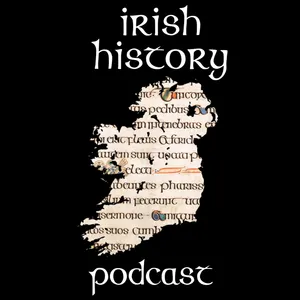
From the Norman Invasion to the War of Independence, the Great Famine to the Troubles, the Irish History Podcast takes you on a journey through the most fascinating stories in Ireland's past. Whether it’s the siege of Dublin in 1171 or gun battles in the 1920s, the podcast vividly recreates a sense of time and place. Each episode is meticulously researched, creating character-driven narratives that are engaging and accessible for all.Since the first episode was released back in 2010, the podcast has covered scores of captivating stories. Major multi-part series have explored the Great Famine, the Norman Invasion, and Irish involvement in the Spanish Civil War. If you are looking for standalone episodes, there are lots of great interviews with leading Irish historians covering topics from medieval sex magic to Irish connections in the Jack the Ripper murders!Why not start with 'Three Days in July', an acclaimed mini-series from the summer of 2024. It explores th
Latest Episodes
The most recent episodes — sign up to get AI-powered summaries of each one.
- 4 days ago53 min
The Rise of the Provisional IRA: Conspiracy vs Reality
In the late 1960s, the Provisional IRA and what became modern Sinn Féin emerged from a bitter split in the Irish republican movement. This split would shape not only the Troubles but also Irish politics down to the present day.However, for the last five decades, the story of how and why that split occurred has been clouded by enduring conspiracy theories.The most prominent of these claims that the Irish government in Dublin orchestrated the split to create a more conservative force in the Provisional IRA and neutralise left-wing republicanism. Many opponents of the Provisionals in the rival Left Wing Official IRA understood these events through this lens. Meanwhile, unionists believed the Provisionals had been created by politicians in Dublin in the hope of destabilising the Northern state. The theory also found adherents among the political enemies of Charles Haughey and Neil Blaney, two politicians whose actions lie at the heart of these claims.Yet the history of those fateful years tells a different story: one of uncertainty and desperation. Conspiratorial interpretations also overlook how politicians in later decades were happy to court such understandings to suit their own ends. In this episode, I am joined by Dr Brian Hanley to thrash out what happened in late 1969 and 1970 and why the IRA split. We discuss where conspiracy theories come from, why they are more common than we might imagine and what purpose they serve. We then explore how the Provisional IRA emerged and became the dominant force in Irish republicanism.The picture that emerges is far from straightforward and at times, disquieting. Rather than being controlled by a handful of people, events sometimes seemed to gather a momentum of their own. There were many forces at play, but no hidden hand at work.Sound by Kate Dunlea. Hosted on Acast. See acast.com/privacy for more information.
- 1 weeks ago28 min
The Golden Age of Irish Smuggling
The 18th century was a golden age of Irish smuggling. It's estimated that as many as one third of all luxury goods entering Ireland were brought in by smugglers. Far from being a fringe activity, smuggling was woven into the wider economy and remarkably was often a community enterprise with entire villages involved. It's very different than we imagine: while perhaps less glamorous, it was far more lucrative and important to the Irish economy. In this episode I'm joined by historian James Doherty to explore why smuggling boomed in the 18th century, who was involved and why entire communities along the Irish coast got in on the act.My guest James Doherty is a historian based in Waterford with interests in Military History and the history of smuggling in Ireland in the 18th and 19th centuries.Sound by Kate Dunlea Hosted on Acast. See acast.com/privacy for more information.
- 3 weeks ago40 min
Why Did Nazi Germany Bomb an Irish Village in 1940?
Become a supporter at https://www.patreon.com/c/IrishpodcastOn 26 August 1940, two German aircraft crossed the coast of County Wexford and flew towards the small village of Campile. One aircraft dropped bombs near Ambrosetown, while the other attacked the tiny village of Campile a few miles further east. Three women, Mary Ellen Kent, Catherine Kent and Kathleen Hurley were killed. The bombing shattered the belief that Ireland’s neutrality could protect it from the Second World War. It also ignited a debate that has lasted for decades: Was the attack intentional or were the pilots lost? While politicians attempted to reduce tensions, investigations by An Garda Síochána and Irish Military Intelligence reached disturbing conclusions. They believed Campile had been deliberately targeted by the Nazis. In this episode I explore what happened. I also explore why Irish Military Intelligence were convinced the Nazis intentionally bombed this tiny Irish village at the height of the Battle of Britain and what it purpose it served. Written, researched and presented by: Fin DwyerSound: Kate DunleaAdditional narration: Aidan Crowe and Therese MurrayFurther Reading and Listening:The Campile Bombing, August 26th, 1940, Horeswood Historical Society. This detailed local history includes eyewitness accounts, photographs and primary material relating to the attack. Michael Kennedy, Guarding Neutral Ireland: The Coast Watching Service and Military Intelligence, 1939–1945. Hosted on Acast. See acast.com/privacy for more information.
- Aug 19, 20261h 2m
The Sinking of the Lusitania
On 7 May 1915, the passenger liner RMS Lusitania was torpedoed by the German submarine U-20 off the coast of County Cork. The enormous ship sank in just 18 minutes, killing over one thousands people.The sinking became one of the most controversial events of the First World War, provoking questions that remains the source of debate today. Why did the Lusitania sink so quickly? What caused the second explosion reported by survivors? How much ammunition and war material was the ship carrying? Did this cargo make the ship a legitimate military target or was the attack a crime against civilians?In this episode, I am joined by Shannon Forde, manager of the Lusitania Museum and Old Head Signal Tower in Kinsale. We discuss the history of the famous ocean liner, how it compared with the Titanic, the events of its final voyage and the experiences of those caught up in the disaster. We also examine the enduring controversies surrounding the sinking, from the Lusitania’s cargo to the actions of the German submarine and the British authorities.Support the Irish History Podcast at patreon.com/irishpodcastThe Lusitania Museum & Old Head Signal Tower is open 10am – 5pm 7 days a week from March to October. https://www.oldheadofkinsale.comI will have more detail on the supporters tour mentioned in the episode later in the week!Sound by Kate DunleaMy Guest is Shannon Forde. Shannon is a native of Kinsale, County Cork. She completed a MA in Irish History in Maynooth University, and has worked in Charles Fort, Kinsale and as a Heritage Specialist with Cork County Council. She researched and authored a local history book on the War of Independence in Kinsale. Shannon has been the Manager of the Lusitania Museum & Old Head Signal Tower since 2022 – which is a non profit community project at the Old Head of Kinsale. In 2025 she authored a book detailing the story of this community project from restoring a derelict Napoleonic signal tower to plans for a dedicated Lusitania Museum onsite. Hosted on Acast. See acast.com/privacy for more information.
- Aug 12, 202655 min
Ireland’s Shipwrecks: History from the Depths
Every year, fragments of long-lost ships wash ashore on Irish beaches. They are remnants of the thousands of shipwrecks scattered around our coast, dating from Prehistory to the Second World War. Each wreck has a fascinating story from how they went down to their rediscovery often centuries later. In this episode, I speak with Dublin Port Heritage Director Lar Joye at a new exhibition exploring the shipwrecks of Dublin Bay. Our conversation explores several disasters including the famous cases of the Leinster, the Dorset and the Tayleur.We discuss the stories behind these ships, why shipwrecks were so common in the past and why fragments of wrecks continue to wash ashore today. Visit the exhibition: https://www.dublinport.ie/shipwrecks-of-dubln-bay-exhibition-at-the-substation/ Upcoming events at the Substation:https://www.dublinport.ie/heritage-week/ My guest, Lar Joye, has served as Port Heritage Director at Dublin Port since 2017. He cares for the 300-year-old Port Archive and leads projects reconnecting the working port with the city through heritage, culture and public access. Before joining Dublin Port, Lar worked as a film archivist and as Curator of Irish Military History at the National Museum of Ireland. There he led the team behind the award-winning Soldiers & Chiefs exhibition which explores the history of Irish soldiers at home and abroad from 1550 to the present. Sound: Kate Dunlea Hosted on Acast. See acast.com/privacy for more information.
- Jul 29, 202643 min
Broken Promises: Why Irish Independence Failed the Irish Language
In 1922, Ireland gained its independence. The new state promised to revive the Irish language. A century later, English still dominates daily life. What went wrong?In this episode, I speak to John Walsh of the University of Galway, author of One Hundred Years of Irish Language Policy, 1922–2022, about why a movement that had real momentum in the years before independence stalled in the decades that followed.John traces the high ambition and lofty ideals to the failed policies of successive Irish governments. He also reveals how at times outright hostility to the language within the political establishment emerged in the later 20th century with devastating consequences. The episode also looks at the very different experience of the language in the Northern State, where the unionist government treated Irish as a threat.Support the show at www.patreon.com/irishpodcastIf you want to find out moreFind out more about John and his work: https://research.universityofgalway.ie/en/persons/john-walsh/To find out more about this subject, check out John's book One Hundred Years of Irish Language Policy, 1922–2022 https://www.peterlang.com/document/1248601Check out this episode with Dr Nicholas Wolf on why the Irish language went into decline in the 18th and 19th century. https://shows.acast.com/irishhistory/episodes/the-irish-language-why-ireland-became-english-speakingJohn's forthcoming book Ar Lámh Shábhála? Coimisiún na Gaeltachta 1926 will be published by Cló Iar-Chonnacht this autumn https://cic.ie/Sound by Kate Dunlea. Hosted on Acast. See acast.com/privacy for more information.
- Jul 22, 202633 min
Progress at Any Cost? The Dark History Behind Ireland’s Electrification
In the 1920s, the newly established Irish Free State embarked on one of the most ambitious engineering projects in its history: the Shannon Scheme at Ardnacrusha.This was a state-of-the-art hydroelectric plant that paved the way for the electrification of Irish society. The scheme developed an almost mythic reputation, becoming a powerful symbol of independence, progress and modernisation.But behind the concrete and turbines was a darker story. Thousands of poorly paid labourers worked in brutal conditions, dozens were killed and hundreds suffered life-changing injuries. Many were left in poverty while Irish society celebrated their achievements. In this episode, I explore both sides of the Shannon Scheme: the remarkable project that helped transform Ireland, but also the terrible human cost that was largely written out of our history.Sound by Kate Dunlea.Support my work patreon.com/irishpodcast if you want to read more check out High Tension: Life on the Shannon Scheme https://www.abebooks.com/9781843510611/High-Tension-Life-Shannon-Scheme-1843510618/plpAndy Bielenberg's The Shannon Scheme and the Electrification of the Irish Free State is a good overview of the project. A Digital copy is also available on the E.S.B. Archives website for free https://esbarchives.ie/wp-content/uploads/2015/05/the-shannon-scheme.pdfMaurice Manning & More McDowell's History of the Electricity Supply Board is also a useful read and a digital copy is also available on the ESB Archive for free. https://esbarchives.ie/wp-content/uploads/2015/08/the-history-of-the-esb.pdf Hosted on Acast. See acast.com/privacy for more information.
- Jul 15, 202620 min
Hitler’s Irish Relatives: The Strange True Story
A video version of this episode is available on Apple Podcasts https://podcasts.apple.com/ie/podcast/irish-history-podcast/id363368392On the day Hitler invaded Poland, another Hitler was making headlines in Britain. It was not the dictator, but his Irish sister-in-law, Bridget Hitler, who had been hauled before the courts in London over a mundane, unpaid electricity bill. This episode explores the life of this woman and the strange reality of the "Irish Hitlers."For eight decades, the story of Bridget and her son has been muddied by sensational claims: that she hosted a young Adolf Hitler in her Liverpool flat, that she helped shape his infamous physical appearance, and that she enjoyed intimate access to his private mountain retreat. But how much of this narrative is grounded in reality, and how much is the product of post-war myth-making?In this episode, I reconstruct the documented history of this Irish woman’s connection to the Hitler family. We follow the journey from when Hitler’s brother, Alois, arrived in Dublin and married Bridget, through to how she reacted when her brother-in-law became the most notorious figure in history. I also reveal how much of what has been written about Bridget is based on a memoir that may actually be a forgery.Sound and Video Editing: Kate Dunlea Hosted on Acast. See acast.com/privacy for more information.
Get Irish History Podcast summaries in your inbox
Free AI-powered daily recaps. Key takeaways, quotes, and mentions — in a 5-minute read.
Get Free Summaries →Free forever for up to 3 podcasts. No credit card required.
You Might Also Like
Listeners also like.

HistoryExtra podcast
Covers global history from ancient to modern times through expert interviews on events, figures, and eras.
History Unplugged Podcast
Features interviews with history authors and answers to listener questions on a wide range of historical topics.

The Rest Is History
Historians Tom Holland and Dominic Sandbrook analyze major historical events and figures with narrative depth and scholarly insight.

The Ireland Rugby Social Podcast
Rugby analysis and stories from player Conor Murray, covering key moments, legends, and rivalries in Irish and international rugby.
The History Podcast
Two men from Nottingham find themselves on opposing sides of the conflict in Ukraine.
History's Heroes
Profiles real-life historical figures whose courage, innovation, or resilience changed the course of history.

HISTORY This Week
A weekly look at pivotal historical events and the people behind them, famous or forgotten, who shaped the world.
Noiser Presents
Dramatic, immersive retellings of history’s most pivotal events through expert interviews and eyewitness accounts.

Short History Of...
Each episode examines a significant moment or figure in history, spanning ancient to modern times.
Witness History
First-hand accounts of pivotal historical moments, from global events to cultural milestones, told by those who lived them.
D-Day: The Tide Turns
Follows the personal stories of those who lived through the planning, execution, and aftermath of the 1944 Normandy landings.
The History of WWII Podcast
A detailed narrative exploration of World War II, covering its events, battles, and key figures.
About Irish History Podcast
From the Norman Invasion to the War of Independence, the Great Famine to the Troubles, the Irish History Podcast takes you on a journey through the most fascinating stories in Ireland's past. Whether it’s the siege of Dublin in 1171 or gun battles in the 1920s, the podcast vividly recreates a sense of time and place. Each episode is meticulously researched, creating character-driven narratives that are engaging and accessible for all.Since the first episode was released back in 2010, the podcast has covered scores of captivating stories. Major multi-part series have explored the Great Famine, the Norman Invasion, and Irish involvement in the Spanish Civil War. If you are looking for standalone episodes, there are lots of great interviews with leading Irish historians covering topics from medieval sex magic to Irish connections in the Jack the Ripper murders!Why not start with 'Three Days in July', an acclaimed mini-series from the summer of 2024. It explores th
Customized Recaps
AI-powered recaps with compact key takeaways, quotes, and insights.
Straight to Your Inbox
Get key takeaways from Irish History Podcast in a 5-minute read.
Save Hours Every Week
Stay current on your favorite podcasts without falling behind.
Frequently Asked Questions
What is Podzilla's Irish History Podcast daily summary?
It's a free AI-powered email that summarizes new episodes of Irish History Podcast as soon as they're published. You get the key takeaways, notable quotes, and links & mentions — all in a quick read.
How does the Irish History Podcast podcast summary work?
When a new episode drops, our AI transcribes and analyzes it, then generates a personalized summary tailored to your interests and profession. It's delivered to your inbox every morning.
Is this an official Irish History Podcast product?
No. Podzilla is an independent service that summarizes publicly available podcast content. We're not affiliated with or endorsed by Fin Dwyer.
Can I get summaries of other podcasts too?
Absolutely! The free plan covers up to 3 podcasts. Upgrade to Pro for 15, or Premium for 50. Browse our full catalog at /podcasts.
What topics does Irish History Podcast cover?
Irish History Podcast covers topics including History. Our AI identifies the specific themes in each episode and highlights what matters most to you.
Start getting Irish History Podcast summaries tomorrow morning.
Free forever for up to 3 podcasts. No credit card required.
Free forever for up to 3 podcasts. No credit card required.