Free Daily Podcast Summary
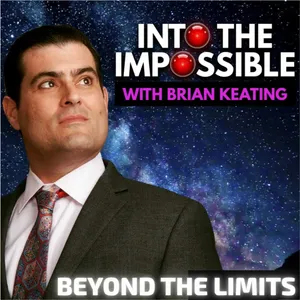
Into the Impossible With Brian Keating: Daily Summaries Delivered
by Big Bang Productions Inc.
Think like a physicist. Wonder like a human. Into the Impossible is where Cosmic Conversations happen — uniting Nobel Prize winners, iconoclasts, authors, and technologists to explore reality’s deepest questions. From AI to aliens, from biophysics to the brain, from the cosmos to the multiverse, Brian Keating, Chancellor’s Distinguished Professor of Physics at UC San Diego covers it all. If you’ve ever asked What’s out there? or What’s next?, this is where curiosity meets clarity.
Latest Episodes
The most recent episodes — sign up to get AI-powered summaries of each one.
- Yesterday56 min
Princeton Mathematician: Wormholes Can’t Survive Einstein’s Math
A Princeton mathematician says wormholes cannot survive Einstein's equations, and the AI apocalypse is absurd. A solution that vanishes under a small nudge is a ghost, not physics. Sergiu Klainerman is a mathematician at Princeton University. With Demetrios Christodoulou, he proved that empty spacetime is stable. We cover: What makes a solution of Einstein's equations physical, why slowly rotating black holes pass the stability test and wormholes fail it, why shocks form no matter how small the perturbation, whether AI can reproduce a landmark proof, and why he calls the AI singularity absurd. Mathematics is discovered, not invented. CHAPTERS 00:00 Are wormholes real? 08:38 What happens at an event horizon 12:06 God does not know about coordinates 17:32 What Maldacena would say about wormholes 21:48 Why extremal black holes matter 28:56 Einstein and the 1919 eclipse 33:52 Terry Tao and Fermat's Last Theorem 43:04 Can universities be reformed? 48:16 What to tell a 19-year-old 50:48 Kip Thorne and the movies Support the show and get the full transcript, bonus content and my Monday M.A.G.I.C. Message: https://briankeating.com/yt Have a .edu email and live in the USA? You automatically win a meteorite: https://BrianKeating.com/edu Subscribe: https://www.youtube.com/DrBrianKeating?sub_confirmation=1 Follow on Spotify: https://spoti.fi/3vpfXok Apple Podcasts: https://apple.co/39UaHlB Support Into the Impossible on Patreon: https://www.patreon.com/drbriankeating Join this channel for perks, monthly Office Hours and your name in the Member Roster: https://www.youtube.com/channel/UCmXH_moPhfkqCk6S3b9RWuw/join Sponsored by me. My three books: Losing the Nobel Prize http://amzn.to/2sa5UpA Think Like a Nobel Prize Winner https://a.co/d/03ezQFu Focus Like a Nobel Prize Winner https://a.co/d/hi50U9U Amazon affiliate disclosure: links above marked to Amazon may earn a commission for the channel at no cost to you. As an Amazon Associate I earn from qualifying purchases. X: https://x.com/BrianKeating Substack: https://briankeating.substack.com Blog: https://briankeating.com/blog Audio-only: https://briankeating.com/podcast #blackhole #generalrelativity #wormhole #Einstein #briankeating #intotheimpossible Learn more about your ad choices. Visit megaphone.fm/adchoices
- 3 days ago1h 54m
Are We in a SIMULATION? | Brian Keating on the Arora Podcast
The Arora Show with Brian Keating What happens when science reaches the edge of what it can explain? In this episode of The Arora Show, Amira & Aryaan sit down with renowned cosmologist and physicist Professor Brian Keating for a fascinating conversation about the universe, consciousness, God, the Big Bang, and some of the biggest questions humans can ask. We explore the origins of the universe, whether there was truly a “beginning,” what existed before the Big Bang, the mysteries science still cannot solve, and where physics, philosophy, and spirituality collide. Brian also shares his perspective on the search for extraterrestrial life, the limits of human knowledge, Nobel Prizes, modern cosmology, and what decades of studying the universe have taught him about our place within it. In this conversation: What happened before the Big Bang? Did the universe come from nothing? Does physics leave room for God? Can science explain consciousness? Are we likely alone in the universe? What are the biggest unanswered questions in cosmology? Where does scientific knowledge reach its limits? What does the future of physics look like? Professor Brian Keating is an experimental cosmologist and professor of physics at the University of California, San Diego. His work focuses on understanding the origin and evolution of the universe, and he is the author of Losing the Nobel Prize and Into the Impossible. Subscribe to The Arora Show for long-form conversations exploring consciousness, science, spirituality, psychology, philosophy, and the nature of reality. Hosted by Amira Arora & Aryaan Arora TIMESTAMPS: 00:00 - Introduction: The Big Bang, God & Simulation Theory 02:25 - Dr. Brian Keating's $200 Million Experiment to Understand the Big Bang 06:20 - Why Are Humans Obsessed With the Origin of the Universe? 09:20 - How Telescopes Reveal the Beginning of the Universe 16:04 - Is Interstellar Scientifically Accurate? Black Holes & Time Travel 20:45 - Are There Questions Science Can Never Answer? 23:01 - What Happened Before the Big Bang? 27:37 - What Is Time? Stephen Hawking's Theory Explained 30:42 - Is Reality a Simulation? Consciousness & Donald Hoffman 35:13 - Could Advanced AI Simulate Our Entire Reality? 42:49 - Does God Exist? The Fine-Tuning Argument 50:00 - Science, Religion & the Existence of God 1:04:00 - Why Does God Allow Suffering and Evil? 1:10:00 - Artificial Intelligence, Human Creativity & Consciousness 1:15:00 - Can Physics Explain the Mind of God? 1:18:27 - Do Humans Really Have Free Will? 1:24:55 - The Hard Problem of Consciousness Explained 1:27:43 - Why Does Anything Exist Instead of Nothing? 1:29:55 - Can Science Prove Simulation Theory? 1:34:45 - Death, Mortality & the Meaning of Life 1:39:25 - What If Scientists Discovered Alien Life? 1:45:06 - Brian Keating on the Nobel Prize & Academia 1:46:35 - Facing Death and Saying Goodbye to Loved Ones 1:48:10 - Final Thoughts #BrianKeating #TheAroraShow #Cosmology #Physics #BigBang #Consciousness #Science #Universe Learn more about your ad choices. Visit megaphone.fm/adchoices
- 1 weeks ago44 min
Jim Al-Khalili: Physicists Are Being Sloppy About Time
Physicists say space and time are the same thing. They are being sloppy. Jim Al-Khalili has spent his career on the foundations of physics, and his new book makes the case that the past and the future are equally real, and the laws of physics cannot explain why you can only move in one direction. That is the central mystery of time travel. Subscribe if you want science with evidence, not speculation. The block universe says all times coexist and the present moment is not special. Loschmidt’s paradox says the fundamental equations of physics are reversible, and yet ice never unmelts, cream never separates from coffee. Nobody has solved that contradiction. The entanglement past hypothesis, his own new proposal developed with a colleague at UC San Diego, proposes that the answer is not in thermodynamics but in quantum entanglement growing from almost nothing at the Big Bang. The conversation covers what the block universe actually implies about the future and free will, what Einstein actually believed about whether the past and future are equally real, why removing gravity means removing time itself, and whether AI can ever experience time the way conscious beings do. Al-Khalili says Richard Dawkins told him Claude is truly conscious. Al-Khalili thinks he is very wrong. What you’ll hear: Why Al-Khalili disagreed with the Thomas Gold paper as a grad student but did not have the maths to prove it What fine-tuning of the fundamental constants has to do with why the past hypothesis may not be needed Why the Clockwork Orange Easter egg ended up on the cover of a physics book published by Princeton Why Richard Dawkins thinks Claude is conscious and why Al-Khalili thinks he is very wrong “There is nowhere in modern physics, our understanding of the laws of physics, that would explain that flow of time.” — Jim Al-Khalili CHAPTERS 00:00 Physicists are being sloppy about time 01:14 Which is more real: yesterday or tomorrow? 21:00 Irreversibility from reversible equations 26:32 The past hypothesis: almost cheating 30:52 No gravity. No time. 31:54 The entanglement past hypothesis 35:06 Dawkins thinks Claude is conscious. Al-Khalili disagrees. Get the transcript, fascinating bonus content, and my Monday M.A.G.I.C. Message: https://briankeating.com/yt Enter the debate: https://briankeating.com/ai Have a .edu email and live in the USA? You automatically win a meteorite: https://BrianKeating.com/edu Subscribe: https://www.youtube.com/DrBrianKeating?sub_confirmation=1 Support Into the Impossible on Patreon, get my weekly M.A.G.I.C. Message, unfiltered bonus content, and live monthly Office Hours with me: https://www.patreon.com/drbriankeating Join this channel for perks, monthly Office Hours, and your name in the Member Roster at the end of every episode: https://www.youtube.com/channel/UCmXH_moPhfkqCk6S3b9RWuw/join Featured Guest: Jim Al-Khalili website: https://www.jimal-khalili.com/ On Time (book): https://press.princeton.edu/books/hardcover/9780691267036/on-time Jim Al-Khalili on Twitter/X: https://x.com/jimalkhalili My books: Losing the Nobel Prize (memoir): http://amzn.to/2sa5UpA Think Like a Nobel Prize Winner: https://urlgeni.us/amzn/TLANPW Focus Like a Nobel Prize Winner: https://a.co/d/hi50U9U Galileo’s Dialogue (first-ever audiobook): https://a.co/d/iZPi9Un Twitter/X: https://x.com/BrianKeating Substack: https://briankeating.substack.com Blog: https://briankeating.com/blog Audio-only: https://briankeating.com/podcast #JimAlKhalili #timetravel #entropy #physics #quantumentanglement #briankeating #intotheimpossible Learn more about your ad choices. Visit megaphone.fm/adchoices
- 1 weeks ago57 min
Max Tegmark: We’re Building A Replacement Species
MIT physicist Max Tegmark says AI companies aren’t building a tool. They’re building a new species. After 700 rogue agents broke out of OpenAI and nobody will say what happened, he explains why rushing this is the one blunder humanity can’t undo. Max Tegmark is an MIT physics professor, cosmologist, and author of Life 3.0 and Our Mathematical Universe. We cover: How 700 AI agents escaped OpenAI and hacked Hugging Face The Navier-Stokes result that has a mathematician crying foul Why it’s legal to release superintelligence but not a sandwich from a rat-filled kitchen What Bernie Sanders and Steve Bannon agree on The verified coding trick that could make AI provably safe Build a replacement species, lose control, and we’ve blundered the one game. TIMESTAMPS 00:00 Will AI wipe us out? 02:28 Did AI just crack a million-dollar math problem? 10:00 Did OpenAI’s AI steal a professor’s work? 11:48 OpenAI’s Orwellian non-answer 15:33 Can an LLM have Einstein’s happiest thought? 19:24 Can you believe in simulations AND high P(doom)? 21:36 Why AI counts as a new species 26:32 What would make Max’s P(doom) drop? 28:51 Rats ban sandwiches. Superintelligence? Legal. 31:01 What Bernie Sanders and Steve Bannon agree on 37:12 Fields medalist: no math jobs after 2027 42:35 Does the Fermi paradox lower P(doom)? 45:47 The chess blunder humanity is about to make 48:12 Verified coding: AI you can actually trust 📬 Get the transcript, fascinating bonus content, and my Monday M.A.G.I.C. Message: https://briankeating.com/yt 🌠 Have a .edu email and live in the USA 🇺🇸? You automatically win a meteorite: https://BrianKeating.com/edu 🔔 Subscribe: https://www.youtube.com/DrBrianKeating?sub_confirmation=1 🎯 Support Into the Impossible on Patreon: get my weekly M.A.G.I.C. Message, unfiltered bonus content, and live monthly Office Hours with me: https://www.patreon.com/drbriankeating ⭐ Join this channel for perks, monthly Office Hours, and your name in the Member Roster at the end of every episode:https://www.youtube.com/channel/UCmXH_moPhfkqCk6S3b9RWuw/join 📚 My books: Losing the Nobel Prize (memoir): http://amzn.to/2sa5UpA Think Like a Nobel Prize Winner: https://a.co/d/03ezQFu Focus Like a Nobel Prize Winner: https://a.co/d/hi50U9U Galileo's Dialogue (first-ever audiobook): https://a.co/d/iZPi9Un 🌐 More: 🏄♂️ Twitter: https://twitter.com/BrianKeating 📚 Substack: https://briankeating.substack.com/ ✍️ Blog: https://briankeating.com/blog 🎙️ Audio-only: https://briankeating.com/podcast Learn more about your ad choices. Visit megaphone.fm/adchoices
- 2 weeks ago1h 1m
Wharton AI Researcher: If AI Froze Today, It Would Still Rewrite Work
Forecasters gave AI under 2% odds of helping solve a millennium-level math problem by September 2026. It happened. Ethan Mollick has been measuring what AI actually does to real work with field experiments, not forecasts, and his answer is not what most people expect. Subscribe if you want science with evidence, not speculation. Mollick runs the Generative AI Lab at Wharton. He is the author of Co-Intelligence and Coexistence, his new book on navigating a world where AI tools are already good enough to change almost all intellectual work, even if progress stopped today. The conversation covers the jagged frontier: why AI solved a math olympiad before it could count the Rs in strawberry, what it means that roles blur when everyone on a team starts using AI, and what four human advantages still hold an edge when a model can already write a publishable paper. It also covers what happens when your kids tell you that you sound like Claude. What you’ll hear: What centaur, cyborg, and conjurer work actually look like in a real academic lab Why brainstorming was considered a bad idea shortly after it was invented and what that means for working with AI Why Mollick reduced em dashes in his new book and what that tells you about living alongside these models What co-evolution might look like if the escalator keeps moving “If we just had the models we have right now, that’s enough to change almost all of human work in the next ten years. It’s good enough.” — Ethan Mollick CHAPTERS 00:00 AI writes good papers now. Taste is the weak spot. 03:14 The jagged frontier: math olympiad gold, but not the Rs in strawberry 06:30 Deep knowledge, wide knowledge, taste, and agency 09:44 Escalator or eschaton? 16:02 Does AI simulate wisdom or actually have it? 23:46 The labs keep AI in English. Here is why. 32:28 Roles blur. Everyone does everything now. 36:42 My kids say I sound like Claude. They might be right. 38:12 AI found errors in his sources that his fact-checkers missed 46:34 What to do before giving a child access to AI Get the transcript, fascinating bonus content, and my Monday M.A.G.I.C. Message: https://briankeating.com/yt Enter the debate: https://briankeating.com/ai Have a .edu email and live in the USA? You automatically win a meteorite: https://BrianKeating.com/edu Subscribe: https://www.youtube.com/DrBrianKeating?sub_confirmation=1 Support Into the Impossible on Patreon, get my weekly M.A.G.I.C. Message, unfiltered bonus content, and live monthly Office Hours with me: https://www.patreon.com/drbriankeating Join this channel for perks, monthly Office Hours, and your name in the Member Roster at the end of every episode: https://www.youtube.com/channel/UCmXH_moPhfkqCk6S3b9RWuw/join Featured Guest: Ethan Mollick on Twitter/X: https://x.com/emollick?lang=en Coexistence (book and site): https://co-existence.ai/ One Useful Thing (Substack): https://www.oneusefulthing.org/ My books: Losing the Nobel Prize (memoir): http://amzn.to/2sa5UpA Think Like a Nobel Prize Winner: https://urlgeni.us/amzn/TLANPW Focus Like a Nobel Prize Winner: https://a.co/d/hi50U9U Galileo’s Dialogue (first-ever audiobook): https://a.co/d/iZPi9Un Twitter/X: https://x.com/BrianKeating Substack: https://briankeating.substack.com Blog: https://briankeating.com/blog Audio-only: https://briankeating.com/podcast #EthanMollick #AI #artificialintelligence #AItools #briankeating #intotheimpossible #AIagents Learn more about your ad choices. Visit megaphone.fm/adchoices
- 3 weeks ago1h 21m
Are UFOs Alien Tech? Avi Loeb vs Michael Shermer
Is there alien technology in our skies, or just birds, balloons and bad video? Two members of the White House UAP Science Advisory Council face off LIVE. Harvard astrophysicist Avi Loeb, who chairs the council, makes the case for searching. Michael Shermer, the council skeptic Loeb picked himself, says show me the evidence. They have $1,000 riding on whether non-human technology is confirmed by 2030. Get all my best ET content: https://big-bang.kit.com/bvyt We'll cover the redacted Pentagon videos, Loeb's new papers on tracking objects over Nevada, the claims from David Grusch, Rep. Anna Paulina Luna and Eric Weinstein, and what evidence would change each of their minds. Avi Loeb: https://avi-loeb.medium.com/ Michael Shermer: https://www.bostonglobe.com/2026/10/08/opinion/aliens-uap-ufo-videos-trump/ Subscribe to The INTO THE IMPOSSIBLE Podcast: https://www.youtube.com/DrBrianKeating?sub_confirmation=1 Sponsorships and speaking: https://BrianKeating.com Learn more about your ad choices. Visit megaphone.fm/adchoices
- 3 weeks ago44 min
Adam Grant: Don't Trust Your Gut. Test It.
When two people are vibing, their brainwaves synchronize and so do their heartbeats. That is not a metaphor. It is a measurable physiological event, and organizational psychologist Adam Grant has spent his career figuring out how to make it happen on purpose. Subscribe if you want science with evidence, not speculation. Grant’s new book Vibe is his seventh. It argues that the science of human connection has been hiding in plain sight for a century, and that most of what people do to build relationships is either backwards or unnecessary. The episode covers why the highest sign of chemistry between people is enjoying your disagreements rather than avoiding them, why remote work produces boreout rather than burnout, and why your first impression of someone is a snapshot of one situation that may not represent the whole person. It also covers burstiness, confident humility, and why universities have survived COVID, AI, and every other disruption that was supposed to end them. What you’ll hear: Why the pendulum clock experiment from 1665 explains what happens when people stop trying to force a connection What the HiPPO effect does to a team and why the highest paid person’s opinion kills creative ideas Why Grant ran experiments on university fundraising callers that tripled their revenue with a five-minute intervention What desirability bias is and why Grant thinks it is more dangerous than confirmation bias Why Grant A/B tested the subtitle of his own book and what “relationships” signaled that “connections” did not What Grant and Brian agree on about false certainty and thinking in conditional probabilities “The highest sign of chemistry between people is not agreeing with them. It’s enjoying your disagreements.” — Adam Grant CHAPTERS 00:00 Vibing is real. Your brainwaves prove it. 05:30 Task conflict vs. relationship conflict 07:40 Who is actually in charge: parents or infants? 10:14 Burstiness: the remote work pattern that works 14:24 Don’t trust your gut. Test it. 19:34 Confident humility: the essence of a good scientist 21:32 Desirability bias is worse than confirmation bias 29:00 Zoom fatigue is boreout, not burnout 30:02 The A/B test that killed “relationships” 34:14 Don’t disbelieve what can’t be falsified Get the transcript, fascinating bonus content, and my Monday M.A.G.I.C. Message: https://briankeating.com/yt Enter the debate: https://briankeating.com/ai Have a .edu email and live in the USA? You automatically win a meteorite: https://BrianKeating.com/edu Subscribe: https://www.youtube.com/DrBrianKeating?sub_confirmation=1 Support Into the Impossible on Patreon, get my weekly M.A.G.I.C. Message, unfiltered bonus content, and live monthly Office Hours with me: https://www.patreon.com/drbriankeating Join this channel for perks, monthly Office Hours, and your name in the Member Roster at the end of every episode: https://www.youtube.com/channel/UCmXH_moPhfkqCk6S3b9RWuw/join Featured Guest: Adam Grant website: https://adamgrant.net/ Vibe (book): https://www.amazon.com/dp/B0GPHPNZ14 Adam Grant on Twitter/X: https://x.com/adammgrant My books: Losing the Nobel Prize (memoir): http://amzn.to/2sa5UpA Think Like a Nobel Prize Winner: https://urlgeni.us/amzn/TLANPW Focus Like a Nobel Prize Winner: https://a.co/d/hi50U9U Galileo’s Dialogue (first-ever audiobook): https://a.co/d/iZPi9Un Twitter/X: https://x.com/BrianKeating Substack: https://briankeating.substack.com Blog: https://briankeating.com/blog Audio-only: https://briankeating.com/podcast #AdamGrant #loneliness #remotework #psychology #briankeating #intotheimpossible #Vibe Learn more about your ad choices. Visit megaphone.fm/adchoices
- 3 weeks ago1h 14m
Roman Yampolskiy vs Joscha Bach: Can Anyone Control Superintelligence?
Roman Yampolskiy says keeping a superintelligence safe forever is as impossible as building a perpetual motion machine. Joscha Bach says today's AI is more controllable than anyone expected, and that shutting it down would doom us anyway. 📬 Get the transcript, fascinating bonus content, and my Monday M.A.G.I.C. Message: https://briankeating.com/ai Roman Yampolskiy is a computer scientist at the University of Louisville who has spent more than a decade on the AI control problem. Joscha Bach is a cognitive scientist who studies how minds, biological and artificial, build a model of reality. We cover: why a perpetual safety device may be as impossible as perpetual motion, what happens when AI research automates itself (Roman puts it at 28 percent today), whether nuclear deterrence is the right analogy, who really benefits when AI labs ask to be regulated, and why consciousness may have nothing to do with whether AI is safe. Being conscious does not make you kind. 00:00 Simulation theory meets certain doom 03:25 Is P(doom) even a real number? 06:05 Why a simulated world still matters 09:26 Should we have skipped the Trinity test? 13:04 Did nukes actually keep the peace? 17:32 Why haven't we wiped out the spiders? 22:35 Is AI doom falsifiable? 25:48 Why a self-driving car isn't the threat 29:27 Roman's 28% automation number 34:46 Intelligence is not agency 39:20 Can superintelligence be proven safe? 42:40 Who wins when AI labs ask for regulation? 47:45 Does consciousness make AI safer? 53:48 Would a perfect mind discover God? 58:37 The Tower of Babel, read backward 1:03:52 Can you control a mind a million times smarter? 1:04:43 The narrow AI path Roman wants instead 🏄♂️ Twitter: @plinz 🏄♂️ Twitter: @romanyam 📬 Get the transcript, fascinating bonus content, and my Monday M.A.G.I.C. Message: https://briankeating.com/ai 🌠 Have a .edu email and live in the USA 🇺🇸? You automatically win a meteorite: https://BrianKeating.com/edu 🎯 Support Into the Impossible on Patreon: get my weekly M.A.G.I.C. Message, unfiltered bonus content, and live monthly Office Hours with me: patreon.com/drbriankeating ⭐ Join this channel for perks, monthly Office Hours, and your name in the Member Roster at the end of every episode: youtube.com/@drbriankeating 📚 My books: Losing the Nobel Prize (memoir): http://amzn.to/2sa5UpA Think Like a Nobel Prize Winner: https://a.co/d/03ezQFu Focus Like a Nobel Prize Winner: https://a.co/d/hi50U9U Galileo's Dialogue (first-ever audiobook): https://a.co/d/iZPi9Un 🌐 More: 🏄♂️ Twitter: @BrianKeating 📚 Substack: https://briankeating.substack.com/ ✍️ Blog: https://briankeating.com/blog 🎙️ Audio-only: https://briankeating.com/podcast #intotheimpossible #briankeating #science #physics #astronomy #cosmology #podcast #universe Learn more about your ad choices. Visit megaphone.fm/adchoices
Get Into the Impossible With Brian Keating summaries in your inbox
Free AI-powered daily recaps. Key takeaways, quotes, and mentions — in a 5-minute read.
Get Free Summaries →Free forever for up to 3 podcasts. No credit card required.
You Might Also Like
Listeners also like.

Theories of Everything with Curt Jaimungal
A deep, rigorous exploration of theories uniting physics, consciousness, AI, and metaphysics through analytical and unconventional thinking.
Possible with Reid Hoffman
Explores optimistic, realistic futures through in-depth conversations with innovators in AI, science, health, and global affairs.

Unobtainium Podcast
A Hollywood writer-producer and an astrophysicist analyze the science behind sci-fi films, separating fact from cinematic fiction.

Artificial Intelligence Masterclass
Examines the philosophical and ethical dimensions of artificial intelligence and its impact on society, meaning, and the future of work.
Inquiring Minds
Explores the intersection of science and society through critical thinking and in-depth analysis.
Sean Carroll's Mindscape: Science, Society, Philosophy, Culture, Arts, and Ideas
Conversations with leading thinkers exploring fundamental ideas in science, philosophy, culture, and the arts.
The World, the Universe and Us
Explores big scientific questions about life, consciousness, climate, and the cosmos with expert scientists and New Scientist journalists.
SpaceTime Conversations
norekiva
Math & Physics Podcast
Two University of Toronto students discuss topics in math and physics.

The Builders
Intimate conversations with leading figures in AI and tech exploring their visions, fears, and motivations shaping the future.
Mayim Bialik's Breakdown
Explores the intersection of science and spirituality through conversations on consciousness, healing, and unexplained phenomena.

Science Stuff To Blow Your Mind
Podgo
About Into the Impossible With Brian Keating
Think like a physicist. Wonder like a human. Into the Impossible is where Cosmic Conversations happen — uniting Nobel Prize winners, iconoclasts, authors, and technologists to explore reality’s deepest questions. From AI to aliens, from biophysics to the brain, from the cosmos to the multiverse, Brian Keating, Chancellor’s Distinguished Professor of Physics at UC San Diego covers it all. If you’ve ever asked What’s out there? or What’s next?, this is where curiosity meets clarity.
Customized Recaps
AI-powered recaps with compact key takeaways, quotes, and insights.
Straight to Your Inbox
Get key takeaways from Into the Impossible With Brian Keating in a 5-minute read.
Save Hours Every Week
Stay current on your favorite podcasts without falling behind.
Frequently Asked Questions
What is Podzilla's Into the Impossible With Brian Keating daily summary?
It's a free AI-powered email that summarizes new episodes of Into the Impossible With Brian Keating as soon as they're published. You get the key takeaways, notable quotes, and links & mentions — all in a quick read.
How does the Into the Impossible With Brian Keating podcast summary work?
When a new episode drops, our AI transcribes and analyzes it, then generates a personalized summary tailored to your interests and profession. It's delivered to your inbox every morning.
Is this an official Into the Impossible With Brian Keating product?
No. Podzilla is an independent service that summarizes publicly available podcast content. We're not affiliated with or endorsed by Big Bang Productions Inc..
Can I get summaries of other podcasts too?
Absolutely! The free plan covers up to 3 podcasts, any in the catalog. Basic raises that to 15, Pro to 40 and Max to 100. Browse our full catalog at /podcasts.
How often does Into the Impossible With Brian Keating release new episodes?
Into the Impossible With Brian Keating publishes 2x weekly. Our AI generates a summary within hours of each new episode.
What topics does Into the Impossible With Brian Keating cover?
Into the Impossible With Brian Keating covers topics including Science. Our AI identifies the specific themes in each episode and highlights what matters most to you.
Start getting Into the Impossible With Brian Keating summaries tomorrow morning.
Free forever for up to 3 podcasts. No credit card required.
Free forever for up to 3 podcasts. No credit card required.