Free Daily Podcast Summary
Intelligent Design the Future: Daily Summaries Delivered
by Discovery Institute
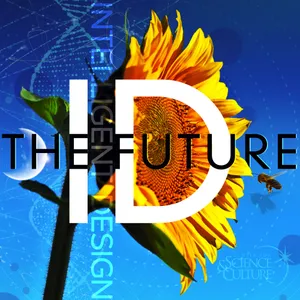
The ID The Future (IDTF) podcast carries on Discovery Institute's mission of exploring the issues central to evolution and intelligent design. IDTF is a short podcast providing the most current news and views on evolution and ID. IDTF delivers brief interviews with key scientists and scholars developing the theory of ID, as well as insightful commentary from Discovery Institute senior fellows and staff on the scientific, educational and legal aspects of the debate.
Latest Episodes
The most recent episodes — sign up to get AI-powered summaries of each one.
- 2 days ago1h 29m
Tech Entrepreneur on People-First AI Innovation in Business
Today’s episode of ID The Future comes from our sister podcast Mind Matters News, a production of Discovery Institute’s Walter Bradley Center for Natural and Artificial Intelligence. Mind Matters regularly explores the nature of intelligence, the origin of information, and the things that make us uniquely human, all concepts that are central to the theory of intelligent design. Enjoy today’s offering of Mind Matters News! How can entrepreneurs incorporate the benefits of AI while maintaining their dedication to serving fellow human beings? On this episode of Mind Matters News, host Robert J. Marks welcomes David Copps, a renowned entrepreneur, technologist, and thought leader with over two decades of experience pioneering advancements in artificial intelligence and other emerging technologies. Source
- 4 days ago54 min
The Missing 20 Years: What Designer Science Left Out
Is the intelligent design movement a short-lived phenomenon that has come and gone? Or is its steady and consistent growth evidence of a flourishing scientific program? On this ID The Future, host Andrew McDiarmid concludes his conversation with Dr. Casey Luskin about his critique of a recent book called Designer Science that portrays the ID movement as a short-lived political, cultural, and religious phenomenon that has produced little new research in the last two decades. In Part 2, Luskin turns to another major problem: Designer Science almost entirely ignores the last twenty years of ID scientific research and novel arguments. As the book gets retracted by the publisher, Luskin corrects the record in this conversation. This is Part 2 of a two-part conversation. Source
- 6 days ago49 min
Fact-Checking Designer Science: Casey Luskin on ID History Errors
Is intelligent design dying out or just warming up? On this ID The Future, host Andrew McDiarmid welcomes Dr. Casey Luskin to a new and improved podcast studio for a sit-down, in-person conversation! Today, Dr. Luskin discusses a recent book called Designer Science that portrays the ID movement as a short-lived political, cultural, and religious phenomenon. Luskin reveals some egregious errors in this purported comprehensive history of ID. First, a made-up quote from Michael Behe used to support one of the book's major premises. Second, some glaring omissions, including a number of scientific breakthroughs and developments from ID scientists in the last two decades. This is Part 1 of a two-part conversation. Look for Part 2 next! Also available in video format on our YouTube channel! Source
- 1 weeks ago32 min
Stephen Meyer & Ben Shapiro Discuss the Origin of Information
On this episode of ID The Future from our archive, we’re bringing you the concluding half of a 2019 interview between Daily Wire host Ben Shapiro and philosopher of science Dr. Stephen C. Meyer. The conversation is now seven years old, so it's a good time to dust it off and share it with those who may have missed it or forgotten about it. Dr. Meyer considers this one of the best interviews he’s done on the subject of his second solo book Darwin’s Doubt. Shapiro was extremely well-prepared and asked great questions, resulting in a thought-provoking and thoroughly engaging hour-long conversation. In the second half, Dr. Meyer and Shapiro discuss the origin of life. Source
- 1 weeks ago31 min
Priors & Proof: Brian Miller Unpacks the Meyer/Halper Debate
Are the Big Bang and the evidence for the fine-tuning of the universe evidence that supports theistic belief or undermines it? On this ID The Future, host Andrew McDiarmid welcomes Dr. Brian Miller to give us a breakdown of a recent debate between philosopher of science Dr. Stephen Meyer and science communicator Phil Halper about the Big Bang, the arguments for fine-tuning, and the compatibility of science and faith in general. Source
- 2 weeks ago30 min
Stephen Meyer and Ben Shapiro Talk Intelligent Design
On this ID The Future selected out of the vault, we bring you the first half of Daily Wire host Ben Shapiro's 2019 interview with philosopher of science Dr. Stephen Meyer on The Ben Shapiro Sunday Special. This exchange happened seven years ago now, and we thought it was a good time to put it out there again for those who may not have heard it or don't remember it. Dr. Meyer considers this one of the best interviews he’s done on the subject of his second solo book Darwin’s Doubt. Shapiro was very well-prepared and asked great questions, resulting in a thought-provoking and thoroughly engaging hour-long conversation. We’ve got the first half of it for you today, followed by the concluding half in a subsequent episode. Source
- 2 weeks ago1h 13m
Angus Menuge: A Defense of the Soul in the Age of AI
Today’s episode of ID The Future comes from our sister podcast Mind Matters News, a production of Discovery Institute’s Walter Bradley Center for Natural and Artificial Intelligence. In this episode of Mind Matters News, hosts Dr. Robert J. Marks and Pat Flynn welcome returning guest Dr. Angus Menuge, professor of philosophy at Concordia University Wisconsin, to discuss his paper “Powers of the Soul Beyond AI.” Dr. Menuge breaks down the philosophical and logical limits of artificial intelligence, targeting the concept of anthropic mechanism to explain why material machines cannot replicate the immaterial aspects of human agency. Through the lens of five distinct powers—including insight, meta-insight, and free will—Menuge explores why large language models and advanced computing systems fall short of genuine understanding and human consciousness. Source
- 2 weeks ago51 min
Physicist Robert Sheldon on Wonder, Discovery, and The Story of Everything
By now, you’ve likely heard of the new documentary film The Story of Everything. It’s a cinematic exploration of the evidence for intelligent design in the cosmos, from the fine-tuning of the universe to the stunning engineering in every living cell. Today on ID The Future, we continue our series of interviews with the scientists and scholars featured in The Story of Everything. Host Andrew McDiarmid welcomes plasma physicist Dr. Robert Sheldon to the podcast to discuss his participation in the movie and talk about his work in physics and cosmology. Source
Get Intelligent Design the Future summaries in your inbox
Free AI-powered daily recaps. Key takeaways, quotes, and mentions — in a 5-minute read.
Get Free Summaries →Free forever for up to 3 podcasts. No credit card required.
You Might Also Like
Listeners also like.
Inquiring Minds
Explores the intersection of science and society through critical thinking and in-depth analysis.

Intelligent Machines (Audio)
Explores the impact of artificial intelligence through conversations with pioneers shaping the future of intelligent technology.

COMPLEXITY
Santa Fe Institute
Technically Speaking: An Intel Podcast
Explores how technological advancements, from computer chips to medical implants, are developed and shaping the future of society.

Design Better
Conversations on design, technology, and creativity with experts to improve your craft and collaboration skills.
The Future Tools Podcast
Explores AI, machine learning, and future tech advancements, simplifying complex topics while covering practical uses, ethics, and history.

Possible
Explores optimistic, realistic futures through in-depth conversations with innovators in AI, science, health, and global affairs.

TED Tech
Experts examine how technology reshapes society, science, design, and business through ethical, cultural, and human lenses.

Intelligence Squared
Live debates and in-depth discussions on pressing global issues featuring leading experts and thinkers.

Expert Intelligence with Paul Estes
Examines how AI and human expertise are reshaping work, freelancing, and workplace dynamics through expert conversations.

The World, the Universe and Us
Explores big scientific questions about life, consciousness, climate, and the cosmos with expert scientists and New Scientist journalists.
Into the Impossible With Brian Keating
Brian Keating explores profound scientific and philosophical questions with leading thinkers in physics, technology, and beyond.
About Intelligent Design the Future
The ID The Future (IDTF) podcast carries on Discovery Institute's mission of exploring the issues central to evolution and intelligent design. IDTF is a short podcast providing the most current news and views on evolution and ID. IDTF delivers brief interviews with key scientists and scholars developing the theory of ID, as well as insightful commentary from Discovery Institute senior fellows and staff on the scientific, educational and legal aspects of the debate.
Customized Recaps
AI-powered recaps with compact key takeaways, quotes, and insights.
Straight to Your Inbox
Get key takeaways from Intelligent Design the Future in a 5-minute read.
Save Hours Every Week
Stay current on your favorite podcasts without falling behind.
Frequently Asked Questions
What is Podzilla's Intelligent Design the Future daily summary?
It's a free AI-powered email that summarizes new episodes of Intelligent Design the Future as soon as they're published. You get the key takeaways, notable quotes, and links & mentions — all in a quick read.
How does the Intelligent Design the Future podcast summary work?
When a new episode drops, our AI transcribes and analyzes it, then generates a personalized summary tailored to your interests and profession. It's delivered to your inbox every morning.
Is this an official Intelligent Design the Future product?
No. Podzilla is an independent service that summarizes publicly available podcast content. We're not affiliated with or endorsed by Discovery Institute.
Can I get summaries of other podcasts too?
Absolutely! The free plan covers up to 3 podcasts. Upgrade to Pro for 15, or Premium for 50. Browse our full catalog at /podcasts.
How often does Intelligent Design the Future release new episodes?
Intelligent Design the Future publishes every few days. Our AI generates a summary within hours of each new episode.
What topics does Intelligent Design the Future cover?
Intelligent Design the Future covers topics including Science, Astronomy, Philosophy, Culture, Society & Culture, Life Sciences. Our AI identifies the specific themes in each episode and highlights what matters most to you.
Start getting Intelligent Design the Future summaries tomorrow morning.
Free forever for up to 3 podcasts. No credit card required.
Free forever for up to 3 podcasts. No credit card required.