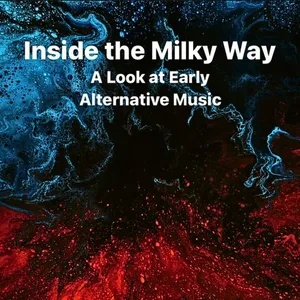
Free Daily Podcast Summary
Inside the Milky Way - A Look at Early Alternative Music: Daily Summaries Delivered
by ITMW Music
A podcast that takes a look at the development of alternative music in the 80's with a focus on post-punk, electronic, dark wave, goth, synth, industrial, and indie genres. The podcast episodes feature stories, background, and discussions of artists, contributors, music, themes, and events of the early alternative era. The title of our podcast is based on the alternative song from 1988 by The Church, "Under the Milky Way".
Latest Episodes
The most recent episodes — sign up to get AI-powered summaries of each one.
- Today32 min
Alphaville - Forever Gold
The German band Alphaville formed in 1982 and built their music and sound around synthesizers, drum machines, and layered electronic keyboards becoming one of the great synth-pop bands from the era.The band was co-founded by vocalist Marian Gold and keyboardists Bernhard Lloyd and Frank Mertens. Led by Marian Gold, the band released their debut album, Forever Young, in 1984 which included two classic hits, the title track “Forever Young” and their first single released, the number 1 hit, "Big in Japan". Using catchy and lush electronic hooks, moody and cinematic atmospheres, and Gold's dramatic soaring vocals, Alphaville's music often explored bittersweet nostalgia, romanticism, and dystopian futures while influencing subsequent generations of synth-pop and new wave artists.The band performs today led by Marian Gold, the only original member with the band and who has been a continuous member of the group since their inception.This episode tells the story of Alphaville and their early days, the classic debut album, the following albums from the band into the 90's, and Marian Gold who has forever imprinted himself in the world of music with "Forever Young".
- 1 weeks ago37 min
Cocteau Twins II - The Road to Heaven or Las Vegas
In the time after their 1984 album Treasure, Cocteau twins continued to evolve from their early atmospheric and dark post-punk music to pioneer ethereal wave and dream pop. This culminated with the masterpiece 1990 album, Heaven or Las Vegas.Cocteau Twins would release a number of EP's in 1985 building off of the style created on Treasure. The road would continue with 1986’s Victorialand, an album with a more acoustic and ambient feel. Beyond a collaboration with composer Harold Budd that further expanded their sound, the band created a refined and lush, multi-layered guitar and vocal style album with 1988's Blue Bell Knoll. Then, Heaven or Las Vegas of September 1990 would be the landmark dream pop album as Cocteau Twins blended shimmering guitar textures and lush soundscapes with Elizabeth Fraser’s emotive, ethereal vocal delivery.This episode tells the story of the Scottish band Cocteau Twins’ growth as one of the most influential bands going beyond their early years and on the road to Heaven or Las Vegas of 1990. The episode will also discuss the albums in the 90’s that followed before the group disbanded in 1997, in part from the disintegration of the romantic relationship between members Robin Guthrie and Elizabeth Fraser. This episode continues the story of our earlier first Cocteau Twins podcast from 2025 for the band's early years through their first three albums.
- 2 weeks ago34 min
The Mekons - Post-Punk Country
The Mekons arrived during the late 70's UK post-punk scene and still perform today as one of the longest running artists from this era. The band never achieved mainstream commercial success, but has consistently received critical acclaim throughout their career especially in the mid-1980's while blending punk rock with traditional folk and country music to pioneer the alternative-country genre.The Mekons, or just Mekons, formed in Leeds in 1976 as an art collective with many musicians contributing over the years as they operated on principles that everything is created by the band and not individuals. This uncompromising band has always maintained their political edge with their lyrics and their style has constantly evolved over time to incorporate aspects many genres including country music, folk music, and alternative rock, among others. Although The Mekons' lineup has changed from time to time over the years, the core line-up gathered in the mid-80s and is still together today. This includes Sally Timms on vocals and Susie Honeyman on violin, along with founders Jon Langford on vocals and guitar, and Tom Greenhalgh on vocals and guitars.The Mekons, well known for their exuberant live performances, have released a total of 16 studio albums, starting with the 1979 debut and the most recent in 2025. This episode tells the story of the band from formation through the creative work of their albums of the 80’s and into the early 90’s.
- 3 weeks ago33 min
The Cult - Origins
The Cult formed in 1983, behind vocalist Ian Astbury and guitarist Billy Duffy. Initially known as Death Cult before changing their name in early 1984, this English band would establish a following with their post-punk and gothic rock sound before changing to a more hard rock sound in the later 80’s.The Cult's debut studio album, Dreamtime, was released in 1984 and their second studio album, Love, followed in 1985. Love was the band's breakthrough success and included the classic singles, "She Sells Sanctuary" and "Rain".The Cult’s early work mixed dark, atmospheric sounds with heavy guitar riffs while adding spiritual themes and Native American imagery. The band would be influential for bridging the gap between gothic rock/post-punk with later 80’s hard rock as they changed their musical direction working with producer Rick Rubin for the album Electric in 1987. The Cult would finish out the 80’s with the fourth studio album, Sonic Temple, which included the song “Fire Woman”. This podcast episode will explore the origins of The Cult from before the Death Cult days and through the first four albums as The Cult, all before the end of the 80’s.
- 4 weeks ago35 min
The Stranglers - The Men in Black
After starting on the pub rock scene in England, the core line-up of The Stranglers would form in 1975, and they would release their debut album in 1977 during the British punk explosion. During the band's early years, the aggressive and uncompromising approach of The Stranglers would result in the press and critics grouping them with the emerging UK punk rock scene. However The Stranglers, beyond dressing in all black outfits, were different. After the first two albums and over the following years the sound of the band would gradually shift through various genres and styles as the music matured and became more refined. Throughout the band’s history, The Stranglers have had multiple hit singles while releasing 18 studio albums, of which the first ten albums hit top 20 on the UK top album charts. The Stranglers are amongst the longest-surviving bands to have originated in the British punk scene, and one of the most commercially successful band from the UK punk era. This episode tells the story of the band through the first six albums, all by 1981 over a 4 and a half year span, including The Raven, Black and White, and The Gospel According to Meninblack.
- Aug 16, 202633 min
The Motels - Out of Los Angeles
Originally from Berkeley, California as the Warfield Foxes, this band relocated to Los Angeles in the mid-70’s and became The Motels. During the late 70's in L.A., The Motels became a vital part of the club circuit that helped launch the local punk and new wave scenes. The band’s early tracks were along punk rock lines, but by the early 80’s The Motels were more new wave and alternative rock behind atmospheric sound, theatrical style, and the sultry vocals of lead singer Martha Davis.Following their third studio album, The Motels became a fixture of the early 1980s MTV. Their music blended moody, melancholic lyrics with catchy, melodic pop-rock and synth-driven arrangements as they achieved commercial success with hit singles, "Only the Lonely" and "Suddenly Last Summer".Led by the charismatic Martha Davis, The Motels were one of the most successful and acclaimed bands to emerge from the Los Angeles new wave scene. The initial run of the band would end in 1987, but Martha Davis later revived the band that is currently known as "The Motels featuring Martha Davis." This episode will tell the story of the band from their early years through the 1980’s.
- Aug 9, 202631 min
The Feelies - Crazy Indie Rhythms
Originating from Haledon, New Jersey in 1976, The Feelies would play a post-punk, indie rock, jangle pop style of music. By 1980, The Feelies had become one of the more unique bands from the New York City underground music scene.Arriving during the early post-punk era, the band’s debut album was 1980’s Crazy Rhythms. This trend setting and influential album combined jangly guitars with chiming and droning guitar patterns, along with fast and sharp percussive beats setting the rhythm. The band was not commercially successful, but The Feelies would help shape the sound of American alternative and indie rock music in the 80’s and 90’s, influencing many artists. It would not be until six years after the debut when album number two would be released. That second album, The Good Earth, was co-produced with Peter Buck of R.E.M. By 1992, The Feelies would create two more studio albums before the end of their first run as a band. The band reunited in 2008, and released new studio albums in 2011 and 2017.This episode tells the story of the band from formation and early years through today.
- Aug 2, 202633 min
Siouxsie and the Banshees II - The John McGeoch Years
In late 1979 following their second album, two members of Siouxsie and the Banshees departed the band leaving them without a drummer and guitarist. By early 1980, the band had added drummer Budgie and guitarist John McGeoch, which accompanied a change in musical direction for the group.The shift began with the addition of synthesizers and drum machines on the 1980 album, Kaleidoscope. Changes continued with the fourth studio album, the seminal JuJu which featured innovative and unconventional guitar work from McGeoch. On their fifth studio album, A Kiss in the Dreamhouse, Siouxsie and the Banshees shifted toward a more sensual and psychedelia style while incorporating string arrangements.After the third album with McGeoch, they would part ways but not before McGeoch's work with the Banshees would influence many future alternative music guitarists.This episode tells the story of Siouxsie and the Banshees through the three albums with the legendary John McGeoch, and continues the story of our earlier podcast for the band's early years through their first two albums.
Get Inside the Milky Way - A Look at Early Alternative Music summaries in your inbox
Free AI-powered daily recaps. Key takeaways, quotes, and mentions — in a 5-minute read.
Get Free Summaries →Free forever for up to 3 podcasts. No credit card required.
You Might Also Like
Listeners also like.
Ongoing History of New Music
Explores the evolution of alternative rock, hip hop, and other modern music genres through artist profiles and thematic stories.

The Indie Sound with Jimmy Star
A fast-paced music podcast spotlighting independent artists across genres with candid interviews and new release highlights.
Stuff To Blow Your Mind
Explores the strange edges of science, consciousness, and reality through neuroscience, cosmology, evolution, and emerging technology.
Wild Thing
A narrative podcast exploring how humanity's quest to uncover scientific mysteries reveals deeper truths about ourselves.
Beyond the Dark
Immersive sci-fi tales set in cyberpunk cities, wastelands, and alien planets, each with original music.
Bedtime Astronomy
A calming exploration of cosmic wonders, sharing stories about stars, planets, and celestial phenomena to inspire curiosity before sleep.

Professor of Rock
Music historian Adam Reader examines the origins and stories of classic rock songs through interviews and detailed episode explorations.
Twenty Thousand Hertz
Explores the hidden stories and science behind iconic sounds, from movie effects to jingles and animal communication.
Wilco the Podcast
Two hosts explore Wilco’s music through thematic deep dives, discussing song meanings, personal reactions, and behind-the-scenes stories.
The Cobain 50
Explores Kurt Cobain’s musical influences by examining albums from his personal top 50 list.
Mysterious Universe
Explores fringe science, UFOs, cryptozoology, and alternative history with a mix of curiosity and humor.
The Rise and Fall of ...
Explores the dramatic rise and fall of major music industry stories.
About Inside the Milky Way - A Look at Early Alternative Music
A podcast that takes a look at the development of alternative music in the 80's with a focus on post-punk, electronic, dark wave, goth, synth, industrial, and indie genres. The podcast episodes feature stories, background, and discussions of artists, contributors, music, themes, and events of the early alternative era. The title of our podcast is based on the alternative song from 1988 by The Church, "Under the Milky Way".
Customized Recaps
AI-powered recaps with compact key takeaways, quotes, and insights.
Straight to Your Inbox
Get key takeaways from Inside the Milky Way - A Look at Early Alternative Music in a 5-minute read.
Save Hours Every Week
Stay current on your favorite podcasts without falling behind.
Frequently Asked Questions
What is Podzilla's Inside the Milky Way - A Look at Early Alternative Music daily summary?
It's a free AI-powered email that summarizes new episodes of Inside the Milky Way - A Look at Early Alternative Music as soon as they're published. You get the key takeaways, notable quotes, and links & mentions — all in a quick read.
How does the Inside the Milky Way - A Look at Early Alternative Music podcast summary work?
When a new episode drops, our AI transcribes and analyzes it, then generates a personalized summary tailored to your interests and profession. It's delivered to your inbox every morning.
Is this an official Inside the Milky Way - A Look at Early Alternative Music product?
No. Podzilla is an independent service that summarizes publicly available podcast content. We're not affiliated with or endorsed by ITMW Music.
Can I get summaries of other podcasts too?
Absolutely! The free plan covers up to 3 podcasts. Upgrade to Pro for 15, or Premium for 50. Browse our full catalog at /podcasts.
How often does Inside the Milky Way - A Look at Early Alternative Music release new episodes?
Inside the Milky Way - A Look at Early Alternative Music publishes weekly. Our AI generates a summary within hours of each new episode.
What topics does Inside the Milky Way - A Look at Early Alternative Music cover?
Inside the Milky Way - A Look at Early Alternative Music covers topics including History, Music. Our AI identifies the specific themes in each episode and highlights what matters most to you.
Start getting Inside the Milky Way - A Look at Early Alternative Music summaries tomorrow morning.
Free forever for up to 3 podcasts. No credit card required.
Free forever for up to 3 podcasts. No credit card required.