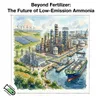
In this episode of Innovate and React, I met with Kevin Rouwenhorst, the technology manager at the Ammonia Energy Association, to discuss the future of sustainable ammonia synthesis. We explore his journey into the clean molecule space, which ultimately led him to write a comprehensive book on low-emission ammonia technologies. Kevin clarifies a common misconception about the traditional Haber-Bosch process, explaining that over 90% of its CO2 emissions actually stem from hydrogen production, such as steam methane reforming or coal gasification, rather than the ammonia synthesis loop itself. The conversation dives deep into the challenges of decarbonizing this massive industry, focusing on the high costs of scaling green electrolytic hydrogen and the complexities of retrofitting existing plants for carbon capture. We discuss the engineering hurdles of designing flexible ammonia plants that can adapt to the variable loads of renewable energy sources. Beyond its traditional use in fertilizers, we explore exciting emerging use cases for low-emission ammonia, including its adoption as a zero-carbon maritime fuel, and its potential for power generation, such as co-firing in thermal plants and fueling combined cycle gas turbines. The episode concludes with a look at safety standards, the geopolitical implications of localizing energy production, and the fascinating history behind the Haber-Bosch process and Alwin Mittasch's catalyst discovery.
Podzilla Summary coming soon
Sign up to get notified when the full AI-powered summary is ready.
Free forever for up to 3 podcasts. No credit card required.
Listen to This Episode
More from Innovate and React
Replacing crude oil with local plants to make chemicals

Replacing chemical plants with methanol-eating bacteria

Defying Markovnikov: A New Spin on the Wacker Oxidation
The Perfect Compromise: Unlocking the Future of Green Hydrogen with AEM
Get summaries like this every morning.
Free AI-powered recaps of Innovate and React and your other favorite podcasts, delivered to your inbox.
Free forever for up to 3 podcasts. No credit card required.