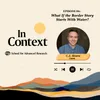
What If the Border Story Starts With Water?
What if the real story of the border isn’t about walls at all? In this episode, we explore how rivers, irrigation projects, and trade routes have bound together and divided the U.S., Mexico, and Canada over nearly two centuries.In this episode, Paul and C. J. discuss: Personal roots in the U.S.–Mexico borderlands and origins of the projectTransformation of the border through massive construction and engineeringParadox of closed-border policing vs. open-border trade and transportationWater infrastructure, irrigation, and the creation of migrant labor demandSystemic flaws, compensatory infrastructure, and the disfiguring of the Rio GrandeKey Takeaways: The U.S.–Mexico border is not a single, uniform place but a 2,000-mile span of diverse ecosystems, cultures, and landscapes that defies simple political narratives.Over the last 175+ years, the border has been physically made visible and “legible” through mega-projects, dams, canals, roads, and fences, layered one atop another.Water engineering and irrigation projects have not only transformed rivers but also generated powerful economic magnets for migrant labor, tightly linking hydrology to human movement.Many contemporary crises at the border stem from earlier grand projects and policies; new “solutions” often serve as compensatory layers that attempt to fix problems those very systems created.The most profound environmental damage along the border has been done to the river itself, especially the Rio Grande, whose flow, shape, and ecology have been radically altered, challenging us to rethink our relationship with the more-than-human world.“The border has always been open, and the border has always been closed. The only question is, to whom and to what and when?” - C. J. AlvarezEpisode Resources:Book: <em style="background-color: transparent; color: rgb(34, 36, 47); --darkreader-inline-bgcolor: transparent; --darkreader-inline-color: var(--darkreader-text-22242f, #cecac4);" data-darkreader-inline-bgcolor="" da
Podzilla Summary coming soon
Sign up to get notified when the full AI-powered summary is ready.
Free forever for up to 3 podcasts. No credit card required.
Listen to This Episode
More from In Context with School for Advanced Research
Who Do You Trust With Your Water?
The Grid: The Invisible System Running Your Life. You never think about it—until it fails
Believing In Bits
Social Movements and Ethics in Philosophy
Get summaries like this every morning.
Free AI-powered recaps of In Context with School for Advanced Research and your other favorite podcasts, delivered to your inbox.
Free forever for up to 3 podcasts. No credit card required.