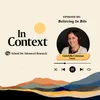
In this episode, Paul and Gabriella discuss: What Gabriella Coleman means by “sturdy knowledge” and why the concept matters in today’s epistemic crisisHow misinformation debates often rely on a “naive liberal epistemology” that oversimplifies how knowledge is producedWhy is scientific consensus difficult to achieve, even without political polarizationWhy AI boosterism reflects the same epistemic blind spots as science absolutismKey Takeaways: Establishing reliable knowledge is never simple or automatic, even in the absence of political polarization. Scientific facts emerge through contested processes shaped by uncertainty, debate, and institutional structures.Treating facts as obvious or self-evident often deepens mistrust rather than resolving disagreement. Absolutist claims leave little room for nuance, making public corrections feel like evidence of deception instead of scientific evolution.Knowledge is always produced within social and political contexts, and pretending otherwise undermines credibility. Transparency about positionality and process strengthens trust more than claims of pure neutrality.AI boosterism repeats the same epistemic mistakes as science absolutism by framing technology as a neutral source of truth. Without humility and accountability, AI risks amplifying, not solving, the current epistemic crisis.“And you know this notion of sturdy knowledge, as we've explored. And you put so well, is anti-arrogance, it's like pro-humility.” - Gabriella ColemanEpisode Resources:Donna Haraway, “Situated Knowledges: The Science Question in Feminism and the Privilege of Partial Perspective”Bruno Latour, Reassembling the SocialBruno Latour, The Pasteurization of FranceSusan Sontag, Illness as MetaphorNaomi Klein, DoppelgängerAbout Gabriella Coleman: Gabriella (Biella) Coleman is a full professor of Anthropology at Harvard University and a faculty associate at the Berkman Klein Center for Internet & Society. Her work focuses on the politics, cultures, and ethics of hacking, and she is widely regarded as one of the leading scholars examining hacker communities and digital power. She is the author of Coding Freedom: The Ethics and Aesthetics of Hacking and Hacker, Hoaxer, Whistleblower, Spy: The Many Faces of Anonymous, the latter named a Kirkus Reviews Best Book of 2014 and recipient of the 2015 Diana Forsythe Prize from the American Anthropological Association.Coleman’s current research examines the relationship between hackers and the state, including a Ford Foundation–, NSF-, SSHRC-, and FRQ-funded project on the professionalization of hacking from
Podzilla Summary coming soon
Sign up to get notified when the full AI-powered summary is ready.
Free forever for up to 3 podcasts. No credit card required.
Listen to This Episode
More from In Context with School for Advanced Research
Who Do You Trust With Your Water?
The Grid: The Invisible System Running Your Life. You never think about it—until it fails
What If the Border Story Starts With Water?
Social Movements and Ethics in Philosophy
Get summaries like this every morning.
Free AI-powered recaps of In Context with School for Advanced Research and your other favorite podcasts, delivered to your inbox.
Free forever for up to 3 podcasts. No credit card required.