Free Daily Podcast Summary
Humans in Public Health: Daily Summaries Delivered
by Brown University School of Public Health
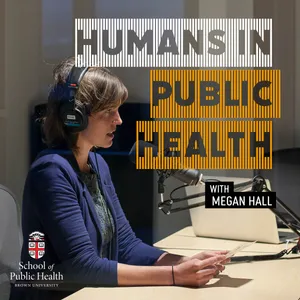
How should we prepare for the next pandemic? How is noise pollution affecting my neighborhood? And how can we prevent opioid overdose from a public parking lot? From epidemiology to behavioral science, Megan Hall covers it all as she interviews public health researchers about their work and what brought them to the field of public health.
Latest Episodes
The most recent episodes — sign up to get AI-powered summaries of each one.
- 6 days ago17 min
A New England Family Affair
In 1960, a pregnant mother walked into Providence Lying-In Hospital for a routine checkup and sat down in a marked chair. That simple act enrolled her — and her child — in a groundbreaking research project known as the New England Family Study.Decades later, the data collected from those marked chairs continues to transform how we understand brain development, spinal cord health,and human lifespan. In this episode, host Megan Hall speaks with principal investigator Dr. Steve Buka, Professor of Epidemiology at the Brown University School of Public Health. Together, they trace the origins of this ambitious study, explore its modern-day impact and examine how public health research subtly shapes our everyday lives.Show Notes & Credits:Learn More: Visit nefsstudy.com to explore the New England Family Study.Production: Produced by Nat Hardy and recorded at the Upward and Onward studio at CIC Providence.Music & Audio: Sound effects recorded by Andrzej Maciejewski (CC-BY-NC); music recorded at the Jazz Club de Dunkerque by Jean-François Carvo.
- 3 weeks ago12 min
Cultivating Mental Health Among Ukrainian Youth
From air raid alarms to high school crushes, Ukrainian adolescents are balancing everyday adolescence with the trauma of war. Professor Shufang Sun is working to address their vast unmet psychological needs with a tech-based approach that delivers crucial support to teenagers navigating life amid conflict.
- Sep 8, 202613 min
Rethinking Drinking
New research shows that no level of alcohol consumption is risk-free, with mortality risks jumping sharply after just seven drinks per week. Professor Christopher Kahler breaks down the health hazards of moderate drinking and shares realistic strategies for reducing risk.
- Aug 18, 202618 min
RERUN: Measles: The Return of a Preventable Disease
With the U.S. experiencing its worst measles outbreak in 25 years, the threat of preventable infectious disease is back at our doorstep. In this rerun episode of Humans in Public Health, host Megan Hall speaks with Jennifer Nuzzo, director of the Pandemic Center at Brown University. Nuzzo dives into the factors driving the resurgence of measles, the dangerous spread of health misinformation and why simply "repackaging facts" isn't enough to rebuild public trust. Tune in to explore how we must rethink public health communication, biosecurity and community protection in an age of rising outbreaks
- Jul 14, 202617 min
Growing a Healthier Climate
In this episode, we sit down with Professor Meredith Niles to explore how climate-friendly agriculture—from methane-reducing rice irrigation to no-till farming—is actually a quiet powerhouse for public health. While traditional environmental messaging has hit a wall, shifting the narrative to human health benefits (like keeping heavy metals out of baby food and clearing our air) might be the key to finally getting farmers, consumers and policymakers on board. It’s time to take off the carbon goggles and look at the health potential of sustainable farming.
- Jun 9, 202612 min
Mapping the World Cup
More than 6.5 million people are expected to attend the World Cup this summer at stadiums across Canada, the U.S. and Mexico. One of the largest sporting events in world history, the tournament is presenting unique infectious disease challenges for public health officials. To help, spatial epidemiologist Professor Will Goedel has developed an interactive map to track the movements of World Cup teams and their fans. He explains how his live-updated tracking map is helping health departments, and how it might be able to prevent a disease outbreak before one starts.
- May 12, 202614 min
The 2026 Cohort: Two MPH Students on What’s Next
In this special commencement-season episode of Humans in Public Health, host Megan Hall welcomes Campbell Loi and Graham Huntington, two freshly minted graduates of Brown University’s intensive 5-year combined undergraduate/MPH program.As they transition from the classroom to professional practice in 2026, they reflect on the academic experiences and practical training that have shaped their careers — including Graham's background as an EMT— and that have shaped their commitment to global health.
- Apr 14, 202616 min
The Great Upside-Down Food Pyramid
Meat is on the top, grains are at the bottom, scientists are concerned. Nutrition expert Jennifer Sacheck deconstructs the controversial new food pyramid, what it means for your health—and your wallet. She breaks down the new dietary guidelines, how much protein Americans actually need and how the beef lobby may be reshaping everything from SNAP benefits to cafeteria trays.
Get Humans in Public Health summaries in your inbox
Free AI-powered daily recaps. Key takeaways, quotes, and mentions — in a 5-minute read.
Get Free Summaries →Free forever for up to 3 podcasts. No credit card required.
You Might Also Like
Listeners also like.
Who the Health Cares? with Prof Michael Sparer
A public health expert explores the history, challenges, and importance of America’s local health departments.
Pathogen Perspectives
pathogenperspectives
Health Matters
NewYork-Presbyterian

Health Discovered
Doctors explore surprising stories to uncover insights about health and well-being.
Freakonomics, M.D.
A physician-economist explores surprising studies where healthcare and economics intersect, uncovering hidden patterns in medical data.

Speaking of Psychology
Explores recent psychological research and its applications to daily life.

Unbiased Science
Dr. Jess Steier and guests analyze viral health claims using scientific evidence and explain key findings for everyday conversations.

The Pulse
Explores surprising stories in health and science, from operating rooms and labs to breakthrough innovations.

Paul Saladino MD podcast
A physician explores the root causes of chronic disease and optimal health through science and personal experimentation.

Red Pill Your Healthcast
Two healthcare providers discuss overlooked health issues and empower listeners to make informed decisions for their families.

A Shot in the Arm Podcast
Ben Plumley

Huberman Lab
Explores neuroscience and science-based tools for understanding and improving brain function, behavior, and health.
About Humans in Public Health
How should we prepare for the next pandemic? How is noise pollution affecting my neighborhood? And how can we prevent opioid overdose from a public parking lot? From epidemiology to behavioral science, Megan Hall covers it all as she interviews public health researchers about their work and what brought them to the field of public health.
Customized Recaps
AI-powered recaps with compact key takeaways, quotes, and insights.
Straight to Your Inbox
Get key takeaways from Humans in Public Health in a 5-minute read.
Save Hours Every Week
Stay current on your favorite podcasts without falling behind.
Frequently Asked Questions
What is Podzilla's Humans in Public Health daily summary?
It's a free AI-powered email that summarizes new episodes of Humans in Public Health as soon as they're published. You get the key takeaways, notable quotes, and links & mentions — all in a quick read.
How does the Humans in Public Health podcast summary work?
When a new episode drops, our AI transcribes and analyzes it, then generates a personalized summary tailored to your interests and profession. It's delivered to your inbox every morning.
Is this an official Humans in Public Health product?
No. Podzilla is an independent service that summarizes publicly available podcast content. We're not affiliated with or endorsed by Brown University School of Public Health.
Can I get summaries of other podcasts too?
Absolutely! The free plan covers up to 3 podcasts, any in the catalog. Basic raises that to 15, Pro to 40 and Max to 100. Browse our full catalog at /podcasts.
How often does Humans in Public Health release new episodes?
Humans in Public Health publishes monthly. Our AI generates a summary within hours of each new episode.
What topics does Humans in Public Health cover?
Humans in Public Health covers topics including Science, Medicine, Fitness, Health & Fitness, Social Sciences, Life Sciences. Our AI identifies the specific themes in each episode and highlights what matters most to you.
Start getting Humans in Public Health summaries tomorrow morning.
Free forever for up to 3 podcasts. No credit card required.
Free forever for up to 3 podcasts. No credit card required.