Free Daily Podcast Summary
Honestly with Bari Weiss: Daily Summaries Delivered
by The Free Press
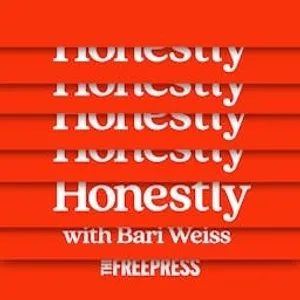
The most interesting conversations in American life happen in private. This show brings them out of the closet. Stories no one else is telling and conversations with the most fascinating people in the country, every week, hosted by former New York Times and Wall Street Journal journalist Bari Weiss.
Latest Episodes
The most recent episodes — sign up to get AI-powered summaries of each one.
- 2 days ago2 min
Tickets Now Live: Bari Weiss and Simon Sebag Montefiore in NYC
For the first time in almost a year, Bari is thrilled to host a live Free Press event, on October 1 in New York City. We’d love for you to join us. Many of you will know the name Dr. Simon Sebag Montefiore. He’s a close friend of The Free Press, a renowned historian, and the author of multiple worldwide bestsellers, including Jerusalem: The Biography, The Romanovs, Stalin: The Court of the Red Tsar, and, to be published this month, The Cauldron: The Making of the Modern Middle East. That last book will be the subject of our urgent conversation. For two decades, the region it covers has shaped U.S. foreign policy and dominated American politics. If we listed all the conflicts, we’d be here all day. Of course, right now we have the ongoing war in Iran, with no end in sight. Through it all, Simon argues, one truth endures: America’s quagmires in the Middle East stem from a deep misunderstanding of the region—on both the left and the right. This is the subject of his brilliant new book, and you won’t want to miss us discussing it live. I hope you’ll join us. Tickets are available at TheFP.com/Events. Get them today before they sell out. Learn more about your ad choices. Visit megaphone.fm/adchoices
- Apr 17, 20261h 21m
We’re All Living in Casey Neistat’s World
Today, on our inaugural episode of Second Thought, Suzy Weiss sits down with one of the most influential people in YouTube’s history: Casey Neistat. Casey has millions of followers and billions of views to his name—and he saw early on that YouTube would change everything. It certainly changed his own life. In this conversation, Casey talks about riding the wave of the YouTube tsunami, his love of old technology, and how his career illustrates Andy Warhol’s infamous prediction that “In the future, everyone will be world-famous for 15 minutes.” Plus: the creative power of brothers, Lena Dunham, and who inherited the mantle of Jackass. He also answers some harder questions: Has the rise of the creator economy and the parasocial relationships that came with it been a net positive? Is it possible to win the algorithm without exploiting your audience? Can artistic expression survive the onslaught of artificial intelligence? On all fronts, the man who saw around the corner of our last media revolution isn’t so sure. Subscribe to Second Thought for new episodes every week. Follow Suzy Weiss: Twitter: https://x.com/SnoozyWeiss Instagram: https://www.instagram.com/suzyisonline/ Subscribe to The Free Press: https://www.thefp.com/subscribe Learn more about your ad choices. Visit megaphone.fm/adchoices
- Jan 22, 20265 min
A Note from Bari on Honestly
Honestly is taking a pause. We’ll be back soon. Learn more about your ad choices. Visit megaphone.fm/adchoices
- Dec 31, 20252h 29m
What to Expect in 2026 with Niall Ferguson, John McWhorter, Dr. Mark Hyman, Leandra Medine Cohen, Suzy Weiss, and Sarah Isgur
This past year wasn’t easy—but it was certainly eventful. Donald Trump returned to the White House, issued a record number of executive orders, deployed the National Guard to American cities—like LA and D.C.—imposed sweeping tariffs on all our trading partners, gutted the government with the Department of Government Efficiency (DOGE), and unleashed a massive crackdown on immigration. But that was only the beginning. The administration also reached a ceasefire between Israel and Hamas—and all the living hostages came home from Gaza. Israel and the United States struck Iran’s nuclear sites. We got the first American pope. And we haven’t even started listing the pop-culture moments, like the Sydney Sweeney jeans ad, the Travis Kelce–Taylor Swift engagement, or when Lauren Sánchez Bezos and Katy Perry went to space. There was truly so much, and if we kept going we’d be here all day. But this, after all, is a prediction episode. So what will 2026 bring? Bari and Free Press deputy editor Olly Wiseman called up some friends of the pod—and experts in their fields—to get a better sense of what’s in store for the year ahead. They spoke to political analyst and legal expert Sarah Isgur, who told them what to expect in Trump’s second year; to Suzy Weiss on the cultural calendar ahead; to linguist John McWhorter on how new words and language will evolve; to Dr. Mark Hyman on how to get healthier in 2026; to writer and fashionista Leandra Medine Cohen on fashion trends to watch for; and to historian Niall Ferguson on whether or not we’re right to have nightmares about World War III. Learn more about your ad choices. Visit megaphone.fm/adchoices
- Dec 24, 20251h 10m
The Birth of Christianity
It's Christmas Eve. A holiday celebrated by 2.4 billion people around the world, which centers on a 2,000-year-old story about a Jewish man born in Bethlehem who became a rabbi, who the Romans would later execute in Jerusalem. But what most people don’t know is that the first people who believed in Jesus did not think they were starting a new religion. They were a small group of Jews who thought of themselves as history's last generation, with Jesus as their Messiah. Of course, as we all know now, they were not history’s last generation. Instead, they became history's first Christians. How did that happen? When did Christ's followers begin to see themselves as distinct and separate from Judaism? Why did some Jews refuse to accept Christ as the Messiah? And how was that refusal, and the anti-Judaism of the early Christians, directly connected to the antisemitism burning across the globe today? These first few centuries are essential for understanding not just Christianity and Judaism, but the way ideas spread, and why many of the ideas of this period—good ones, and also some very bad ones—still persist in our world today. My guest today, Paula Fredriksen, has spent her career studying this period of history. She is one of the world’s leading scholars of early Christianity and the author of many books including: When Christians Were Jews: The First Generation, Paul: The Pagans’ Apostle, and Ancient Christianities: The First Five Hundred Years. Paula was born in Rhode Island and now lives in Jerusalem, just 20 minutes from Golgotha, where Jesus was crucified. This conversation is a Christmas special you won’t want to miss. The Free Press earns a commission from any purchases made through all book links in this article. Learn more about your ad choices. Visit megaphone.fm/adchoices
- Dec 14, 202553 min
CBS News Presents: A Town Hall with Erika Kirk
Last week, Bari sat down with Erika Kirk for an hour-long town hall in front of a live audience on CBS. It was an extremely powerful conversation. Erika and Bari spoke about a lot—rising political violence in this very divided country; the way some people justified or excused Charlie’s murder; what Erika thinks about some of the controversial things Charlie said in his lifetime; her response to Candace Owens and the conspiracy theories Owens and others are peddling; the growing antisemitism on the right; and her decision to forgive Charlie’s killer. They also talked about the posthumous release of Charlie’s last book, Stop, in the Name of God: Why Honoring the Sabbath Will Transform Your Life. This town hall was the first of many conversations and debates Bari will be bringing to CBS News about the things that matter most. Which, of course, are often the hardest to talk about. We really hope you will tune in. In case you missed this first one with Erika Kirk, we’re thrilled to share the conversation here on Honestly. And we can’t wait for you to catch the next one on CBS News. The Free Press earns a commission from any purchases made through all book links in this article. Learn more about your ad choices. Visit megaphone.fm/adchoices
- Dec 9, 20251h 32m
Should We Legalize Assisted Suicide?
One of the most complex medical, ethical, moral, and religious questions of our era is that of physician-assisted suicide—also known as Medical Aid in Dying, or MAID. Eleven U.S. states and Washington, D.C. have legalized some form of MAID for terminally ill patients. And New York might join them. Over the summer, a Medical Aid in Dying Act passed New York’s state legislature. It is now sitting on Governor Kathy Hochul’s desk as she decides whether to sign it into law. Under the proposed New York bill, terminally ill adults with a prognosis of six months or less to live would be able to access a prescribed, self-administered life-ending medication. Supporters argue that this is a compassionate option—one that can relieve people of immense pain and suffering, allowing patients to choose when and where they die, and to do so surrounded by loved ones. Opponents see this as a violation of physicians’ fundamental oath to do no harm. They also worry that while access may begin narrowly, it could expand over time to include people seeking death for reasons other than terminal illness—such as mental suffering or simply a desire to stop living. Cases like this have already occurred in Belgium, the Netherlands, Canada, and Switzerland. Rafaela Siewert sat down with two experts who see this topic very differently for a heated debate. David Hoffman is a healthcare attorney, clinical ethicist, and professor of bioethics at Columbia University. He argues that hypothetical future abuses of MAID shouldn’t outweigh the needs of terminal patients who need this option now. Dr. Lydia Dugdale is a physician, medical ethicist, and professor of medicine at Columbia University. In her view, legalizing this practice of physician-assisted suicide risks undermining the responsibilities of governments, medical systems, and families to care for the mentally ill, the poor, and the physically disabled. And she fears that the potential for excessively expanded access over time is too great. We are among the many Americans who do not know what the right answer is. We see both sides—which is why grappling with the nuances of this subject is so important. This is a debate you won’t want to miss. Learn more about your ad choices. Visit megaphone.fm/adchoices
- Dec 2, 20251h 24m
Is Designing Babies Unethical—or a Moral Imperative?
All parents know what goes into raising children: the time spent changing diapers in inopportune places; the hours of worrying—about what to feed them, how to educate them, how to protect them and keep them healthy; the countless hours devoted to dance classes, summer camps, pediatricians, and piano lessons—all investments meant to give them the best chance in life. Most of us would do anything to help our kids become the most successful and happiest versions of themselves. But what if we could start earlier? At the molecular level. What if we could ensure our babies were healthier, smarter, and stronger, before they even took their first breath? To make tweaks to our own embryos in order to “optimize” them. This isn’t something out of Aldous Huxley’s Brave New World. It’s the very real, and near, future. And it raises profound and critical questions. So we hosted a debate: Is it ethical to design our unborn children? And are we morally obligated to do so when the risks of abstaining include serious diseases? Or does designing babies cross a line? Is it wrong to play God and manipulate humanity’s genetic heritage? The Free Press is honored to have partnered with the Foundation for Individual Rights and Expression to present this debate. Head to TheFire.org to learn more about this indispensable organization Learn more about your ad choices. Visit megaphone.fm/adchoices
Get Honestly with Bari Weiss summaries in your inbox
Free AI-powered daily recaps. Key takeaways, quotes, and mentions — in a 5-minute read.
Get Free Summaries →Free forever for up to 3 podcasts. No credit card required.
You Might Also Like
Listeners also like.
The Interview
In-depth interviews with influential figures across culture, politics, business, and sports exploring their motivations and impact.
On with Kara Swisher
Kara Swisher conducts candid, in-depth interviews with influential figures in tech, business, media, and politics.
The Rubin Report
Political talk show with interviews focused on free speech and current events.

Mo News
Daily news coverage with analysis, interviews, and listener Q&A on global headlines from Mosheh Oinounou and Jill Wagner.

The Brian Lehrer Show
Discussions on current issues in local and national politics, community matters, and personal life.
Pivot
Sharp, unfiltered analysis of tech, business, and politics with bold predictions and lively debate.

The Press Box
A roundtable discussion of major media stories with a focus on sports, politics, and cultural news.

The New Yorker Radio Hour
Profiles, storytelling, and insightful conversations are explored in episodes hosted by David Remnick.
Impolitic with John Heilemann
Candid interviews with figures in politics, media, tech, and culture exploring power, influence, and societal change.

Breaking History
Historians and reporters analyze current events through the lens of past political and social upheavals.
Conversations with Coleman
Explores complex topics like politics, philosophy, and culture through candid, in-depth conversations with intellectuals and thinkers.
Outloud with Gianno Caldwell
A conservative political commentator explores news and culture by challenging prevailing orthodoxies and advocating for free expression.
About Honestly with Bari Weiss
The most interesting conversations in American life happen in private. This show brings them out of the closet. Stories no one else is telling and conversations with the most fascinating people in the country, every week, hosted by former New York Times and Wall Street Journal journalist Bari Weiss.
Customized Recaps
AI-powered recaps with compact key takeaways, quotes, and insights.
Straight to Your Inbox
Get key takeaways from Honestly with Bari Weiss in a 5-minute read.
Save Hours Every Week
Stay current on your favorite podcasts without falling behind.
Frequently Asked Questions
What is Podzilla's Honestly with Bari Weiss daily summary?
It's a free AI-powered email that summarizes new episodes of Honestly with Bari Weiss as soon as they're published. You get the key takeaways, notable quotes, and links & mentions — all in a quick read.
How does the Honestly with Bari Weiss podcast summary work?
When a new episode drops, our AI transcribes and analyzes it, then generates a personalized summary tailored to your interests and profession. It's delivered to your inbox every morning.
Is this an official Honestly with Bari Weiss product?
No. Podzilla is an independent service that summarizes publicly available podcast content. We're not affiliated with or endorsed by The Free Press.
Can I get summaries of other podcasts too?
Absolutely! The free plan covers up to 3 podcasts. Upgrade to Pro for 15, or Premium for 50. Browse our full catalog at /podcasts.
How often does Honestly with Bari Weiss release new episodes?
Honestly with Bari Weiss publishes weekly. Our AI generates a summary within hours of each new episode.
What topics does Honestly with Bari Weiss cover?
Honestly with Bari Weiss covers topics including News, Culture, Society & Culture. Our AI identifies the specific themes in each episode and highlights what matters most to you.
Start getting Honestly with Bari Weiss summaries tomorrow morning.
Free forever for up to 3 podcasts. No credit card required.
Free forever for up to 3 podcasts. No credit card required.