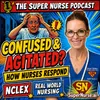
Alzheimer’s vs Dementia: Connection Over Correction in Real-World Nursing
👉 Watch the video on-YouTube@SuperNurse This episode explains the difference between Alzheimer’s disease and dementia in a way that nursing students, new grad nurses, and bedside nurses can actually use. Dementia is not one single disease. It is a collection of symptoms that affect memory, judgment, communication, reasoning, safety awareness, and behavior. Alzheimer’s disease is one specific type of dementia and is the most common cause of progressive cognitive decline. A major nursing priority is recognizing that dementia is not the same as delirium. Dementia usually develops slowly over time, while delirium is sudden, acute, and often caused by something reversible. If a patient suddenly becomes more confused, agitated, sleepy, combative, or “not themselves,” nurses should assess for infection, hypoxia, dehydration, medication effects, pain, urinary retention, electrolyte imbalance, or another acute change. The heart of this episode is connection over correction. When a patient with Alzheimer’s says something that is not factually true, correcting them may increase fear, shame, frustration, or agitation. Their brain may not be able to process logic, timelines, memory, or cause and effect the way it once did. The safer nursing response is often to validate the emotion underneath the statement instead of forcing the patient to accept facts they cannot hold onto. This episode also covers what nurses do when a patient is confused and agitated. The goal is not to “win” the argument. The goal is to lower stimulation, use a calm voice, simplify the environment, offer short phrases, provide reassurance, and redirect gently. Nursing care becomes less about explaining more and more about creating safety. Safety is a major focus in Alzheimer’s and dementia care. Patients may wander, fall, pull at lines, forget they need help, become overstimulated, or misread the environment. Nursing interventions include fall precautions, reducing clutter, keeping the room calm, using familiar objects when possible, maintaining routines, avoiding unnecessary restraints, and watching closely for changes in behavior. The episode also discusses sundowning, when confusion and agitation may worsen later in the day. Nurses can help by reducing noise, softening the environment, limiting unnecessary interruptions, supporting sleep-wake cycles, and avoiding overwhelming the patient with too many choices or explanations. Nutrition, hydration, and swallowing are also important nursing concerns. Patients with Alzheimer’s may forget to eat, become overwhelmed by a full tray, struggle with utensils, pocket food, cough, choke, or develop aspiration risk as the disease progresses. Helpful interventions include offering simple choices, finger foods, one item at a time, quiet meals, and careful monitoring for dysphagia. Family education is a huge part of dementia nursing care. Families may feel grief, guilt, exhaustion, or frustration when their loved one becomes fearful, angry, repetitive, or unable to recognize them. Nurses can help families understand that these behaviors come from brain disease, not stubbornness or lack of love. The key takeaway: when logic stops working, nurses do not need to correct harder. They need to connect better. In dementia care, the safest nursing priorities are validation, calm communication, environmental safety, fall prevention, caregiver support, and preserving the patient’s dignity. Timestamps 00:00 – Alzheimer’s vs dementia at the bedside Why nurses need to understand the difference for real-world care and NCLEX. 01:05 – Dementia is the umbrella term Dementia describes a group of symptoms, not one single disease. 02:00 – Alzheimer’s is one type of dementia How Alzheimer’s causes progressive brain changes that affect memory, judgment, communication, and safety. 03:00 – Dementia vs delirium Why sudden confusion is not “just dementia” and should always trigger a nursing assessment. 04:05 – What can cause sudden confusion? Infection, hypoxia, dehydration, medications, pain, urinary retention, and metabolic changes. 05:05 – When logic stops working Why Alzheimer’s patients may not be able to process reasoning, timelines, or consequences. 06:10 – Connection over correction Why correcting the facts can increase fear, shame, agitation, or resistance. 07:15 – How nurses validate emotion Respond to the feeling underneath the statement instead of arguing with the patient’s reality. 08:20 – Confused and agitated patients Use ca
Podzilla Summary coming soon
Sign up to get notified when the full AI-powered summary is ready.
Free forever for up to 3 podcasts. No credit card required.
Listen to This Episode
More from The Super Nurse Podcast

The Head Injury That Looks Fine: TBI, Increased ICP & Nursing Red Flags
Confused Patient? How Nurses Decode the 3 Ds at the Bedside.
When Logic Stops Working: Dementia Communication for Real-World Nursing

Seizure Aftercare for Nurses: What to Do When the Shaking Stops
Get summaries like this every morning.
Free AI-powered recaps of The Super Nurse Podcast and your other favorite podcasts, delivered to your inbox.
Free forever for up to 3 podcasts. No credit card required.