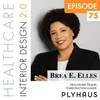
Episode 75, Brea E. Elles, Healthcare Design & Construction Leader, Owner of Plyhaus
"Flexibility became our currency during COVID." –Brea E. Elles on HID2.0 In today's episode, Cheryl sits down virtually with Brea E. Elles, Healthcare Design & Construction Leader. Together they pull back the curtain on what owner-side leadership really looks like when capital planning meets real-world constraints: staffing shortages, reimbursement uncertainty, supply chain, and the relentless need to keep care moving. You'll hear her practical frameworks for designing "for flow," why standardization can reduce cognitive stress for clinicians, and how teams can protect performance when budgets tighten. And if you love the details, Brea goes delightfully nerdy on the behind-the-scenes decisions that make healthcare millwork and furniture succeed (or fail) over time — from seams and water intrusion to integrated sinks, chemical resistance, and specs written for performance. In this episode, we cover: What it actually means to sit at the intersection of finance + operations + design + construction—and why alignment is the job. The teaching mindset that carries into project leadership: if you can't explain why, you don't fully understand the decision. Lean healthcare design in one phrase: design for flow—patient flow, staff flow, equipment flow, information flow. A blunt truth: "Every unnecessary step is a cost"… and inefficient adjacencies compound into burnout. How policy/funding uncertainty (including the "Big Beautiful Bill") shows up as more disciplined revenue assumptions, phasing, and scope restraint. Why patient experience isn't just the lobby: staff experience drives patient experience through workflow and physical demands. The post-COVID shift that won't go away: conversion speed + flexibility as core performance. "Standardization is resilience": how standards reduce cognitive load and keep clinicians focused on care. Rural vs urban: durability, simplified infrastructure, and designing for a community asset that carries generational weight. Plyhouse and the millwork "nerd-out": infection prevention through seam minimization, integral sinks, edge protection, chemical resistance—and specs written for performance. Memorable quotes from Brea "I sit at the intersection of finance, operations, design, and construction." "I align people who think differently." "If you can't explain why a decision matters, you don't fully understand it." "Every unnecessary step is a cost. Every inefficient adjacency becomes burnout over time." "You're designing for the person that's moving through the space, not the person photographing it." "Standardization is resilience." "In urban systems, you manage complexity. In rural systems, you're managing vulnerability." "I saw a disconnect between specification and reality." "Specs should be designed for performance, not just by material type." "When you think about surfaces, you want to minimize your seams." "In order to have patient experience… it's also staff experience." "Design for flow… not just patient flow, but staff flow, equipment flow, information flow." Links & ways to connect Email: brea@p
Podzilla Summary coming soon
Sign up to get notified when the full AI-powered summary is ready.
Free forever for up to 3 podcasts. No credit card required.
Listen to This Episode
More from Healthcare Interior Design 2.0
Episode 76, Elizabeth Sullivan, Principal, Regional Co-Leader of Healthcare, Northeast HOK

Episode 74, Susan Suhar, NCIDQ, IIDA, LEED AP, WELL AP, Fitwel Amb, Design Principal – Interiors, Associate Vice President at HDR Architecture
Episode 73, Ghina Itani, MBA, CHID, NCIDQ, EDAC, ASID, Owner/Principal Interior Designer of Itani Design Concepts (IDC)

Episode 72, Elizabeth Johnson, PhD, MS-CRM, RN, Assistant Professor, Montana State University Mark and Robyn Jones College of Nursing, Incoming President of the Nursing Institute for Healthcare Design
Get summaries like this every morning.
Free AI-powered recaps of Healthcare Interior Design 2.0 and your other favorite podcasts, delivered to your inbox.
Free forever for up to 3 podcasts. No credit card required.