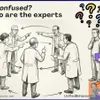
Behavior Architecture, the 8-Day Cohort & Scholarship Applications are now open. Next cohort begins Thursday, June 18th.👋 Hey, Martin Grunburg (mg) here, author of the Habit Factor® trilogy, creator of the Unified Behavior Model™ (UBM), and host of the Habits 2 Goals podcast — possibly the longest-running habits, goals, and performance podcast. For 20+ years, I’ve researched, trained, and coached with a SINGLE objective: to make behavior change, habit development, and achieving goals EASIER to understand, implement, and teach. That twenty-year concentrated effort yielded the world’s first elemental, unified, goal-directed behavioral model. Important: Quality scientific theories are subject to disproof because they are testable. Unfortunately, behavioral science, since its inception, has failed to produce a single elemental and unified model of behavior. Thus, the Unified Behavior Model™ (UBM) is presented as falsifiable, which means it is testable.The best part— the ONLY reason YOU ought to care… is that UBM provides the highest-goal probabilistic outcome of ANY goal framework, ever. Of course, that statement is independently verifiable, so please DO NOT take my word for it, visit unifiedbehaviormodel.com and download the white paper and LLM Primer 5.1— keep reading, listening, and please, always test and experiment for yourself.🎓 Next cohort: Behavior Architecture on Maven → | 6/18/26 - 6/25/26🎙️ Habits 2 Goals Podcast 📄 Free habit tracking templateRead time: 4 minutesWhy Does Science Exist?Let’s begin with why science does NOT exist. Science doesn’t exist to win awards or fill thick textbooks with complicated diagrams and formulas.Science does not exist to gatekeep, lecture from ivory towers, or foster incestuous citation cartels,Science does not exist to make other scientists feel good.Science exists for one reason:To understand phenomena.Life, experience, and human behavior are mysterious “phenomena.”Science, then, is (ideally) the simple tool used to pull back the curtain to understand and learn about such phenomena.Yet, there’s a massive problem, particularly in BEHAVIORAL SCIENCE…Without a shared paradigm or ontology, behavioral scientists have no basis upon which to fundamentally present theories.The “Napkin” TestEinstein famously said that if you can’t explain a theory to a child, it’s probably useless.Double click to interact with videoGreat science must have a simple pictorial representation.The “Behavior Echo-System” 2021 - Presented on a Napkin just before the release of EVERYTHING is a Freakin’ STORY.According to the best scientists, including Einstein, worth consideration…If you can’t draw it on a napkin, it may not be ready.If it requires a PhD to decode, it probably lacks elementality.Good science brings with it accessibility.Good science is easy to learn, teach, and—most importantly—USE.The Myth of ComplexityWe’ve been taught to respect complicated things.We think “complex” equals “intelligent.”It’s almost always the opposite.“Simplicity is the ultimate sophistication.” ~Leonardo da Vinci“Truth is ever to be found in simplicity, and not the multiplicity and confusion of things.” ~ Sir Isaac NewtonComp
Podzilla Summary coming soon
Sign up to get notified when the full AI-powered summary is ready.
Free forever for up to 3 podcasts. No credit card required.
Listen to This Episode
More from Habits 2 Goals: The Habit Factor Podcast with Martin Grunburg
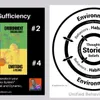
What Is Basic Behavior Literacy?
Where Logic Hides
Psychology Decided to Build a Science upon a Concept with No Objective Definition

The 16 Year Habit-Tracking Flip-Flop
Get summaries like this every morning.
Free AI-powered recaps of Habits 2 Goals: The Habit Factor Podcast with Martin Grunburg and your other favorite podcasts, delivered to your inbox.
Free forever for up to 3 podcasts. No credit card required.