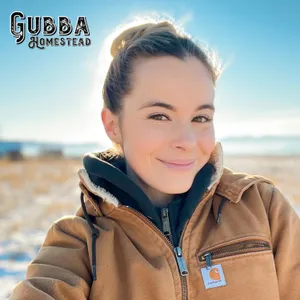
Free Daily Podcast Summary
Gubba Homestead Podcast: Daily Summaries Delivered
by Gubba Homestead Podcast
Would you like to learn how to nurture a garden, raise farm animals, cook recipes from scratch, and preserve food for SHTF? Join me on the Gubba Homestead Podcast, where we share traditional homesteading skills and country insights for a more natural, self-reliant, healthful homestead life.
Latest Episodes
The most recent episodes — sign up to get AI-powered summaries of each one.
- 5 days ago23 min
86: Why Grocery Stores Want You To Buy Seedless Fruit
Shop my all-natural skincare products at Arvoti.com.Seedless fruit is a scam, and we made it possible.Seedless grapes, seedless watermelon, seedless citrus... almost every fruit at the grocery store has been bred to remove the one part that actually makes it a plant.I only started noticing this when I went to buy grapevines for my garden and saw "seedless" listed as the top selling point on nearly every variety. Growing up, I would have picked seedless every time. Now I deliberately look for seeded ones, and this episode is about why that changed.Seeds carry the plant's genetics, the nutrients we're told to supplement with, and the option to grow food again next year without buying anything new. Grape seed extract is sold in capsules while the grapes themselves are engineered to remove the same seed those capsules come from. That contradiction runs through the whole food system.Heirloom and traditional varieties don't get banned. They get replaced when shoppers stop buying them, growers stop planting them, and nurseries stop stocking them. A variety can disappear without anyone deciding to remove it.I also raise a bigger pattern in the episode: Fertility is dropping in people, and it’s being bred out of the fruit we eat. Both are worth paying attention to.You’ll Learn:[0:00] Introduction[4:41] Choosing seeded grape varieties over the seedless standard[6:13] How shipping and shelf life influence which varieties survive[8:11] He who controls the food controls the people[10:22] The pattern of stripping whole foods into components[11:55] Seed saving once meant genuine food independence[13:58] Watching the full growth cycle changes how a seed looks[15:38] Traditional food skills fade when nobody needs them[17:50] Preserving diversity as a form of resilience[21:11] What to notice next time seedless is printed on a bagResources Mentioned:The Homestead Prepper's Guide To Canning CourseFind more from Gubba:Gubba Homestead | X | Facebook | Instagram | Pinterest | WebsiteGubba Homestead Products | <a href="https://shop.gubbahomestead.com?utm_source=podcast&utm_medium=description&utm_campaign=po
- 1 weeks ago24 min
85: Why I've Thrown Away All My Smart Devices (You Should Do The Same)
Shop my all-natural skincare products at Arvoti.com.I've been making my house “dumb” again, and this episode is about why. After bringing back an old television, building a physical DVD collection, and cutting off appliances that want an internet connection, I started looking more closely at what "smart home" actually means for your privacy.In a 2017 FTC (Federal Trade Commission) case, Vizio's software was found to have tracked second-by-second viewing across roughly 11 million televisions. The tracking pulled information from cable boxes, external streaming devices, DVD players, and over-the-air broadcasts. Then there's the Amazon case, where children's voice recordings were kept indefinitely, and thousands of employees reportedly had access to Alexa users' recordings without a business need.Convenience is how nearly all of this gets through the front door. Preheating an oven from an app sounds harmless until you ask what you're trading for it, and how many points of failure you've added to your household.People are outraged about Flock cameras on the pole, then walk past a doorbell camera and a voice assistant to get to the couch. That disconnect is the whole conversation.You’ll Learn:[0:00] Introduction[3:15] Technology stopped serving us and started learning about us[6:32] The Vizio case and second-by-second viewing data[8:32] How voice assistants actually record and who listens[10:08] Amazon kept children's voice recordings and geolocations[13:35] The strange disconnect between Flock cameras and home devices[16:48] Convenience is how all of this gets through the front door[19:38] Backdoor upgrades and the two iPhones that failed the same dayResources Mentioned:VIZIO to Pay $2.2 Million to FTC, State of New Jersey to Settle Charges It Collected Viewing Histories on 11 Million Smart Televisions without Users' Consent by Federal Trade Commission | ArticleFTC and DOJ Charge Amazon with Violating Children's Privacy Law by Keeping Kids' Alexa Voice Recordings Forever and Undermining Parents' Deletion Requests by Federal Trade Commission | ArticleFind more from Gubba:Gubba Homestead | X | Facebook | Instagram | <a href="https://ca.pinterest.com/GubbaHomestead/" target="_blank" style="bac
- 2 weeks ago22 min
84: Why The Government Tried to HIDE Cloudbusters
Shop my all-natural skincare products at Arvoti.com.The man who invented the cloudbuster died in a federal prison, and his research was burned, ordered by a US court.His name was Wilhelm Reich, a physician and psychoanalyst who spent decades studying what he called orgone energy, a force he believed moved through living things and the atmosphere.Reich designed arrays of hollow metal pipes connected to water and pointed them at the sky. He claimed they could shift atmospheric conditions, dissipate clouds, and even bring rain. In 1953, blueberry growers in Maine paid him after rain followed one of his experiments. In the mid-1950s, he ran the same tests in the Arizona desert.Then the FDA came for his orgone accumulators, a federal court issued an injunction, and quantities of his publications were destroyed under court order. He died in prison in 1957.I've been running my own backyard version of his work. Copper pipes in the garden. A gravel basin with water. Blackberries and strawberries responding on the copper side. Skies clearing after wildfire smoke. And posts about it getting flagged and hidden online.If copper in a garden is harmless nonsense, why work so hard to make sure people don't hear about it? That's what this one is really about.You’ll Learn:[0:00] Introduction[3:24] Copper in the garden and getting community noted[5:46] Orgone energy and why modern physics rejects it[9:43] Deadly orgone radiation and cosmic orgone engineering[13:29] Why copper became the material of choice for builders[15:03] The FDA injunction and burning of Reich's publications[17:53] Reasons someone might want the cloud buster information gone[20:36] What homesteading teaches about trusting your own observations Resources Mentioned:Cloudbuster | WikipediaThe Development of Orgonomy, Wilhelm Reich | WebsiteFind more from Gubba:Gubba Homestead | X | Facebook | Instagram | Pinterest | WebsiteGubba Homestead Products | Shop</
- 3 weeks ago26 min
83: The Real Causes Behind The Fertility Crisis No One Is Talking About
Shop my all-natural skincare products at Arvoti.com.Most people blame bad luck for infertility, but the research keeps pointing somewhere else entirely.Let's explore what I’ve been reading about the modern fertility crisis, and why so many people around me are struggling to conceive. I'm not a doctor, and none of this is medical advice. It's a walk through the research in relation to what I'm observing in my own life.Endocrine-disrupting chemicals like BPA and phthalates keep coming up in reproductive research. Phthalates hide inside a single word on a label: "fragrance". That one word can represent dozens or hundreds of compounds, which is part of why many fertility clinics won't let you walk in wearing perfume.Microplastics are another piece of this. A 2024 study found them in every human testis sample examined. Others have detected them in ovarian follicular fluid, blood, placentas, and breast milk.Then there's food. Diets high in ultra-processed foods have been linked to lower sperm concentration, reduced motility, and poorer morphology. Similar patterns show up in women.No single cause explains what's happening. That's exactly why I wanted to talk about the cumulative picture.You’ll Learn:[0:00] Introduction[3:41] Declining sperm counts have researchers asking whether human biology itself is changing[6:04] How endocrine-disrupting chemicals mimic hormones and why sunscreen ingredients started my investigation[9:10] The BPA replacement pattern where each "safer" chemical turns out just as bad[12:53] The cocktail effect of applying hundreds of chemicals to your body before breakfast[17:42] Trust your own eyes over waiting for science, and the copper garden lesson[21:28] Why oxidative stress damages delicate sperm cells and how antioxidants may help[23:23] There is no single cause, so return to the fundamentals and tune into your bodyResources Mentioned:Temporal trends in sperm count: a systematic review and meta-regression analysis of samples collected globally in the 20th and 21st centuries by Levine, H. et al. | ArticleMicroplastic presence in dog and human testis and its potential association with sperm count and weights of testis and epididymis by Hu, C. et al. | ArticleRole of oxidative stress in male infertility by Takalani, N. et al. | ArticleRelated Gubba Homestead Episodes:Your Wardrobe Is Killing Your Hormones. Swap THESE Fabrics Before It's Too LateFind more from Gubba:Gubba Homestead | X<span style="background-col
- Aug 18, 202622 min
82: What If Dragons Are NOT Just Mythology?
Shop my all-natural skincare products at Arvoti.com.Did dragons actually exist, or has history been rewritten to make sure you never ask?In this episode, I share what I found in old books, Latin dictionaries, and dragon artwork, and outline why those sources contradict what we learned in school.A 1946 dictionary defined dragons as "now rare". My 1700s Latin dictionary lists female dragons, water dragons, and baby dragons as if they were distinct animals. Medieval manuscripts placed dragons next to elephants and wolves, not in a separate section labeled fantasy.Ancient China, medieval Europe, Japan, the Vikings, and the feathered serpent cultures of Central and South America all recorded dragon-like creatures independently across thousands of years. The Chinese zodiac uses eleven real animals and one dragon. Why?My argument with Dr. Phil about carbon dating comes up. So does the Triceratops skull I once stood next to before a museum whisked it away, a 1500s book on the medicinal use of the unicorn horn, Marco Polo's writings on dragons and griffins, and why I think rare book collectors are acting as gatekeepers of a version of history most people will never see.I'm not telling you dragons existed. I'm asking why the answer feels so protected.You’ll Learn:[0:00] Introduction[3:45] How a 1946 dictionary defined dragons as "now rare" instead of imaginary[5:48] Dozens of disconnected cultures recorded strikingly similar dragon creatures[9:01] Why medieval books listed dragons alongside real animals like elephants and lions[12:52] The newspaper accounts of flying reptiles that historians still debate[17:46] Why the Chinese zodiac lists only real animals, except the dragonResources Mentioned:1984 by George Orwell | BookThe Travels of Marco Polo the Venetian by Marco Polo | ArchiveDictionary, English and Latin by Robert Ainsworth (1773 edition) | ArchiveDe Unicornu Observationes Novae by Bartholin, T. et al. (Unicorn Book) | ArchiveDr. Phil Primetime episode on Conspiracy Theories – Believing Everything Yet Nothing! (featuring Gubba) | YouTubeRelated Gubba Homestead Episodes:These Secrets Hidden in Mainstream History Reveal A Dark PatternFind more from Gubba: Gubba Homestead | <a href="https://x.com/GubbaHomestead" target="_blank" style="background-color: transparent;
- Aug 11, 202618 min
81: They Hide Electroculture From You So You Keep Buying More Fertilizer
Shop my all-natural skincare products at Arvoti.com.Electroculture gardening sounds ridiculous… until you stick copper into your own garden bed and watch what happens next.After five years of growing blackberries on the homestead, this year's harvest has been the most abundant I've ever had, and it lined up with the season I loaded that bed with copper wire and antennas.Electroculture is the practice of placing copper stakes, wires, and antennas in the garden to interact with the natural electricity in the atmosphere. Some gardeners swear by it. Others insist there's no science behind it. My response to the "no research" crowd is simple: my eyeballs are the research. The beds with copper and the beds without look nothing alike, and the difference is obvious.There's a bigger story tucked inside this too… Old French books on electroculture that people say disappeared. An element called aether that used to sit in the dictionary and doesn't anymore. Antennas on the old world's fair buildings that I've talked about in the “Secrets Hidden in Mainstream History” episode linked below. None of that proves anything on its own, but it makes you wonder what we've been trained not to look at. If you've been curious about copper in the garden, or you're tired of being told a good harvest requires a paywall of fertilizer and sprays, this one is for you.You’ll Learn:[0:00] Introduction[2:48] Electroculture gardening explained, and why copper harvests keep going viral[4:41] Why "my eyeballs are the science" beats waiting for a research paper[7:41] They lied about fertilizer and Roundup, and what the dandelion reveals[9:15] Copper's real risk with lightning, and the storm boost that followed[11:18] How disappearing French books and world's fair antennas hint at a reset[16:02] Why gardeners split into two camps, and where you should actually landRelated Gubba Homestead Episodes:These Secrets Hidden in Mainstream History Reveal A Dark PatternThe Hidden Benefits of Dandelions & Why No One Knows About ThemFind more from Gubba: Gubba Homestead | X | Facebook | Instagram | Pinterest | WebsiteGubba Homestead Products | Shop
- Aug 4, 202616 min
80: Everyone Is Quitting Homesteading. DON'T Make Their Mistake
Shop my all-natural skincare products at Arvoti.com.Fear got a lot of people into homesteading, and it's the exact reason most of them are walking away.Five years ago, homesteading felt like the beginning of a movement. Now Marketplace is full of chicken coops, freeze dryers, incubators, and canning supplies, and I've been noticing the shift.People who once posted daily about their gardens haven't planted one this year. Some are openly saying they're done. Others have moved on without much explanation. That got me asking why so many jumped in around 2020 only to walk away a few years later.Fear is a strong motivator. Empty grocery shelves pushed millions of people to learn skills they'd never considered before, and I think that was a good thing. Once fear fades and life gets comfortable again, most people drop the lifestyle… but I'm still out here living it. The goats still yell at me on Saturday mornings. The weeding never ends. Canning butter at 2 a.m. is a real thing that happens.There's also a comparison problem worth naming. You can't see the family money, the inherited knowledge, or the nanny behind the picture-perfect homestead you're measuring yourself against. This episode is my honest read on why people quit, what the ones who stay have in common, and why starting small in your kitchen matters more than trying to run a full operation on day one.You’ll Learn:[0:00] Introduction[3:44] The fear behind the 2020 homesteading boom[6:13] Butter-canning at 2AM, and what it taught me about homesteading[7:54] Why biting off everything at once burns new homesteaders out[10:28] The sunshine-and-rainbows myth versus losing livestock and storm-wrecked gardens[14:26] Why anyone can homestead, and the gatekeeping that says otherwise Related Gubba Homestead Episodes:11 Easy Things You Can Do Today to Start Homesteading (From Anywhere) Find more from Gubba: Gubba Homestead | X | Facebook | Instagram | Pinterest | WebsiteGubba Homestead Products | Shop
- Jul 28, 202616 min
79: The Clothes You're Wearing Are Making You Sick
Shop my all-natural skincare products at Arvoti.com.Your clothes and bed sheets touch your skin more than almost anything else, so why have we stopped asking what they're made of? For thousands of years, clothing came straight from nature: linen from flax, cotton from the plant, wool from sheep.In the last century, synthetic fibers like polyester, spandex, and acrylic took over our closets, and most of us have never stopped to ask what that shift might be doing to us.In this episode, I break down the difference between natural and synthetic fibers, and why our skin (our largest organ) reacts so differently to each. I also share a surprising study linking polyester garments to lower fertility in dogs, and dig into the chemical treatments hiding in modern textiles, from flame retardants to stain-resistant coatings.This isn't about tossing your whole wardrobe overnight. It's about small, sustainable swaps, like linen sheets and wool blankets, that add up over time. If you've never thought twice about the fabric touching your skin all day, this episode might just change that.You’ll Learn:[0:00] Introduction[2:00] Most people couldn’t tell you what fabric their clothes are made from[4:01] Why clothing changed 100 years ago, just like our food system did[5:36] Breathable natural fibers regulate temperature in ways synthetics can't[8:02] The polyester dog fertility study that should make you pay attention[9:42] The lymph and circulation effects of sweating in spandex leggings[11:56] The hidden flame retardants and toxic chemical treatments coating your clothes[14:07] Swapping fibers gradually, without throwing your whole wardrobe away[15:56] The idea that different fabrics carry different frequenciesRelated Gubba Homestead Episodes:These Secrets Hidden in Mainstream History Reveal A Dark PatternFind more from Gubba:Gubba Homestead | X | Facebook | Instagram | Pinterest | WebsiteGubba Homestead Products | Shop
Get Gubba Homestead Podcast summaries in your inbox
Free AI-powered daily recaps. Key takeaways, quotes, and mentions — in a 5-minute read.
Get Free Summaries →Free forever for up to 3 podcasts. No credit card required.
You Might Also Like
Listeners also like.
Everyday Homesteading
A veteran homesteading couple shares practical methods for growing, cooking, and preserving food for families with limited time.
Pioneering Today Podcast - Homesteading in a Modern World
Homesteading skills like gardening, food preservation, livestock care, and natural remedies for a self-sufficient life in the modern world.

The Two Acre Homestead
A couple shares their experiences moving from suburban to rural homesteading, covering gardening, self-sufficiency, and country living.

The Beginner's Garden with Jill McSheehy
A practical guide for new gardeners, breaking down gardening basics and terminology to help beginners grow confidently.

The joe gardener Show - Organic Gardening - Vegetable Gardening - Expert Garden Advice From Joe Lamp'l
Joe Lamp'l shares practical, organic gardening advice focused on growing food and sustainable practices for gardeners of all skill levels.

Podcast | ice age farmer
Ice Age Farmer, iceagefarmer.com

Ancestral Kitchen
Two women explore traditional food practices and ancestral cooking wisdom for modern kitchens.

Gastropod
Explores the science and history behind food and farming, from ancient feasts to modern aquaculture and everything in between.
The Beet: A Podcast For Plant Lovers
Explores gardening from basics to advanced techniques, featuring expert insights and innovations in plant science and agriculture.
The 1000 Hours Outside Podcast
A podcast exploring how spending time outdoors helps children and adults thrive by choosing real-world experiences over screen-based ones.
Sustainable World Radio- Ecology and Permaculture Podcast
Experts discuss ecology, permaculture, organic gardening, and sustainable living through interviews and commentary.

Homing
How homes shape identity and creativity through conversations with artists, designers, and thinkers.
About Gubba Homestead Podcast
Would you like to learn how to nurture a garden, raise farm animals, cook recipes from scratch, and preserve food for SHTF? Join me on the Gubba Homestead Podcast, where we share traditional homesteading skills and country insights for a more natural, self-reliant, healthful homestead life.
Customized Recaps
AI-powered recaps with compact key takeaways, quotes, and insights.
Straight to Your Inbox
Get key takeaways from Gubba Homestead Podcast in a 5-minute read.
Save Hours Every Week
Stay current on your favorite podcasts without falling behind.
Frequently Asked Questions
What is Podzilla's Gubba Homestead Podcast daily summary?
It's a free AI-powered email that summarizes new episodes of Gubba Homestead Podcast as soon as they're published. You get the key takeaways, notable quotes, and links & mentions — all in a quick read.
How does the Gubba Homestead Podcast podcast summary work?
When a new episode drops, our AI transcribes and analyzes it, then generates a personalized summary tailored to your interests and profession. It's delivered to your inbox every morning.
Is this an official Gubba Homestead Podcast product?
No. Podzilla is an independent service that summarizes publicly available podcast content. We're not affiliated with or endorsed by Gubba Homestead Podcast.
Can I get summaries of other podcasts too?
Absolutely! The free plan covers up to 3 podcasts. Upgrade to Pro for 15, or Premium for 50. Browse our full catalog at /podcasts.
How often does Gubba Homestead Podcast release new episodes?
Gubba Homestead Podcast publishes weekly. Our AI generates a summary within hours of each new episode.
What topics does Gubba Homestead Podcast cover?
Gubba Homestead Podcast covers topics including Education, How To. Our AI identifies the specific themes in each episode and highlights what matters most to you.
Start getting Gubba Homestead Podcast summaries tomorrow morning.
Free forever for up to 3 podcasts. No credit card required.
Free forever for up to 3 podcasts. No credit card required.