Free Daily Podcast Summary
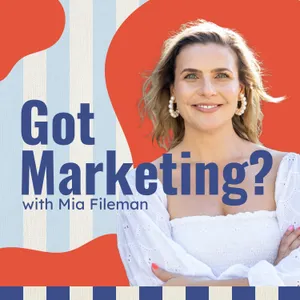
Got Marketing?: Daily Summaries Delivered
by Mia Fileman
Most marketing has the shelf life of a trending sound.This is Got Marketing? where we unpack campaigns, marketing news, and what actually lasts.
Latest Episodes
The most recent episodes — sign up to get AI-powered summaries of each one.
- 1 weeks ago24 min
Newsletters are dead
Would you sign up to receive your own newsletter? If the answer is no, why on earth are you asking your customers to? I love email marketing. It's one of the highest-performing marketing channels available to small businesses. But I have a problem with newsletters. The boring company updates, the generic 'sign up for our latest news' forms, and the emails nobody asked for (or particularly wants to read). In this episode, I'm making the case for ditching the newsletter and treating your emails like a publication people look forward to receiving. I'll share examples of brands doing this brilliantly, from curated content and conversation starters to behind-the-scenes storytelling. Plus, I'll explain how to give your emails their own identity, create a compelling reason to subscribe, and turn your email list into something far more valuable than another marketing channel. And in this week's campaign review, I'm looking at Peach Business's wonderfully playful Peachopoly campaign and why serious businesses could do with taking themselves a little less seriously. Come say hi Has your newsletter become another thing on your marketing to-do list that you're not entirely sure anyone reads? I want to hear about it. Find me on Instagram → @campaign_del_mar Extras → Explore The Village→ Get Mia’s Mini Campaign Planner References mentioned in this episode Byzantine Design – The Modern Archaeologist email publication The Sleep Collective by Gerri Florence – Bedtime Stories The GIST – Women's and men's sports media publication Odette Barry – Conversation-led email marketing Stef Hanson – That's What She Said email publication Peach Business – Peachopoly campaign by Fiona Johnston Peach Business Nell Casey, Fete Creative – Helped name File Under M Campaign Brief, Mumbrella, B&T and Marketing Mag – Industry publications Substack Mia’s Substack – File Under M Klaviyo, MailerLite and ActiveCampaign – Email marketing platforms This episode was produced by Laura McRae from Podcast Support Services
- 3 weeks ago34 min
Your brand has changed. Has your positioning caught up?
What does it really take to change what people know you for? I’ve officially repositioned Campaign Del Mar from marketing training to strategic advisory. And no, I didn’t just rewrite my Instagram bio and call it a day. In this episode, I’m sharing what I changed across my offers, pricing, content and messaging, why it took three months of relentless consistency, and the signals that told me the new positioning had finally landed. I also talk about why repositioning is something you should do before your business starts losing relevance, not once the ship is already sinking. If you’re changing your audience, moving upmarket or simply want to be known for something different, you’ll learn why positioning requires trade-offs, how your old content habits can undermine the new story you’re trying to tell, and why being multi-passionate doesn’t excuse being bloody confusing. Then, in Gurus in the Wild, I look at the Luna Bronze campaign controversy and why blaming AI misses the bigger problem. Plus, I run through Nara Smith’s partnership with infant formula brand Bobbie and why it’s such a clever example of matching a creator’s existing positioning with the right brand. Come say hi If you’ve ever tried to reposition your business only to find yourself slipping straight back into the content, offers or language of your old positioning, I want to hear about it. Find me on Instagram → @campaign_del_mar Extras → Explore The Village→ Get Mia’s Mini Campaign Planner References mentioned in this episode Cue Wittner Betts Willow & Blake Sydney Sweeney campaign Luna Bronze Body Blendz Orange Juice Lane Nara Smith on TikTok Bobbie infant formula Nara Smith and Bobbie campaign This episode was produced by Laura McRae from Podcast Support Services
- Sep 30, 202637 min
Building a Founder-Led Brand with April Butten
Can you build a product brand in 2026 without putting the founder front and centre? I’m joined by April Butten, founder and Creative Director of Boast Studio, to talk about why founder-forward marketing has gone from nice-to-have to one of the fastest ways to build trust, traction and demand. We consider the difference between simply being the face of a brand and having genuine authorship, obsession and skin in the game. And importantly, what to do if being on camera makes you want to quietly delete Instagram and disappear. We also get into one of my favourite marketing bugbears: brands claiming they’ve built a “community” when what they actually have is an audience. April shares what real community looks like when the founder isn’t in the room, why participation matters more than broadcasting and how brands can give their customers a bigger role instead of saving all the fun stuff for influencers. Then we tackle AI slop, culturally relevant brands and world building. We look at why replacing creative thinking with AI is a slippery slope, how brands like Fenty Beauty and The Ordinary changed consumer behaviour, and why strong brands build a recognisable world rather than jumping on every trend the algorithm throws at them. If you’re building a founder-led brand, this episode will help you think much more deliberately about visibility, community and the world you’re asking customers to step into. Come say hi If being the face of your brand has ever made you want to hide safely behind the logo, I want to hear about it. Find me on Instagram → @campaign_del_mar Extras → Explore The Village→ Get Mia’s Mini Campaign Planner References mentioned in this episode Boast Studio website Oner Active Krissy Cela Alix Earle from Reale Actives on Instagram DISSH Rebecca Judd and Alchemy Collective Hub and Lisa Messenger Steven Bartlett and The Diary of a CEO HYROX Brittney Saunders, Fayt and Fayt Estate Rhode Fenty Beauty The Ordinary Coca-Cola’s AI Christmas advertising Guess and its AI-generated advertising Mango’s AI-generated models Balenciaga CPR Hair Liquid Death April on LinkedIn Boast on Instagram This episode was produced by Laura McRae from <a href="https://podcastsupportserv
- Sep 16, 202648 min
Marketing Without Reliance on Social Media with Ellen Hooper
Can you build a successful business without spending your life on social media? The answer is yes, but that doesn’t mean you get to opt out of marketing altogether. In this episode, I’m joined by Ellen Hooper, founder of Corporate Escapees Club, to talk about what marketing looks like when Instagram isn’t the centre of your business. We talk about why your business model should determine your marketing strategy, not whatever the algorithm is demanding this week. Ellen shares how she built a successful consulting business largely through referrals, relationships and strategic partnerships, including one particularly clever question: who is already getting enquiries for the work you do, but doesn’t want to do it themselves? We also cover direct outreach, networking, guest masterclasses, LinkedIn, and why keeping your existing network warm can be far more valuable than endlessly trying to grow an audience of strangers. If you’ve been looking for permission to spend less time making Reels, consider it granted. But there’s a catch. You still have to choose another way to be visible, build relationships and sell. Because “I don’t want to do social media” is a perfectly reasonable marketing decision. “I don’t want to do any marketing” is a business problem. Come say hi If social media has ever made you wonder whether running a business means signing up to become a full-time content creator, I want to hear about it. Find me on Instagram → @campaign_del_mar Extras → Explore The Village→ Get Mia’s Mini Campaign Planner References mentioned in this episode Episode 104: Marketing without Social Media with Lillie Brown Ellen Hooper’s website Corporate Escapees Club Ripple Festival Ellen’s Work Wife weekly email Pareto principle, also known as the 80/20 principle Ellen Hooper’s LinkedIn Ellen Hooper on Instagram This episode was produced by Laura McRae from Podcast Support Services
- Sep 2, 202647 min
Mediocre Retail is Being Exposed with Andrea Andric
What if retail isn’t dying, but mediocre brands are? In the same month that legacy retailers are closing stores, digital-first luggage brand July is opening a 250-square-metre Melbourne flagship that looks more like a gallery than somewhere you’d go to buy a suitcase. So, I invited marketing consultant Andrea Andric back to the podcast to talk about it. We get into why heritage isn’t a strategy, why being known doesn’t guarantee you’ll stay relevant, and why brands that have spent years harvesting familiarity without investing back into their brand are now being exposed. We also tackle what Andrea calls the disappearing middle. People haven’t necessarily stopped spending, but they’re becoming much more particular about where their money goes. A $300 suitcase or $600 dress can still sell when customers see enough value in it. Mediocre is the bit that’s getting harder to justify. You’ll hear us talk about the difference between value and value for money, why brands need to know exactly who they’re for, and why trying to hold onto every customer can be a terrible strategy. And then there’s the big measurement question. If someone visits July’s beautiful store, fondles a suitcase, leaves and buys it online three weeks later, who gets the credit? Andrea and I talk about our obsession with attribution, the ROI of brand experiences that don’t fit neatly into a spreadsheet, and why experiential retail doesn’t require hand-poured terrazzo and a DJ. Sometimes it’s simply staff who know the product and give a sh!t. Ultimately, this episode is about doing fewer things better and building a brand people have a reason to choose. Come say hi If you’ve ever wondered whether customers have stopped spending or they’ve simply stopped spending with brands that give them no compelling reason to care, I want to hear about it. Find me on Instagram → @campaign_del_mar Extras → Explore The Village→ Get Mia’s Mini Campaign Planner References mentioned in this episode Andrea Andric’s website Andrea Andric on Instagram Andrea Andric on LinkedIn Andrea’s Substack, including her piece about “the middle” disappearing. The specific publication/contact details aren’t provided in the transcript, so these will need to be added. July July and its Melbourne flagship store Betts Link Craft Barbeques Galore Millers Katies Rivers Rockmans <a href="https://w
- Aug 26, 202612 min
Marketing Moment: Do you really need Substack? with Andrea Andric
Is Substack worth adding to your marketing mix? Or is it another shiny platform opening a new tab in your brain? In this Marketing Moment, I’m joined by Andrea Andric to talk about our experiences using Substack. We cover where it fits alongside email marketing and blogging, why the writing experience is so bloody good, and the limitations that keep me from seeing it as a replacement for a proper email marketing platform. We also get into the bigger strategic question. Do you need another channel? Because planting a flag on Pinterest, Substack, Instagram, LinkedIn and every other platform isn’t a marketing strategy. It’s a very efficient way to spread yourself thin. Andrea and I talk about getting more mileage from fewer, better pieces of content, why long-form content can become the starting point for everything else, and the underrated relief of deciding a platform simply isn’t for you. Come say hi If adding another marketing platform has ever made you feel like you’ve opened yet another tab in your brain, I want to hear about it. Find me on Instagram → @campaign_del_mar Extras → Explore The Village→ Get Mia’s Mini Campaign Planner References mentioned in this episode Andrea Andric’s website Andrea Andric on Instagram Andrea Andric on LinkedIn Andrea’s Substack Got Marketing Substack Substack Kajabi Instagram Spotify LinkedIn Google and SEO LLMs and how they index online content Facebook Pinterest Pokémon Go This episode was produced by Laura McRae from Podcast Support Services
- Aug 19, 202620 min
Behavioural Psychology Effects That Change How People Buy
Why do some marketing campaigns stick in your mind while others disappear the moment you scroll past? Most marketers spend their time asking what they should say. I think the better question is why do people notice, remember and act in the first place? In this episode, I talk about five behavioural psychology effects that quietly shape buying decisions every day. Not as marketing hacks or manipulation tactics, but as practical ways to understand how real people make choices. We'll look at why familiarity builds trust, why distinctive brands are easier to remember, why the cost of doing nothing is often more motivating than the promise of a better future, why concrete language beats vague marketing every time, and why the most trusted brands aren't afraid to admit when they've stuffed up. Along the way, I'll break down campaigns from Specsavers, Cadbury, WWF, Metro Trains and KFC to show these principles in action. If you've ever wondered why some campaigns become part of culture while others vanish without a trace, this episode will change the way you think about marketing. You'll walk away with a sharper understanding of human behaviour and practical ways to build campaigns that people notice, remember and choose. Come say hi If you've ever struggled to make your marketing memorable or wondered why your campaigns aren't cutting through, I want to hear about it. Find me on Instagram → @campaign_del_mar Extras → Get the backstage pass on Substack→ Explore Marketing Circle→ Get Mia’s Mini Campaign Planner References mentioned in this episode How Brands Grow by Byron Sharp Specsavers "Should've Gone to Specsavers" Cadbury Gorilla campaign WWF #LastSelfie campaign Metro Trains Dumb Ways to Die KFC FCK campaign This episode was produced by Laura McRae from Podcast Support Services
- Jul 29, 202627 min
Was the Bonds campaign really that controversial? (And four others worth watching)
I think marketing has entered a new era. Have you noticed? Five campaigns, five completely different industries. One pattern I couldn't ignore. In this episode, I look at campaigns from Franjos, Bonds, Reddit, Nescafé and Suncorp. On the surface they have very little in common. Different budgets, audiences and creative. But underneath, they're all built on the same strategic idea. The interesting part isn't the creative, it's the thinking underneath it. Every one of these campaigns starts from the same place. Not the product or purpose but a belief about the world that their audience already holds. Once you spot that pattern, it's very hard to unsee. And it might completely change where you start your next campaign. Come say hi If you've ever wondered whether you're chasing more simply because you think you should, I'd love to hear your thoughts.Find me on Instagram → @campaign_del_mar Extras → Get the backstage pass on Substack→ Explore Marketing Circle→ Get Mia’s Mini Campaign Planner References mentioned in this episode Franjos "Lift Like a Mother" Bonds featuring Adam Hyde (Keli Holiday) Robert Irwin Bonds campaign Andrea Andric Got Marketing? episode with Andrea Andric Reddit "People Are the Best" Nescafé "Make Your World" Suncorp "A Tale of Two Queenslands" Søren Kierkegaard Off Campus Peking Duck Myer campaign with Peking Duck (2021) This episode was produced by Laura McRae from Podcast Support Services
Get Got Marketing? summaries in your inbox
Free AI-powered daily recaps. Key takeaways, quotes, and mentions — in a 5-minute read.
Get Free Summaries →Free forever for up to 3 podcasts. No credit card required.
You Might Also Like
Listeners also like.

Everyone Hates Marketers | No-BS Marketing & Brand Strategy Podcast
A marketing podcast offering practical insights on branding, strategy, and customer research from industry professionals.

Marketing Happy Hour
Real marketing career advice and strategies from industry pros, with honest conversations on growth, leadership, and balance.
Marketing Made Simple
Strategies for crafting clear marketing messages that connect with customers and grow businesses.

Marketing Therapy
Private practice therapists learn practical marketing strategies to attract ideal clients and grow their practices without burnout.
Create or Destroy: Reimagining Marketing with Seth Matlins
Discusses how business, culture, and technology decisions create or destroy value in marketing and customer relationships.

Your Brand Amplified
Explores the strategies and mindsets of successful entrepreneurs in business growth, marketing, and personal branding.

Right About Now - Legendary Business Advice
Raw business insights from founders and industry leaders, revealing real wins, failures, and actionable strategies without the fluff.
The Revenue House
Examines ethical marketing and business growth for purpose-driven companies through expert interviews and real-world strategies.

Growth Triggers: Content Marketing & AI
A marketing podcast teaching business owners how to use podcasting to generate leads, sales, and authority across competitive niches.
So, Get This
iHeartPodcasts and Bubbler

Possible NOW
Explores the future of marketing, culture, and technology through conversations with innovators shaping bold new possibilities.

Lunch Hour Legal Marketing
Legal Talk Network
About Got Marketing?
Most marketing has the shelf life of a trending sound.This is Got Marketing? where we unpack campaigns, marketing news, and what actually lasts.
Customized Recaps
AI-powered recaps with compact key takeaways, quotes, and insights.
Straight to Your Inbox
Get key takeaways from Got Marketing? in a 5-minute read.
Save Hours Every Week
Stay current on your favorite podcasts without falling behind.
Frequently Asked Questions
What is Podzilla's Got Marketing? daily summary?
It's a free AI-powered email that summarizes new episodes of Got Marketing? as soon as they're published. You get the key takeaways, notable quotes, and links & mentions — all in a quick read.
How does the Got Marketing? podcast summary work?
When a new episode drops, our AI transcribes and analyzes it, then generates a personalized summary tailored to your interests and profession. It's delivered to your inbox every morning.
Is this an official Got Marketing? product?
No. Podzilla is an independent service that summarizes publicly available podcast content. We're not affiliated with or endorsed by Mia Fileman.
Can I get summaries of other podcasts too?
Absolutely! The free plan covers up to 3 podcasts, any in the catalog. Basic raises that to 15, Pro to 40 and Max to 100. Browse our full catalog at /podcasts.
How often does Got Marketing? release new episodes?
Got Marketing? publishes weekly. Our AI generates a summary within hours of each new episode.
What topics does Got Marketing? cover?
Got Marketing? covers topics including Business, Marketing, Entrepreneurship. Our AI identifies the specific themes in each episode and highlights what matters most to you.
Start getting Got Marketing? summaries tomorrow morning.
Free forever for up to 3 podcasts. No credit card required.
Free forever for up to 3 podcasts. No credit card required.