Free Daily Podcast Summary
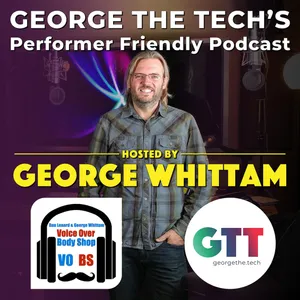
George The Tech’s Performer Friendly Podcast: Daily Summaries Delivered
by George The Tech Whittam
George The Tech Interviews the Pros in Voiceover, Podcasting, and Audio Tech
Latest Episodes
The most recent episodes — sign up to get AI-powered summaries of each one.
- 1 weeks ago55 min
GTT Spotlight: Voice Actor and Atlanta Voiceover Studio Owner Heidi Rew
George the Tech sits down with Heidi Rew, full-time voice actor, on-camera actor, podcast host, and co-owner of Atlanta Voiceover Studio, to talk about her unlikely path from childhood performer to radio personality to working voice actor and studio owner. Heidi shares why persistence often matters more than raw talent, what she learned from losing a nine-year client, how Atlanta Voiceover Studio grew from a tiny recording space into a major VO training resource, and why making a demo before you're ready can set you up for failure instead of success. Timeline 00:00 Sponsor: Full Compass + GTT Sound Check 00:57 Meet Heidi Rew 02:00 From Childhood Performer to Voice Actor 05:00 Performing Without “Performing” for the Microphone 07:00 Self-Consciousness, Confidence, and Getting Out of Your Own Way 11:30 Paying Her Own Way Through College 12:30 Internships and Finding Radio 14:00 The Many Jobs You Do in Radio 16:15 The “Redneck Home Shopping Show” 18:30 Meeting Mike Stoudt and the Road to Voiceover 20:00 Building a VO Career While Working in Radio 23:00 Why You Can’t Compare Your Voiceover Journey to Someone Else’s 24:30 Talent vs. Persistence: Who Actually Builds a Career? 25:30 Leaving Radio and Going Full-Time 27:00 How Atlanta Voiceover Studio Started Almost by Accident 29:00 From Recording Space to VO Training 30:30 You Don’t Need to Be the Biggest Expert to Be a Great Teacher 33:00 Learning to Let Go of Auditions 34:30 Big Wins, Long-Term Clients, and AutoNation 35:30 What Happens When a Nine-Year Client Disappears? 37:00 Balancing VO, Acting, and Running a Studio 38:30 The Business Mistake Heidi Wishes They Had Avoided 40:00 Growing Atlanta Voiceover Studio — Then COVID Hit 42:00 How Virtual Training Changed the Business 44:00 Surviving the Financial Ups and Downs of Creative Work 45:00 Hiring, Delegating, and Building a Flexible Team 48:30 What Atlanta Voiceover Studio Offers Today 52:30 How Do You Know When You’re Ready for a Commercial Demo? 54:00 Where to Learn More About Heidi and Atlanta Voiceover Studio
- 2 weeks ago1h 3m
GTT Spotlight: Voiceover Audio Engineer and Demo Producer Henry Willard
George talks with UK-based voiceover engineer and demo producer Henry Willard about the rise of virtual engineering and why more actors are bringing their own engineers into remote directed sessions. Henry explains how having someone handle recording, playback, timing, and client requests can free the actor to stay where they belong: in the performance. They also explore Henry’s approach to creating authentic commercial demos, why overproducing auditions can backfire, the never-ending battle with mouth noise, common home-studio mistakes, and the realities of producing audiobooks by hand in an increasingly automated world. And because two audio engineers can only behave themselves for so long, there’s plenty of talk about Pro Tools, headphones, plugins, noise reduction, Macs vs. PCs, and keeping your processing chain simple. Timeline 00:00 Sponsor and Sound Check 01:00 Meet Henry Willard 03:00 Running an Audio Business with Two Young Kids 05:00 The Reality of Working from a Home Studio 07:00 Why Voice Actors Are Hiring Their Own Engineers 10:00 What a Virtual Engineer Actually Does 11:00 Henry’s Start in Remote Recording 14:00 How COVID Changed the Voiceover Workflow 16:00 Building a Freelance Voiceover Engineering Business 19:00 Getting Into Voiceover Demo Production 20:00 Making a Demo Sound Authentic—not Overproduced 22:00 Music Choices That Can Ruin a Demo 24:00 Henry’s “Palette Call” for Building Personalized Demos 27:00 Why Demo Spots Need a Beginning, Middle, and End 28:00 Mouth Noise, Perfectionism, and Over-Editing 29:00 Mac vs. Windows for Voiceover Recording 34:00 How Much Mouth Noise Should You Actually Remove? 35:00 RX Mouth De-click and the Problem with Overprocessing 37:00 Alternatives to RX and When Your Headphones Are Too Good 39:00 Fix the Room and Mic Technique Before Adding Plugins 40:00 The Wrong Mic, the Wrong Input—and Other Common Mistakes 43:00 Henry’s Approach to Audiobook Production 46:00 Punch and Roll vs. Continuous Recording 49:00 AI Proofing vs. Actually Listening to the Audiobook 51:00 Why Henry Takes a Premium Approach to Audiobook Editing 53:00 Henry’s Favorite Tools: Pro Tools, Editus Keys, and Headphones 58:00 Keeping Plugins Simple 59:00 Waves NS1 and Noise Reduction 1:00:00 Apollo C-Vox and Real-Time Noise Reduction 1:02:00 More Audio Geekery—and an Invitation to Pro Audio Suite
- Aug 17, 20261h 9m
GTT Spotlight: Narration Voice Coach and Voice Actor Thom Pinto
Voiceover veteran Thom Pinto joins George the Tech for a trip through more than four decades of VO—from cutting quarter-inch tape in radio to voicing trailers for The Breakfast Club, Sixteen Candles, Uncle Buck, Planes, Trains and Automobiles and more. Thom shares stories from the golden age of LA voiceover, explains how he’s stayed relevant as the industry has changed, and talks about his current focus coaching documentary and docuseries narration. George and Thom also dig into what today’s talent needs to succeed: versatility, self-direction, a dependable home studio, and auditions that sound polished without sounding overproduced. Timeline 00:00 Zoom, Tech Changes, and Old-School Stories 13:00 Meet Thom Pinto 19:00 From Radio DJ to Production Director 21:30 Discovering Ernie Anderson 22:00 Working with a Voiceover Legend 27:00 The Golden Age of LA Voiceover 28:30 Getting Signed and the “Bean” Nickname 30:00 How Casting and Auditions Have Changed 35:00 Versatility, Longevity, and Staying in the Game 39:00 Bill Ratner and the Art of Working Fast 42:00 Thom’s Brief On-Camera Career 44:00 How Thom Became a Voiceover Coach 46:30 Buzzy’s and the Classic LA Studio Era 48:00 Sixteen Candles, The Breakfast Club, and the Movie Trailer Years 50:30 Filling In for Bill Ratner 53:00 What Today’s Successful Voice Actors Have in Common 54:30 Why Voiceover Is Harder Today 56:00 Why a Professional Home Studio Matters 57:00 Don LaFontaine and the Home Studio Revolution 58:15 Bo Weaver: Remote VO Before It Was Normal 1:00:00 ISDN, ipDTL, Source-Connect, and Adapting to New Tech 1:03:00 Coaching Becomes a Bigger Part of Thom’s Career 1:06:00 Finding His Lane in Documentary Narration 1:07:30 Voice vs. Interpretation 1:10:45 Coaching “Primetime Narrators” 1:13:25 What Thom Hears in Audition Audio 1:15:00 When Processing Makes an Audition Sound Too Polished 1:18:15 Stop Editing the Life Out of Your Read 1:20:00 How Much Comping Is Too Much? 1:21:55 Where to Find Thom 1:22:15 Final Wrap and Thanks
- Jul 27, 202656 min
GTT Trusted Partner Profile: Commercial Voiceover Coach Hugh Klitzke
Many voice actors know the term conversational read—but fewer understand what actually makes a performance feel authentic. George welcomes Hugh P. Klitzke to discuss the evolution of conversational voiceover, the changing casting landscape, and why coaching has become more important than ever. Hugh shares his unconventional path into voiceover, lessons learned working behind the scenes at a New York talent agency, and how those experiences shaped his teaching philosophy. They also discuss Hugh's popular Open Studio coaching sessions, the value of letting performers observe real coaching in action, and why creating genuinely helpful free content has become one of the strongest ways to build trust in today's voiceover community. Whether you're a newer talent or several years into your career, this episode offers valuable insight into developing stronger performances—not just better recordings. Episode Timeline 00:00 – Introduction and podcast setup 03:10 – Hugh's musical background and unexpected path into voiceover 10:45 – Working behind the scenes at a New York talent agency 18:20 – Why Hugh eventually began coaching actors 26:40 – Leaving the agency and launching his own coaching business 33:15 – Building the Conversational VO brand 40:30 – Why conversational reads are harder than they sound 49:05 – The philosophy behind Open Studio 58:20 – Helping experienced voice actors solve performance problems 1:08:15 – Creating free educational content that provides real value 1:15:40 – Final thoughts and where to learn more
- Jul 7, 20261h 15m
GTT Spotlight: Animation Director, Voice Caster and Coach Andy Lerner
In this episode of the GTT Performer Friendly Podcast, George Whittam talks with voice director, casting professional, producer, writer, actor, and VO coach Andy Lerner about the intersection of performance, audio, and modern voiceover. Andy shares how he moved from engineering and comedy radio production into directing and coaching, including his work in the SpongeBob SquarePants universe during COVID. He also offers practical advice for newer voice actors on training, rejection, improv, mic placement, and avoiding overly edited, lifeless auditions. Timeline 00:00 — Sponsor Message 00:31 — Sticking With Acting 01:49 — Meet Andy Lerner 03:29 — VO Atlanta Highlights 05:55 — Bridging Tech And Talent 08:34 — From Engineer To Studio Builder 14:02 — Comedy Commercials Era 15:19 — Edgy Ads And Changing Norms 18:09 — Joining SpongeBob During COVID 22:01 — Directing A Legacy Franchise 26:48 — Remote Workflow And Cast Praise 29:01 — Fans, Conventions, And Voicelings 33:27 — Neurodiversity In The VO Community 35:54 — Showrunner Role And ADR Pickups 38:56 — ADR Fixes Explained 39:50 — Why Andy Coaches Newbies 42:41 — Handling Rejection Gently 44:50 — What Casting Wants 47:44 — Be 401, Not 400 50:13 — Training Before Voices 51:29 — Mic Placement Mistakes 53:21 — Stop Over-Editing 01:00:08 — Workflow And Software 01:03:14 — TwistedWave Special Paste 01:06:05 — Know Your Genre 01:09:42 — Workouts And Where To Find Andy 01:12:22 — If You Feel Cringe, Quit 01:13:49 — Stick With It Anyway 01:15:23 — Final Thanks And Wrap
- Jun 22, 202659h 58m
GTT Trusted Partner Profile: Video Game & Animation Voice Casting Director Kim Hurdon
What makes a voiceover audition feel bookable — and what makes casting hit pause? George the Tech sits down with Kim Hurdon of KH Casting for a deep conversation about the casting side of voiceover, especially in video games, animation, and remote audition workflows. Kim explains why human performance still matters most, why over-editing can hurt more than help, and how actors can avoid sounding processed, artificial, or disconnected from the role. They also explore the post-COVID home studio divide, the value of hub studios and engineers, video game realism, effort sounds, PCAP, inclusive casting, NDAs, and why booking often comes down to fit — not just skill. Timeline 00:00 Sponsor and Sound Check 01:07 Meet Kim Hurdon 02:19 Headphone Geek Out 04:39 Audition Mistakes: Editing, Breaths, Music, and Overprocessing 08:29 Kim’s Casting Origin Story 12:55 The Home Studio Divide After COVID 16:01 The Gaming Boom and AAA Workflows 18:38 Mics, Movement Rigs, and Remote Recording 21:59 Authenticity in Games and Inclusive Casting 25:01 Efforts, Levels, and Clipping 29:01 Hybrid Workflows and Hub Studios 30:57 The Laptop Mic Disaster 33:03 Building a Studio Checklist Mindset 34:52 Ensemble Sessions vs. Solo Sessions 36:26 PCAP Explained 38:21 Gameplay Lines and Alts 39:09 Booking Fit vs. Skill 41:36 Game Timelines and NDAs 43:49 NPCs and Long-Running Game Work 45:22 Favorite Work and Family 49:05 Zoom Auditions and CAVA 51:24 AI Laws and Advocacy 52:56 Conferences and Community 55:15 How to Book More 56:09 Coaching Without Overdoing 59:02 Where to Find Kim 59:15 Final Wrap and Thanks
- Jun 8, 202657 min
GTT Trusted Partner Profile: Jodi Gottlieb, Voiceover Coach
In this episode, George talks with Jodi Gottlieb, a voiceover coach with more than 20 years of industry experience and a background working with major networks. Jodi shares how she coaches established voice talent who are ready to raise their game, especially in commercial auditions where subtle, natural choices can make all the difference. George and Jodi discuss common audition mistakes, why dramatic pauses often work against you, how to use two different reads strategically, and what it really means to “show range” without ignoring the specs. They also explore the impact of AI on the voiceover industry — including Jodi’s concerns about lost opportunities and her belief that audiences can still hear the difference when a performance is genuinely human. 00:00 Sponsor and Offer 00:31 Booth Mindset Tips 00:56 Meet Coach Jodi 02:56 Audio vs Video Podcasts 04:17 Remote Sessions Connection 08:23 Who Jodi Coaches 11:37 How She Started Coaching 15:46 Commercial Specs Myth 20:26 Disqualifying Reads 25:31 Directed Auditions Help 27:09 Demo Production Process 29:43 What Makes Demos Work 29:51 Demo Spots Under 10 Seconds 31:16 Variety and Money Voice 33:00 Audition Takes and Specs 35:59 Specs vs Reality in Sessions 38:02 Stop Over Editing Auditions 42:02 Separate Roles and Take Breaks 47:03 AI Voices and Industry Shifts 52:12 Calling Out AI and Audience Detection 56:26 Wrap Up and Contact Info
- May 18, 202638 min
GTT Client Profile: Sara Van Beckum, Voice Actor
George the Tech sits down with longtime client Sara Von Beckham to unpack what it takes to build—and sustain—a voiceover career across multiple genres. Sara shares how acting training transformed her reads, why SOVAS sparked a major career reset, and how she transitioned to remote work long before it became the norm. She also gets real about vocal health, promo pressure, tech anxiety, and the standards that separate working pros from everyone else. Timeline 00:00 Sound Check Promo 00:21 “Kind, On Time, Good” — The Core Formula 00:37 Meet Sara Von Beckham 01:52 Conferences & VO Community 02:42 SOVAS Wake-Up Call 04:22 Switching to Atlas Agency 06:51 From Wisconsin to Voiceover 08:55 Acting Training & Meisner Influence 11:39 NYC Audition Hustle 12:49 Going Remote (2013 ISDN Era) 14:14 Vocal Surgery & Recovery 15:06 Audiobooks as Daily Practice 18:44 Cracking the Promo Market 19:52 Landing ABC & Fast Turnarounds 21:12 What “Pro Turnaround” Really Means 21:59 “Kind, On Time, Good” Revisited 22:32 Self-Recording Promo Work 23:39 The Ephemeral Nature of Promo 24:57 Live-Directed Commercial Sessions 25:54 Campaigns Come and Go 26:45 Relationships with Engineers 28:06 Actors as Their Own Tech Team 30:31 Tech Anxiety & Triggers 32:13 Advocating for Yourself 33:39 Confidence & Professional Standards 35:34 Everyday Gear Setup 36:50 Tribooth Studio Setup 37:41 Closing Thoughts
Get George The Tech’s Performer Friendly Podcast summaries in your inbox
Free AI-powered daily recaps. Key takeaways, quotes, and mentions — in a 5-minute read.
Get Free Summaries →Free forever for up to 3 podcasts. No credit card required.
You Might Also Like
Listeners also like.
The George Janko Show
Heartfelt conversations with influential figures and rising voices exploring faith, purpose, struggles, and personal triumphs.

This Week in Tech (Audio)
A weekly roundtable of tech insiders discusses the latest developments in AI, robotics, computing, and digital privacy.
DGTL Voices with Ed Marx
Ed Marx and Digital Voices host industry leaders to discuss healthcare technology's future.

FT Tech Tonic
Explores the impact of emerging technologies on society, business, and everyday life.

Know Your Gear Podcast
A no-nonsense guide to guitars, amps, pedals, and the music industry from a seasoned insider.
Gilbert Gottfried's Amazing Colossal Podcast
Gilbert Gottfried and Frank Santopadre interview show business legends and behind-the-scenes figures about Hollywood history and comedy.
Have You Heard George's Podcast?
A poetic narrative series exploring inner city life through storytelling, music, and fiction.
The Prof G Pod with Scott Galloway
A professor discusses business, politics, tech, and culture with experts, offering career and life advice through daily segments.
The BOB & TOM Show Free Podcast
A morning radio show mixing comedy, talk, news, and sports with a live audience and daily bonus content.

Brad & Will Made a Tech Pod.
Two tech enthusiasts explore topics like virtual reality, space travel, and electric cars in weekly deep-dive conversations.

Stop Podcasting Yourself
A comedy podcast hosted by Graham Clark and Dave Shumka featuring weekly guests.

The Rest Is Entertainment
Richard Osman and Marina Hyde offer insider perspectives on TV, film, and pop culture with behind-the-scenes insights and industry analysis.
About George The Tech’s Performer Friendly Podcast
George The Tech Interviews the Pros in Voiceover, Podcasting, and Audio Tech
Customized Recaps
AI-powered recaps with compact key takeaways, quotes, and insights.
Straight to Your Inbox
Get key takeaways from George The Tech’s Performer Friendly Podcast in a 5-minute read.
Save Hours Every Week
Stay current on your favorite podcasts without falling behind.
Frequently Asked Questions
What is Podzilla's George The Tech’s Performer Friendly Podcast daily summary?
It's a free AI-powered email that summarizes new episodes of George The Tech’s Performer Friendly Podcast as soon as they're published. You get the key takeaways, notable quotes, and links & mentions — all in a quick read.
How does the George The Tech’s Performer Friendly Podcast podcast summary work?
When a new episode drops, our AI transcribes and analyzes it, then generates a personalized summary tailored to your interests and profession. It's delivered to your inbox every morning.
Is this an official George The Tech’s Performer Friendly Podcast product?
No. Podzilla is an independent service that summarizes publicly available podcast content. We're not affiliated with or endorsed by George The Tech Whittam.
Can I get summaries of other podcasts too?
Absolutely! The free plan covers up to 3 podcasts. Upgrade to Pro for 15, or Premium for 50. Browse our full catalog at /podcasts.
How often does George The Tech’s Performer Friendly Podcast release new episodes?
George The Tech’s Performer Friendly Podcast publishes biweekly. Our AI generates a summary within hours of each new episode.
What topics does George The Tech’s Performer Friendly Podcast cover?
George The Tech’s Performer Friendly Podcast covers topics including Technology, Education, How To. Our AI identifies the specific themes in each episode and highlights what matters most to you.
Start getting George The Tech’s Performer Friendly Podcast summaries tomorrow morning.
Free forever for up to 3 podcasts. No credit card required.
Free forever for up to 3 podcasts. No credit card required.