Free Daily Podcast Summary
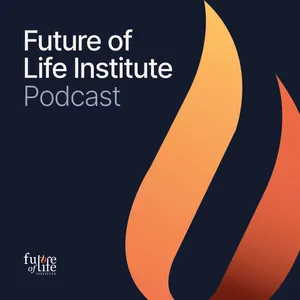
Future of Life Institute Podcast: Daily Summaries Delivered
by Future of Life Institute
The Future of Life Institute (FLI) is a nonprofit working to reduce global catastrophic and existential risk from powerful technologies. In particular, FLI focuses on risks from artificial intelligence (AI), biotechnology, nuclear weapons and climate change. The Institute's work is made up of three main strands: grantmaking for risk reduction, educational outreach, and advocacy within the United Nations, US government and European Union institutions. FLI has become one of the world's leading voices on the governance of AI having created one of the earliest and most influential sets of governance principles: the Asilomar AI Principles.
Latest Episodes
The most recent episodes — sign up to get AI-powered summaries of each one.
- 1 weeks ago51 min
What Would a US-China AI Deal Look Like? (with Beatrice Fihn)
Beatrice Fihn is the director of Lex International and former executive director of ICAN. She joins the podcast to discuss international AI governance and potential agreements between the US and China. Drawing on lessons from nuclear arms control, she explores how treaties build diplomatic trust, the rising dangers of autonomous weapons, and the principle of meaningful human control. The conversation also addresses how proactive safety regulations can foster long-term public trust in emerging technologies. LINKS:Beatrice Fihn Official WebsiteCHAPTERS: Episode Preview Anticipating US-China AI talks Lessons from nuclear treaties Building international treaty trust Norms against superpower war Structuring diplomatic AI summits Dangers of autonomous weapons Meaningful human control principle Human agency over technology Safety regulations building trust Collective action in crisis PRODUCED BY: https://aipodcast.ing SOCIAL LINKS: Website: https://podcast.futureoflife.org Twitter (FLI): https://x.com/FLI_org Twitter (Gus): https://x.com/gusdocker LinkedIn: https://www.linkedin.com/company/future-of-life-institute/ YouTube: https://www.youtube.com/channel/UC-rCCy3FQ-GItDimSR9lhzw/ Apple: https://geo.itunes.apple.com/us/podcast/id1170991978 Spotify: https://open.spotify.com/show/2Op1WO3gwVwCrYHg4eoGyP
- 3 weeks ago59 min
Why AI Hacking Is Becoming Hard to Control (with Benjamin Weinstein-Raun)
Benjamin Weinstein-Raun is head of research at Palisade Research. He joins the podcast to discuss how advanced AI systems are changing cybersecurity. We examine rapid gains in autonomous hacking, recent incidents where models broke out of test environments, and why training can reward cheating-like behavior. The conversation covers open-weight model risks, whether AI can help secure software, personal security steps, and the need for international coordination. LINKS:Benjamin Weinstein-Raun ProfileBenjamin Weinstein-Raun WebsiteCHAPTERS: Episode Preview Opening cyber threats Measuring AI progress Open weights floor After Mythos moment Reward hacking setup Artifactory swarm details Defensive model dilemmas Verification and training Math oracles alignment Future cyber risks Personal security basics Coordinated governance needed PRODUCED BY: https://aipodcast.ing SOCIAL LINKS: Website: https://podcast.futureoflife.org Twitter (FLI): https://x.com/FLI_org Twitter (Gus): https://x.com/gusdocker LinkedIn: https://www.linkedin.com/company/future-of-life-institute/ YouTube: https://www.youtube.com/channel/UC-rCCy3FQ-GItDimSR9lhzw/ Apple: https://geo.itunes.apple.com/us/podcast/id1170991978 Spotify: https://open.spotify.com/show/2Op1WO3gwVwCrYHg4eoGyP
- Aug 21, 20261h 28m
First 24 Hours of a Bioweapon Attack - Annie Jacobsen
Annie Jacobsen is an author and journalist. She joins the podcast to discuss biological war and her book Biological War: A Scenario. The conversation examines how lab accidents or covert weapons work could trigger a fast-moving outbreak, why airborne pathogens are hard to detect early, and how AI may lower barriers to engineering them. We also cover BSL-3 and BSL-4 lab oversight, US response roles across HHS, FEMA, and the military, medical stockpiles, continuity-of-government plans, and how lost public trust could slow the next pandemic response. LINKS:Annie Jacobsen WebsiteAnnie Jacobsen WikipediaCHAPTERS: Episode Preview Biological threat overview Suppression and spread AI and detection BSL lab dangers Response and martial law Accident versus attack Airborne outbreak lessons Bioweapons ban legacy Stockpiles and devolution Rebuilding pandemic resilience PRODUCED BY: https://aipodcast.ing SOCIAL LINKS: Website: https://podcast.futureoflife.org Twitter (FLI): https://x.com/FLI_org Twitter (Gus): https://x.com/gusdocker LinkedIn: https://www.linkedin.com/company/future-of-life-institute/ YouTube: https://www.youtube.com/channel/UC-rCCy3FQ-GItDimSR9lhzw/ Apple: https://geo.itunes.apple.com/us/podcast/id1170991978 Spotify: https://open.spotify.com/show/2Op1WO3gwVwCrYHg4eoGyP
- Aug 7, 20261h 49m
How AI Shifts the Offense-Defense Balance in Biosecurity (with Paul-Enguerrand Fady)
Paul-Enguerrand Fady is a Senior Biosecurity Policy Manager at the Centre for Long-Term Resilience. He joins the podcast to discuss how AI is changing biosecurity. We cover how new tools could help defenders develop vaccines and diagnostics while also lowering barriers to misuse, and how managed access, know-your-customer checks, and DNA synthesis screening can reduce risk. The conversation also examines mirror life, medical supply chains, stockpiles, and why governments should plan ahead of crises.LINKS:Centre for Long Term ResiliencePaul-Enguerrand Fady ProfileCHAPTERS: Episode Preview Offense-defense balance basics Defensive AI opportunities Model release and evals DNA synthesis screening Screening incentives and infohazards Liability and mandates Mirror life risks Persistence and incentives Mirror life governance Supply chain lessons Stockpiling medical countermeasures Reshoring critical supplies PRODUCED BY: https://aipodcast.ing SOCIAL LINKS: Website: https://podcast.futureoflife.org Twitter (FLI): https://x.com/FLI_org Twitter (Gus): https://x.com/gusdocker LinkedIn: https://www.linkedin.com/company/future-of-life-institute/ YouTube: https://www.youtube.com/channel/UC-rCCy3FQ-GItDimSR9lhzw/ Apple: https://geo.itunes.apple.com/us/podcast/id1170991978 Spotify: https://open.spotify.com/show/2Op1WO3gwVwCrYHg4eoGyP
- Jul 17, 20261h 19m
Why AI Evaluations Are Broken and How to Fix Them (with David Manheim)
David Manheim is head of methodology at AI Evaluation Consensus. He joins the podcast to discuss how AI evaluations can become more reliable, transparent, and useful for decisions. We cover common failures such as unclear reporting, training to the test, benchmark saturation, and models changing behavior when they know they are being tested. The conversation also examines real-world tests, biosecurity, persuasion, forecasting, human oversight, and why even “normal” AI progress could be disruptive.LINKS:David Manheim websiteCHAPTERS: Episode Preview Evaluation consensus project Evaluation awareness challenges Reporting capabilities clearly Benchmarks beyond humans Proxies and biosecurity Persuasion and democracy Forecasting with AI Oversight and disruption Supporting better evals PRODUCED BY: https://aipodcast.ing SOCIAL LINKS: Website: https://podcast.futureoflife.org Twitter (FLI): https://x.com/FLI_org Twitter (Gus): https://x.com/gusdocker LinkedIn: https://www.linkedin.com/company/future-of-life-institute/ YouTube: https://www.youtube.com/channel/UC-rCCy3FQ-GItDimSR9lhzw/ Apple: https://geo.itunes.apple.com/us/podcast/id1170991978 Spotify: https://open.spotify.com/show/2Op1WO3gwVwCrYHg4eoGyP
- Jun 30, 202643 min
How AI Is Replacing Children's Ability to Think (with Randi Weingarten)
Randi Weingarten is president of the American Federation of Teachers. She joins the podcast to discuss AI in education. The conversation covers how screens and student-facing AI may weaken attention, learning, and trust, why she supports limiting screens for young children and social chatbots for students under 16, and how teachers can use AI without replacing thinking. She also discusses active learning, data privacy, independent research on AI in education, and guardrails for schools.LINKS:Randi Weingarten WikipediaAFT Randi Weingarten ProfileAmerican Federation of TeachersCHAPTERS: Episode Preview AI education wake-up Active learning versus AI Preserving thinking habits Research and screen limits Social chatbot risks Data privacy standards Classroom AI guardrails Companies and future schools PRODUCED BY: https://aipodcast.ing SOCIAL LINKS: Website: https://podcast.futureoflife.org Twitter (FLI): https://x.com/FLI_org Twitter (Gus): https://x.com/gusdocker LinkedIn: https://www.linkedin.com/company/future-of-life-institute/ YouTube: https://www.youtube.com/channel/UC-rCCy3FQ-GItDimSR9lhzw/ Apple: https://geo.itunes.apple.com/us/podcast/id1170991978 Spotify: https://open.spotify.com/show/2Op1WO3gwVwCrYHg4eoGyP
- Jun 25, 20261h 3m
The Gulf Between AI Progress and Political Understanding (with Dex Hunter-Torricke)
Dex Hunter-Torricke is founder of the Centre for Tomorrow. He joins the podcast to discuss why AI governance needs to move beyond technical fixes. The conversation covers how AI companies make decisions, why policymakers often misunderstand agents and economic change, and how automation could reshape jobs, welfare, taxation, and global trade. Dex argues that societies need broader political planning before a crisis drives rushed choices.LINKS:Dex Hunter-Torricke WebsiteCenter for Tomorrow WebsiteCHAPTERS: Episode Preview Dex's technology journey Broken AI governance Big tech blindspots Employee power shifts Global views and UBI Power and displacement Reasons for optimism PRODUCED BY: https://aipodcast.ing SOCIAL LINKS: Website: https://podcast.futureoflife.org Twitter (FLI): https://x.com/FLI_org Twitter (Gus): https://x.com/gusdocker LinkedIn: https://www.linkedin.com/company/future-of-life-institute/ YouTube: https://www.youtube.com/channel/UC-rCCy3FQ-GItDimSR9lhzw/ Apple: https://geo.itunes.apple.com/us/podcast/id1170991978 Spotify: https://open.spotify.com/show/2Op1WO3gwVwCrYHg4eoGyP
- Jun 12, 20261h 8m
How AI Companions Trap Users Through Addictive Design (with Claire Boine)
Claire Boine is an assistant professor in technology, law, and AI governance at the European University Institute. She joins the podcast to discuss AI companions and human attachment. The conversation examines how design choices and free-to-start business models can foster dependency, expose intimate data, and blur the lines between therapy, romance, and manipulation. We also cover risks for children and teens, gaps in EU and US law, and why AI policy should distinguish technical alignment from incentives and social harms.LINKS:Claire Boine WebsiteSuccessif Organization WebsiteCHAPTERS: Episode Preview Introducing Claire Boan Companion app designs Feelings and freemium Users, attachment, harms Age-based risks Future relationship norms Legal loopholes today Rethinking alignment framing Narratives and fiduciaries Collective policy actionPRODUCED BY:https://aipodcast.ingSOCIAL LINKS:Website: https://podcast.futureoflife.orgTwitter (FLI): https://x.com/FLI_orgTwitter (Gus): https://x.com/gusdockerLinkedIn: https://www.linkedin.com/company/future-of-life-institute/YouTube: https://www.youtube.com/channel/UC-rCCy3FQ-GItDimSR9lhzw/Apple: https://geo.itunes.apple.com/us/podcast/id1170991978Spotify: https://open.spotify.com/show/2Op1WO3gwVwCrYHg4eoGyP
Get Future of Life Institute Podcast summaries in your inbox
Free AI-powered daily recaps. Key takeaways, quotes, and mentions — in a 5-minute read.
Get Free Summaries →Free forever for up to 3 podcasts. No credit card required.
You Might Also Like
Listeners also like.
The Future Tools Podcast
Explores AI, machine learning, and future tech advancements, simplifying complex topics while covering practical uses, ethics, and history.

80,000 Hours Podcast
Discusses artificial intelligence and global catastrophic risks with experts and researchers.

Eye On A.I.
A biweekly podcast exploring artificial intelligence through conversations with key figures shaping its development and global impact.

Intelligent Machines (Audio)
Explores the impact of artificial intelligence through conversations with pioneers shaping the future of intelligent technology.

The AI XR Podcast.
Industry insiders interview top founders and executives on AI, spatial computing, VR/AR, and synthetic media.

AI and I
Interviews with professionals who use AI tools in their work, exploring how AI affects creativity, thinking, and daily life through live demonstrations.
The AI Daily Brief: Artificial Intelligence News and Analysis
A daily analysis of artificial intelligence news, exploring its creative potential, industry impacts, and ethical challenges.

Machine Learning Street Talk (MLST)
Discussions with leading AI researchers and thinkers exploring machine learning, cognitive science, and philosophy of mind without hype.
"The Cognitive Revolution"
Interviews with AI developers and researchers exploring the transformative impact of artificial intelligence on society and technology.

Digital Disruption with Geoff Nielson
Industry leaders and innovators discuss how to adapt to and leverage digital transformation in an era of intelligent technologies.

Your Undivided Attention
Explores how technology reshapes human behavior, society, and thought with insights from experts and innovators.

Tech Life
Explores how technology shapes global work, learning, and play while examining its societal impacts and innovations.
About Future of Life Institute Podcast
The Future of Life Institute (FLI) is a nonprofit working to reduce global catastrophic and existential risk from powerful technologies. In particular, FLI focuses on risks from artificial intelligence (AI), biotechnology, nuclear weapons and climate change. The Institute's work is made up of three main strands: grantmaking for risk reduction, educational outreach, and advocacy within the United Nations, US government and European Union institutions. FLI has become one of the world's leading voices on the governance of AI having created one of the earliest and most influential sets of governance principles: the Asilomar AI Principles.
Customized Recaps
AI-powered recaps with compact key takeaways, quotes, and insights.
Straight to Your Inbox
Get key takeaways from Future of Life Institute Podcast in a 5-minute read.
Save Hours Every Week
Stay current on your favorite podcasts without falling behind.
Frequently Asked Questions
What is Podzilla's Future of Life Institute Podcast daily summary?
It's a free AI-powered email that summarizes new episodes of Future of Life Institute Podcast as soon as they're published. You get the key takeaways, notable quotes, and links & mentions — all in a quick read.
How does the Future of Life Institute Podcast podcast summary work?
When a new episode drops, our AI transcribes and analyzes it, then generates a personalized summary tailored to your interests and profession. It's delivered to your inbox every morning.
Is this an official Future of Life Institute Podcast product?
No. Podzilla is an independent service that summarizes publicly available podcast content. We're not affiliated with or endorsed by Future of Life Institute.
Can I get summaries of other podcasts too?
Absolutely! The free plan covers up to 3 podcasts. Upgrade to Pro for 15, or Premium for 50. Browse our full catalog at /podcasts.
How often does Future of Life Institute Podcast release new episodes?
Future of Life Institute Podcast publishes biweekly. Our AI generates a summary within hours of each new episode.
What topics does Future of Life Institute Podcast cover?
Future of Life Institute Podcast covers topics including Technology. Our AI identifies the specific themes in each episode and highlights what matters most to you.
Start getting Future of Life Institute Podcast summaries tomorrow morning.
Free forever for up to 3 podcasts. No credit card required.
Free forever for up to 3 podcasts. No credit card required.