Free Daily Podcast Summary
Furthure: Daily Summaries Delivered
by Haley Maria Dourron
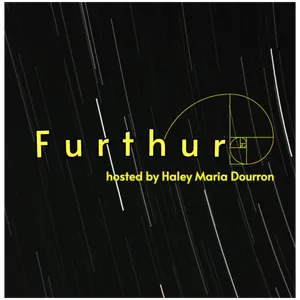
The Furthure Podcast explores the far reaches of the human experience from missions to Mars to skydiving to blowing one's mind with psychoactive substances. These conversations offer insight into how these extreme experiences showcase the human spirit and just might teach us how to live our everyday lives a bit better. Hosted by Haley Maria Dourron.
Latest Episodes
The most recent episodes — sign up to get AI-powered summaries of each one.
- Jul 3, 20261h 3m
Lexicons of the Ineffable: A Conversation with Josie Kins, PsychonautWiki Founder
One of the most systematic and comprehensive systems of documenting the effects of psychedelics and other psychoactives wasn’t made in academia, but was crafted by some drug nerds with high trait-level systematizing and a penchant for self-expirementation. In this episode, Josie Kins is the founder of PsychoanutWiki, the Subjective Effects Index, and the Replications Reddit tells us about the backstory behind how Josie got involved in subjective effect documentation. We discuss what her quest to describe the “ineffable” has led her to do, everything from poring over pretty much every drug effects system known to taking DPH to accurately describe its deliriant effects. Josie also tells us a bit about her brush with “McKenna syndrome,” her “DSM fan fiction” diagnosis for describing people who go a bit out there with psychedelics. In Josie's case, it led her to create a GitHub for her own religion, which she no longer fully endorses. We also talk a little bit about neurodiversity and whether psychedelics could have an impact on autism or not, and whether Josie’s experience with persistent depersonalization shaped PsychoanutWiki.Like the show? Please rate the podcast & subscribe ⭐️ ⭐️ ⭐️ ⭐️ ⭐️Lastly, I’d like to do a little shout-out for the Patreon! If you like the Furthure project, check out the Furthure page⚡️⚡️⚡️https://patreon.com/Furthure_HDourron⚡️⚡️⚡️
- May 14, 20262h 5m
Dissociatives Nervewing has known and (Ab)used
Nervewing may be the closest thing the field of psychonautics has seen to a Shulgin of dissociatives. Having cataloged an extensive repertoire of 253 unique substances ingested in their lifetime, including many substances that they were the first to synthesize and experience. Nervewing also has the honor of being the person with the most Erowid reports submitted.But unlike Shulgin, there was a darkness that crept in. Nervewing describes what it’s like to be so in the grips of dissociative addiction that doing PCP to clean the dishes was an ordinary part of their daily life.The circumstances of this story are singular. How many people synthesize novel dissociatives and get a chance to test their creations? Few people have a drive to catalog so innate to their psychological makeup that they have the drive to explore even the most unpleasant of pharmacological states and find themselves drawn into cataloging even the edges of the insect kingdom (Nervewing is also a skilled entomologist).Yet, at the same time, their story is an everyday story of addiction. The slow slip-ups, the compulsive behavior, the formation of a sense of identity around use. The slow boiling. One day you are just a person who uses a drug, and before you know it— the drugs are using you. Replacing life with use.The suffering and doldrums of recovery often get glossed over– Nervewing tells us about it. After all, how can a normal life feel good, when you are used to getting “dissed” every night?This was a story that was beautiful to capture. It was my favorite story I have captured on Furthure. I hope to someday capture more stories with this depth and nuance in the future.Trigger warning: This episode is not for people to listen to who might be upset about the discussion of self-harm, suicidality, and substance use. It is a deeply vulnerable and human story.
- Apr 24, 202646 min
Can Psychedelics Pass the Placebo Test? with Balázs Szigeti, PhD
The structure of clinical trials is generally not the most interesting thing in the world.But for psychedelic science, going through the “gold standard” double-blind placebo-controlled paradigm is all but impossible– and presents arguably one of the largest barriers to psychedelic treatments gaining approval.After all, how can one even pretend that seeing a bunch of fractals everywhere is even remotely similar to the effects of a niacin flush or being zonked out on diphenhydramine? Is it even possible these days to go through a psychedelic trial without all the media hype priming people to have “one of the top 10 most meaningful experiences in their life,” as Griffiths' study widely lauded?The field is advancing rapidly, and these questions are quickly catching up to us.To help figure out whether psychedelics could ever possibly pass the placebo test, Balázs Szigeti, PhD, came on the show to discuss his work examining blinding, placebo effects, and the power of expectancy.Although some people might not exactly be keen on the results of his work, they have the potential to reveal a lot about how psychedelics work, which in some ways may be even trippier than we imagined.Like the show? Please rate the podcast & subscribe ⭐️ ⭐️ ⭐️ ⭐️ ⭐️Lastly, I’d like to do a little shout-out for the Patreon! If you like the Furthure project, check out the Furthure page⚡️⚡️⚡️https://patreon.com/Furthure_HDourron⚡️⚡️⚡️
- Apr 4, 202647 min
Conversations with Amazonian Plants: Ayahuasca & Beyond with Rebekah Senānāyaka, PhD
Rebekah Senānāyaka, PhD, is an anthropologist and a certified explorer, having spent a combined total of 27 months of fieldwork in the heart of the Amazon, often living in a house with no walls, protected from the jungle by only a mosquito net. She also shares a bit about her experience as an apprentice with a Kichwa maestro, a first for a woman in the community she lived in. We also go beyond psychoactive plants to the broader relationships the Peruvian people have with the natural world, from dietas to exploring the Amazon’s natural medicine cabinet. Aside from talking to plants, Rebekah also shares her love for broader extreme experiences, from float tanks to ultra-endurance sports.Learn more about Rebekah's work here: https://www.bekplants. Instagram @whereisriaxPhoto credit: Rebekah SenānāyakaLike the show? Please rate the podcast & subscribe ⭐️ ⭐️ ⭐️ ⭐️ ⭐️Lastly, I’d like to do a little shout-out for the Patreon! If you like the Furthure project, check out the Furthure page⚡️⚡️⚡️https://patreon.com/Furthure_HDourron⚡️⚡️⚡️
- Feb 13, 202651 min
Exceptional Experiences with Psychedelics and Beyond with Dr. David Luke
This is one of the most fun and wide-ranging conversations I’ve had on Furthure in a while — and one of the weirder ones. Dr. David Luke, author of Otherworlds: Psychedelics and Exceptional Human Experience, investigates everything from how psychedelics may increase the odds of ESP-like experiences and paranormal beliefs to how people cope with existential distress after challenging psychedelic experiences. He has also been his own “guinea pig” for science, let’s just say, and isn’t afraid to tell us the tale.Even though studying the ESP phenomenon with psychedelics might seem a bit out there — maybe unicorn-dimension-level weird — there’s no denying that there are strong roots in the history of the field for studying this, with everyone from serious scientists in the 1950s to indigenous traditions entwined with it.We also get into the Challenging Experiences Project, which studies what can go wrong after psychedelic use. I loved this part of the conversation — we get into the nuances of how little is really known about what can go wrong after challenging psychedelic experiences. A little hint: it’s a lot more diverse than just psychosis or even run-of-the-mill depression. Understanding what can go wrong with psychedelics, and what people can do to help themselves afterward, is essential to the future of psychedelics integrating well (whatever that means) into society.I would also consider this a companion episode to Dr. Willoughby Britton’s episode on meditation-related side effects. If you enjoy this, be sure to check that out as well.
- Jan 24, 202650 min
The Varieties of Psychedelic Somatic Experience
Dan Grossman takes us on a tour of a very uncharted—but important—aspect of psychedelics’ effects: somatic experiences. We discuss the role that weird and wacky, “energy-like” experiences might play in the effects of psychedelics, and how, despite sounding a little out-there, these experiences are grounded in rich psychological and somatic traditions in both the East and West. If you’re wondering how The Body Keeps the Score might relate to psychedelics, this episode is for you.Like the show? Please rate the podcast & subscribe ⭐️ ⭐️ ⭐️ ⭐️ ⭐️Lastly, I’d like to do a little shout-out for the Patreon! If you like the Furthure project, check out the Furthure page⚡️⚡️⚡️https://patreon.com/Furthure_HDourron⚡️⚡️⚡️
- Nov 26, 202540 min
Running Further with Ultrarunner Ria Xi
Ria Xi is taking running further than many people could even conceive of as possible. She is planning a 20,000-km (~12,427-mile) run from the edge of Russia to Portugal. She has already pushed running to its limits—setting the fastest known time on the Camino trail in Spain and becoming the first person to ultrarun the Sinai Trail in Egypt.In our conversation, we talk about what she is running toward, what endurance really means, and the power of focusing on your “why.” We also get into the practicalities of ultrarunning and who might be ready to take the first steps toward training.Still, this conversation is inspiring for more than just the athletes out there. Ria basically asks us to dream big, bolder, and to just go for things—and to remember, “It’s only delusional until it’s not.”Stick around to the end of the episode for a little surprise goal I will be pursuingFollow Ria's Journey here on instagram @whereisriaxPhoto credit: Jack Lawes @jack.lawesLike the show? Please rate the podcast & subscribe ⭐️ ⭐️ ⭐️ ⭐️ ⭐️Lastly, I’d like to do a little shout-out for the Patreon! If you like the Furthure project, check out the Furthure page⚡️⚡️⚡️https://patreon.com/Furthure_HDourron⚡️⚡️⚡️
- Nov 11, 202552 min
Macrodosing Awe with Sean Goldy, PhD
How often do you feel amazed—or experience a sense of wonder? When was the last time you looked up at a tree, even in an ordinary park, and felt awe?Sean Goldy, PhD, a postdoctoral researcher at the Center for Psychedelics and Consciousness Research, takes us on a tour through his work on awe. We discuss the role it plays in psychedelic experiences—but also move beyond psychedelics to explore something even more fundamental to being human, and far more easily accessible.Like the show? Please rate the podcast & subscribe ⭐️ ⭐️ ⭐️ ⭐️ ⭐️Interested in the furthure book club? Join us for The Electric Acid Kool Aid Book will be meeting on November 23rd over Discord. Join us!Lastly, I’d like to do a little shout-out for the Patreon! If you like the Furthure project, check out the Furthure page ⚡️⚡️⚡️https://patreon.com/Furthure_HDourron⚡️⚡️⚡️
Get Furthure summaries in your inbox
Free AI-powered daily recaps. Key takeaways, quotes, and mentions — in a 5-minute read.
Get Free Summaries →Free forever for up to 3 podcasts. No credit card required.
You Might Also Like
Listeners also like.
Mushroom Revival Podcast
Explores the role of fungi in health, science, technology, and culture.

PSYCHOACTIVE
Explores humanity's complex relationship with drugs through conversations with users, experts, and critics.

hidden experience audio
In-depth interviews exploring the personal impact of UFO contact and the broader UFO mystery.
Mayim Bialik's Breakdown
Explores the intersection of science and spirituality through conversations on consciousness, healing, and unexplained phenomena.

Psychiatry & Psychotherapy Podcast
Explores psychiatry and psychotherapy through interviews with experts, trainees, and individuals sharing lived mental health experiences.

Next Level Soul Podcast with Alex Ferrari
Explores spirituality, consciousness, and life’s big questions through interviews with teachers, authors, and visionaries.
Aubrey Marcus Podcast
Conversations on mindset, spirituality, and human optimization with a focus on psychedelics, health, and personal growth.
The Psychology Podcast
Explores human potential and possibility through conversations with scientists, thinkers, and self-actualized individuals.
Aeon Byte Gnostic Radio
Explores ancient Gnostic, Hermetic, and Cathar wisdom to decode modern conspiracies, AI, UFOs, and the illusion of reality.

Forum Borealis
In-depth interviews with authors and thinkers on unconventional topics in history, science, philosophy, and politics.

Being Well with Forrest Hanson and Dr. Rick Hanson
Explores the science of lasting well-being through psychology, neuroscience, and mindfulness with expert guests.
Inner Cosmos with David Eagleman
Neuroscientist David Eagleman examines how the brain interprets reality through science, stories, and interviews.
About Furthure
The Furthure Podcast explores the far reaches of the human experience from missions to Mars to skydiving to blowing one's mind with psychoactive substances. These conversations offer insight into how these extreme experiences showcase the human spirit and just might teach us how to live our everyday lives a bit better. Hosted by Haley Maria Dourron.
Customized Recaps
AI-powered recaps with compact key takeaways, quotes, and insights.
Straight to Your Inbox
Get key takeaways from Furthure in a 5-minute read.
Save Hours Every Week
Stay current on your favorite podcasts without falling behind.
Frequently Asked Questions
What is Podzilla's Furthure daily summary?
It's a free AI-powered email that summarizes new episodes of Furthure as soon as they're published. You get the key takeaways, notable quotes, and links & mentions — all in a quick read.
How does the Furthure podcast summary work?
When a new episode drops, our AI transcribes and analyzes it, then generates a personalized summary tailored to your interests and profession. It's delivered to your inbox every morning.
Is this an official Furthure product?
No. Podzilla is an independent service that summarizes publicly available podcast content. We're not affiliated with or endorsed by Haley Maria Dourron.
Can I get summaries of other podcasts too?
Absolutely! The free plan covers up to 3 podcasts. Upgrade to Pro for 15, or Premium for 50. Browse our full catalog at /podcasts.
How often does Furthure release new episodes?
Furthure publishes monthly. Our AI generates a summary within hours of each new episode.
What topics does Furthure cover?
Furthure covers topics including Education, Fitness, Health & Fitness. Our AI identifies the specific themes in each episode and highlights what matters most to you.
Start getting Furthure summaries tomorrow morning.
Free forever for up to 3 podcasts. No credit card required.
Free forever for up to 3 podcasts. No credit card required.