Free Daily Podcast Summary
Food Junkies Podcast: Daily Summaries Delivered
by Clarissa Kennedy
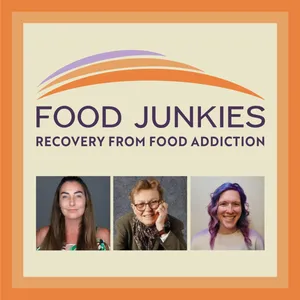
Welcome to the "Food Junkies" podcast! Here we aim to provide you with the experience, strength and hope of professionals actively working on the front lines in the field of Food Addiction. The purpose of our show is to educate YOU the listener and increase overall awareness about Food Addiction as a recognized disorder. Here we discuss all things recovery, exploring the many pathways people take towards abstinence in order to achieve a health forward lifestyle. Most importantly how to THRIVE rather than just survive. The content on our show does not supplement or supersede the professional relationship and direction of your healthcare provider. Always seek the advice of your physician or other qualified mental health provider with any questions you may have regarding a medical condition, substance use disorder or mental health concern.
Latest Episodes
The most recent episodes — sign up to get AI-powered summaries of each one.
- 1 weeks ago47 min
Episode 293: Clinician's Corner | Shame, Shadow & the Parts We Don't Show
Molly and Clarissa sit down for another Clinician's Corner to dig into shadow work — what Carl Jung meant by it, why it's not just a "woo-woo" concept, and why it belongs in food addiction recovery. They talk about the parts of ourselves we learn to hide (anger, desire, ambition, even joy), how those exiled parts often drive the very behaviors we're trying to recover from, and how projection, envy, and even compliments can point us straight to what we've buried. This episode previews the Shadow Work module inside Liberation, Sweet Sobriety's brand-new 10-module program launching this fall. WHAT WE COVER Why Molly built a shadow work module into Liberation, and how it connects to the Shame module covered in a previous episode Carl Jung's quote — "Until you make the unconscious conscious, it will direct your life, and you will call it fate" and what it means in practice The iceberg metaphor: the curated 10% we show the world vs. the 90% underneath driving our behavior Where the shadow comes from (genetics loads the gun, environment pulls the trigger) and why this isn't about blaming parents How substance use, food behaviors, and other compulsive patterns often exist to manage and suppress shadow parts Recovery work doesn't make the shadow disappear — and why it can get louder, becoming a high-risk time for return to use Projection: how "accusations are often confessions," and why the people who irritate us most can be mirrors The Golden Shadow — the positive traits (confidence, joy, ambition) we also learn to suppress or deny Why receiving compliments can feel unbearable, and what that has to do with shadow work Envy and jealousy reframed as information rather than something shameful Individuation and integration — Jung's idea that the goal isn't to eliminate these parts, but to become a whole person who can hold all of them How return to use fits into this: not a moral failure, but sometimes a shadow part that hasn't been integrated A personal moment on privilege, shame, and how rejecting a part of ourselves can limit our ability to help others What to expect from the Shadow Work module inside Liberation LIBERATION — SWEET SOBRIETY'S NEW PROGRAM Liberation is the next step after Foundations — a deeper 10-module program covering shadow work, shame, anger, guilt, the inner critic, ADHD and the nervous system, trauma, highly sensitive people, and more. You do not need to have completed Foundations first. Modules release the week of September 21. Live sessions begin October 15 at 1:00–2:30 PM Eastern. Starting price: $400 USD for this first round (early participants help shape the program, same as the first Foundations cohort) Learn more and join us: https://sweetsobriety.newzenler.com/courses/sweet-sobriety-liberation RESOURCES & LINKS Catch our earlier episode on Shame: https://open.spotify.com/episode/44sTxYKeVv7r01wtSKkYtm?si=7557f537d5314ebd Sweet Sobriety Foundations Program: https://sweetsobriety.newzenler.com/courses/sweet-sobriety-foundations Sweet Sobriety website: https://www.sweetsobriety.ca/ Have a topic you want us to cover? Email us: foodjunkiespodcast@gmail.com POLAND 2027: https://fundacjabraciarodzen.pl/products/international-advanced-training-programme?variant=56860764078458 ABOUT FOOD JUNKIES PODCAST Food Junkies is hosted by Dr. Vera Tarman, Clarissa Kennedy, and Molly Painschab, exploring food addiction, ultra-processed food use disorder, and recovery from a clinical, compassionate, and lived-experience perspective. Subscribe for new e
- 3 weeks ago51 min
Episode 292: Lucy Loch | Food Addiction in Older Adults - What New Research Reveals
Why do older women show the highest rates of food addiction, while older men are more likely to meet criteria for alcohol and tobacco use disorder — and why does that gap flip when it comes to weight? In Episode 292, we sit down with Lucy Loch, a doctoral candidate in Psychology at the University of Michigan, to unpack her research on food addiction in older adults and what it reveals about decades of diet culture, marketing, and an under-screened generation. Lucy studies the life course development of addictive-like eating — how early-life experiences and exposure to ultra-processed foods shape appetite, self-regulation, and long-term health outcomes. She's supported by the National Science Foundation Graduate Research Fellowship, works under Dr. Ashley Gearhardt at the University of Michigan, and her research has appeared in Addiction, Current Obesity Reports, and Physiology & Behavior. In this conversation, we dig into her recent study from the National Poll on Healthy Aging: why older women meet criteria for food addiction at higher rates than older men, why overweight men in the study were 19x more likely to meet criteria (compared to 11x for women), what a small but striking finding on underweight older adults might mean, and why isolation and food addiction may feed each other in a bidirectional loop. We also talk about why food addiction is so often invisible in geriatric medicine, what it would take to get it screened for the way depression and falls already are, and what decades of "low-fat," heavily marketed diet products may have set up for the women who trusted them. This one is for anyone who works with older adults, anyone who's ever been told "just eat healthier," and anyone who's still unlearning the idea that this comes down to willpower. About our guest: Lucy Loch is a doctoral candidate in the Department of Psychology at the University of Michigan. Her research focuses on the life course development of addictive-like eating, examining how early life experiences and exposure to ultra-processed foods influence appetite, self-regulation, and risk for later-life health outcomes. She is supported by the National Science Foundation Graduate Research Fellowship and works to uncover why certain foods and life experiences may make some individuals more susceptible to overeating. Her work has appeared in journals including Addiction, Current Obesity Reports, and Physiology & Behavior. POLAND 2027: https://fundacjabraciarodzen.pl/products/international-advanced-training-programme?variant=56860764078458 Connect With Us Subscribe to Food Junkies Podcast for new episodes Email us at foodjunkiespodcast@gmail.com The content of our show is educational only. It does not supplement or supersede your healthcare provider's professional relationship and direction. Always seek the advice of your physician or other qualified mental health providers with any questions you may have regarding a medical condition, substance use disorder, or mental health concern.
- Aug 18, 202645 min
Food Junkies Recovery Stories Episode 37: April Oscarson
In this episode, CJ sits down with April for a thoughtful, reflective conversation about recovery. April brings a quiet intentionality to the way she understands healing, growth, and the ongoing work of becoming. Her perspective is introspective, honest, and at times existential, inviting us to slow down and consider what recovery truly asks of us. This conversation has a different rhythm—less about quick answers and more about meaningful questions, self-awareness, and the space between where we have been and who we are becoming. April's calm presence reminds us that recovery can be both deeply personal and profoundly transformative. If you're considering personalized assistance, CJ, a Certified Addiction Professional specializing in Food Addiction, is here for one-on-one coaching. Reach out to CJ at cjnguy@myfoodaddictioncoach.com Interested in sharing your recovery story on our show? We'd love to hear from you! Please email FJRecoverystories@gmail.com
- Aug 13, 202650 min
Episode 291: Dr. Matt Bernstein, MD | Metabolic Psychiatry, Ketosis, and Food Addiction
Can changing what you eat treat depression, anxiety, and even psychosis more effectively than medication alone? In this episode of Food Junkies, Dr. Vera Tarman sits down with Dr. Matt Bernstein, MD, psychiatrist and CEO of Accord, to unpack the emerging field of metabolic psychiatry — and what it means for people recovering from food addiction. Dr. Bernstein trained at Columbia, Penn, and the MGH-McLean Psychiatry Program before shifting from traditional hospital-based psychiatric care toward lifestyle-based interventions: nutrition, sleep, light, and movement. He now serves on the advisory board of Metabolic Mind and helped organize the first public conference on metabolic psychiatry in 2023. In this conversation, Dr. Bernstein and Dr. Tarman explore how brain energy metabolism — not just neurotransmitters — may be a root driver of conditions like depression, bipolar disorder, schizophrenia, and Alzheimer's, and why ketogenic and low-carbohydrate approaches are showing early but compelling results for food cravings, food noise, and psychiatric symptom relief. In This Episode, You'll Learn: Why Dr. Bernstein moved away from conventional psychiatric medication models toward metabolic approaches How brain insulin resistance can contribute to depression, bipolar disorder, and schizophrenia The role of mitochondria, oxidative stress, and the gut-brain axis in mental illness How ketones act as an alternative brain fuel — and why that matters for insulin-resistant neurons The connection between brain insulin resistance and Alzheimer's risk decades before symptoms appear How ketogenic and low-carb diets naturally reduce food cravings and "food noise" for people with food addiction What a day in the Accord immersive metabolic psychiatry program actually looks like Why combining diet, exercise, circadian rhythm alignment, and mind-body practices produces faster results than any single intervention alone How GLP-1 medications compare to ketogenic diets for reducing food noise and cravings — and where each may fall short The risks of rapid or unsupported psychiatric medication tapering, and why "hyperbolic tapering" matters What to watch for (and troubleshoot) if a ketogenic diet isn't producing results after several weeks Guest Dr. Matt Bernstein, MD is a psychiatrist and CEO of Accord, an immersive metabolic psychiatry program near Boston. He is a leading voice in metabolic psychiatry, sits on the advisory board of Metabolic Mind, and helped organize the first public conference dedicated to the field in 2023. Connect with Dr. Matt Bernstein & Accord Website: https://accordmh.com/ Releasing What's Not Ours: Healing Food & Body Struggles Through IFS with Vanessa Kredler 👉Learn more here: https://sweetsobriety.newzenler.com/courses/releasing-whats-not-ours Connect with Food Junkies 🎧 Subscribe for new episodes 🌐 Learn more about food addiction recovery at <a href= "https://www.sweetsobriety.ca/" target="_blank"
- Jul 30, 202658 min
Episode 290: Dr. Carolyn Dean | Magnesium, Yeast Overgrowth & Sugar Cravings
Fatigue. Brain fog. Cravings that never quit no matter how "good" you're eating. In this episode of Food Junkies, Dr. Vera Tarman sits down with Dr. Carolyn Dean — MD, naturopath, and author of more than 50 books including The Magnesium Miracle — to unpack a piece of the addiction and recovery puzzle that rarely gets airtime: magnesium deficiency and its tangled relationship with yeast overgrowth, sugar metabolism, and chronic cravings. Dr. Dean has spent over five decades in integrative and functional medicine, and in this conversation she lays out her theory that a huge share of chronic symptoms — anxiety, insomnia, heart palpitations, muscle tension, even conditions mistaken for neurological disease — trace back to a mineral most conventional labs never test properly. She also digs into candida overgrowth, why restrictive diets like keto and carnivore may be working for reasons people don't realize, and why sugar cravings might be your gut asking for something other than sugar. This episode isn't a replacement for individualized medical or clinical treatment, and it isn't an endorsement of any product mentioned. As always, we encourage listeners to bring these questions to their own care team. In this episode, you'll learn: Why magnesium is required to produce ATP — the energy currency of every cell — and what happens when your body can't get enough The difference between a magnesium compound and a bioavailable magnesium ion, and why so many supplements underdeliver How soil depletion and modern agriculture have quietly lowered magnesium in the food supply over the past century The link Dr. Dean draws between candida/yeast overgrowth, leaky gut, and persistent sugar cravings Why she believes some people on restrictive diets (keto, carnivore, paleo) may be managing yeast overgrowth without realizing it The connection between sugar metabolism, vitamin C, and cardiovascular health Her recommended starting point for anyone wanting to address deficiency: diet, timing, and sequencing of supplementation About Our Guest Dr. Carolyn Dean, MD, ND is a physician and naturopath with over 50 years of experience in integrative and functional medicine. A graduate of Dalhousie University's medical school, she is the author of more than 50 books, including The Magnesium Miracle, Detox Your Body, and multiple works on sugar toxicity and mineral deficiency. Her clinical focus centers on magnesium, mineral absorption, and yeast overgrowth as root contributors to chronic fatigue, cravings, and metabolic dysfunction. Learn more: drcarolyndean.com Her product site: rnareset.com About Vanessa Kredler's Upcoming IFS Workshop: 👉Releasing What's Not Ours: Healing Food & Body Struggles Through IFS Not every struggle with food and body belongs to you. Some of it was handed down — a mother's dieting, a culture's obsession with thinness, a family that never said "I love you" out loud but said "eat" instead. In this 3-part live series, clinical counsellor Vanessa Kredler — a PACFA-registered therapist, certified food addiction professional (INFACT), and Level 2-trained IFS practitioner — draws on her work in addiction, complex trauma, and intergenerational trauma to help you untangle what's actually yours from what you inherited. Using Internal Family Systems, you'll learn to recognize the legacy and cultural burdens shaping your relationship with food, understand why parts of you hold onto them, and take part in a guided practice to begin letting them go — with the same compassionate, trauma-informed approach Vanessa brings to her own clinical work (and, as she'll tell you, her own recovered life). 👉Link: <a href= "https://sweetsobr
- Jul 16, 202652 min
Episode 289: Brian Baumal | Perfectionism, Shame, and Food Addiction Recovery
In this episode of Food Junkies, Dr. Vera Tarman and Clarissa Kennedy sit down with Brian Baumal, a registered psychotherapist based in Toronto and owner of Aliva Psychotherapy, where he specializes in weight management, eating disorders, food addiction, and psychological support for bariatric surgery patients. Brian trained at the Gestalt Institute of Toronto and has been a licensed member of the College of Registered Psychotherapists of Ontario since 2015. He's also a food addict in long-term recovery, having lost 100 pounds and kept it off for over 14 years. Brian shares the moment that changed his understanding of food addiction forever — an intense, addictive reaction to a piece of chocolate at a holiday party that made him realize this was on an entirely different scale than an ordinary craving. From there, the conversation dives deep into perfectionism: how shame and diet culture create an idealized, unrealistic self-image; the difference between adaptive perfectionism (using structure and tools in service of recovery) and toxic or maladaptive perfectionism (an all-or-nothing mindset that treats any slip as total failure); and how perfectionism can quietly become a "runaway train," redirecting obsessive focus from food onto weight, exercise, or other behaviors. Brian also explains how he uses a Gestalt therapy lens — treating what shows up in the room between therapist and client as the material for the work itself — to help clients build individualized, flexible recovery plans instead of rigid, punishment-driven rules. The group discusses distinguishing an addictive relapse from a psychological or shame-based slip, the role of relapse plans and "gathering data" after a slip, and why using tools (scales, timers, structure) isn't a sign of weakness but a sustainable part of long-term recovery. The episode closes with Brian's reflections on chairing the Sugar and Food Addiction Professionals Network, a free Facebook community of nearly 200 food addiction professionals offering training, research updates, and access to leading voices in the field. Topics Covered Brian's personal food addiction story and his "aha moment" with chocolate at a holiday party What Gestalt therapy is and how it approaches defense mechanisms relationally How shame and diet culture create unrealistic, idealized self-images Adaptive vs. maladaptive (toxic) perfectionism in recovery Perfectionism as a "runaway train" — when focus shifts from food to weight, exercise, or other behaviors Distinguishing an addictive relapse from a shame-driven psychological slip Building individualized, flexible abstinence and relapse plans Using tools (scales, timers, structure) without turning them into self-punishment Vulnerability factors: trauma, family food dynamics, anxious or over-controlled personality styles Adaptive perfectionism as flexibility, not the absence of high standards The Sugar and Food Addiction Professionals Network on Facebook Connect with Brian Baumal Website: Aliva Psychotherapy — https://alivapsychotherapy.com/ WORKSHOP LINKS: 🚨Curious why cravings hit harder some days than others? Viktoria Hamma's two-part Circadian Rhythms & Red Light Therapy workshop breaks down the biology behind your body's internal clock and shows you exactly how morning light, meal timing, and red light therapy can work with your recovery instead of against it. Grab your spot for Part 1: <a href= "https://sweetsobriety.
- Jul 13, 202640 min
Food Junkies Recovery Stories Episode36: Lára Pedersen
CJ welcomes Lara, a former professional soccer player from Iceland, for a powerful and deeply honest conversation about food addiction and recovery. Lara began struggling with food at a very young age and recognized early that it was beginning to take over her life, even while competing as an elite athlete. She speaks with remarkable transparency about her experiences, their impact on her, and the path she has taken toward healing. Lara's willingness to share is so profound that she even wrote a book about her journey. CJ found her story fascinating and truly loved talking with her. If you're considering personalized assistance, CJ, a Certified Addiction Professional specializing in Food Addiction, is here for one-on-one coaching. Reach out to CJ at cjnguy@myfoodaddictioncoach.com Interested in sharing your recovery story on our show? We'd love to hear from you! Please email FJRecoverystories@gmail.com
- Jul 2, 202657 min
Episode 288: Susan Peirce Thompson, PhD — Six-Year Outcomes, GLP-1s & the Identity Shifts Behind Lasting Recovery
📢 A quick announcement from the Food Junkies team: For the first time, we're moving to a new release schedule — new episodes every other week, still featuring one Recovery Story each month. We'll share more about this decision in our next Clinician's Corner. Whether you've been with us from the beginning or just found us, thank you. This is also the perfect time to dive into our archive of hundreds of conversations with experts, clinicians, researchers, and people with lived experience. Our next episode launches on July 17th. About Today's Guest Dr. Susan Peirce Thompson is a cognitive psychologist with expertise in the psychology of eating and the founder and CEO of Bright Line Eating, a global program for abstinence-based recovery from ultra-processed food addiction and long-term weight management. She is an adjunct associate professor in Brain and Cognitive Sciences at the University of Rochester and the author of Bright Line Eating, ReZoom, On This Bright Day, The Official Bright Line Eating Cookbook, and her newest book, Maintain. In 2025, Susan published a study in Frontiers in Psychiatry reporting six-year outcomes from the Bright Line Eating program that suggest an abstinence-based food addiction recovery approach can support clinically meaningful, long-term weight loss. In This Episode Vera and Clarissa sit down with Susan to unpack her research, her personal recovery story, and the deeper psychology of maintenance. Topics include: Susan's journey from drug addiction to food addiction recovery — and why she found the food harder to quit How Bright Line Eating began, and why so many people won't walk into a 12-step room The honest story behind ReZoom: Susan's own break-and-resume cycles while leading a recovery movement The six-year follow-up study: methodology, sample, limitations, and what the numbers actually show How outcomes compare to published GLP-1 (semaglutide) data at long-term follow-up Why simply learning about the addictiveness of sugar and flour may "inoculate" people against further weight gain The four Bright Lines: sugar, flour, meals, quantities Who did best at six years — and the surprising role of morning accountability calls GLP-1 medications in food addiction recovery: Susan's "pro-choice" stance, the promise, the unknowns, and why we shouldn't pathologize medication for a brain-based disease The tension between weight loss outcomes and addiction symptom recovery — and protecting listeners in larger bodies who are doing everything "right" Lipedema: the under-recognized condition affecting an estimated 11% of women that doesn't respond to dietary intervention The three identity shifts in Maintain: becoming devoted, resourced, and liberated Grief work: why letting go of foods (and food-centered traditions) is a real loss that deserves real mourning Finish-line anxiety and the fear of liberation — who am I without the food and weight struggle? Willpower, habit stacking, and designing a life that works even on your worst day What's next for Susan: an alternative memoir about the dopamine-dominant brain Connect with Susan Peirce Thompson <ul style="margin-top:
Get Food Junkies Podcast summaries in your inbox
Free AI-powered daily recaps. Key takeaways, quotes, and mentions — in a 5-minute read.
Get Free Summaries →Free forever for up to 3 podcasts. No credit card required.
You Might Also Like
Listeners also like.

Just Ingredients
Explores whole, non-toxic ingredients for nutrition, wellness, and daily living with expert guests discussing health and natural product choices.

Quiet the Diet
A dietitian shares her experience and knowledge to help people heal their relationship with food and make health choices based on self-awareness.

Rooted in Wellness with Mona Sharma
A holistic nutritionist blends ancient wellness practices with modern science to address mind, body, and soul health.

Red Pill Your Healthcast
Two healthcare providers discuss overlooked health issues and empower listeners to make informed decisions for their families.

Weight Loss for Busy Physicians | Helping Women Physicians Lose Weight for the Last Time
Helps women physicians lose weight by addressing stress eating, exhaustion, and time constraints in their demanding careers.

Peak Performance Life Podcast
Covers health, energy, and mental performance optimization through biohacking, nutrition, and lifestyle strategies.

The Dr. Gabrielle Lyon Show
Discusses health, longevity, and mental resilience through science-based conversations with medical and wellness experts.

High Vibe & Healthy: Gut Health | Functional Nutrition | Whole Foods
A functional nutritionist explores gut health and whole foods to help simplify wellness and boost energy.

Dr. Jockers Functional Nutrition
Discusses science-based functional nutrition strategies for reducing inflammation, improving brain health, and supporting overall wellness.

ZOE Science & Nutrition
Experts break down cutting-edge health and nutrition science to help you make better choices for your body and gut.

The Dr. Hyman Show
Explores root causes of chronic disease and promotes functional medicine, nutrition, and preventive health through expert discussions.
Treated with Dr. Sara Szal
Dr. Sara Szal explores holistic health solutions through conversations with experts and patients seeking mind, body, and soul healing.
About Food Junkies Podcast
Welcome to the "Food Junkies" podcast! Here we aim to provide you with the experience, strength and hope of professionals actively working on the front lines in the field of Food Addiction. The purpose of our show is to educate YOU the listener and increase overall awareness about Food Addiction as a recognized disorder. Here we discuss all things recovery, exploring the many pathways people take towards abstinence in order to achieve a health forward lifestyle. Most importantly how to THRIVE rather than just survive. The content on our show does not supplement or supersede the professional relationship and direction of your healthcare provider. Always seek the advice of your physician or other qualified mental health provider with any questions you may have regarding a medical condition, substance use disorder or mental health concern.
Customized Recaps
AI-powered recaps with compact key takeaways, quotes, and insights.
Straight to Your Inbox
Get key takeaways from Food Junkies Podcast in a 5-minute read.
Save Hours Every Week
Stay current on your favorite podcasts without falling behind.
Frequently Asked Questions
What is Podzilla's Food Junkies Podcast daily summary?
It's a free AI-powered email that summarizes new episodes of Food Junkies Podcast as soon as they're published. You get the key takeaways, notable quotes, and links & mentions — all in a quick read.
How does the Food Junkies Podcast podcast summary work?
When a new episode drops, our AI transcribes and analyzes it, then generates a personalized summary tailored to your interests and profession. It's delivered to your inbox every morning.
Is this an official Food Junkies Podcast product?
No. Podzilla is an independent service that summarizes publicly available podcast content. We're not affiliated with or endorsed by Clarissa Kennedy.
Can I get summaries of other podcasts too?
Absolutely! The free plan covers up to 3 podcasts. Upgrade to Pro for 15, or Premium for 50. Browse our full catalog at /podcasts.
How often does Food Junkies Podcast release new episodes?
Food Junkies Podcast publishes weekly. Our AI generates a summary within hours of each new episode.
What topics does Food Junkies Podcast cover?
Food Junkies Podcast covers topics including Nutrition, Fitness, Health & Fitness. Our AI identifies the specific themes in each episode and highlights what matters most to you.
Start getting Food Junkies Podcast summaries tomorrow morning.
Free forever for up to 3 podcasts. No credit card required.
Free forever for up to 3 podcasts. No credit card required.