Free Daily Podcast Summary
Female by Design: Daily Summaries Delivered
by Francie Winslow
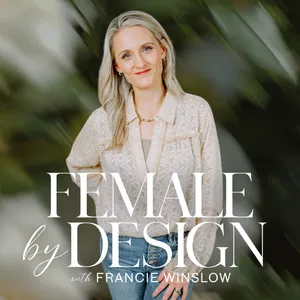
An honest space for female flourishing. Together we'll explore sexuality and spirituality by God's design, healing our relationship with pleasure, our bodies, and our identity as image-bearers. Let's take a deep breath and step into God's invitation to live fully alive—mind, body, and spirit.
Latest Episodes
The most recent episodes — sign up to get AI-powered summaries of each one.
- Yesterday23 min
Ep. 273. Celebrating Masculine Strength (Part 2): The Gaze, the Time, and the Words That Heal a Marriage
Francie continues her celebration of holy masculine strength — and this week, she gets specific. Masculine strength "used well," she says, isn't about domination or performance; it's strength channeled toward self-giving love, the kind Ephesians 5 calls husbands to. Francie unpacks three concrete ways her husband Wyatt's strength has healed her heart and body over 21+ years of marriage: his disciplined gaze (and what it's meant that his eyes are for her, not a scroll), his willingness to become a curious student of her body and design instead of assuming he already knew it, and the intentional, unhurried way he creates safety in their intimate life — what he calls "the pace of my pleasure." She closes with a tender word on the power of words: how careless ones wound, and how measured, honoring ones can heal decades of body shame. In This Episode: What "masculine strength used well" actually means — and why it's the opposite of domination The gift of a disciplined gaze, and how it healed Francie's fear of being compared How Wyatt became a "student" of Francie's body — and why the curiosity mattered more than expertise Spontaneous intimacy vs. intentional, unhurried intimacy ("the pace of my pleasure") How words — in conflict and in the bedroom — can wound or heal A closing charge to the husbands showing up, imperfectly, anyway Ready to go deeper right now? Back to the Garden is the guide I wrote for exactly where you are — a married woman's guide to pleasure by design. It's the most honest thing I've put together, and at $18 it's the easiest yes you'll make this week. → here Questions? Find me on Instagram or at franciewinslow.com
- 1 weeks ago19 min
Ep 272. Celebrating Masculine Strength (Part 1): A Wife Was Made to Receive
Francie's back from a summer away — and she's kicking off a new mini-series on something our culture rarely celebrates: holy masculine strength. After a clip about honoring husbands went semi-viral this summer (and pulled in a wave of new male listeners), Francie felt the nudge to open this conversation to husbands too — not just wives. In this episode, she lays the theological groundwork, starting with the Hebrew word tov me'od ("very good") — the phrase God used only once He'd created both male and female. Then she gets honest about female design itself: more nerve endings, more erogenous zones, more built-in capacity for pleasure than most of us were ever taught to expect. So why do so many of us walk into the bedroom already in to-do-list mode? Francie also shares candidly about seasons in her own 21-year marriage marked by shame, numbness, and disconnection — and introduces the three-part framework she'll spend the rest of the series unpacking: how her husband Wyatt's strength has helped her feel seen, safe, and celebrated. In This Episode: Why Francie is dedicating a series to celebrating masculine strength — and inviting husbands to listen in The Hebrew word tov me'od and what it means that God called male AND female "very good" The design of female pleasure: nerve endings, erogenous zones, and the shift from "doing" to "receiving" Francie's own story of numbness and healing, 21 years into marriage A first look at the framework: seen, safe, celebrated Ready to go deeper right now? Back to the Garden is the guide I wrote for exactly where you are — a married woman's guide to pleasure by design. It's the most honest thing I've put together, and at $18 it's the easiest yes you'll make this week. → here Questions? Find me on Instagram or at franciewinslow.com
- Jul 13, 202624 min
Ep. 271 Female Orgasm: What You Were Never Taught
This is the episode I wish someone had offered me years ago. We grew up in a culture that was simultaneously saturated with sexuality and almost completely silent about women's actual experience of it. And for those of us who wanted to stay honorable in our searching, we often didn't know where to turn. So this episode is a warm, clear, shame-free conversation about female anatomy, how your body was designed to experience pleasure, and what you actually need to know to have a genuinely good intimate life. I'm sharing it from the same place I share everything — as a woman on a journey, who loves God and loves women, and believes deeply that understanding your design is an act of worship. A few things in this episode that I hope bring you relief and wonder: Women have over 10,000 nerve endings in the clitoris — more than double what men have. God didn't design that by accident. It tells us something about his heart for women's pleasure. The clitoris wasn't fully studied in medical research until 2022. If you feel undereducated about your own body, that's not your fault. Most women don't reach orgasm through penetration alone — and that is completely normal. Understanding your body and how it works changes everything. Your body takes an average of 20 minutes to become fully aroused — and everything we've talked about in this series about slowing down, becoming present, and waking up to sensation is exactly what prepares you for that. We also walk through three types of orgasm — vaginal, clitoral, and cervical — gently and practically, with the same spirit that has carried this whole series. Tov Meod. Very good. That is God's word over your body, your femininity, and your capacity for pleasure. This episode is an invitation to receive that as true. A few key terms defined in this episode: Clitoral stimulation — direct touch or sensation to the clitoris, one of the primary pathways to orgasm for most women. Arousal — your body's physical response to intimacy, which for women takes time, safety, and presence to fully develop. Cervical orgasm — a deep, full-body experience connected to the vagus nerve, described by many women as transcendent and deeply releasing. Ready to go deeper right now? Back to the Garden is the guide I wrote for exactly where you are — a married woman's guide to pleasure by design. It's the most honest thing I've put together, and at $18 it's the easiest yes you'll make this week. → here Questions? Find me on Instagram or at franciewinslow.com
- Jul 6, 202627 min
Ep. 270 Small Daily Habits That Wake Up Your Pleasure
Female flourishing doesn't start in the bedroom. It starts in the kitchen. In the shower. At a stoplight. In five minutes on your front porch listening to birds. That might sound surprising — but it's one of the most freeing things I've discovered on this journey. The capacity to feel pleasure, connection, and aliveness in intimacy is directly connected to how present you are in your body throughout the rest of your day. And most of us, if we're honest, have spent years going the other direction. We rush through showers without feeling the water. We eat while scrolling. We move through our days completely in our heads — making lists, managing everything, pushing through — without ever stopping to notice what our bodies are actually experiencing. That's what I mean by disembodiment. And it's more common than you think. The beautiful thing is that coming back doesn't require a retreat or a dramatic overhaul. It starts with small things. Noticing the texture of a warm mug in your hands. Rolling essential oil between your palms and actually smelling it. Letting your spine sway for thirty seconds in the kitchen. Washing your hair just a little more slowly. These are what I call pleasure practices — small, intentional moments of sensory awareness that help your nervous system settle, your body come online, and your capacity to feel grow. They're not about sexuality. They're about being awake to your own life. And over time, that aliveness translates into everything — including your marriage. A few key terms defined in this episode: Pleasure practices — small daily habits that engage your five senses and help you stay present in your body throughout the day. Nervous system regulation — gently helping your body shift out of stress or shutdown so it can feel safe, open, and present. Nonlinear movement — free, flowing movement (like swaying or rolling your spine) that releases tension and helps your body feel safe and open. This one is full of things you can try today. Come take a slow breath with me. Ready to go deeper right now? Back to the Garden is the guide I wrote for exactly where you are — a married woman's guide to pleasure by design. It's the most honest thing I've put together, and at $18 it's the easiest yes you'll make this week. → here Questions? Find me on Instagram or at franciewinslow.com
- Jun 29, 202625 min
Ep 269. Body Shame: Where It Comes From and How to Heal
Most of us carry body shame. Yet, we don't always know where we picked it up. In this episode we go a little deeper into the roots of shame — because understanding where it came from is one of the most powerful steps toward healing it. And what we find, when we look honestly, is that this shame runs deeper than any one experience or teaching. It's woven into our language, our culture, and even our anatomy textbooks. Here's one example that stopped me cold: the Latin word for vagina — pudendum — literally means part to be ashamed of. That word has been in medical textbooks for centuries. It's in the name of the pudendal nerves — the very nerves responsible for much of a woman's sexual pleasure. And somewhere in our collective history, we absorbed that message into our bodies without ever being told it outright. That's what shame does. It doesn't always arrive loudly. It seeps in quietly — through language, silence, the absence of good education, and the distance between our spiritual lives and our physical ones. But here's the good news — and there is so much good news in this episode. God has a different word for your body. Tov Meod. Very good. Beneficial. Lovely. Harmonious. Flourishing. Fulfilling its purpose. That was his declaration over you when he made you. And it's still true. In this episode you'll hear what it looks like to begin replacing the language of shame with the language of the garden. Including one surprisingly tender and powerful practice: renaming the parts of yourself you've been taught to be ashamed of. A few key terms defined in this episode: Embodiment — living connected to and aware of your physical body, not just operating from your head. Tov Meod — Hebrew for "very good" — God's original declaration over his creation, including your body and your sexuality. Befriending your body — choosing to treat your body with curiosity and kindness instead of shame or avoidance. Come as you are. This is a journey, not a destination — and you are welcome here exactly where you are. Ready to go deeper right now? Back to the Garden is the guide I wrote for exactly where you are — a married woman's guide to pleasure by design. It's the most honest thing I've put together, and at $18 it's the easiest yes you'll make this week. → here Questions? Find me on Instagram or at franciewinslow.com
- Jun 22, 202627 min
Ep 268. Female Flourishing: What It Means to Be Fully Alive
Hey friend — welcome to something that's been on my heart for a while. Over the next four episodes we're going to talk about what it looks like to be fully alive as a woman. Not just spiritually. Not just emotionally. But in your whole self — mind, body, and yes, sexuality too. I'm calling it Female Flourishing. That phrase might be new to you, so let me explain what I mean. Female flourishing is the journey of becoming more whole, more free, and more at home in the body God gave you. It's the opposite of the numbness, shame, and disconnection that so many of us have quietly carried for years — often without even realizing it. For me, that journey has been a long one. For about the first fifteen years of my marriage, I was what I'd call disembodied— meaning I lived almost entirely in my head. I was spiritually engaged, mentally active, always doing — but deeply disconnected from my own body and from the idea that my sexuality, my femininity, and my capacity for pleasure were actually good things. God things. It wasn't until I started to understand what God actually said about our bodies — Tov Meod, the Hebrew words meaning very good — that something began to shift. In this first episode I share some of my story, cast a vision for where we're going in this series, and offer an invitation: to begin bringing the parts of yourself you've kept hidden back into the light of what God has always said is true. A few things you'll hear: What embodiment means — and why most of us have lost it without realizing it. What Tov Meod means and why it matters for how you see your body. Why female flourishing starts with honesty — with yourself, with God, and with your story. You are deeply loved. You are not alone. And this is a really good place to begin. Ready to go deeper right now? Back to the Garden is the guide I wrote for exactly where you are — a married woman's guide to pleasure by design. It's an approachable, honest guide to the sex talk you never got, and at $18 it's the easiest yes you'll make this week. → here Questions? Find me on Instagram or at franciewinslow.com
- Jun 8, 202617 min
267. How to Cultivate Drive in a Long-Term Marriage
Summer Q&A Series Real talk: how do you keep the passion alive when you've been married five, ten, twenty years? When the kids are loud, the calendar is full, and you're both just... tired? That's the question on the table today — and the answer might surprise you. In this bite-sized summer Q&A episode, Francie tackles one of the most common questions she receives: how do you cultivate drive in a long-term marriage? And the reframe she offers is one you probably haven't heard before. Hint: high drive isn't the goal. Sexual energy is. Ready to go deeper right now? Back to the Garden is the guide I wrote for exactly where you are — a married woman's guide to pleasure by design. It's the most honest thing I've put together, and at $18 it's the easiest yes you'll make this week. → here Questions? Find me on Instagram or at franciewinslow.com
- Jun 1, 202617 min
266. Great Sex Grows – 10 Superpowers You Didn't Know You Had
This is the finale of the Great Sex Grows series — and Francie is sending you off with a shot of something you might not have expected: a deep, settled confidence in who God made you to be. In this episode, Francie walks through 10 superpowers she never knew she had as a woman and a wife — things she only discovered as she began inviting God into the intimate places of her marriage. Some of them will surprise you. Some of them will make you want to sit with them for a while. All of them are rooted in the truth that you were made on purpose, with purpose. This isn't a pep talk. It's a paradigm shift. You are more powerful than you know. And great sex grows when you start to believe it. Ready to go deeper right now? Back to the Garden is the guide I wrote for exactly where you are — a married woman's guide to pleasure by design. It's the most honest thing I've put together, and at $18 it's the easiest yes you'll make this week. → here Questions? Find me on Instagram or at franciewinslow.com
Get Female by Design summaries in your inbox
Free AI-powered daily recaps. Key takeaways, quotes, and mentions — in a 5-minute read.
Get Free Summaries →Free forever for up to 3 podcasts. No credit card required.
You Might Also Like
Listeners also like.

Please Me! A Sexuality Podcast
Explores sexuality, sexual health, and intimacy with expert insights on pleasure, body positivity, and holistic wellness.

Live Like a Girl with Dr. Mindy Pelz
Dr. Mindy Pelz explores women's health through hormone science and wellness conversations to help women live in rhythm with their bodies.

The Intimate Marriage Podcast, with Intimacy Coach Alexandra Stockwell, MD
Explores emotional and sexual intimacy in marriage through practical advice on building deeper connection and authentic partnership.

You Are Not Broken
Explores sex, hormones, and midlife for women with science, humor, and candid conversations about body and mind reconnection.
Simply For Women
A faith-based podcast encouraging women to deepen their relationship with God amid life's daily challenges.

Woman Evolve with Sarah Jakes Roberts
Faith-centered conversations on healing, personal growth, and empowerment for women navigating life’s challenges.
The Balanced, Beautiful and Abundant Show - Rebecca Whitman
A coach helps high-achieving women overcome burnout using a framework centered on spiritual, emotional, physical, and financial well-being.

The Bad Girls Bible - Sex, Relationships, Dating, Love & Marriage Advice
Explores sex, relationships, dating, and marriage through expert interviews and practical advice.

Where To Be A Woman
Journalists compare global practices on women's wellbeing, equality, and quality of life across different countries.

Fuller Expectations
Explores living with purpose, reinvention, and personal growth in midlife and beyond.

Come As You Are
A sex educator uses scientific research to answer questions and challenge myths about desire, anatomy, and sexual wellbeing.
Cultivating H.E.R. Space: Uplifting Conversations for the Black Woman
Black women discuss healing, empowerment, and resilience through honest weekly talks on health, relationships, and personal growth.
About Female by Design
An honest space for female flourishing. Together we'll explore sexuality and spirituality by God's design, healing our relationship with pleasure, our bodies, and our identity as image-bearers. Let's take a deep breath and step into God's invitation to live fully alive—mind, body, and spirit.
Customized Recaps
AI-powered recaps with compact key takeaways, quotes, and insights.
Straight to Your Inbox
Get key takeaways from Female by Design in a 5-minute read.
Save Hours Every Week
Stay current on your favorite podcasts without falling behind.
Frequently Asked Questions
What is Podzilla's Female by Design daily summary?
It's a free AI-powered email that summarizes new episodes of Female by Design as soon as they're published. You get the key takeaways, notable quotes, and links & mentions — all in a quick read.
How does the Female by Design podcast summary work?
When a new episode drops, our AI transcribes and analyzes it, then generates a personalized summary tailored to your interests and profession. It's delivered to your inbox every morning.
Is this an official Female by Design product?
No. Podzilla is an independent service that summarizes publicly available podcast content. We're not affiliated with or endorsed by Francie Winslow.
Can I get summaries of other podcasts too?
Absolutely! The free plan covers up to 3 podcasts. Upgrade to Pro for 15, or Premium for 50. Browse our full catalog at /podcasts.
What topics does Female by Design cover?
Female by Design covers topics including Sexuality, Fitness, Religion & Spirituality, Spirituality, Christianity, Health & Fitness. Our AI identifies the specific themes in each episode and highlights what matters most to you.
Start getting Female by Design summaries tomorrow morning.
Free forever for up to 3 podcasts. No credit card required.
Free forever for up to 3 podcasts. No credit card required.