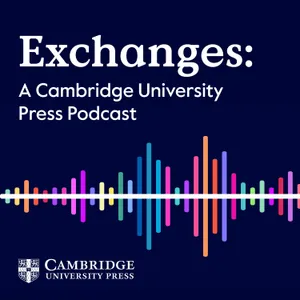
Free Daily Podcast Summary
Latest Episodes
The most recent episodes — sign up to get AI-powered summaries of each one.
- Yesterday1h 8m
Pushpesh Kumar et al. eds., "Sociology of Gender in India: Contemporary Issues and Perspectives" (Cambridge UP, 2026)
Sociology of Gender in India brings together feminist and queer scholarship to chart the changing landscape of gender debates in Indian sociology. Spanning over five decades of disciplinary evolution, this volume interrogates how gender, caste, sexuality, class, and digitalisation intersect in shaping contemporary social life. With chapters by a new generation of scholars, it critically engages with foundational debates in kinship, marriage, labour, media, nationalism, and pedagogy, while foregrounding neglected areas such as femtech, queer infrastructures, and digital precarity. The volume not only reanimates classic concerns of Indian feminist sociology but also aims to intervene in global conversations on intersectionality, decolonial knowledge, and the sociology of everyday life.Pushpesh Kumar teaches sociology at the University of Hyderabad. He has written extensively on gender and sexuality issues. Rituparna Patgiri teaches Sociology in the Department of Humanities and Social Sciences (HSS) at the Indian Institute of Technology (IIT), Guwahati. Her research explores questions of culture, food, media, gender, and pedagogy. Deepali Aparajita Dungdung teaches in the Department of Sociology, Ranchi University. Her research examines the intersections of gender, ethnicity, and care work within contemporary capitalism, with her more recent work focusing on language, education, and development.Priyam Sinha is an Early-Career Fellow at the Wee Kim Wee School of Communication and Information, Nanyang Technological University, where her work sits at the intersection of critical media industry studies, production cultures, disability studies, gender studies, and digital media development in Asia. She previously held a Humboldt Postdoctoral Research Fellowship at the Institute for Asian and African Studies, Humboldt University Berlin, and her doctoral research was awarded by the Singapore Indian Chamber of Commerce and Industry. Her articles appear in the European Journal of Cultural Studies; Media, Culture and Society; Communication, Culture and Critique; and South Asian Diaspora, among others. Committed to public scholarship, she is a regular host on the New Books Network and has written for the Economic and Political Weekly, the Asian Film Archive, and FemAsia. Her work can be found at here and you can follow her on X here Hosted by Simplecast, an AdsWizz company. See pcm.adswizz.com for information about our collection and use of personal data for advertising.
- 6 days ago31 min
Avraham Faust and Zev I. Farber, "The Bible’s First Kings: Uncovering the Story of Saul, David, and Solomon" (Cambridge UP, 2025)
Saul, David, and Solomon are among the most influential—and most contested—figures in the Hebrew Bible. The biblical narratives portray them as rulers of an expanding Israelite polity that eventually divided into the kingdoms of Israel and Judah. Yet how much of these accounts reflects historical reality? Did the United Monarchy truly exist, and what can archaeology tell us about Israel’s earliest kings?In The Bible’s First Kings: Uncovering the Story of Saul, David, and Solomon (Cambridge UP, 2025), archaeologist Avraham Faust and biblical scholar Zev I. Farber enter one of the most vigorously debated areas of biblical scholarship. Against the growing skepticism surrounding the historicity of the United Monarchy, they argue that Saul, David, and Solomon were real rulers of consequence and that the early Israelite kingdom developed into a regional “mini-empire”—even if the biblical authors later reshaped the memories of these kings in order to glorify, criticize, or vilify them.Combining recent archaeological discoveries with close and critical readings of Samuel and Kings, Faust and Farber reconstruct the rise, development, and collapse of this short-lived ancient polity. Their study examines settlement patterns, fortifications, demographic change, relations between Israelites and Philistines, copper production in Edom and Timna, and the complex relationship between material evidence, historical memory, and biblical narrative.In this interview, Professor Avraham Faust discusses what archaeology can—and cannot—tell us about Saul, David, and Solomon; why the scholarly consensus concerning the United Monarchy has changed so dramatically; how biblical traditions preserve genuine historical memories while also reshaping the past; and why a kingdom that lasted for less than a century left such an extraordinary religious and cultural legacy.The interview was conducted by Željko Stanojević of the Institute for Hebrew Language and Literature, with invaluable assistance from his colleague Mila Lekić. The Institute publishes the Diamond Open Access European Hebrew Journal and organizes the EHJ International Scholarly Online Conference 2026, at which Professor Faust will present “The Archaeology of the Return to Zion and the Achaemenid Economic Revolution.” Hosted by Simplecast, an AdsWizz company. See pcm.adswizz.com for information about our collection and use of personal data for advertising.
- 1 weeks ago1h 17m
Gabrielle Thomas, "The Problem of the Devil in Cappadocian Thought" (Cambridge UP, 2026)
In The Problem of the Devil in Cappadocian Thought (Cambridge UP, 2026), Gabrielle Thomas questions the popular assumption that the devil served as the primary explanation for evil, sin, and suffering as early Christians grappled with all that is wrong in the world. Interrogating the status of the devil in the teachings of the Cappadocians – Basil of Caesarea, Gregory of Nazianzus, Gregory of Nyssa, and Macrina the Younger – she identifies their points of agreement, that the devil is a fallen angel, and disagreement, notably how Christ defeated him, his continued existence, and his ultimate end. In her investigation, Thomas engages fourth-century Christian thought in conversation with ancient philosophy, ancient history, classics, and biblical studies. She demonstrates how the Cappadocians negotiated myriad philosophical, theological, and spiritual problems with the devil. Thomas argues that the devil is not simply a strategy for explaining the problem of evil. Rather, the devil himself is the problem. New Books in Late Antiquity is Presented by Ancient Jew Review Gabrielle Thomas, an Anglican priest, is Dean and President of Berkeley Divinity School at Yale and Professor of Early Christian, Anglican, and Theological Studies at Yale Divinity School. She is the author of The Image of God in the Theology of Gregory of Nazianzus and For the Good of the Church: Unity, Theology, and Women and co-editor of Women and Ordination in the Orthodox Church. Michael Motia teaches in Classics and Religious Studies at Umass Boston Hosted by Simplecast, an AdsWizz company. See pcm.adswizz.com for information about our collection and use of personal data for advertising.
- 1 weeks ago46 min
Ciara Breathnach, "Absence in the Archives" (Cambridge UP, 2026)
Ciara Breathnach is Professor of Irish Gender History at University College Cork. She has published widely on Irish socio-economic, gender, cultural and health history. Her last monograph Ordinary lives, death and social class: Dublin City Coroner’s Court, 1876-1902 (Oxford University Press, 2022) won the American Conference of Irish Studies, James S. Donnelly Sr. Prize for Books on History and Social Sciences in 2023. In this interview she discusses her new book Absence in the Archives (Cambridge UP, 2026). Absence in official records can have profound implications for social memory, civil rights, restorative and transitional justice, citizenship, social welfare, and redress for historical abuse. Scholars of archivistics and early modern New World imperial contexts have uncovered the epistemological problems that archival silences pose for historical research, and the author contends that absence deserves separate conceptual treatment. Archival absences, both permanent and temporary, have particular resonances for postcolonial countries, and are an ongoing threat under totalitarian regimes. Using Britain and Ireland as primary examples, this Element traces how absence took root in the domestic and subsequently the colonial archive, and how through legal mechanisms it became an accepted part of archival praxis. The aim of this Element is to raise awareness of archival absence in order to prevent more losses, particularly in the abundance of the digital age. This title is also available as Open Access on Cambridge Core. Absence in the Archives was recently published with Cambridge University Press, as part of their Elements short book series. Aidan Beatty teaches in the history department at Carnegie Mellon University.
- 1 weeks ago1h 26m
Han Hsien Liew, "Preaching Pious Rulership in Medieval Islam: Ibn Al-Jawzi's Political Thought" (Cambridge UP, 2026)
Han Hsien Liew’s fascinating and insightful new book, Preaching Pious Rulership in Medieval Islam: Ibn al-Jawzi’s Political Thought (Cambridge University Press, 2026) offers a new way of understanding the political thought of one of medieval Islam’s most influential preachers, Ibn al-Jawzi. Although Ibn al-Jawzi is often remembered primarily as a preacher, moralist, and religious scholar, Han Hsien challenges conventional accounts of medieval Islamic political thought by showing how piety, preaching, and emotional formation shaped his vision of political authority. Rather than focusing simply on the ruler’s ability to maintain order, Ibn al-Jawzi placed extraordinary emphasis on the ruler’s moral character and on cultivating emotions such as fear, humility, remorse, and compassion. Han Hsien argues that this vision of pious rulership emerged from what he calls “homiletic piety,” revealing how the moral and emotional world of hortatory preaching shaped ideas about what it meant to rule well. By placing Ibn al-Jawzi’s writings in their historical and political context—including his relationship with the Abbasid caliphate and his controversial intervention in debates over the cursing of Yazid—Han Hsien challenges simplistic distinctions between political “quietism” and “activism” and reveals a thinker deeply invested in influencing those who wielded political power. In our conversation, Han Hsien explains why he chose Ibn al-Jawzi as the subject of the book and what we can learn about medieval Islamic politics by taking preachers seriously as political thinkers. We discuss the concept of “homiletic piety” and Ibn al-Jawzi’s approach to exhorting rulers, including the rhetorical strategies he believed scholars could use to encourage rulers toward greater humility, kindness, and moral responsibility. We also explore Ibn al-Jawzi’s relationship with the Abbasid caliph al-Mustadi and what his writings reveal about the particular concerns of the ruler to whom they were addressed. Han Hsien discusses the complicated relationship between scholars and political power, including the historical debate over sharia and siyasa (or politics), and explains why Ibn al-Jawzi does not fit neatly into categories such as “quietist” or “activist.” We also talk about the significant role of emotions—including fear, remorse, humility, and compassion—in Ibn al-Jawzi’s understanding of political authority and consider whether he actually believed rulers could be transformed through preaching. Finally, we discuss Ibn al-Jawzi’s intervention in the debate over Yazid and what this reveals about his commitment to the idea of pious rulership. This book will be of tremendous interest to scholars and students of Islamic studies, medieval Islamic history, Islamic political thought, and the history of preaching, as well as anyone interested in the relationship between religion, morality, and political power. It will also appeal to readers interested in a different way of thinking about politics, one that takes seriously the power of preaching, persuasion, and moral and emotional formation to shape those who govern.
- 1 weeks ago43 min
Jonathan Swift and David Womersley ed., "Gulliver's Travels: Cambridge Anniversary Edition" (Cambridge UP, 2026)
Gulliver's Travels is one of the landmarks of world literature. Gulliver's adventures with the tiny but spirited Lilliputians, the giant inhabitants of Brobdingnag, the flying island of Laputa, and the rational horses of Houyhnmhnmland have become globally famous for their satirical wit and visionary creativity. Early editions credited Gulliver himself as the author, and many readers believed him to be a real person. Later commentators have variously described the work as proto-science fiction, as inspired children's literature and as a forerunner of the modern novel. The editor's introduction to this celebratory anniversary edition contextualises Gulliver's Travels in Swift's life and work as a whole while exploring its rich and remarkable afterlife. All the original illustrations and maps are included, as are the frontispiece portraits. Generous annotation explains textual details which might now seem obscure, and appendices contain additional documents and images to enhance contemporary understanding and enjoyment. David Womersley is the Thomas Warton Professor of English Literature at the University of Oxford. His books include Divinity and State, Gibbon and the “Watchmen of the Holy City” and The Transformation of the Decline and Fall of the Roman Empire. He is also the editor of many books, including the Penguin Classics editions of Gibbons’s Decline and Fall of the Roman Empire, Boswell’s Life of Samuel Johnson and David Hume’s complete essays. He is a Fellow of the British Academy and of the Royal Historical Society. Morteza Hajizadeh is a Ph.D. graduate in English from the University of Auckland in New Zealand. His research interests are Cultural Studies; Critical Theory; Environmental History; Medieval (Intellectual) History; Gothic Studies; 18th and 19th Century British Literature. YouTube Channel: here
- 2 weeks ago53 min
Agnes Mueller, "Holocaust Migration in German Jewish Literatures" (Cambridge UP, 2026)
In Holocaust Migration in German Jewish Literatures (Cambridge UP, 2026), analysing the past two decades of literature on Holocaust memory and migration stories, Agnes Mueller engages with writers such as W. G. Sebald, Thomas Bernhard, Edgar Hilsenrath, Benjamin Stein, Mirna Funk, Fred Wander, Barbara Honigmann, Julia Franck, Sasha Marianna Salzmann, Olga Grjasnowa, and Kat Kaufmann to explore current debates on Israel, the German Democratic Republic, gender, Jewish and Muslim identity, and antisemitism. Her new readings of German-language texts by younger authors present robust challenges to entrenched ideas concerning the singularity of the Holocaust, multidirectional memory, and a range of other memory debates. Jewish identity and Muslim identity are shown in direct conversation with other migrants' experiences, and literature is revealed to be a brave space where Holocaust memory is newly imagined. Mueller's study invites a radically new way to think about the Holocaust and sheds new and valuable light on adjacent contemporary discourses. Agnes Mueller (M.A., LMU Munich, Germany; Ph.D., Vanderbilt U), Professor of German and Comparative Literature at the University of South Carolina, is an expert on recent and contemporary German literature. She is core faculty in Jewish Studies and affiliated with Women's and Gender Studies. Her essay publications are on German American relations, contemporary literature, German Jewish studies, and Holocaust memory. Her 2004 anthology German Pop Culture: How "American" Is It? (U of Michigan P) is still widely used for teaching and research. Her 2015 monograph is entitled The Inability to Love: Jews, Gender, and America in Recent German Literature, (Northwestern UP), available in German translation as Die Unfähigkeit zu lieben (Königshausen & Neumann, 2017). With Katja Garloff she edited German Jewish Literature After 1990 (Camden House, 2018). In Spring of 2025 she was the Carol Kahn Strauss Fellow in Jewish Studies at the American Academy in Berlin. Her new book, Holocaust Migration in German Jewish Literatures (Cambridge UP, 2026) reveals how, in recent German Jewish literature, Jewish and Muslim migration stories converge to shape the future of Holocaust memory. She is currently at work on a new monograph entitled The Family’s Fight: Resisting State Control, where she investigates how families deal with loved ones who are or were political prisoners, and how that relationship reflects back on authoritarian regimes.
- 2 weeks ago45 min
Valeria Vázquez Guevara, "Truth Commissions and International Law: Jurisdiction, Representation, Authority" (Cambridge UP, 2026)
Truth Commissions and International Law: Jurisdiction, Representation, Authority (Cambridge University Press, 2026) examines how truth commissions construct authoritative accounts of conflict, and how they account for the plurality of accounts across affected communities. Dr. Valeria Vázquez Guevara examines three of the earliest and most influential truth commissions: Argentina (1983–1984), Chile (1990–1991), and El Salvador (1992–1993), and examines how relevant cultural objects support or counter the official account for each. In doing so, she argues that these truth commissions drew on international law to authorise their accounts of violent conflict, and that this had the consequence of privileging an internationally-authorised truth over other truths, whilst simultaneously strengthening the authority of international law over the post-conflict state. By demonstrating how truth commissions turn to international law for authority, the book shows how this produces an official account of past violence and promises of future community, which fundamentally affects how communities live together in the aftermath of violent conflict. This interview was conducted by Dr. Miranda Melcher whose book focuses on post-conflict military integration, understanding treaty negotiation and implementation in civil war contexts, with qualitative analysis of the Angolan and Mozambican civil wars. You can find Miranda’s interviews on New Books with Miranda Melcher, wherever you get your podcasts.
Get Exchanges: A Cambridge UP Podcast summaries in your inbox
Free AI-powered daily recaps. Key takeaways, quotes, and mentions — in a 5-minute read.
Get Free Summaries →Free forever for up to 3 podcasts. No credit card required.
You Might Also Like
Listeners also like.
Scholarly Communication
Discusses the dissemination of research with professionals in the field.

Conversations with Tyler
Discussions with intellectuals and experts on ideas, culture, and global issues.

CSPI Podcast
Conversations with CSPI scholars and experts on topics in science, technology, and politics.

Inquiring Minds
Explores the intersection of science and society through critical thinking and in-depth analysis.

Intelligence Squared
Live debates and in-depth discussions on pressing global issues featuring leading experts and thinkers.

Issues, Etc.
Discusses a wide range of topics with experts, centered on Christian faith and teachings.

Forum Borealis
In-depth interviews with authors and thinkers on unconventional topics in history, science, philosophy, and politics.

The Curiosity Shop with Brené Brown and Adam Grant
Brené Brown and Adam Grant explore boldness amid uncertainty through research, debate, and dialogue in a six-episode series.

Diabolical Lies
Katie Gatti Tassin & Caro Claire Burke

Bibliotequeando
Un podcast que explora grandes obras de la literatura para entender el mundo y responder preguntas existenciales.
Expanded Perspectives
Explores ancient history, alternative theories, cryptozoology, UFOs, and paranormal mysteries through research and expert interviews.

In Our Time: Religion
Explores religious movements, their theories, and key figures.
About Exchanges: A Cambridge UP Podcast
Interviews with Cambridge UP authors about their new books
Customized Recaps
AI-powered recaps with compact key takeaways, quotes, and insights.
Straight to Your Inbox
Get key takeaways from Exchanges: A Cambridge UP Podcast in a 5-minute read.
Save Hours Every Week
Stay current on your favorite podcasts without falling behind.
Frequently Asked Questions
What is Podzilla's Exchanges: A Cambridge UP Podcast daily summary?
It's a free AI-powered email that summarizes new episodes of Exchanges: A Cambridge UP Podcast as soon as they're published. You get the key takeaways, notable quotes, and links & mentions — all in a quick read.
How does the Exchanges: A Cambridge UP Podcast podcast summary work?
When a new episode drops, our AI transcribes and analyzes it, then generates a personalized summary tailored to your interests and profession. It's delivered to your inbox every morning.
Is this an official Exchanges: A Cambridge UP Podcast product?
No. Podzilla is an independent service that summarizes publicly available podcast content. We're not affiliated with or endorsed by New Books Network.
Can I get summaries of other podcasts too?
Absolutely! The free plan covers up to 3 podcasts. Upgrade to Pro for 15, or Premium for 50. Browse our full catalog at /podcasts.
How often does Exchanges: A Cambridge UP Podcast release new episodes?
Exchanges: A Cambridge UP Podcast publishes every few days. Our AI generates a summary within hours of each new episode.
What topics does Exchanges: A Cambridge UP Podcast cover?
Exchanges: A Cambridge UP Podcast covers topics including Science, History, Arts, Books, Social Sciences. Our AI identifies the specific themes in each episode and highlights what matters most to you.
Start getting Exchanges: A Cambridge UP Podcast summaries tomorrow morning.
Free forever for up to 3 podcasts. No credit card required.
Free forever for up to 3 podcasts. No credit card required.